
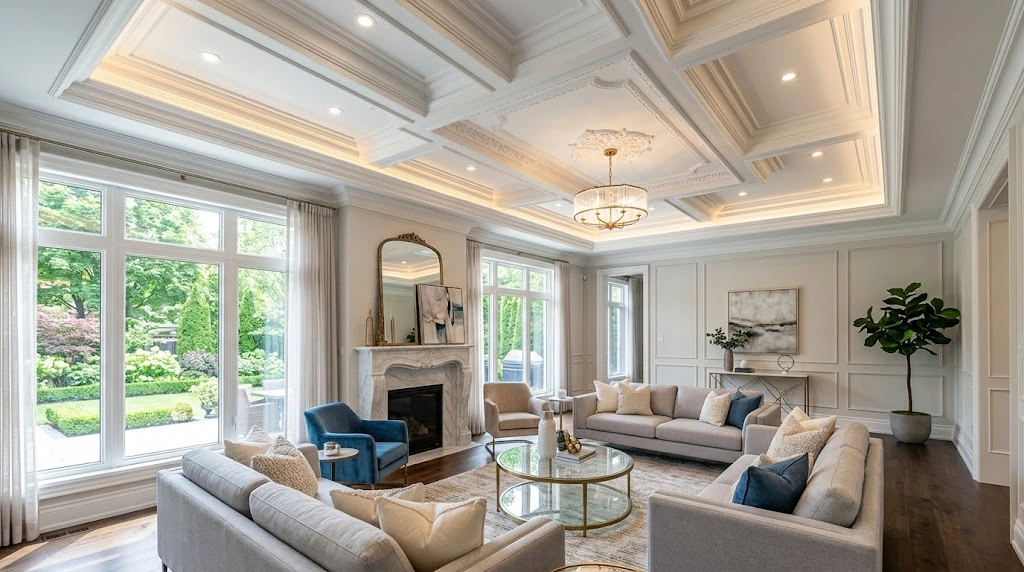
Ceiling trim ideas include crown molding, coffered ceilings, tray ceilings, minimalist flat profiles, and painted border lines. Each style adds character to the space where walls meet the ceiling. The right trim can make rooms feel taller, more finished, and far more intentional — without a full renovation.
Most people spend hours picking the perfect wall color or floor finish — and then completely forget about the ceiling. That’s a missed opportunity. Top interior designers often call the ceiling the “fifth wall” because it offers a unique chance to change the entire feel of a room. A little trim up top can shift a space from flat and forgettable to something that actually stops people in their tracks.
Whether you live in a Victorian terrace or a modern apartment, there’s a ceiling trim style that fits. You don’t need to spend a fortune or hire a full design team. You just need the right idea and a clear direction.
What Is Ceiling Trim and Why Does It Matter?
Ceiling trims — also known as crown moldings — have been used for years as coverings and dividers between the section of space where a wall and ceiling meet, creating a smooth and neat transition. Originally designed as both a practical and decorative feature, their styles have shifted from ornate to sleek and simple over time.
Today, that range is bigger than ever. You can go full old-world grandeur with plaster carvings, or keep it so minimal you’d almost miss it. The point is the same either way: trim gives a room a finished, intentional look that bare walls and plain ceilings simply can’t achieve on their own.
Crown molding is a relatively inexpensive way to make a room seem more upscale, and it can even impact your home’s resale value by attracting buyers with higher budgets. That’s a solid return for something most people walk past without noticing.
Classic Crown Molding: The Timeless Choice

Crown molding has been around for centuries, and it’s still one of the most popular ceiling trim choices for good reason. It enhances a room’s beauty, creates a smooth transition between wall and ceiling, and can even create an illusion of higher ceilings depending on how it’s designed. It’s a detail that quietly does a lot of work.
The material you choose makes a real difference here. Wood is the standard, and it’s more durable than synthetic options. Most home improvement stores carry different hardwoods — great if you want to stain it — and primed wood for painted finishes. Polyurethane is a lighter, more budget-friendly option that’s easier to cut and install if you’re doing this yourself.
The style you pick should match the room. Ornate, curved profiles suit period properties and formal living rooms. Clean, flat-edged crown molding works better in modern homes where the architecture already leans minimal. For beginners taking the DIY route, a flat profile is the smartest starting point — traditional crown molding has angles at the ceiling, wall, and corners, making it three times harder to cut perfectly.
Modern Minimalist Trim: Clean Lines, Big Impact

Not every home suits heavy ornamentation. If you’re working with a contemporary interior, a minimalist trim profile might be exactly what the space needs. Modern minimalist homes often benefit from square edge trim, which provides a clean and sharp transition between walls and the ceiling. Unlike traditional curved crown molding, this style uses flat, rectangular profiles to maintain a sleek and contemporary look.
In open-plan living areas, ceiling trims can actually define zones — like the dining space or lounge area — without using walls at all. This technique brings a luxury hotel-like feel to living rooms and bedrooms. It’s a clever way to structure an open floor plan without adding any physical barriers.
Painting the trim the same color as your walls or ceiling makes it feel even more integrated. The result is architectural detail that feels deliberate without screaming for attention.
Coffered Ceilings: Structured Elegance

A coffered ceiling takes ceiling trim to a whole new level. Instead of running a single strip of molding around the perimeter, you create a grid of recessed panels across the entire ceiling. The effect is rich, structured, and deeply impressive — especially in dining rooms, home offices, or master bedrooms where you want the ceiling to feel like part of the design rather than just the top of the room.
Coffered ceilings are one of the most popular and well-established ways to create interest on the ceiling, and in 2025 and 2026, designers are giving them a modern twist — using triangles instead of squares, or painting the interior of each panel a contrasting color for added depth. That small change makes an old format feel current and original.
The installation is more involved than standard crown molding, but prefabricated coffered ceiling kits have made it far more accessible for homeowners. You get the high-end look without commissioning custom carpentry.
Painted Ceiling Trim: A Modern Alternative

Here’s a ceiling trim idea that costs almost nothing but looks like it came straight from an interior design magazine. Instead of physical molding, you use paint to create a border or frame where the wall meets the ceiling. Interior designer Nicole Roe explains it well: “Paint lets you draw the trim through borders, stripes, or even tonal shifts that frame the ceiling. Patterns or color variations can highlight the ceiling as the fifth wall without adding physical ornamentation.”
A slender painted line in a contrasting color — like a bold red stripe against cream walls — makes a striking yet effortlessly simple separation. This approach creates unique visual interest and a stylish contrast with classically designed spaces. It’s a modern art approach applied to architecture.
This works especially well in rental apartments where you can’t nail into the walls or install physical trim. A steady hand, a good brush, and some painter’s tape are all you need.
Tray Ceilings: Adding Depth and Dimension
A tray ceiling creates a recessed central panel in the ceiling, framed by a stepped border of trim around the edges. The layered effect adds depth and makes the room feel like it has more volume, even in spaces with standard ceiling heights. It works beautifully in bedrooms, where the visual weight above the bed feels grounding and deliberate.
Tray ceilings are right on trend heading into 2026, especially when designers add a twist — painting the interior top of the tray a different color to add an unexpected pop of depth or warmth. A deep navy or soft sage inside the tray, contrasted against white trim, looks genuinely striking.
The trim around the tray is what pulls the whole look together. A simple flat profile keeps it contemporary. A more detailed stepped profile pushes it toward a classic, period-inspired feel.
LED-Integrated Trim: Function Meets Style
This is one of the most practical ceiling trim ideas in modern design. LED-compatible trims have a built-in channel on the back that holds a strip light, sending a soft glow along the ceiling line. Integrating recessed lighting with ceiling trim creates a harmonious ambient glow throughout the space. The trim acts as a frame for ambient lights, producing a dramatic interplay between shadow and light while concealing wiring and providing a contemporary look.
This idea suits living rooms, hallways, and bedrooms where mood lighting makes a real difference. It’s also energy-efficient — LED strips use a fraction of the power of traditional light fixtures while delivering a warm, even wash of light around the entire perimeter of the room.
Choosing the Right Ceiling Trim for Your Space
Before you commit to a style, think about the proportions of your room. In small rooms and spaces with low ceilings, every line, shadow, and proportion is immediately noticeable. Heavy ornamentation can visually compress wall height, while slim, clean profiles help define the floor-to-ceiling line while keeping the space feeling tall and uncluttered.
Maintaining similar sizes between your crown molding and baseboards contributes to a balanced appearance throughout the room. Casings around doors and windows should also factor into the overall picture to keep the design feeling cohesive. When every trim element speaks the same design language, the space feels calm and considered rather than busy.
Color is the final decision. White trim on white ceiling is the safe choice — it blends in and simply refines the room’s edges. Matching the trim to a dark ceiling color, on the other hand, makes the molding feel like an extension of the ceiling itself and creates a bold, dramatic effect that feels very current. Either way, the trim you choose is doing more than you think.
The ceiling above your head isn’t just structural. It’s design space — and the right trim turns it into a feature worth looking up for.


Comments are closed.