
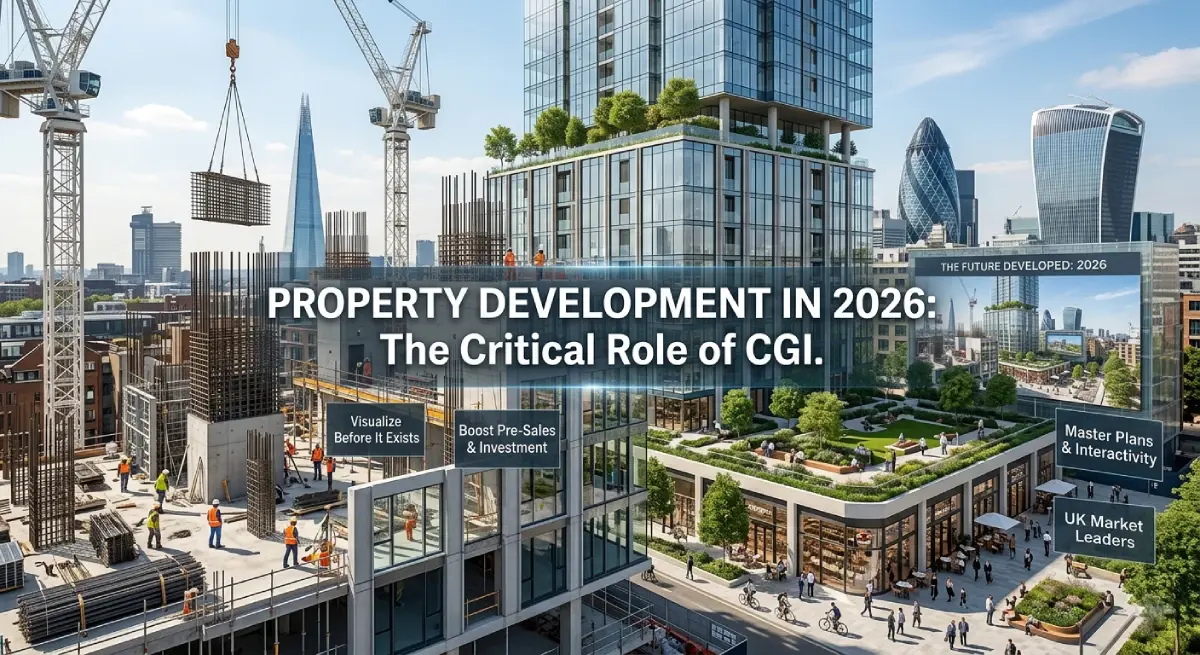
Property development in 2026 is no longer just about location, architecture, or pricing. It is about how clearly a project can be communicated before it exists. Buyers, investors, and stakeholders expect to see and understand developments long before construction is complete. This is where CGI (computer-generated imagery) plays a central role.
In highly competitive markets like London and across the UK, strong visuals are not optional. They directly influence buyer confidence, pre-sales performance, and overall project perception. Developers who invest in the right CGI approach often move faster, attract stronger interest, and reduce uncertainty during early project stages.
This article explores the role of CGI in modern property development and highlights key companies working in this space, focusing on those relevant to the UK market.
The Role of CGI in Property Development
Turning Concepts into Clear Visual Communication
One of the biggest challenges in property development is explaining something that does not yet exist. Plans, drawings, and technical documentation are useful internally, but they are not effective communication tools for most buyers.
CGI transforms complex architectural ideas into clear, easy-to-understand visuals. It allows stakeholders to see the final result, not just imagine it. This reduces confusion and helps align expectations early in the process.
Supporting Pre-Sales and Investment Decisions
Pre-sales are critical for many developments. They provide early cash flow and validate demand. CGI makes this possible by showing buyers exactly what they are investing in.
High-quality visuals can simulate finished interiors, exterior environments, and even surrounding neighbourhoods. This gives buyers enough confidence to commit before construction is complete.
Enhancing Marketing Across Channels
CGI assets are flexible. A single set of visuals can be used across:
- websites
- digital ads
- social media campaigns
- brochures
- sales presentations
This consistency strengthens brand perception and improves marketing efficiency. Instead of waiting for real photography, developers can launch campaigns early and maintain control over how the project is presented.
Communicating Complex Developments
Large-scale projects, such as mixed-use developments or multi-phase residential complexes, are difficult to explain using traditional methods. CGI allows developers to present entire master plans, showing how different elements connect.
This is especially important for urban developments, where context, infrastructure, and environment all influence buyer decisions.
Leading CGI Companies for Property Developers
The companies below are recognised for their work in property-related CGI. Each operates with a different focus, from high-end visual storytelling to scalable production and technical visualisation.
The Boundary
The Boundary is often associated with high-end architectural visualisation. Their work focuses on detailed, photorealistic imagery that reflects how spaces will look in real conditions. They are frequently involved in premium residential and commercial developments where visual quality plays a role in positioning and pricing. Their output tends to emphasise realism, lighting, and material accuracy.
Arqui9
Arqui9 approaches CGI from a more conceptual perspective. Instead of focusing purely on realism, they often explore how visualisation can communicate ideas, atmosphere, and identity. Their work is commonly used in projects that require strong branding or narrative elements. This makes them relevant for developments where visual communication goes beyond simple representation.
Maverick Frame
Maverick Frame combines CGI production with a focus on real estate marketing. Their work often aligns closely with how developments are presented across digital channels. They are known for delivering visuals that are adaptable to different marketing formats, including static images, animations, and promotional content. This makes them suitable for developers who need consistent output across campaigns.
3D Verso
3D Verso focuses on delivering tailored CGI solutions for property developments. Their work often supports both visualisation and presentation needs. They are involved in projects that require customised approaches, especially when developments have unique architectural or marketing requirements. Their output typically balances visual clarity with flexibility.
3DLines
3DLines operates at the intersection of architecture and visualisation. Their approach emphasises accuracy and communication rather than stylistic experimentation. They are often used in projects where clarity is critical, such as planning applications or stakeholder presentations. Their work supports decision-making by presenting information in a structured and understandable way.
Q-Lux Studios
Q-Lux Studios focuses strongly on animation and walkthrough experiences. Their work often includes dynamic presentations that help viewers explore a project in more detail. This type of visualisation is particularly useful for investor presentations or marketing campaigns where movement and interaction increase engagement.
Charles Roberts Studios
Charles Roberts Studios brings long-term experience in architectural visualisation. Their work often focuses on contextual representation, showing how developments fit into real environments. They are frequently used in projects where planning approval or public consultation is involved. Their visuals help demonstrate how a development integrates with its surroundings.
Digital3DWorks
Digital3DWorks focuses primarily on residential real estate CGI. Their work covers interiors, exteriors, and floor plan visualisation. They are often involved in ongoing property marketing, where consistent visual output is needed across multiple units or developments. Their approach supports clear and practical communication of residential spaces.
VisEngine
VisEngine takes a more structured and technology-oriented approach to CGI in property development. As a 3d architectural rendering studio, their work extends beyond static visuals. It often includes interactive applications, real-time rendering, and tools designed to support sales processes. This approach is particularly relevant for large developments or projects that require more advanced presentation methods. Instead of focusing only on imagery, their work supports how projects are experienced and explored.
Choosing the Right CGI Partner
Not all CGI companies serve the same purpose. The right choice depends on the specific needs of a development.
Some projects require highly detailed visuals to support premium positioning. Others need scalable production to handle multiple units efficiently. In some cases, interactive tools or animations are more important than static images.
A common mistake is choosing based only on portfolio aesthetics. While visual quality is important, it should be evaluated alongside practical factors such as scalability, turnaround time, and how the visuals will be used in marketing.
Developers should also consider how CGI fits into the broader strategy. Visualisation is not just about creating images. It is about improving communication, supporting sales, and reducing uncertainty throughout the project lifecycle.
Conclusion
CGI has become a core component of property development in 2026. It allows projects to be communicated clearly, marketed effectively, and sold earlier in the process.
As the market becomes more competitive, the role of visualisation will continue to grow. Developers who invest in the right CGI approach will have a clear advantage in both attracting buyers and securing investment.
The companies highlighted in this article represent different approaches to CGI, from artistic storytelling to technical visualisation and interactive tools. Understanding these differences is key to selecting the right partner.
In the end, the goal is not just to produce visually appealing images, but to support real outcomes. Strong CGI should make developments easier to understand, more engaging to explore, and more effective in achieving business goals.


Comments are closed.