
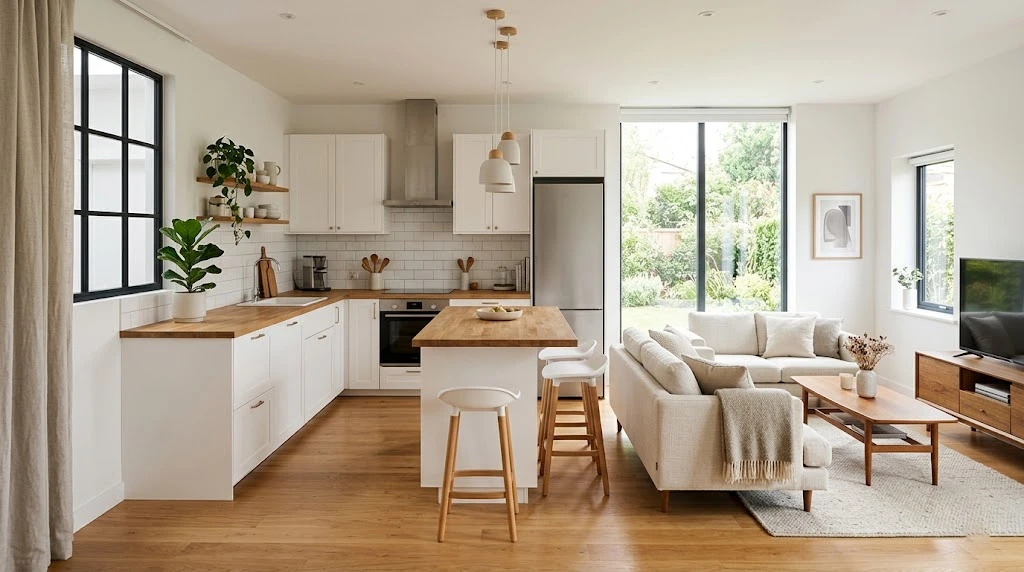
A small house open concept kitchen and living room removes walls between cooking and living spaces to create one connected area. It improves natural light, increases airflow, and makes a small home feel larger. Smart zoning through furniture, rugs, and lighting keeps each area distinct without adding physical barriers.
If you live in a small house, you already know the frustration. Every room feels separate, the kitchen feels cramped, and the living room barely fits a couch and a coffee table. You want the space to breathe, but the walls keep closing in. That’s exactly where an open concept kitchen and living room changes everything.
When done right, this layout helps light move better, keeps daily routines simple, and makes a small home easier to live in. It’s not just a design trend. It’s one of the most practical decisions you can make when you’re working with limited square footage.
This guide walks you through everything — layout choices, furniture placement, lighting, storage, and color — so your small house feels twice its size.

Why Open Concept Works So Well in a Small House
A small house with an open concept kitchen and living room layout can completely change how your home feels and functions. This design approach works perfectly for modern families who want to cook, eat, and relax together without feeling boxed in.
In an 800-square-foot apartment or a narrow townhouse, the shift is immediate. Natural light travels farther. Sightlines open up. And what once felt compartmentalized now feels livable, even social. A cramped galley kitchen becomes part of the conversation, not a space you disappear into while everyone else gathers elsewhere.
For small houses, this layout eliminates wasted hallway space and makes rooms feel much larger than their actual square footage. You’re not adding a single square foot, but the home feels like you did.
How to Plan Your Layout the Right Way
Before you move a single piece of furniture, you need a layout plan. In smaller spaces, homeowners go for galley or linear kitchens to maintain openness and conserve valuable floor space. Another excellent idea is to position the kitchen along one wall and allow the living area to unfold beside or across from it.
An L-shaped kitchen tucks into a corner while keeping living space open and creates natural separation without walls. A galley kitchen flowing directly into a living room makes the space feel larger in long, thin homes.
Pave the way for walkways to be at least 3 feet wide. To ensure safety and leg room, have at least a 14–18-inch gap between your coffee table and your sofa. These small clearances make a huge difference in how easy it is to move around the space every day.
The Best Way to Zone Without Walls
One of the biggest worries people have about open concept spaces is that everything blends together into one messy area. The good news is that you don’t need walls to define zones. You need smart furniture placement and a few key design tools.
A good floor plan for an open kitchen living room separates cooking, dining, and lounging areas without physical barriers. Use furniture placement, lighting changes, and ceiling variations to subtly guide movement and visually distinguish sections.
You should arrange furniture to create visually divided zones without using physical walls. Start by identifying the focal point in each area. In the living room, a statement piece could be a media console, fireplace, or large piece of art. Anchor the seating arrangement around that focal point and ensure there’s enough space for you to move freely. Avoid pushing all furniture against the walls. Instead, float the sofa or use a low console table to subtly define the edge of the living zone.
Area rugs are another powerful tool. Place one under the sofa and chairs to anchor the living area. It signals where the living room starts and the kitchen ends, without a single wall involved.
Using a Kitchen Island as a Natural Divider
A kitchen island serves multiple purposes in an open layout. It provides extra counter space for meal prep while offering casual seating for quick breakfasts. The island creates a subtle division between the kitchen and the living areas without blocking views. Pendant lights hanging above the island add task lighting and visual interest.
Consider a movable island on wheels if you need flexibility. This is especially useful if your square footage is tight and you need the floor space for other activities on some days.
If a full island doesn’t fit, a peninsula works just as well. It stays connected to the wall on one end, which saves space while still giving you that visual separation between cooking and living zones.
Color Strategy: How to Make It All Feel Connected
Color does more work in an open concept space than in any other room type. When there are no walls to separate areas, your color choices are the thread that holds everything together.
Color consistency shapes how people experience open spaces. A unified palette helps define separate zones while keeping the spacious feeling that makes open concepts attractive.
Warm neutrals like beige, cream, soft tan, and warm white make a small space feel cozy without feeling dark. These colors work well together and are easy to build on. They make the kitchen and living area feel connected and pulled together.
You don’t need to use the exact same shade everywhere. Using tones from the same color family across cabinets, walls, and furniture creates visual flow. Your eye reads the space as one unified room rather than two different areas that happen to share a floor.
Lighting That Works Zone by Zone
Lighting is one of the most underrated parts of small open concept design. Ambient lighting provides general illumination. Task lighting supports work zones like the kitchen counter or your reading area. Accent lighting adds mood and highlights focal points. Pendant lights above an island or dining area offer task lighting and visually distinguish the kitchen zone. Recessed lighting is perfect for low ceilings or minimalist schemes.
Select light fixtures that complement each other in both the kitchen and living zones to maintain visual harmony. Whether you choose modern pendants, recessed lights, or sconces, keeping the lighting style consistent helps unify the overall space.
Use dimmer switches wherever you can. The ability to lower lights in the living area while keeping the kitchen bright lets you shift the mood without changing a single piece of furniture.
Smart Storage Ideas for Open Concept Small Homes
When everything is visible from every angle, clutter has nowhere to hide. Add cabinets, shelves, and hidden storage solutions to keep clutter under control since everything is visible from all angles.
Mix open shelves with closed cabinets to balance display and hidden storage. Install floor-to-ceiling shelving units along one wall for books. Build storage benches under windows for extra seating and hidden organization. Create a built-in desk nook between the kitchen and living room.
Create small spaces in the living room and designate them exclusively for certain activities — a reading space, a pet cuddling space — and compartmentalize the space with relevant furniture. This approach gives each corner a purpose, which keeps the open space from ever looking chaotic.
How to Handle Noise and Smell in an Open Layout
Without walls to contain them, cooking smells and noise travel throughout your home. This is one of the most common challenges people face after opening up their space. Fortunately, both problems have practical fixes.
Incorporate soft materials like upholstered furniture, area rugs, and fabric window treatments that naturally absorb sound rather than reflecting it. Consider acoustic panels disguised as artwork, or add a large bookcase filled with books, which acts as both storage and sound absorption.
For smells, a strong range hood directly over your cooktop does most of the heavy lifting. Choose one that vents to the outside rather than recirculating air. Pair it with good ventilation through windows, and cooking odors won’t linger in your living area.
Furniture Choices That Keep Small Spaces Open
Include low-backed furniture and lightweight silhouettes into your design. These will maintain open sightlines, ensuring that no area feels visually blocked. Select pieces that share complementary materials, finishes, and color tones across the kitchen and the living room.
By strategically placing mirrors near windows or light sources, you can greatly enhance the brightness and create a more spacious feel in the room. They reflect both natural and artificial light, making tight layouts feel more expansive.
Avoid oversized sectionals that eat up floor space. A mid-sized sofa with clean lines, a small armchair, and a compact coffee table give you everything you need without crowding the room.
Making It Feel Like a Real Home, Not a Floor Plan
The biggest mistake people make in open concept spaces is forgetting that it still needs to feel warm and personal. A beautiful layout with perfect zones means nothing if it feels like a showroom.
Scandinavian style focuses on simplicity, natural materials, and soft light — white walls, light wood floors, simple furniture, and a few natural touches like a plant or a woven basket. This style is a natural fit for a modern, small, open plan kitchen and living room because it keeps things clean without feeling cold or empty.
Add a few personal touches — a piece of art you love, a plant on the kitchen counter, a throw blanket on the sofa. These details make the space yours. They signal that a real person lives here, not a design model.
A small house open concept kitchen and living room gives you more than extra space. It gives you a home that works with your life instead of against it.

Comments are closed.