
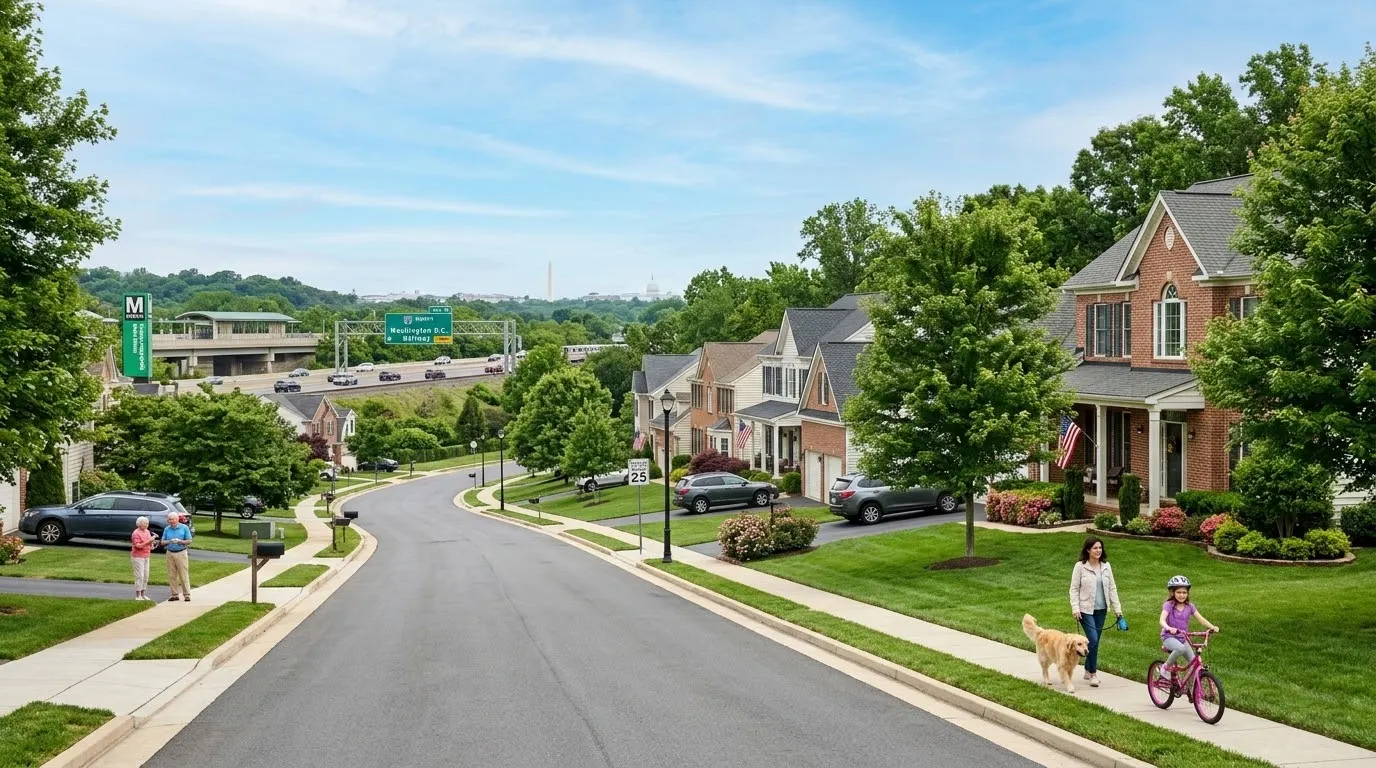
If you want to live near Washington, D.C. but do not want to pay sky-high prices, Springfield, Virginia may be a smart choice. It gives you a suburban lifestyle, good schools, and easier access to the city than many people expect.
For many families, workers, and first-time homebuyers, living in Springfield VA feels like a nice middle ground. You get more space than you would in D.C. or Arlington, but you can still reach downtown for work, events, or weekend fun.
So, is Springfield VA a good place to live?
The short answer is: yes, for many people it is.
Springfield is a well-known community in Fairfax County, Virginia. It has strong public schools, different types of homes, shopping centers, parks, and several ways to commute into Washington, D.C. At the same time, it also has some downsides like traffic, higher housing costs than many parts of the country, and a car-heavy lifestyle.
In this guide, we will cover everything you need to know before moving, including:
- Springfield VA neighborhoods
- Home prices and rent
- Schools
- Commute to D.C.
- Cost of living in Springfield VA
- Safety
- Things to do
- Pros and cons
If you are planning a move, this guide will help you decide if Springfield feels like the right fit.
Quick Facts About Living in Springfield, VA
Before we dive in, here are a few quick facts:
- Location: Fairfax County, Northern Virginia
- Distance to Washington, D.C.: About 14 miles southwest
- Population: The broader Springfield area has over 100,000 residents based on 2020 Census data
- Main Metro Station: Franconia-Springfield Metro Station
- Commute to D.C.: About 35 to 50 minutes by Metro, depending on destination
- Home prices: Many homes are in the mid-$600,000s to low-$700,000s, though prices vary a lot by neighborhood
- Rent: Apartments often range from about $1,800 to $2,400+ depending on size and location
- Schools: Served mainly by Fairfax County Public Schools, one of the largest districts in the U.S.
- Lifestyle: Suburban, family-friendly, practical, commuter-focused
Where Is Springfield, VA?
Springfield is in Northern Virginia, inside Fairfax County. It sits near one of the most important road junctions in the region, where I-95, I-395, and I-495 meet.
That location matters a lot.
It means you can reach many major places without living right in the middle of D.C. Here are a few examples:
- Old Town Alexandria: about 20–25 minutes away in light traffic
- The Pentagon: around 20–30 minutes in lighter traffic
- Downtown Washington, D.C.: often 30–50 minutes depending on time and route
- Tysons: usually 25–40 minutes without heavy traffic
- Fort Belvoir: fairly close for military families and workers
This is one reason so many people choose Springfield. It is not the trendiest suburb, but it is one of the most convenient.
Springfield VA Neighborhoods: Best Areas to Consider

One of the best things about Springfield is that it is not just one type of neighborhood. There are several areas, and each one feels a little different.
West Springfield
West Springfield is popular with families who want larger homes and bigger yards. Many homes here were built in the 1960s through the 1980s, but many have been updated.
You will usually find:
- Single-family homes
- Tree-lined streets
- Larger lots
- Quiet residential feel
- Strong school reputation
This area can be more expensive, but many buyers like it because it feels established and family-friendly.
North Springfield
North Springfield is known for its older charm and easy access to outdoor space.
Why people like it:
- Close to Lake Accotink Park
- Mix of older homes and some updated properties
- Good option for buyers who like character
- Easier access to some commuter routes
This area can be attractive if you want a neighborhood feel without being too far from the rest of Fairfax County.
Central Springfield
If you want convenience, Central Springfield is often the easiest place to start.
This area is close to:
- Springfield Town Center
- Restaurants
- Stores
- Metro access
- Everyday errands
Housing here may include:
- Condos
- Townhomes
- Some smaller single-family homes
This can be a good area for:
- First-time buyers
- Renters
- People who want shorter drive times for shopping and commuting
Newington and Newington Forest
These areas can offer more space and a slightly quieter feel.
You may find:
- Townhomes
- Single-family homes
- More wooded surroundings
- Family-oriented communities
The trade-off is that some parts may be farther from the Metro or major shopping areas, but many people feel the extra space is worth it.
Springfield VA Real Estate: What Homebuyers Can Expect
If you are looking at Springfield VA real estate, the first thing to know is this: Springfield is not “cheap” by national standards, but it can be more affordable than closer-in Northern Virginia suburbs like Arlington or some parts of Alexandria.
Typical Home Prices
Many homes in Springfield today often fall in the:
- $400,000s to $500,000s: smaller condos, older townhomes, entry-level options
- $500,000s to mid-$600,000s: larger townhomes or smaller single-family homes
- Mid-$600,000s to $800,000s: many standard family-sized single-family homes
- $800,000 and up: larger updated homes in stronger locations
Prices can change quickly, so always check current listings before making a decision.
What About Property Taxes?
Fairfax County’s base real estate tax rate is $1.1225 per $100 of assessed value, which is important for buyers to understand. On a $600,000 home, that can mean around $6,700+ per year before other fees or special district charges. (Fairfax County)
HOA Fees
Some neighborhoods have HOA fees, especially condos and townhomes.
You might see:
- $50–$150/month in some communities
- $200–$500+/month in condo buildings with more amenities
Always ask what the HOA covers before buying.
Renting in Springfield, VA
Not ready to buy? Renting is common in Springfield too.
Apartment and condo rental prices often depend on:
- Distance to Metro
- Size of unit
- Building age
- Amenities like gym, pool, or parking
A rough idea:
- 1-bedroom: often starts around $1,800+
- 2-bedroom: often $2,100–$2,400+
- Luxury or newer units can be higher
For renters moving from D.C. or Arlington, Springfield can feel like a better value because you often get more space for your money.
Is Springfield, VA Safe?
This is one of the most important questions for families and first-time movers.
So, is Springfield VA safe?
In general, Springfield is considered a solid, family-friendly suburban area, especially compared with many denser urban neighborhoods in the region.
Why many people feel comfortable here:
- It is in Fairfax County, which is often seen as a stable and well-managed county
- Many neighborhoods are residential and community-focused
- Families, commuters, and longtime homeowners make up a large part of the population
- Public spaces, shopping areas, and schools are active and well-used
Important note
Like any large suburb, safety can vary from block to block. Some areas feel quieter than others, especially near busy roads, apartment clusters, or high-traffic commercial zones.
Best advice before moving
Before renting or buying:
- Visit the neighborhood during the day and at night
- Check recent local crime maps
- Talk to neighbors if possible
- Test your drive and parking situation
Overall, many people moving with kids or looking for a calmer daily life find Springfield to be a comfortable and practical place to live.
Schools in Springfield, VA
For families, schools are often a top reason to consider Springfield.
Springfield is mainly served by Fairfax County Public Schools (FCPS), one of the largest school systems in the United States. FCPS reported 181,153 students in the 2024–25 school year. (fcps.edu)
That size gives students access to many programs, such as:
- Advanced Placement (AP) courses
- Career and Technical Education (CTE)
- Sports and clubs
- Fine arts
- Language support
- Special education services
Important for homebuyers
School assignments in Fairfax County can depend on your exact address, and boundaries can change over time. In fact, Fairfax County approved new school boundaries recently after a long review process. (The Washington Post)
So before you buy a home, always:
- Confirm the current school boundary
- Check the assigned elementary, middle, and high school
- Verify program availability directly with FCPS
That step matters a lot because two homes only a few streets apart can sometimes feed into different schools.
Commuting from Springfield, VA to Washington, D.C.
For many residents, Springfield is all about the commute.
Metro Access
The big transit anchor here is the Franconia-Springfield Metro Station.
This station gives you access to the Washington Metro system and makes it possible to reach:
- The Pentagon
- Downtown D.C.
- Other parts of Northern Virginia
Typical Metro commute times
Depending on where you are going, expect roughly:
- Pentagon: around 25–35 minutes
- Downtown D.C.: around 35–50 minutes
- Tysons: longer, often with transfers
Metro Parking
The station has a large parking garage with 5,069 spaces. Fairfax Connector lists daily parking at $4.95/$8.95 depending on trip use, and the station is maintained by WMATA. (Fairfax County)
Weekend parking is often easier and may be free at Metro-operated garages depending on the day and rules, but always double-check current station policies.
Driving to Work
If you drive, Springfield gives you strong highway access. That is the good news.
The bad news? Traffic can be rough.
During rush hour:
- D.C. commutes can stretch to 45–70 minutes or more
- I-95 and I-395 backups are common
- The Springfield Interchange is busy and can slow things down fast
If you drive outside rush hour, travel can be much easier.
Other Commute Options
Some people also use:
- Virginia Railway Express (VRE) from nearby stations
- Bus connections
- Carpooling or “slugging” (popular in Northern Virginia)
- Park-and-ride lots
If you work in D.C. but want more home for your money, Springfield can still make sense—as long as you are realistic about traffic.
Cost of Living in Springfield, VA
Let’s be honest: Springfield is not cheap.
But compared to some nearby areas, it can still be a better value.
Main Monthly Costs
Housing
This will likely be your biggest expense.
For a homebuyer, your monthly cost may include:
- Mortgage
- Property taxes
- Home insurance
- HOA fees (if any)
- Utilities
For renters, the main cost is rent plus parking and utilities.
Utilities
Utilities can vary a lot based on home size and season, but many households may spend roughly:
- $150–$300+ per month
Hot summers and winter heating can raise bills.
Groceries
Groceries in Northern Virginia are usually above the national average.
Many families find:
- Weekly grocery trips cost more than in smaller towns
- Prices vary depending on where you shop
Childcare
If you have young kids, childcare can be a major budget item in Fairfax County. Daycare and private care are often expensive compared with national averages.
Bottom line
Springfield is:
- More expensive than many outer suburbs and smaller Virginia cities
- Often more affordable than Arlington, some parts of Alexandria, and some close-in D.C. alternatives
Things to Do in Springfield, VA
Springfield is not the most exciting nightlife destination in Northern Virginia, but it does offer plenty of practical and family-friendly things to do.
Springfield Town Center
This is the area’s main shopping hub.
You will find:
- Big retail stores
- Clothing shops
- Restaurants
- Movie options nearby
- Family-friendly stops
It is useful for everyday life and weekend errands.
Lake Accotink Park
This is one of the best outdoor spots in the area.
People go there for:
- Walking trails
- Nature views
- Kayaking
- Picnics
- Family outings
If you want a suburban area with some green space, this is a nice bonus.
Sports and Family Activities
Families often enjoy:
- Community sports leagues
- Playgrounds
- Local fitness centers
- Youth programs
- Nearby recreation spaces
Easy Access to Bigger Attractions
Even if Springfield itself feels quiet, you are close enough to enjoy:
- Museums in D.C.
- Old Town Alexandria
- Concerts and sports events
- Regional shopping and dining
That is a major plus. You can live in a calmer place and still enjoy big-city options.
Who Should Move to Springfield, VA?
Springfield can be a great fit for:
- Families who want space, schools, and parks
- Commuters who work in D.C., the Pentagon, or nearby government offices
- First-time buyers priced out of Arlington or closer-in neighborhoods
- Military households who want access to Fort Belvoir or the Pentagon
- People who prefer suburban living over city noise
Springfield may be less ideal for:
- People who want a highly walkable lifestyle
- Those who want trendy nightlife nearby every night
- Buyers looking for very low home prices
Springfield, VA Pros and Cons
Pros
- Good location near D.C. and major highways
- More space than many closer-in suburbs
- Strong access to schools and family amenities
- Mix of condos, townhomes, and single-family homes
- Useful Metro access through Franconia-Springfield
- Good shopping and everyday convenience
Cons
- Traffic can be frustrating
- Home prices are still high by national standards
- Many areas are car-dependent
- Not as walkable or lively as urban neighborhoods
- Some parts feel more practical than charming
Final Verdict: Is Springfield, VA a Good Place to Live?
Yes—Springfield, VA is a good place to live for many people, especially if you want a balance between suburban comfort and access to Washington, D.C.
It is not the cheapest place in Virginia, and it is not the most exciting suburb in Northern Virginia. But it offers something many people need: space, convenience, schools, and flexibility.
If you are moving for work, raising a family, or simply want a calmer place without losing access to the city, Springfield deserves a serious look.
The best way to decide
Before you move:
- Visit different neighborhoods
- Drive your commute at rush hour
- Compare rents and home prices
- Check school boundaries
- Walk around in the evening
- Think about how much you want to rely on a car
For many buyers and renters, Springfield hits a very practical sweet spot.
If your goal is to live near D.C. without paying top-tier prices in Arlington or central Alexandria, living in Springfield VA can be a smart move.


Comments are closed.