
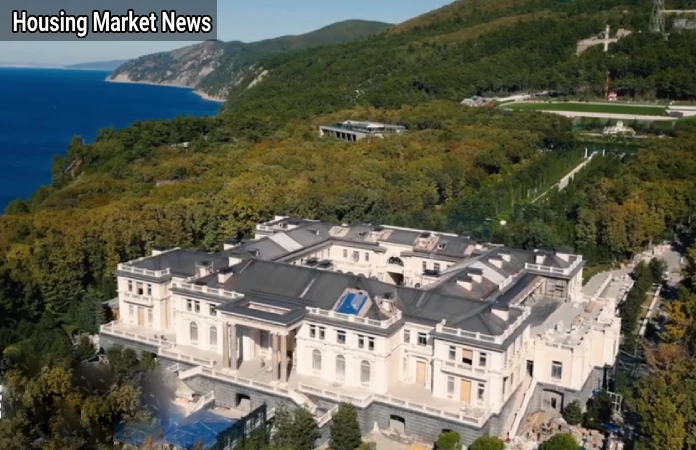
Alexei Navalny House became a topic of global interest after the Russian opposition leader’s dramatic return to Russia in 2021 and his subsequent imprisonment. Many people around the world wondered where this brave activist lived with his family and what kind of home he called his own. The residence of Alexei Navalny tells a story that’s quite different from what you might expect from someone who challenged one of the world’s most powerful leaders.
Unlike many politicians and public figures who often live in luxurious mansions, Navalny’s living situation reflected his middle-class background and his commitment to fighting corruption rather than accumulating wealth. His home became a symbol of his message that Russian officials shouldn’t live in palaces while ordinary citizens struggle. The Alexei Navalny House story is really about a man who practiced what he preached, living modestly while exposing the lavish lifestyles of corrupt government officials.
So what did his actual residence look like? And where is his family living now after the tragic events of February 2024? These questions have become even more important as people remember his legacy and continue his fight for a corruption-free Russia.
Who is Alexei Navalny?
Alexei Navalny was a Russian opposition leader, anti-corruption activist, and lawyer who became one of the most prominent critics of President Vladimir Putin’s government. He was born on June 4, 1976, in a small village near Moscow and grew up during the final years of the Soviet Union. His parents were not wealthy or connected to politics, which shaped his views about ordinary Russians deserving better from their leaders.
Navalny started his activism journey in the early 2000s when he began exposing corruption in Russian state-owned companies. He used social media and his blog to reach millions of Russians who were tired of seeing their tax money stolen by officials. His investigations revealed how government ministers and their friends lived in massive estates while claiming modest salaries. These investigations made him famous but also made him many powerful enemies.
Throughout his career, Navalny survived a poisoning attempt in August 2020 with a nerve agent called Novichok. He recovered in Germany but made the stunning decision to return to Russia in January 2021, knowing he would likely be arrested. Russian authorities immediately detained him at the airport, and he spent the rest of his life in prison. Sadly, Navalny died in a remote Arctic prison colony on February 16, 2024, at the age of 47. His death sparked international outrage and renewed attention to his work and his family.
| Category | Details |
|---|---|
| Full Name | Alexei Anatolievich Navalny |
| Birth Date | June 4, 1976 |
| Birth Place | Butyn, Moscow Oblast, Russia |
| Death Date | February 16, 2024 |
| Age at Death | 47 years old |
| Nationality | Russian |
| Profession | Lawyer, Anti-Corruption Activist, Opposition Leader |
| Education | Russian University of Peoples’ Friendship (Law), Yale University (World Fellows Program) |
| Marital Status | Married |
| Spouse | Yulia Navalnaya |
| Children | Two (Daria and Zakhar Navalny) |
| Net Worth | Estimated $500,000 – $1 million (before imprisonment) |
| Primary Residence | Moscow, Russia |
| Notable Properties | Moscow apartment |
| Organizations Founded | Anti-Corruption Foundation (FBK) |
| Political Affiliation | Opposition leader (Russia of the Future party) |
| Social Media Following | Millions across YouTube, Instagram, and Twitter |
Where Does Alexei Navalny Live Now?
This question needs to be addressed with sensitivity because Alexei Navalny passed away in February 2024 while imprisoned in the IK-3 penal colony in Kharp, in Russia’s Yamalo-Nenets region above the Arctic Circle. Before his death, he spent nearly three years in various Russian prisons and penal colonies. His last years were marked by harsh conditions, solitary confinement, and limited contact with his family.
However, his family’s living situation has changed dramatically since his arrest and death. Yulia Navalnaya, his widow, now lives outside Russia for safety reasons. She has taken up her husband’s mission and continues to speak out against the Russian government from abroad. Their daughter Daria graduated from Stanford University in California and remains in the United States. Their son Zakhar also lives outside Russia with his mother.
The family made the difficult decision to leave Russia because staying would have put them in danger. Russian authorities have labeled Navalny’s organizations as extremist, and anyone associated with them faces prosecution. Yulia Navalnaya has said she will return to Russia someday when it’s free and democratic, just as her husband always hoped it would be. For now, they live in exile, continuing the fight he started while remembering the Moscow home they once shared.
Alexei Navalny House
The Alexei Navalny House was a modest apartment located in southeastern Moscow, far from the city’s most prestigious neighborhoods. This wasn’t a mansion or a luxury penthouse like those owned by the Russian officials he criticized. Instead, it was a regular apartment in a typical Moscow residential building where many middle-class Russian families lived. The choice of this residence was intentional and symbolic of his entire political message.
Navalny’s apartment was situated in the Maryino district of Moscow, a neighborhood built during the Soviet era and later modernized. This area isn’t known for luxury or exclusive living. Rather, it’s where ordinary Muscovites raise their families, go to work, and live normal lives. The building itself looked like thousands of other apartment blocks across Russia, with its characteristic design and no special security features that you’d expect for such a prominent political figure.
The apartment served as both his home and sometimes as a workspace when he wasn’t at his Anti-Corruption Foundation office. Neighbors reported that the Navalny family lived quietly and didn’t draw attention to themselves. They shopped at local stores, and their children attended nearby schools. This normal lifestyle stood in stark contrast to the palaces and villas that Navalny exposed in his investigations of corrupt officials.
Security was always a concern, especially after the 2020 poisoning attempt. The family had to be careful about their safety, but they didn’t have the kind of protection that government officials enjoy. This made their living situation even more vulnerable, yet they chose to stay in their modest Moscow apartment rather than flee to safety abroad. That decision showed incredible courage and commitment to their cause.
The residence became internationally known when Navalny made his famous phone call to one of his poisoners from this apartment after recovering in Germany. That moment, when he tricked a Russian FSB agent into confessing to the poisoning plot, was partly filmed in his Moscow home. The modest background visible in those videos showed the world exactly how he lived.
1. Luxury Amenities of Alexei Navalny House
- Standard Moscow apartment layout
- Basic kitchen with modern appliances
- Living room with workspace area
- Bedrooms for family members
- Standard bathroom facilities
- Internet connection for activism work
- Computer equipment for investigations
- Regular heating system
- Simple furniture and decorations
- No swimming pool or gym
- No private security system
- No luxury cars or garage
- No home theater or entertainment room
- No expensive artwork or collectibles
- Standard balcony common in Moscow apartments
2. Inside Alexei Navalny’s Home
The interior of Alexei Navalny’s home reflected the lifestyle of an educated, modern Russian family rather than a wealthy politician. When you looked at videos and photos from inside the apartment, you saw bookshelves filled with legal texts, history books, and literature. The family valued education and knowledge, which was evident in how they organized their living space. The furniture was comfortable but not expensive or flashy.
The living room doubled as a workspace where Navalny often recorded videos for his YouTube channel, which had millions of subscribers. This room had a simple desk with a computer where he worked on his investigations. The background visible in his videos showed regular walls, basic furniture, and nothing that suggested wealth or luxury. This authenticity helped him connect with ordinary Russians who faced similar living conditions.
His wife Yulia managed the household while also supporting his political work. She created a warm family environment despite the constant stress and danger they faced. The kitchen was where the family gathered for meals, and it looked like any typical Moscow apartment kitchen with standard appliances and simple cabinets. There were no marble countertops or high-end fixtures that you might see in the homes of Russian oligarchs.
The children’s rooms were decorated appropriately for young people, with study areas and personal items. Daria and Zakhar grew up in this apartment, experiencing a childhood that was both normal and extraordinary. They attended regular schools and had friends in the neighborhood, but they also knew their father was doing dangerous work. The home provided them with stability even as their father challenged the most powerful people in Russia.
3. Alexei Navalny House Then and Now
| Aspect | Then (Before 2021) | Now (2024) |
|---|---|---|
| Occupancy | Full family residence with Alexei, Yulia, and children | Empty, family living in exile abroad |
| Purpose | Family home and occasional workspace | Likely vacant or occupied by others |
| Security | Minimal, normal apartment building | Unknown current status |
| Condition | Well-maintained, actively lived in | Unknown, family has not returned |
| Atmosphere | Busy family life, activism hub | Silent, part of Russian history |
| Media Attention | Moderate, known to followers | High historical significance |
| Location Access | Family could come and go freely | Family cannot safely return |
| Neighborhood | Normal Moscow residential area | Unchanged physically |
| Symbolic Meaning | Home of an opposition leader | Memorial to courage and sacrifice |
| Privacy | Some privacy despite public life | No longer a private residence |
4. How Did Alexei Navalny Design His House to Reflect His Personality?
Alexei Navalny didn’t really “design” his house in the way that wealthy people hire interior designers and architects. Instead, his apartment reflected his personality through simplicity, functionality, and a focus on substance over appearance. Everything about the space showed that he cared more about his work and his message than about impressing people with luxury or status symbols.
The most telling aspect of his home was what it lacked. There were no expensive paintings on the walls, no designer furniture, and no renovations that cost hundreds of thousands of dollars. This absence of luxury was itself a powerful statement. When Navalny investigated corrupt officials who claimed to earn $100,000 per year but somehow owned mansions worth millions, his own modest apartment proved he was genuine in his criticism.
His workspace area demonstrated his priorities perfectly. The computer setup wasn’t fancy, but it was functional for creating the investigative videos that exposed corruption. The bookshelves showed his intellectual interests and his commitment to research and evidence-based activism. He surrounded himself with tools for learning and working rather than symbols of wealth and power.
The family photos and personal items scattered throughout the apartment revealed his devotion to his wife and children. Despite the dangers he faced, he created a home environment that felt safe and loving for his family. This balance between his dangerous public work and his role as a father and husband showed the different sides of his personality. He was both a fearless fighter against corruption and a caring family man.
How Much is Alexei Navalny House Worth?
The Alexei Navalny House, being a standard apartment in Moscow’s Maryino district, was worth significantly less than properties owned by the Russian officials he criticized. Real estate values in this area are moderate compared to central Moscow or luxury neighborhoods. The apartment’s value represented the lifestyle of a middle-class professional rather than a wealthy politician or businessman.
Complete Property Details:
- Build Year: Likely 1980s-1990s (typical for Maryino district buildings)
- Purchase Year: Estimated early 2000s (exact date not publicly confirmed)
- Purchase Value: Approximately $80,000-$120,000 (estimated based on Moscow prices at the time)
- Recent Estimated Value: $150,000-$250,000 (Moscow real estate has appreciated)
- Area: Approximately 800-1,200 square feet (typical Moscow apartment)
- House Style: Soviet-era apartment building, multi-story residential
- Architectural Design: Standard panel construction, common in Moscow suburbs
- House Condition: Well-maintained before family’s departure (2021)
- Full Address: Specific address withheld for family privacy and security
- Neighborhood: Maryino district, southeastern Moscow
- Building Type: Multi-family residential building
- Floor: Mid-level floor (exact floor not publicly disclosed)
- Rooms: Estimated 2-3 bedrooms, living room, kitchen, bathroom
- Parking: Standard building parking, no private garage
- Special Features: None beyond standard Moscow apartment amenities
Breakdown of Alexei Navalny Real Estate
Alexei Navalny’s real estate holdings were remarkably simple compared to most public figures of his prominence. He didn’t own multiple properties, vacation homes, or investment real estate like many Russian politicians. His property portfolio reflected his middle-class background and his commitment to transparency in his own financial affairs.
Moscow Apartment (Primary Residence): The Maryino district apartment served as the Navalny family’s main home from approximately the early 2000s until his arrest in 2021. This property, covering roughly 1,000 square feet in a typical Moscow residential neighborhood, was where they raised their children and where Navalny conducted much of his activism work. The area is known for its Soviet-era construction and working-class residents. After his imprisonment and subsequent death, the family could not return to this residence.
Childhood Home: Navalny grew up in modest circumstances in villages and small towns near Moscow. His parents were not wealthy, and his childhood homes were typical Soviet-era housing. His father worked in the military, and his mother was an accountant, so the family lived in standard government-provided housing. These early experiences shaped his understanding of how ordinary Russians lived and fueled his anger at corrupt officials who stole from the public.
No Vacation Properties: Unlike the officials he investigated, Navalny did not own dachas (country houses), beach properties, or foreign real estate. This absence of additional properties was significant because it proved his financial transparency. He often challenged corrupt officials to explain how they could afford multiple luxury properties on their official salaries. By living simply himself, he demonstrated that public service shouldn’t be a path to personal wealth.
Previous Residences: Before settling in the Maryino apartment, Navalny and his young family likely rented or lived in other modest Moscow accommodations. The exact details of these earlier residences are not well-documented because he wasn’t yet a public figure. However, all accounts suggest he consistently lived within his means as a young lawyer and activist.
Current Family Situation: Following Navalny’s death in February 2024, his widow Yulia and their children live in exile, primarily in Europe. They do not own property in Russia anymore and cannot safely return. Their current living arrangements are kept private for security reasons, but they are supported by international organizations and supporters of Navalny’s anti-corruption work. The Moscow apartment remains part of Russian history as the home of one of Putin’s most prominent critics.
Conclusion
The story of Alexei Navalny House is ultimately a story about integrity and sacrifice. His modest Moscow apartment stood in stark contrast to the palaces and mansions he exposed in his corruption investigations. While Russian officials claimed poverty but lived like kings, Navalny lived like the ordinary citizens he fought for. His home wasn’t special because of luxury or size but because it represented the values he died defending.
Today, that apartment stands empty, a silent witness to the courage of a man who could have fled to safety but chose to return home and face imprisonment. His family can’t go back there now, living instead in exile as they continue his mission. The Alexei Navalny House reminds us that true leadership isn’t about accumulating wealth or living in mansions. Sometimes it’s about living simply, speaking truth to power, and being willing to sacrifice everything for what you believe is right. His legacy lives on not in bricks and mortar but in the millions of people worldwide who were inspired by his courage and determination to fight corruption.


Comments are closed.