
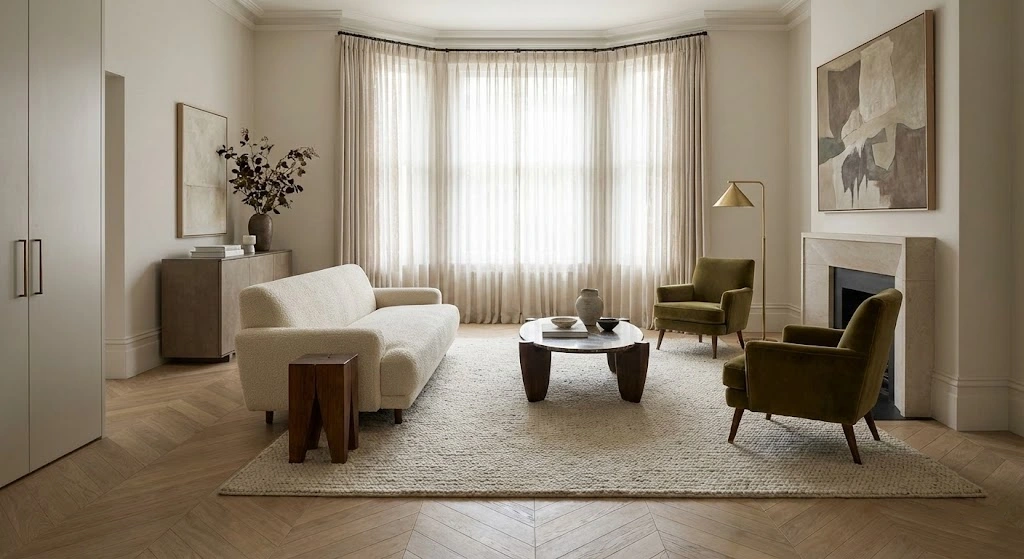
The herringbone tile pattern arranges rectangular tiles in a staggered zigzag layout, creating V-shaped designs that add depth and movement to any space. Named after herring fish bones, this classic pattern dates back to ancient Rome.
What Makes the Herringbone Pattern So Special
Walking into a room with herringbone tiles feels different. The floor guides your eyes naturally across the space. The walls seem taller. The kitchen backsplash catches the light in unexpected ways.
This pattern gets its name from the skeleton of a herring fish. When you look at rectangular tiles arranged at right angles to each other, they create that same distinctive zigzag shape. Each tile meets the next one perpendicular to it, forming a broken zigzag that adds instant character to any surface.
The beauty lies in the stagger. Unlike straight grid patterns that can feel predictable, herringbone creates movement. Your eye travels along the diagonal lines, making rooms appear longer, wider, or taller depending on how you orient the pattern.

A Pattern That Survived Thousands of Years
The story of herringbone tiles stretches back over 2,000 years to ancient Rome. Around 500 BC, Romans built an extensive road network called the Viae Publicae, and they used herringbone patterns in their construction. They called it “opus spicatum,” which translates to “spiked work.”
Roman engineers laid bricks and stones in herringbone formations to create strong, durable roads. The interlocking pattern helped absorb pressure from heavy traffic, whether from pedestrians, horses, or carts. This practical application proved so successful that nearly 50,000 miles of Roman roadways used this system.
But Romans weren’t the first to discover herringbone’s appeal. Ancient Egyptians used the pattern in jewelry for their elite. In ancient Ireland, people wove horsehair cloth in herringbone patterns around 600 BC. The design showed up across different cultures and materials long before it became a flooring trend.
After the Roman Empire fell, the pattern faded from construction. Then came the Renaissance. When Filippo Brunelleschi designed the dome of Florence Cathedral in the 15th century, he used herringbone brick-laying. That dome remains the largest masonry dome ever built, constructed with over 4 million bricks arranged in herringbone formation.
By the 1600s, French nobility fell in love with parquet flooring. Herringbone became a symbol of luxury in palaces and châteaux throughout France. The pattern moved from practical roadways to elegant interior spaces, where it has remained ever since.
How Herringbone Works in Your Space
The herringbone pattern creates a sense of movement across any surface, which instantly draws the eye and adds visual interest. The staggered V-shapes create depth that flat patterns simply can’t match.
The pattern works differently depending on its orientation. Install it with the zigzag running horizontally, and your room appears wider. Orient it vertically, and the ceiling seems higher. Place it at a 45-degree angle to your walls, and you get a more dramatic, dynamic effect.
Tile size changes everything. Small tiles create an intricate, detailed look that works beautifully in compact spaces like powder rooms or narrow hallways. Large tiles deliver a bold, modern statement perfect for open-plan living areas or spacious master bathrooms.
You can play with single or double herringbone layouts. Single-tile herringbone uses one rectangular tile per diagonal, creating detailed patterns with visible grout lines. Double herringbone pairs two tiles per diagonal, making bolder arrows that work best in larger areas.
Where Herringbone Shines Brightest
Kitchen Backsplashes: Glass or marble herringbone tiles behind your stove create a focal point that resists cooking splatters and cleans easily. White tiles with gray grout give you a fresh, contemporary look. Gold or brass-toned glass adds glamour and warmth.
Bathroom Floors and Walls: Porcelain or ceramic herringbone adds spa-like luxury to showers. The texture provides slip resistance underfoot while creating visual interest on walls. Light-colored marble herringbone in small formats works perfectly for bathroom floors, making the space feel larger.
Living Room Floors: Wood-look tiles in herringbone format bring warmth and character to your main living spaces. The pattern adds interest without overwhelming furniture or decor. Pair it with neutral walls and simple cabinetry to let the floor be the star.
Entryways and Hallways: These transitional spaces benefit from herringbone’s ability to create movement. The pattern naturally guides people through the space while making narrow hallways appear wider.
Feature Walls: Create an accent wall with herringbone tiles in your bedroom, living room, or dining area. This adds texture and dimension without covering every surface in the pattern.
Herringbone vs. Chevron: Knowing the Difference
People constantly confuse herringbone with chevron patterns. They both create zigzags, but they’re built differently.
In a chevron pattern, tiles are cut at a 45-degree angle for both sides to create a V-shape. The angled cuts allow tiles to meet point-to-point, forming continuous zigzag lines with sharp, clean vertices.
Herringbone uses rectangular tiles without angled cuts. The tiles remain fully rectangular and meet at right angles. This creates a broken zigzag effect rather than continuous V-shapes.
Chevron delivers a more modern, streamlined look with symmetrical flow. Herringbone offers a more traditional, textured appearance with its staggered layout. Chevron typically costs more to install because each tile requires precise angled cuts. Herringbone installation proves easier, though it still demands careful planning.
Both patterns work beautifully in different settings. Choose chevron for bold, contemporary spaces where you want clean geometry. Pick herringbone for timeless elegance with more subtle visual movement.
Choosing Your Herringbone Tiles
Material Matters: Porcelain and ceramic tiles offer durability and water resistance, making them perfect for high-traffic areas, bathrooms, and kitchens. Natural stone like marble adds luxury but requires sealing and more maintenance. Glass tiles create luminous backsplashes that reflect light beautifully.
Size Considerations: Small tiles (2×6 inches or similar) work well for backsplashes, small bathrooms, and accent walls. They create intricate, detailed patterns. Medium tiles (3×12 inches) suit most applications and balance detail with ease of installation. Large tiles (4×24 inches or bigger) make bold statements in spacious areas and reduce grout lines for a cleaner look.
Color Selection: White and cream tones brighten small spaces and pair with any decor style. Gray creates sophisticated, modern looks that hide dirt well. Warm terracotta or brown tones add coziness and work beautifully with wood furniture. Dark tiles like black or charcoal make dramatic statements in larger rooms with good natural light.
Finish Types: Matte finishes hide water spots and fingerprints, working well in busy family bathrooms. Polished finishes reflect light, making spaces appear larger and adding luxury. Textured or honed finishes provide better slip resistance for floors.
Installation Tips That Make the Difference
Start by dry-laying your tiles before applying adhesive. This lets you visualize the final pattern and make adjustments. The herringbone pattern requires precision, so take time to plan your layout carefully.
Choosing grout color impacts the final look. Contrasting grout emphasizes each tile and the pattern itself, creating bold, graphic designs. Matching grout creates a more subtle, cohesive effect where the pattern flows smoothly.
Find your centerpoint and work outward from there. This ensures symmetry and prevents awkward cuts at edges. Professional installers recommend starting at the room’s visual center rather than an actual corner.
Cut tiles accurately for edges and corners. Herringbone patterns often require many small cuts, especially around obstacles like pipes or outlets. A wet saw gives you clean, precise cuts.
Allow proper drying time between steps. Don’t rush from laying tiles to grouting. Follow your adhesive manufacturer’s recommendations for cure times.
Making Your Herringbone Pattern Pop
Keep surrounding decor simple when you choose herringbone tiles. The pattern provides plenty of visual interest on its own. Neutral walls, simple cabinetry, and streamlined furniture let your tiles shine.
Use lighting to enhance the pattern. Angled lighting creates shadows along the tile edges, emphasizing the zigzag design. Under-cabinet lights bring out the beauty of herringbone backsplashes.
Mix materials thoughtfully. Wood furniture adds warmth against ceramic or porcelain herringbone. Metal fixtures in brass or matte black create beautiful contrasts. Plants and natural textures balance the geometric precision of the pattern.
Consider scale throughout your space. If you use large-format herringbone on your floor, balance it with smaller tiles or smooth surfaces elsewhere. Too much pattern overwhelms the eye.
Maintaining Your Herringbone Tiles
Daily maintenance stays simple. Sweep or vacuum regularly to remove dirt that can scratch tile surfaces. Wipe up spills immediately to prevent staining, especially on natural stone.
Clean with pH-neutral cleaners designed for your tile material. Harsh chemicals can damage grout or etch natural stone surfaces. Warm water and mild soap handle most cleaning jobs perfectly.
Seal natural stone tiles and grout lines annually. This protects against moisture damage and staining. Ceramic and porcelain typically don’t need sealing, but their grout does.
Address grout issues promptly. Cracked or missing grout lets moisture underneath tiles, potentially causing damage. Touch up grout as needed to maintain both appearance and protection.
Why Herringbone Keeps Working
The herringbone pattern survived millennia because it solves real problems. It makes small spaces appear larger. It adds interest to plain walls. It guides movement through rooms naturally.
Modern manufacturing makes herringbone more accessible than ever. Pre-mounted mosaic sheets simplify installation. Advanced materials offer durability and easy maintenance. Color options multiply every year.
The pattern adapts to any style. Traditional homes gain classic elegance. Contemporary spaces get geometric interest. Transitional designs bridge old and new perfectly. This versatility explains why herringbone appears in everything from historic renovations to brand-new construction.
Your home deserves surfaces that tell a story. Herringbone tiles connect your space to centuries of design history while feeling completely current. Whether you choose marble for your bathroom, ceramic for your kitchen, or porcelain for your entryway, this pattern brings depth, movement, and timeless beauty to your daily life.


Comments are closed.