
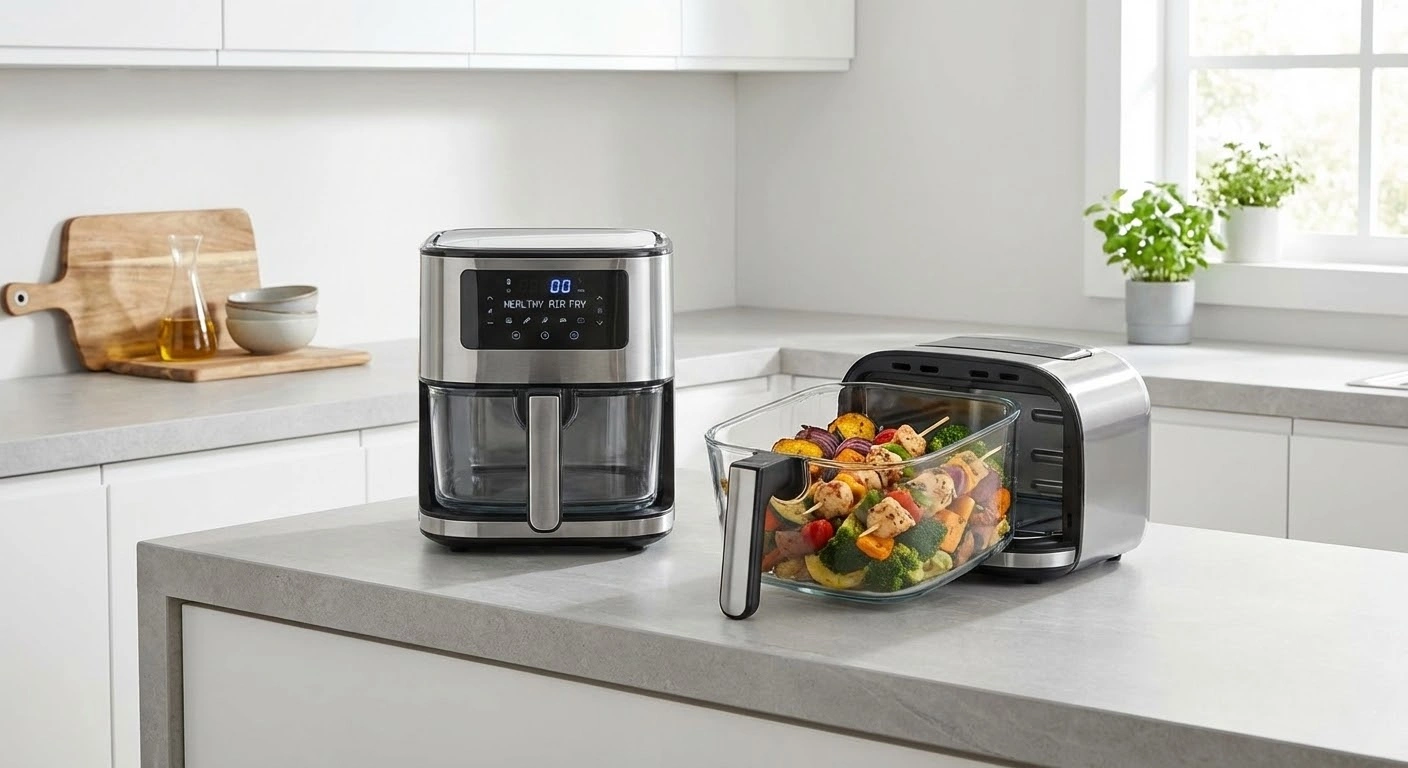
A Non Toxic Air Fryer is one made without PFAS, PTFE (Teflon), BPA, or harmful plastic near food and heat. Safe models use stainless steel, borosilicate glass, or verified ceramic coatings. These materials do not release chemicals into your food, even at high cooking temperatures.
Air fryers took over kitchens fast. They promise crispy food with less oil, shorter cooking times, and easier cleanup. But here’s the thing — not every air fryer is as healthy as it seems. The basket your food sits in might be doing more harm than you realize. Choosing a Non Toxic Air Fryer is one of the most practical steps you can take toward cleaner cooking at home.
This guide breaks down exactly what makes an air fryer toxic, which chemicals to watch for, what safe materials look like, and which models are actually worth your money in 2025.
Why Most Air Fryers Are Not as Safe as You Think

When you buy a standard air fryer, the basket usually comes coated with a non-stick layer. That coating makes cleaning easy, and food slides right off. The problem is what that coating is made from.
Many traditional air fryers use baskets coated with PTFE, commonly known as Teflon — a material within the PFAS chemical family. These coatings can release fumes when overheated, which raises concerns especially if the coating is damaged. Air fryers regularly reach temperatures between 380°F and 450°F, which is exactly the range where these materials start to break down.
PTFE microplastics have been found in urine and semen and have been associated with reduced sperm counts. When PTFE coatings overheat, they can produce fumes that are deadly to small birds and may be harmful to humans. That last part is not an exaggeration. It has actually been used to describe the risk — like a canary in a coal mine, but in your kitchen.
The issue goes beyond just Teflon. BPA, found in some plastics, can be released from plastic components at high temperatures. Phthalates can also be found in the plastics used in some air fryer construction, and high heat can release volatile organic compounds from those plastics into the air or your food. When you are cooking every day, that kind of exposure adds up.
What PFAS Actually Are (and Why They Stay in Your Body)
PFAS stands for per- and polyfluoroalkyl substances. You have probably heard them called “forever chemicals.” That name is not marketing. PFAS molecules have a chain of linked carbon and fluorine atoms. Because the carbon-fluorine bond is one of the strongest, these chemicals do not degrade easily in the environment.
The EPA reports that exposure to PFAS can have widespread effects on the body, including decreased fertility, developmental delays in children, and an increased risk of certain cancers, including prostate, kidney, and testicular cancer.
PFAS is known to accumulate in the environment and has been linked to human health impacts such as abnormal thyroid and hormone function, reduced immune system response, and cancer. These are not fringe concerns — they come from institutions like the National Institute of Environmental Health Sciences and the San Francisco Department of the Environment.
The regulatory landscape is changing fast. As of January 1, 2025, Minnesota became the first state to ban the sale of nonstick cookware coated with PFAS. Vermont, Connecticut, Rhode Island, and Colorado are also moving ahead with bans or restrictions on cookware containing intentionally added PFAS. California passed a bill in September 2025 to prohibit the sale and distribution of several categories of products that contain intentionally added PFAS, with the legislation applying to cookware beginning in 2030. These laws exist for a reason.
The Problem With “PFOA-Free” and “PTFE-Free” Labels
This is where a lot of shoppers get tripped up. You see a label that says “PFOA-free” and assume the product is clean. It is not that simple.
A manufacturer may claim that their products have none of a specific type of PFAS, but they actually contain another that may be equally hazardous. Stating what is not in the product does not clarify what actually is. There are thousands of PFAS chemicals. Removing one does not make the coating safe.
Labels like “PFOA-free” or “PTFE-free” can be misleading. A truly safe air fryer should be clearly labeled PFAS-free — not just PTFE or PFOA-free — and use glass, uncoated stainless steel, or verified ceramic non-stick.
The word “verified” matters. Some brands market ceramic coatings aggressively but cannot confirm the exact materials used. Companies who are still using nonstick coatings are not always willing to provide the exact materials used in their products. Some respond with a generic reply that the nonstick coating used is proprietary and cannot be disclosed. If a brand will not tell you what is in their coating, that is a warning sign.
What Makes an Air Fryer Truly Non-Toxic
A genuine Non Toxic Air Fryer meets three basic requirements. The cooking surface must be free from PFAS — not just one type, but the full class. No plastic should touch the food or sit in the path of hot circulating air. And the unit should remain odor-free at high cooking temperatures.
Here are the materials that actually meet those requirements:
Stainless steel is one of the most reliable options. Air fryers made from polished stainless steel do not require coatings. Stainless steel is environmentally inert and does not leach any chemicals, which is why it is safe for cooking food at high temperatures. Oven-style air fryers often use stainless steel racks and trays, which makes them a strong choice for families.
Borosilicate glass is another excellent option. It is heat-resistant, completely inert, and does not require any coating at all. Glass air fryers let you see your food as it cooks, and they carry zero chemical leaching concerns.
Verified ceramic coatings can work well when sourced from reputable brands. Ceramic-coated air fryers are PFAS-free and stable at high heat when made by reputable brands. The key word is verified. Demand documentation — not just a marketing claim on the box.
What you want to avoid: plastic anywhere near heat or food, cheap non-stick baskets that show no material disclosure, and anything labeled “PFOA-free” or “PTFE-free” without a broader PFAS-free certification.
Top Non Toxic Air Fryer Options Worth Considering in 2025
Several models stand out when material safety is your top priority.
Our Place Wonder Oven consistently tops lists from health-focused reviewers. The Wonder Oven is one of the safest air fryers on the market. This versatile appliance bakes, steams, broils, toasts, and roasts, and uses no toxic materials in its construction. It is compact, multi-functional, and uses no PFAS, no BPA, and no harmful plastic in its food-contact parts. For people who want to reduce their kitchen appliance count without compromising safety, this one is hard to beat.
Fritaire Self-Cleaning Glass Air Fryer uses a full borosilicate glass bowl — zero coatings, complete transparency about materials. It is made with durable glass and is free from BPA, Teflon, and PFAS, so you cook with complete peace of mind knowing there are no harmful coatings or chemicals. The self-cleaning function is a nice bonus that keeps you from scrubbing glass manually.
Midea French Door Air Fryer uses stainless steel racks inside the machine. After extensive testing, the Midea model proved to be quicker, safer, and a better value for money at around $169 compared to competing models. It sits in the mid-price range and performs well for everyday cooking.
Ninja Crispi features a glass container cooking system and is clearly labeled non-toxic. It is compact, capable, and microwave and freezer safe — which adds genuine everyday value beyond just air frying.
For stainless steel oven-style units, the BLACK+DECKER line offers durable cooking surfaces without any coating concerns and at accessible price points.
How to Use Your Air Fryer Safely — Even a Non-Toxic One
Choosing a clean machine is step one. How you use it also matters.
Avoid over-browning starchy foods — darker crusts create more acrylamides, a potential carcinogen. Avoid low-smoke-point oils such as flaxseed or unrefined safflower, as they break down and form harmful compounds. Use high-smoke-point oils like avocado or refined coconut instead. Clean the basket and interior regularly to prevent burnt residue, and avoid charring meats or fish, which can produce harmful compounds.
If you still own an older air fryer with a non-stick basket, check the surface carefully before every use. If your air fryer basket is peeling, flaking, or deeply scratched, it is best to replace the basket or the entire unit rather than continue cooking on a damaged surface. A scratched coating is far more likely to shed particles into your food than an intact one.
Keep temperatures within the recipe range. Most non-toxic coatings — including ceramic — remain stable under normal cooking conditions. It is misuse, overheating, and physical damage that cause the most problems.
Is Switching to a Non Toxic Air Fryer Worth It?
The short answer is yes. The longer answer involves thinking about how often you cook, who eats that food, and how much long-term exposure matters to you.
PFAS build up in the body over time. Even low-level contamination poses serious health risks, particularly because PFAS accumulates in the body over time. You might not feel anything today. But every meal cooked in a scratched, overheated, PFAS-coated basket adds a small amount to that accumulation.
The good news is that safe options exist at every budget. A glass or stainless steel air fryer does not have to cost a fortune. Entry-level non-toxic models start at around $60–80. Premium options like the Wonder Oven or Ninja Crispi sit between $100 and $180. That is a one-time cost for a tool you use daily.
Your kitchen is where you feed your family. The equipment you cook with deserves the same attention as the ingredients you buy. A Non Toxic Air Fryer is not a luxury — it is a practical decision that pays off every single day you use it.
If you are ready to make the switch, start by looking for models that confirm full PFAS-free status in writing, use glass or stainless steel cooking surfaces, and disclose their materials openly. Those three things will take you from overwhelmed to confident in no time.


Comments are closed.