
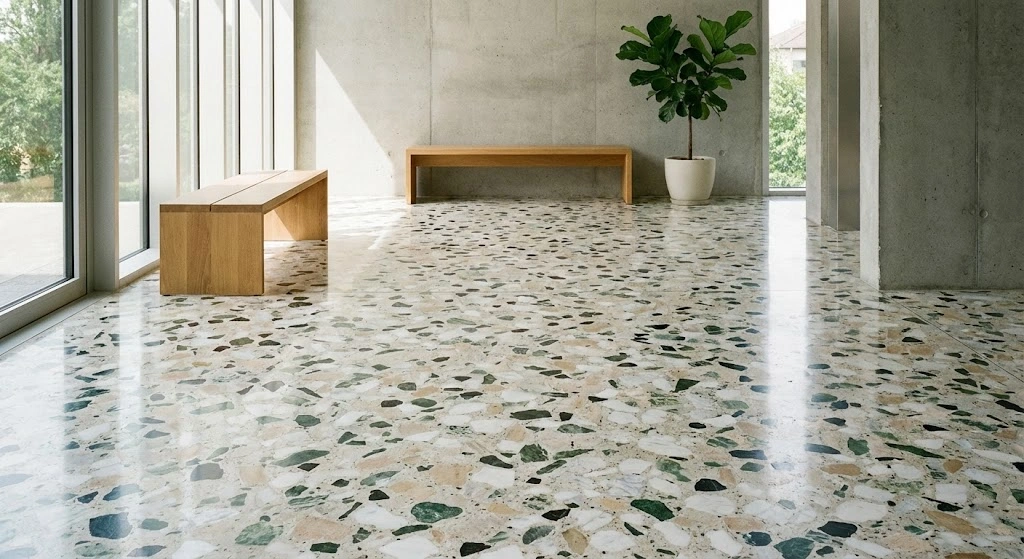
Clean terrazzo floors by dust mopping daily with microfiber, then wet mop weekly using neutral pH cleaners mixed with warm water. Avoid acidic or harsh chemicals. Rinse thoroughly, dry completely, and reseal every 1-3 years to maintain shine and prevent stains.
Terrazzo floors bring timeless beauty to any space. These stunning surfaces combine marble chips with cement or resin to create a unique speckled appearance. You’ll find them in homes, hotels, hospitals, and commercial buildings across the country. The good news? Keeping them clean isn’t as hard as you might think.
Many homeowners worry about damaging their terrazzo floors with the wrong cleaning methods. That fear is valid. These floors can last decades when cared for properly, but harsh chemicals and rough scrubbing can ruin them in minutes. Let me walk you through exactly how to clean terrazzo floors the right way.
Understanding Your Terrazzo Floor

Before you start cleaning, you need to know what type of terrazzo you have. Traditional terrazzo uses Portland cement mixed with marble, granite, or glass chips. Modern terrazzo often uses epoxy resin as the binder instead. Both types look similar, but they respond differently to cleaning products.
Cement-based terrazzo is more porous and needs regular sealing. The cement binder can absorb stains quickly if left unprotected. Epoxy resin terrazzo is less porous but can still be damaged by strong acids. Understanding your floor type helps you choose the right cleaning approach.
Most terrazzo floors have a sealed or polished finish. This protective layer keeps dirt and liquids from soaking into the porous materials underneath. When you clean properly, you protect this finish and keep your floor looking fresh.
Daily Cleaning That Makes a Difference
The single most important cleaning habit for terrazzo floors is daily dust mopping. Sounds simple, right? It is. But this one step prevents more damage than any other maintenance task you’ll do.
Dust, dirt, and grit act like sandpaper on your floor. Every time someone walks across the surface, these particles create tiny scratches. Over time, those scratches dull the finish and make your floor look worn. A quick dust mop removes these abrasive particles before they cause problems.
Use a microfiber dust mop for best results. These mops trap more dirt than traditional dust mops and don’t require any cleaning products. Run the mop across your entire floor every day, especially in high-traffic areas. Keep the mop on the floor as you work—lifting it releases dust back into the air.
For larger spaces, choose a bigger dust mop. A 48-inch or 60-inch mop covers more ground faster. In tight corners or small rooms, a smaller 12-inch mop works better. Match your tool to your space.
Weekly Deep Cleaning Routine
Once a week, your terrazzo floor needs more than a dust mop. This is when you bring out the wet mop and cleaning solution. The key word here is “neutral”—your cleaner must have a pH between 7 and 10.
Mix your neutral cleaner with warm water according to the manufacturer’s instructions. Fill a bucket with this solution and dip your mop in. Wring it out well—too much water can seep into grout lines and cause damage.
Work in sections as you mop. Apply the cleaning solution to one area and let it sit for a few minutes. This dwell time lets the cleaner dissolve dirt and grime. Don’t let the solution dry on the floor, though. Keep the surface wet during this process.
After the cleaner has worked its magic, rinse the area with clean water. This step is crucial but often skipped. Any cleaning residue left on the floor will attract more dirt and create a sticky film. Change your rinse water frequently to avoid spreading dirt around.
The final step is drying. Don’t let your terrazzo floor air dry. Use a clean, dry mop to remove all moisture from the surface. This prevents water spots and keeps dust from sticking to damp areas.
What Cleaners to Avoid at All Costs
Many common household cleaners will destroy your terrazzo floor. Understanding what to avoid is just as important as knowing what to use.
Never use vinegar on terrazzo floors, even though it’s a popular natural cleaner. Vinegar’s acidity can etch the marble chips in your floor. The same goes for lemon juice or any other acidic cleaner. One application might not show damage, but repeated use will permanently dull your finish.
Bleach is another enemy of terrazzo. All-purpose cleaners that contain bleach or ammonia are too harsh for these delicate surfaces. These products leave residue that attracts dirt and requires more frequent cleaning.
Skip the abrasive powders and scouring pads too. Steel wool, rough scrubbers, and gritty cleaners will scratch your floor. Even if the scratches seem minor at first, they accumulate over time and ruin your floor’s appearance.
Steam mops might seem like a good idea, but they’re not safe for terrazzo. The heat and pressure from steam can damage polished stone surfaces. Stick with traditional mopping methods instead.
Tackling Stubborn Stains
Spills happen. The faster you clean them, the easier they are to remove. Coffee, wine, oil, and food can all stain terrazzo if left to sit. Grab a clean cloth and blot the spill immediately—don’t wipe, which spreads the stain.
For fresh stains, warm water and a few drops of dish soap often work. Mix a quarter teaspoon of dish soap with warm water. Dampen a soft cloth with this solution and gently work on the stain. Rinse with clean water and dry thoroughly.
Older stains need more attention. A homemade cleaner mixing a quarter teaspoon of dish soap, a quarter cup of rubbing alcohol, and two and a half cups of warm water can tackle tough stains. Apply this mixture to the stained area and let it sit for 30 seconds to three minutes. Scrub gently in circular motions, then rinse and dry.
For organic stains like coffee or juice, hydrogen peroxide works well. Apply it directly to the stain, let it sit for a few minutes, then wipe clean. Test any stain remover on a hidden area first to make sure it won’t damage your finish.
Some stains, particularly those from carpet padding or old adhesive, can penetrate deep into the terrazzo. These might need professional treatment. Don’t waste time fighting a stain that won’t budge—call an expert who has specialized equipment.
Sealing Your Terrazzo Floor
Sealing protects your terrazzo from stains and moisture damage. Think of sealant as an invisible shield between your floor and everything that could harm it. Most terrazzo floors need resealing every one to three years, depending on foot traffic.
You can tell when your floor needs sealing by doing a simple water test. Drop a few drops of water on the surface. If the water beads up, your seal is still good. If it soaks in and darkens the floor, it’s time to reseal.
Before sealing, your floor must be perfectly clean. Any dirt or residue trapped under the sealer will be visible forever. Clean thoroughly, let the floor dry completely, then apply the sealer according to the manufacturer’s directions.
Water-based sealers are the most common choice today. They’re easy to apply, dry quickly, and don’t produce strong odors. Apply them with a clean mop or applicator, working in thin, even coats. Most floors need two to three coats for full protection.
When to Call a Professional
Regular cleaning handles most maintenance, but sometimes your terrazzo needs professional attention. Deep scratches, extensive staining, or a dull finish that won’t shine with normal cleaning all signal it’s time for expert help.
Professional terrazzo restoration involves grinding the surface with diamond pads. This process starts with coarse pads for grinding, then moves to finer grits for polishing. It removes a thin layer of the floor, taking stains and damage with it.
After grinding, professionals apply polishing compounds and buff the surface to a high shine. They can also repair cracks, fill chips, and address any structural issues. This level of restoration brings old terrazzo back to life.
Don’t wait until your floor is severely damaged to call for help. Annual professional cleaning and polishing keeps terrazzo looking great and extends the time between major restorations.
Creating Your Cleaning Schedule
Consistency matters more than intensity when caring for terrazzo floors. A regular schedule prevents problems before they start. Here’s what works for most homes and businesses.
Daily tasks take five minutes or less. Dust mop high-traffic areas every single day. Wipe up spills as soon as they happen. Place mats at entrances to trap dirt before it reaches your terrazzo.
Weekly cleaning takes about 30 minutes for an average room. Mop with neutral cleaner, rinse thoroughly, and dry completely. Check for new stains or scuff marks and address them right away.
Monthly maintenance includes a closer inspection. Look for worn areas, check your grout lines, and assess whether your sealer is still protecting the floor. Clean grout lines with a soft brush if needed.
Annual professional service keeps everything in top shape. Schedule a deep cleaning and polishing session once a year. This is also a good time to reseal if needed.
Final Thoughts on Terrazzo Care
Learning how to clean terrazzo floor properly protects your investment and keeps your space looking beautiful. These floors have graced buildings for hundreds of years because they’re durable, attractive, and surprisingly easy to maintain.
The secret is simple: clean gently, clean often, and use the right products. Dust mop daily to remove abrasive grit. Wet mop weekly with neutral cleaners. Never use acids, harsh chemicals, or abrasive tools. Seal regularly to prevent stains.
Your terrazzo floor can outlast you when cared for correctly. It won’t need replacement or major repairs if you follow these guidelines. Spend a few minutes each day on basic maintenance, and your floor will reward you with decades of beauty.
Start today with a good dust mopping. Once you establish the habit, everything else becomes easier. Your terrazzo floor is worth the effort, and now you know exactly how to keep it stunning.


Comments are closed.