
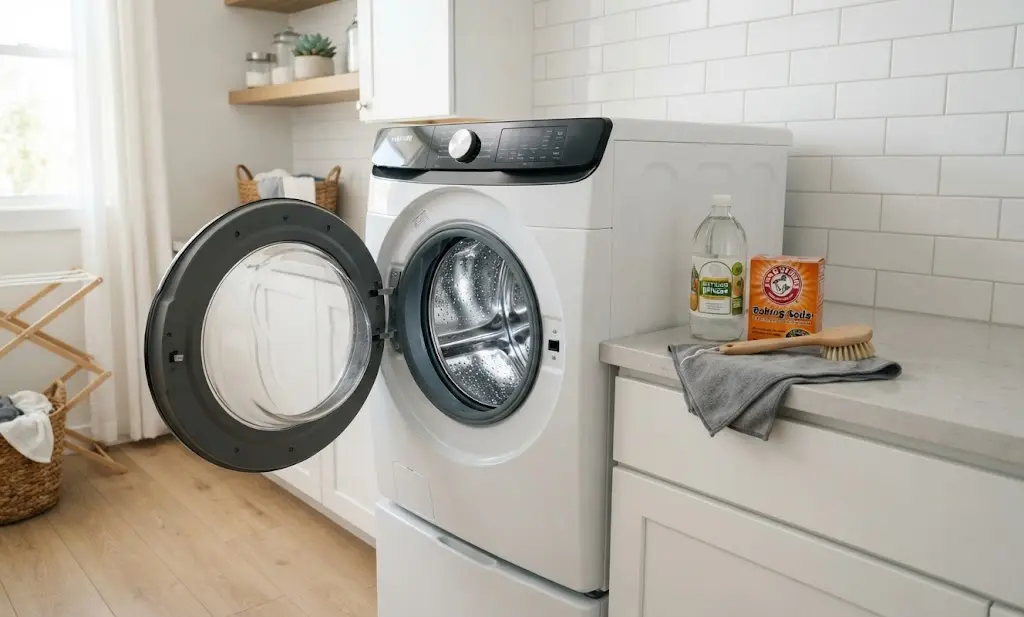
To clean a washing machine, run a hot cycle with vinegar or a washer cleaner tablet, wipe down the drum and door seal, clear out the detergent drawer, and rinse the filter. Do this once a month to stop mold, odors, and residue from building up.
Why Your Washing Machine Needs Regular Cleaning
Your washing machine cleans your clothes, but nobody cleans the washing machine itself. That’s a problem. Every load leaves behind a little bit of detergent, fabric softener, lint, and moisture. Over weeks and months, that mix turns into a sticky film inside the drum and around the seals.
This buildup does more than smell bad. It gives mold and mildew a place to grow, and it can leave your “clean” laundry smelling musty. A dirty washer also works harder than it needs to, which means higher energy use and more wear on the motor and pump over time.
The fix is simple. A regular cleaning routine keeps your machine running smoothly, keeps your clothes smelling the way they should, and helps your washer last longer. You don’t need special skills or expensive tools. You just need a plan and about thirty minutes a month.
How Often Should You Clean A Washing Machine
Most washers need a deep clean once a month. If you do laundry every day or wash a lot of gym clothes, towels, or cloth diapers, clean it every two to three weeks instead. Light users can often stretch to every six weeks.
Water quality matters too. If you live somewhere with hard water, mineral deposits build up faster inside the drum and pipes. In that case, lean toward the monthly side of things, or even more often if you start noticing a smell.
Between deep cleans, a few small habits go a long way. Leave the door or lid open after each load so moisture can dry out. Wipe down the rubber gasket on front-load machines with a dry cloth. These two habits alone prevent most of the mold problems people run into.
What You Need Before You Start
You don’t need anything fancy for this job. White vinegar and baking soda handle most of the work, and both are cheap and easy to find. If you’d rather skip the mixing, a store-bought washing machine cleaner tablet works just as well and is designed specifically for this task.
You’ll also want an old toothbrush or a small scrub brush for tight spots, a microfiber cloth or sponge for wiping surfaces, and a pair of rubber gloves if you’re not a fan of touching gunk. Keep these together in one spot so your monthly cleaning routine takes minutes to start, not an extra trip to the store.
How To Clean A Front-Load Washing Machine
Front-load washers trap more moisture than top-load models because of the rubber door seal, so they need a bit more attention.
Start with the drum. Pour two cups of white vinegar directly into the drum, or add a washing machine cleaner tablet if you have one. Run the hottest, longest cycle your machine offers with no clothes inside. The heat and vinegar break down soap scum and kill off mold spores clinging to the drum walls.
While that cycle runs, turn your attention to the door gasket. This rubber ring is where most front-load odor problems start, since water pools in its folds after every wash. Pull the gasket back gently and wipe inside the folds with a cloth dipped in a mix of vinegar and warm water. You’ll likely find black gunk in there, especially if it’s been a while. Keep wiping until the cloth comes away clean.
Once the vinegar cycle finishes, run a second cycle using half a cup of baking soda in the drum. This helps neutralize any leftover odor and gives the drum a final scrub. When it’s done, prop the door open and let everything air dry completely before you close it up.
How To Clean A Top-Load Washing Machine
Top-load washers are a little more forgiving, but they still need regular care, especially around the agitator and the underside of the lid.
Fill the drum with hot water on the largest load setting. Add four cups of white vinegar and let the machine agitate for a minute or two before pausing the cycle. Let the mixture sit for about an hour so it has time to loosen dried detergent and mineral buildup.
After the soak, let the cycle finish running all the way through. Then take a scrub brush or old toothbrush to the agitator, the fins, and the rim around the top of the tub, since this is where lint and soap scum tend to collect. Wipe down the lid too, paying attention to the underside where condensation gathers.
Finish with a rinse and spin cycle to clear out any leftover vinegar or loosened debris. Leave the lid open afterward so the drum can dry out fully before the next load goes in.
How To Clean The Detergent Drawer
The detergent drawer is one of the most overlooked parts of a washing machine, and it’s often the source of a musty smell that seems to come from nowhere.
Pull the drawer out. Most slide out easily once you press down on a small release lever inside. If yours resists, check your washer’s manual, since some models need a slight lift before they’ll release.
Once it’s out, rinse it under warm running water and scrub the compartments with an old toothbrush to break up dried detergent and fabric softener residue. Pay close attention to the corners, where buildup likes to hide. While the drawer soaks or dries, reach into the empty slot with your brush and clean the recess it sits in, since grime collects there too.
Let the drawer air dry fully before sliding it back into place. A dry drawer won’t grow mold, so this last step matters more than it seems.
How To Clean The Filter And Drain
Most washing machines have a filter that catches lint, coins, and small debris before it can clog the drain pump. Left alone, this filter fills up and can cause drainage problems or a burning smell during cycles.
Check your manual to find the filter, since its location varies by brand and model. On most machines, it sits behind a small panel near the bottom front. Place a shallow towel or tray underneath before you open it, since a bit of water usually drains out.
Turn the filter slowly to remove it, then rinse it under running water while picking out any trapped debris with your fingers or a small brush. Once it’s clear, screw the filter back in securely and run a short rinse cycle to check for leaks around the panel.
How To Clean The Outside Of Your Washing Machine
The outside of your washer collects dust, spills, and fingerprints just like any other appliance. Use a damp cloth with mild soap or an all-purpose cleaner to wipe down the control panel, lid, and sides. Avoid harsh abrasives, since they can scratch the finish or wear away printed labels and buttons.
Give the hoses a quick visual check while you’re at it. Look for cracks, bulges, or leaks around the connections. Catching a worn hose early can save you from a much bigger mess later.
Signs Your Washing Machine Needs Cleaning Now
A few warning signs mean you shouldn’t wait for your next scheduled clean. A musty smell coming from clothes right after a wash is the biggest one. Visible black or green spots around the door seal or drawer are another. If your washer takes longer than usual to drain, or if you notice a burning smell during cycles, stop and check the filter right away.
Catching these signs early keeps small problems from turning into repair bills.
Keep Your Washing Machine Fresh Long Term
Cleaning a washing machine isn’t a big job once it’s part of your routine. A monthly vinegar cycle, a wipe-down of the seal and drawer, and an open door between loads handle most of the work. Stick with it, and your washer will keep running efficiently, your clothes will come out smelling clean, and you’ll avoid the repair costs that come from years of neglect.


Comments are closed.