
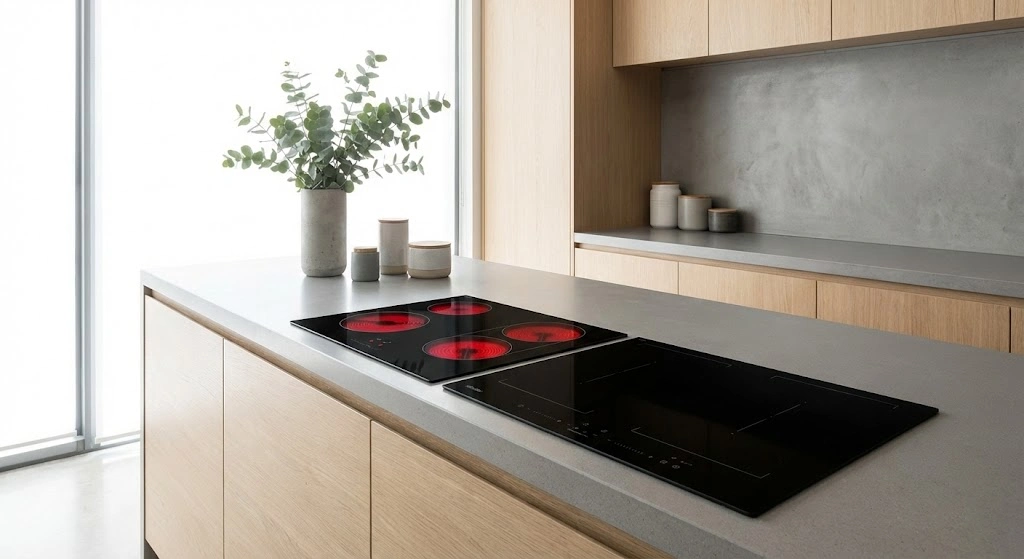
Ceramic vs Induction Hobs: Ceramic hobs heat food through electric elements under glass, while induction hobs use electromagnets to heat the pan directly. Induction is faster, safer, and more energy-efficient. Ceramic costs less upfront and works with any cookware. Your choice comes down to budget and cooking habits.
You’ve been standing in the appliance store — or scrolling online at midnight — staring at two hobs that look almost identical. Same flat glass surface. Same sleek finish. Similar price tags on some models. But here’s the thing: ceramic and induction hobs are completely different machines under that glass. Choosing the wrong one could cost you more money in the long run, or leave you frustrated in the kitchen every single day.
This guide breaks down exactly how each one works, what it costs to run, how safe it is, and which type of cook is best suited to each. By the end, you’ll know which one belongs in your kitchen.
How a Ceramic Hob Actually Works

A ceramic hob is, at its core, a modern electric hob dressed up in nice glass. Beneath that smooth ceramic surface sit coiled metal heating elements — very similar to the ones in old-school electric cookers from the 1950s. When you switch on a zone, electricity passes through that element, it heats up, and the heat transfers through the glass and into your pan.
The process is straightforward, but it has a big drawback. The entire cooking zone gets hot — not just the area under your pan. That means energy escapes around the sides, and the surface stays hot long after you’ve turned it off. If you’ve ever accidentally touched a ceramic hob ten minutes after cooking, you’ll know exactly what that means.
On the plus side, ceramic hobs work with every type of cookware. Copper pans, aluminium, glass, cast iron — it doesn’t matter. You won’t need to replace a single pot or pan when you switch to ceramic.
How an Induction Hob Works
Induction hobs look nearly identical to ceramic ones from the outside, but the technology inside is completely different. Instead of heating elements, induction hobs have copper coils beneath the glass. These coils generate a high-frequency electromagnetic field when switched on.
Here’s where it gets interesting. That magnetic field doesn’t heat the glass or the air. It creates an electrical current directly inside your pan — but only if the pan is made from a magnetic material like cast iron or magnetic stainless steel. The pan itself becomes the heat source. The hob surface only gets warm from the residual heat of the cookware, not from the hob itself.
An induction hob remains cold until you place a pan on it, which means it uses less energy than other types of electric hobs. This one feature changes everything — from safety to speed to your electricity bill.
Speed and Temperature Control
If you cook a lot, this section matters most. Induction hobs are extremely responsive to temperature changes, and they are extremely fast at heating ingredients — they will boil water quicker than a kettle. That’s not marketing talk. It’s physics. Because the pan heats directly, there’s almost no lag between turning up the dial and feeling the result.
Ceramic hobs are quicker to warm up than old solid plate electric hobs, but they still can’t compete with induction on speed. The heat has to travel through the glass surface and then into the pan, which adds time. When you reduce the temperature on a ceramic hob, you’re waiting for the element to cool down first — which can take a while.
For everyday cooking — boiling pasta, frying eggs, making sauces — induction gives you a level of control that feels much closer to cooking on gas. Ceramic gets the job done, but you’ll find yourself adjusting and waiting more often.
Energy Efficiency and Running Costs
This is where the numbers get important. Induction hobs use up to 90% of the available energy to cook your food, compared to around 70% for ceramic hobs. In simple terms, ceramic hobs use around 50% more energy than induction hobs to get the same cooking results.
Think about what that means over a year of cooking. If you use your hob once a day, that gap in efficiency adds up to a real difference on your electricity bill. While induction hobs are the most expensive type of hob to buy, they are generally considered the cheapest to run in the long term.
Ceramic hobs lose more heat because the whole zone gets hot, including the area around your pan. Induction doesn’t heat anything it doesn’t need to. Over months and years, that precision pays for itself.
Safety in the Kitchen
Both types have safety features built in — residual heat indicators, child locks, and automatic cut-offs. But induction holds a clear advantage here for one key reason: the surface doesn’t get hot on its own.
Induction hobs cool down much faster, they have a much smaller area for heating up, and they have a heat indicator light — all of which help prevent mishaps or accidents, especially if there are young children involved. If a child touches an induction hob surface while a pan is cooking, the glass will feel warm at most — not dangerously hot.
Ceramic hobs, on the other hand, keep the surface hot for a while after use. The residual heat indicator light tells you the zone is still warm, but you need to actively remember to check it. For households with young kids or forgetful adults, that’s a genuine safety consideration.
One thing worth knowing about induction: because they produce a magnetic field, they can interfere with medical equipment such as pacemakers. If anyone in your household wears a pacemaker or other implanted medical device, check with their doctor before choosing induction.
Cookware Compatibility
This is probably the biggest practical consideration for most people switching from gas or ceramic to induction. Induction hobs only work with magnetic cookware. A quick test is to see if a magnet sticks to the bottom of the pan. If it does, your pans should be suitable with an induction hob.
Many modern pans — stainless steel sets, cast iron skillets, most oven-to-hob pans — are already induction-compatible. But if you have copper pans, glass pots, or aluminium cookware, those won’t work on induction at all. You’d need to replace them.
Ceramic hobs accept every type of pan without exception. That flexibility is a real advantage if you’ve already invested in a cookware set or if you regularly use a wide variety of pots. You plug it in and everything you already own works on day one.
Purchase Price and Long-Term Value
There’s no getting around it — induction hobs cost more upfront. Small two-zone domino induction hobs can start from around £200–£300, with prices rising to £800–£1,000 for a large, quality, zoneless induction hob. Ceramic hobs tend to sit at a lower price point for equivalent sizes and build quality.
But the upfront price tells only part of the story. If you factor in lower energy bills, faster cooking times, and the reduced need for pan replacement (assuming your pans already work), the cost gap narrows over time. Many households find that an induction hob pays back the price difference within a few years of regular use.
Ceramic hobs make sense if you’re working with a tight budget right now, if you plan to move and don’t want to invest heavily in a rental property, or if you already have non-magnetic cookware you love.
Cleaning and Maintenance
Both types share that flat, smooth glass surface — which is one of the main reasons people choose either over gas. There are no grates to scrub, no burner rings to remove, and spills sit on top rather than dripping inside the appliance.
Induction has a slight edge here too, because the surface around the pan stays cooler. Spills are less likely to burn onto the glass, which makes wiping them up much easier. On a ceramic hob, food can bake onto the hot zones if you’re not careful, and baked-on residue takes more effort to remove.
Both surfaces scratch if you drag heavy pans across them carelessly. Use a proper ceramic glass cleaner and avoid abrasive scrubbers on either type.
Which One Should You Choose?
Here’s the honest answer: if budget is your main concern right now, a ceramic hob is a perfectly solid choice. It cooks reliably, works with any cookware, and costs less to buy. You won’t be stuck with a bad hob — just a less efficient one.
But if you cook regularly, care about your electricity bills, have young children, or want the kind of precise heat control that makes cooking genuinely enjoyable, induction is worth the extra investment. While induction hobs are generally more expensive than their ceramic equivalents, you can often make this back in the energy and time saved over their lifetime.
The two hobs look almost the same sitting in a showroom. But the cooking experience — and the long-term cost — are very different. If you can stretch the budget, induction wins.


Comments are closed.