
Why This Matters Right Now
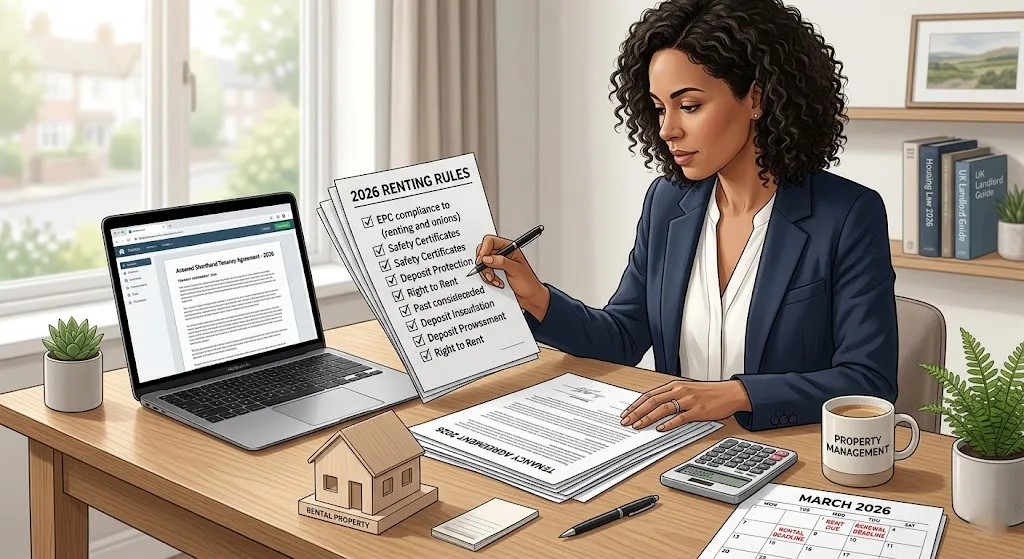
The rules for renting homes in England have changed in 2026. These new laws affect every private landlord, no matter how big or small their property portfolio is.
If landlords do not follow these new rules, they may face fines, legal problems, or delays in renting out their homes.
These changes are part of new government reforms to make renting fairer, clearer, and more organized for tenants and landlords.
In this guide, you will learn the 7 most important things every landlord must do right now. Everything is explained in very simple English, so it is easy to understand and follow.
Quick Summary (Key Takeaways)
| What You Need to Do | Deadline | Why It Matters |
|---|---|---|
| Give tenants Information Sheet | 31 May 2026 | Legal requirement |
| Convert verbal agreements to written record | 31 May 2026 | Avoid disputes |
| Provide written tenancy info for new tenants | From 1 May 2026 | Required by law |
| Include rent in all ads | Immediate | Transparency rule |
| Use new government forms | Ongoing | Legal compliance |
| Student eviction rules (Ground 4A) | Temporary (2026) | Special rule for students |
| Keep proper records | Ongoing | Avoid penalties |
What Changed in 2026?
From 1 May 2026, new renting laws started in England. These laws mainly focus on:
- Clear written tenancy agreements
- Better protection for tenants
- More transparency in rent prices
- Stronger rules for landlords
- New eviction processes
If you are a landlord, you must follow these rules carefully.
1. Give Information to Existing Tenants
If you already have tenants living in your property, you must send them important information.
What you must do
| Situation | What You Must Do |
|---|---|
| Written tenancy already exists | Send government Information Sheet |
| Verbal agreement only | Create written record of agreement |
Important deadline
You must do this before 31 May 2026.
What must be included in written record?
- Landlord name
- Address for service
- Rent details
- Repair responsibilities
Warning
If you do not follow this rule, you may get a fine up to £7,000.
2. Prepare New Tenancy Agreements
All new tenants who move in after 1 May 2026 must get written tenancy details.
This rule is very important because verbal agreements are no longer enough.
What must be included
- Landlord name and contact details
- Rent amount and payment method
- Repair responsibilities
- Property rules
- Other legal information from government
Simple rule
👉 If a tenant moves in, everything must be in writing.
Table: Old Rules vs New Rules
| Topic | Old Rule | New Rule (2026) |
|---|---|---|
| Agreement type | Written or verbal allowed | Written required |
| Rent ads | No fixed format | Must show asking rent |
| Evictions | Standard notice | New grounds introduced |
| Forms | Older forms allowed | New government forms required |
3. Always Show Asking Rent in Ads
Landlords must now show the exact rent price in advertisements.
You cannot:
- Ask tenants to bid higher than listed rent
- Accept offers above asking rent
- Demand large advance payments beyond rules
Why this rule exists
It helps stop unfair bidding wars and keeps renting fair for everyone.
Example Table: Correct vs Incorrect Ad
| Property Ad Type | Allowed? | Reason |
|---|---|---|
| £800 per month fixed rent | ✅ Yes | Clear price |
| “Offers above £800” | ❌ No | Not allowed |
| Bidding system | ❌ No | Banned practice |
4. Learn and Use New Government Forms
The government has introduced new official forms for landlords.
These are used for:
- Ending a tenancy
- Increasing rent
- Legal notices
- Possession requests
Why this matters
Old forms may no longer be valid, which can cause legal problems.
Simple advice
👉 Always check GOV.UK before using any form.
5. Special Rule for Student Landlords (Ground 4A)
If you rent to students, there is a special temporary rule called Ground 4A.
What you must do
- Inform tenants before 31 May 2026
- You can use shorter notice period (2 months) during a short time window
- After 30 July 2026, normal rules return
Table: Student Eviction Timeline
| Date | Rule |
|---|---|
| Before 31 May 2026 | Inform tenants |
| 1 May – 30 July 2026 | 2 months notice allowed |
| After 30 July 2026 | 4 months notice required |
6. Talk to Your Letting Agent
If you use a letting agent, you should speak with them immediately.
Why this is important
Letting agents handle:
- Contracts
- Rent collection
- Legal notices
- Tenant communication
If they are not updated about new rules, mistakes can happen.
Simple advice
👉 Ask your agent: “Are all my properties compliant with 2026 laws?”
7. Keep Strong Records (Very Important)
Good record keeping can save landlords from fines and legal issues.
Here is a simple checklist:
Landlord Record Checklist
| Task | Status |
|---|---|
| Check all tenancy agreements | ⬜ |
| Update missing documents | ⬜ |
| Save rent receipts | ⬜ |
| Store tenant contact info safely | ⬜ |
| Check legal notices | ⬜ |
Best Practices for Record Keeping
1. Audit your properties
Check every property and make sure documents are complete.
2. Track deadlines
Set reminders before:
- Renewal dates
- Notice deadlines
- Certificate expiry
3. Remove illegal clauses
Some rules like discrimination clauses are no longer allowed.
4. Follow data protection rules
Keep tenant data safe and secure.
5. Go digital
Use apps or cloud storage instead of paper files.
Table: Good vs Bad Record Keeping
| Good Practice | Bad Practice |
|---|---|
| Digital storage | Paper files only |
| Regular updates | No updates |
| Clear documents | Missing contracts |
| Deadline tracking | No reminders |
Extra Tips for Landlords
Here are some extra simple tips:
- Always read GOV.UK updates
- Keep a folder for each property
- Do not ignore small legal notices
- Stay updated every month
- Talk to professionals if unsure
Frequently Asked Questions (FAQ)
1. What happens if I don’t follow the new rules?
You may face fines, legal issues, or delays in renting your property.
2. Can I still use old tenancy agreements?
No, new written agreements are required for new tenants from May 2026.
3. Do I need to update all tenants?
Yes, existing tenants must also receive updated information.
4. Is verbal renting still allowed?
No, written agreements are now required.
Conclusion
The 2026 renting rule changes are very important for all landlords in England.
Even though the rules may seem long and complex, they can be followed easily if you take one step at a time.
If you remember the 7 key actions in this article, you will stay safe, avoid fines, and manage your properties properly.


Comments are closed.