
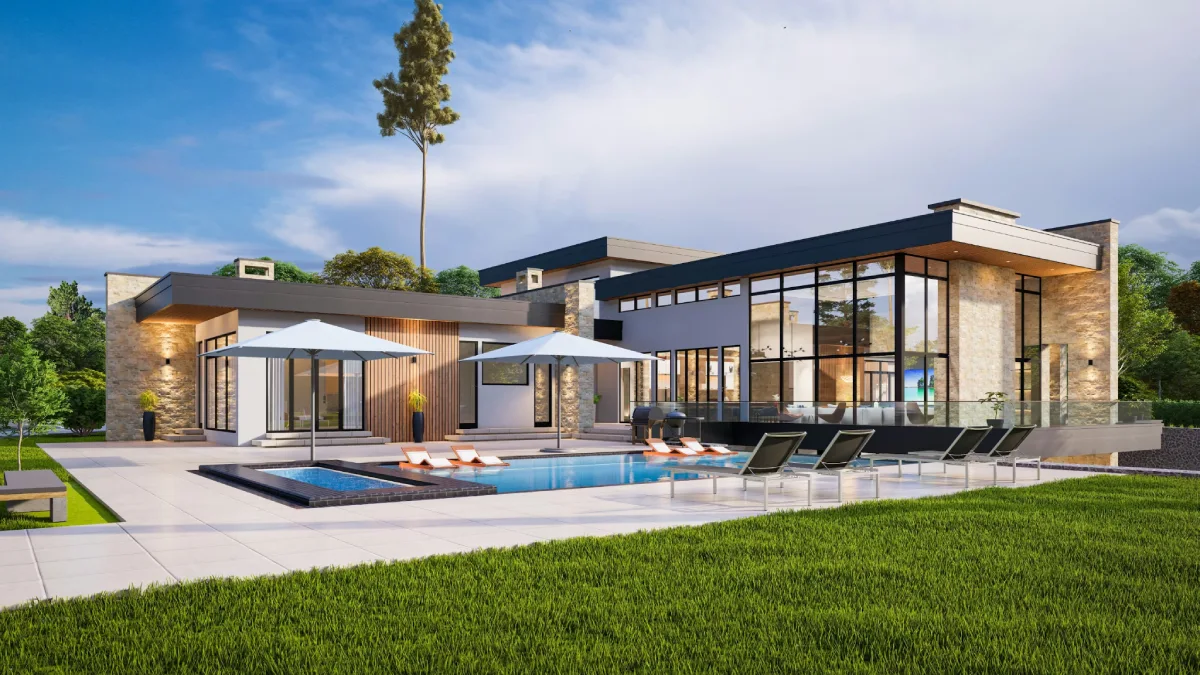
Most people who hear “Las Vegas” picture the Strip. Hotels, neon, tourists. That version of Vegas is real, but it is also a tiny slice of what the metro area actually looks like. Drive 20 minutes west of the Strip and you end up somewhere that feels almost nothing like it. The buildings get lower. The streets get wider. The desert opens up against a wall of red and orange cliffs. That is Summerlin, and it has quietly become one of the most talked about relocation destinations in the country.
If you have not heard of it before, you are not alone. Summerlin does not advertise itself the way the Strip does. It shows up on best places to live lists, in real estate reports, and in conversations between people comparing notes on where to move next. The interest has been building for years, and the reasons behind it are worth understanding even if a move is not on your radar yet.
What Summerlin Actually Is
Summerlin is a master-planned community on the western edge of the Las Vegas Valley with a variety of gated communities and luxury homes for sale. It was started in the early 1990s by the Howard Hughes Corporation on land the late billionaire had purchased decades earlier. The development covers about 22,500 acres, which is enormous, and it has been built out in phases over more than 30 years. Today it is home to roughly 100,000 residents across more than two dozen distinct villages.
The community sits right up against Red Rock Canyon, a federally protected conservation area with sandstone cliffs, hiking trails, and one of the most striking landscapes in the Southwest. On the eastern side, Summerlin connects to the broader Las Vegas metro through a network of well-planned roads. You get the natural setting on one side and full city access on the other.
What makes the place feel different from a typical American suburb is the level of intention behind it. The villages were designed before the homes were built. Schools, parks, shopping centers, and trails were mapped out in advance. The result is a community that feels coherent rather than thrown together, which is rarer than it should be.
The Tax Picture Gets People in the Door
The single most common reason Summerlin shows up in relocation conversations is taxes. Nevada has no state income tax. None on wages, none on retirement income, none on capital gains. For anyone moving from California, Oregon, New York, Minnesota, or any other high-tax state, the difference is significant and immediate.
Some quick numbers to put it in perspective:
- California’s top marginal income tax rate is over 13 percent
- Oregon and Minnesota both sit close to 10 percent at the top
- New York City residents face combined state and city rates above 14 percent
- Nevada’s rate is zero
For a household earning 300,000 a year, the annual savings can run between 20,000 and 40,000, depending on the state they are leaving. Over a decade, that is real money. Property taxes in Clark County are also lower than in most comparable metros, and Nevada has no estate tax. None of this is the only reason people move, but it is almost always the reason they start looking.
The Housing Math Still Works
The other early hook is housing. Compared to coastal California, the Pacific Northwest, or the Northeast, Summerlin homes still feel reasonable for what you get. The community has a wide price range, which is part of why it attracts such a broad mix of buyers.
A general sense of the market:
- Entry level townhomes and condos start in the mid 400s
- Single family homes in established neighborhoods generally run 700K to 1.2 million
- Larger homes with pools, three car garages, and modern finishes sit in the 1.2 to 2.5 million range
- Custom estates in the most exclusive villages start near 3 million and climb past 10
For buyers coming from a market where a starter home costs 1.5 million, those numbers reshape what is possible. Families upgrade square footage. Retirees consolidate without downsizing their lifestyle. Younger professionals buy years earlier than they could have where they came from.
The Outdoor Access Is the Surprise
People expect Las Vegas to be the Strip and the desert. They do not always expect the outdoor lifestyle that comes with living next to Red Rock Canyon. The conservation area covers nearly 200,000 acres and sits less than 15 minutes from most parts of Summerlin. You can be on a real hiking trail, surrounded by sandstone walls and complete quiet, before most commutes would have started.
Inside Summerlin itself there are more than 150 miles of interconnected trails. They run through the villages, parks, and open desert. Residents use them for walking dogs, running, biking, and even getting to schools and shopping. Beyond that, the region offers:
- Mount Charleston for snow in winter and cooler hikes in summer, about 45 minutes north
- Lake Mead for boating and swimming, about 45 minutes east
- Valley of Fire State Park, about an hour northeast
- World class golf at TPC Summerlin and other regional courses
- Multiple climbing, mountain biking, and trail running communities
For people who plan their weekends around being outside, the access here rivals what you get in much smaller mountain towns, without giving up the conveniences of a real city.
Daily Life Is Easier Than People Expect
This is the part that surprises new arrivals most. The pace of life in Summerlin is gentler than almost any major coastal city. Errands take 15 minutes instead of an hour. Parking is plentiful. Traffic exists during rush hour but is mild compared to Los Angeles, the Bay Area, or Seattle. Most of what you need on a daily basis is within a short drive.
Downtown Summerlin functions as the social center of the community. It is an open air district with national retailers, local boutiques, sit down restaurants, a movie theater, parks, and a steady calendar of seasonal events. The Las Vegas Ballpark, home of the Triple A Aviators, sits at the edge of it. So does City National Arena, where the Vegas Golden Knights practice. Both are five minutes from many Summerlin homes.
Healthcare access is another quiet strength. Summerlin Hospital sits inside the community, and the broader valley has been adding medical infrastructure for years. Schools rank among the strongest in Nevada, with multiple highly rated public options, magnet programs, and well known private schools including The Meadows School and Faith Lutheran.
Who Tends to Move Here
Summerlin pulls from a wider range of people than most relocation destinations. The most common groups:
- Families leaving California for more space, better schools, and lower taxes
- Remote workers keeping coastal salaries while reducing their cost of living
- Retirees, many of them in Sun City Summerlin, looking for an active, low tax retirement
- Business owners moving headquarters to Nevada for tax and regulatory reasons
- Empty nesters trading in oversized homes in cold weather states for something easier
- Younger professionals priced out of their home markets
What ties these groups together is not income or age. It is the sense that the daily friction of their current lives has gotten too high, and they are looking for a place where the math, the climate, and the lifestyle all line up at the same time.
Finding a Summerlin Realtor
If you find yourself wanting to learn more about Summerlin, why not start with a discovery tour of the area? Summerlin Realtor Michael Bondi can take you on a tour of Summerlin (along with other areas of Las Vegas) to help you find the area that you will like best. And best of all, Michael Bondi is a transplant himself having relocated to Summerlin from Los Angeles several years ago. Get started by visiting michaelbondi.realtor.


Comments are closed.