
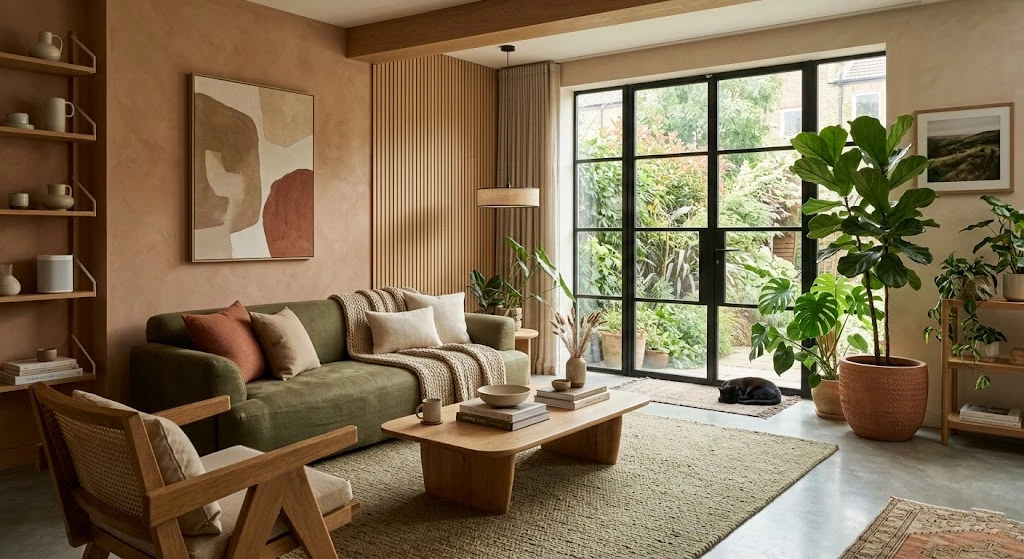
From earthy palettes to Japandi 2.0 and biophilic living, these are the home interior design trends reshaping how UK homeowners decorate, invest, and live in 2026.
Home interior design trends in 2026 are defined by warmth, intention, and a deep desire for spaces that actually feel good to live in. UK homeowners are moving away from cold minimalism and towards interiors that offer comfort, personality, and sustainability. Whether you are refreshing a single room or planning a full renovation, understanding what is trending helps you make smarter decisions for your home and its long-term value.
Why UK Homeowners Are Rethinking Their Interiors
The way British people use their homes has changed significantly over the past few years. Remote working, rising energy costs, and a stronger focus on wellbeing have all pushed interior design into new territory. Homeowners no longer want spaces that simply look good in photographs. They want rooms that support everyday life, reduce stress, and reflect genuine personality.
According to data from Rightmove and Zoopla, properties with well-considered interiors and defined functional spaces attract stronger buyer interest and tend to sell faster. Interior investment is no longer just about aesthetics. It has become a practical contributor to property value.
The Reign of Earthy Tones and Warm Neutrals
Cool greys and brilliant whites are retreating. In their place, burnt sienna, terracotta, olive green, warm taupe, and muted clay are becoming the dominant colours in UK homes. These shades bring a grounded, calming quality to any room without requiring expensive furniture replacements.
Graham and Brown, one of Britain’s longest-standing wallpaper and paint specialists, named a warm, earthy brown called Elderton as its key shade for recent seasons. Dulux has similarly shifted its colour forecasts towards warmer, nature-inspired tones that support a sense of sanctuary at home.
Key ways to bring earthy tones into your home:
- Paint a feature wall in terracotta or rust to anchor a living room
- Introduce olive green through curtains, cushions, or a statement sofa
- Layer woven storage baskets and dried botanicals for texture
- Choose linen or bouclé upholstery in muted sand or brown tones
- Use warm-toned timber flooring such as walnut or dark oak to ground the space
- Add clay-finish ceramics as decorative accents on shelving and mantels
Biophilic Design: Bringing Nature Into Every Room

Biophilic design has moved well beyond placing a few houseplants on a windowsill. In 2026, it is about integrating nature as a structural and sensory experience throughout the home. UK designers are incorporating organic shapes, natural stone textures, limewash wall finishes, and honed timber surfaces to create spaces that feel genuinely connected to the natural world.
The idea draws on the principle that humans feel healthier and calmer when they maintain a relationship with natural environments. Installing large-format stone tiles, opting for clay render on internal walls, and framing garden views as deliberate focal points are all expressions of this philosophy.
Biophilic design also has a practical energy dimension. Maximising natural daylight through thoughtful window placement and choosing recessed roller blinds instead of heavy drapes reduces reliance on artificial lighting and supports lower energy bills.
Japandi 2.0: A Soulful Evolution of a Classic Style
Japandi, the blend of Japanese minimalism and Scandinavian functionality, has evolved into something richer and more textured. Interior experts now refer to this evolution as Japandi 2.0, a version of the style that prioritises feeling over appearance.
Where early Japandi leaned on pale woods and stark white walls, 2026 brings in charcoal tones, deep rust accents, raw linen, and handcrafted ceramics. Johanna Constantinou, interior trends expert at Tapi Carpets and Floors, has noted that the style is shifting from purely functional to genuinely soulful.
Core elements of Japandi 2.0 for UK homes include:
- Low-profile furniture with clean, organic lines
- Walnut or espresso timber in preference to light oak
- Limewash, clay plaster, or raw stone wall finishes
- Tactile fabrics such as bouclé, raw linen, and ribbed cotton
- Handcrafted pottery and imperfect decorative objects that celebrate craft
- Recessed or hidden lighting that creates atmosphere without clutter
Colour Drenching: One Shade, Maximum Impact
Colour drenching is one of the boldest home interior design trends gaining ground in UK homes right now. The technique involves coating walls, ceilings, and skirting boards in the same shade to create a fully immersive room. Rather than looking overwhelming, a well-chosen single colour used throughout a space delivers extraordinary depth and cohesion.
A sage green study creates focus and calm. A terracotta dining room encourages warmth and sociability. A lavender bedroom reduces visual noise and promotes better rest. The approach works at all budgets because it requires only paint rather than new furniture or fittings.
Recommended drenching shades for UK homes in 2026 include misty sage, toffee brown, dusty mauve, and warm cream. Each aligns with the broader movement towards wellness-focused interior spaces.
Multifunctional Spaces and Flexible Furniture
With UK property prices remaining high and average home sizes staying relatively modest, maximising every square metre has never been more important. Homeowners and renters alike are prioritising multifunctional furniture and adaptable room layouts.
Sofa beds with clean lines, fold-out desks built into alcoves, modular shelving systems, and extendable dining tables are among the most sought-after pieces in the current market. Knight Frank Interiors, which operates as part of the B Corp-accredited Accouter Group, has highlighted this shift as one of the most consistent requests from clients undertaking residential renovations.
The move away from fully open-plan living is also notable. UK homeowners are beginning to reintroduce defined zones within open spaces, using bookshelves, half-height partitions, and curtain dividers to create rooms that serve specific purposes rather than attempting to serve all purposes at once.
Sustainable Materials and Conscious Decorating
Sustainability has moved from a niche preference to a mainstream design standard. UK homeowners are increasingly choosing reclaimed timber, recycled metal fittings, eco-certified paints, and upcycled furniture as primary decorating tools rather than afterthoughts.
The financial case is strengthening too. Buying pre-loved statement pieces and refinishing them costs a fraction of new equivalents while delivering a more individual aesthetic. Reupholstering a quality vintage armchair rather than purchasing a new one also typically produces a far more durable and characterful result.
Sustainable choices that are growing in popularity:
- Reclaimed wood shelving sourced from architectural salvage yards
- Low-VOC and natural clay paints from brands such as Earthborn and Little Greene
- Second-hand furniture refinished with chalk paint or natural oils
- Organic cotton and undyed linen for soft furnishings and bedding
- Locally made ceramic tiles as kitchen or bathroom splashbacks
- Beeswax wood treatments instead of synthetic varnishes
Statement Ceilings and the Fifth Wall Trend
Ceilings have historically been ignored in British interior design. That is changing rapidly. The fifth wall concept encourages homeowners to treat the ceiling as a primary decorating canvas, applying bold paint colours, ornamental cornicing, exposed timber beams, and dramatic pendant lighting to transform the overall feel of a room.
A deep navy ceiling in a living room adds unexpected drama. Limewash applied overhead in a bedroom brings a softness that painted walls alone cannot achieve. This trend is particularly well suited to period properties across the UK, where original ceiling roses, coving, and plasterwork details can be emphasised rather than painted over with white emulsion.
Smart Technology That Disappears Into the Design
Technology is essential in modern homes but it need not be visible. The strongest interior design trend within the smart home category is discreet integration. Homeowners are choosing wall-mounted televisions in custom-built recesses, wireless charging surfaces built into side tables, invisible speakers embedded into walls or ceilings, and voice-controlled lighting systems that require no visible hardware.
Smart thermostats such as those offered by Nest and Hive are increasingly specified at the point of renovation rather than being installed as retrofits, allowing them to be integrated neatly into the overall design rather than standing out as obvious additions. The goal is a home that functions intelligently without looking like a showroom.
FAQs About Home Interior Design Trends
What are the most popular home interior design trends in the UK right now?
Biophilic design, Japandi 2.0, earthy colour palettes, and colour drenching are among the most prominent trends. Sustainable materials and multifunctional furniture are also shaping how UK homeowners are updating their spaces.
How much does it cost to redecorate a living room in the UK following current trends?
A budget refresh using paint, new soft furnishings, and upcycled pieces can cost as little as £300 to £600. A mid-range update with new furniture and lighting typically ranges from £2,000 to £5,000.
What colours are trending for UK home interiors in 2026?
Warm, earthy tones are dominant. Key shades include terracotta, burnt sienna, olive green, warm taupe, and dusty mauve. Cool greys and bright whites are fading in favour of these more grounded palettes.
Does following interior design trends add value to a UK property?
Thoughtful updates aligned with current tastes can improve buyer appeal and support asking price, particularly in competitive markets. Neutral yet characterful schemes tend to have the broadest appeal when selling.
What is Japandi design and why is it popular in the UK?
Japandi blends Japanese minimalism with Scandinavian functionality. It is popular because it creates calm, ordered spaces using natural materials without appearing cold or austere. Key features include:
- Clean-lined, low-profile furniture
- Natural timber, linen, and clay finishes
- Muted, warm neutral colour palettes
- Handcrafted decorative objects
- Minimal clutter with purposeful storage
What is biophilic design in interior decorating?
Biophilic design brings natural elements into the home through organic materials, nature-inspired colours, plants, natural light, and textures such as stone and raw timber. It is linked to improved wellbeing and reduced stress.
Is colour drenching suitable for small UK homes and flats?
Yes. Used carefully, colour drenching in softer shades such as sage green or warm cream can make smaller rooms feel more considered and intentional rather than smaller. Lighter drenching shades work particularly well in compact spaces.
Is Investing in Interior Design Worth It in 2026?
Updating your home with current interior design thinking is one of the most cost-effective ways to improve both your quality of life and your property’s appeal. The trends leading right now, from biophilic living to Japandi 2.0 and earthy colour drenching, are not fleeting fads. They reflect a genuine shift in how UK homeowners want to feel in their own spaces.
You do not need a large budget to engage with these ideas. A tin of terracotta paint, a bouclé cushion, and a piece of reclaimed shelving can meaningfully shift the atmosphere of a room. Start with one space, let the changes settle, and build from there.
For more property news, housing market updates, home improvement guides, and daily interior inspiration, visit and subscribe to housingmarketnews.co.uk. The team publishes fresh content every day, covering everything from UK house prices and renovation advice to the latest design ideas for every type of home and budget. You can find the latest articles and features at housingmarketnews.co.uk.

Comments are closed.