
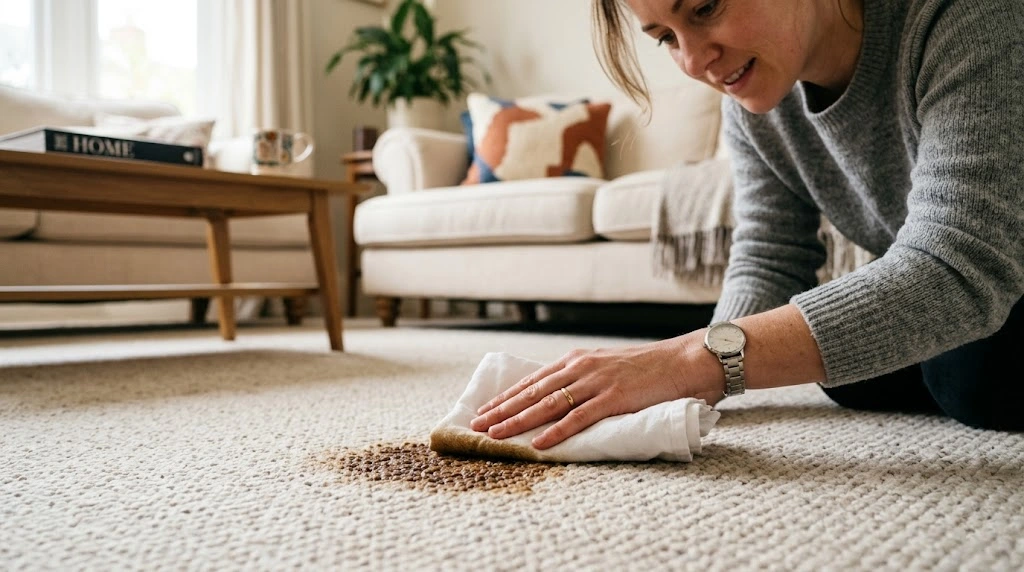
To remove a coffee stain from carpet, blot up the liquid immediately with a clean cloth. Mix one tablespoon of white vinegar, half a teaspoon of dish soap, and two cups of cool water. Apply to the stain, let it sit for five minutes, blot dry, and rinse with cold water.
You’re enjoying your morning coffee, and then — splash. It happens to everyone. One wrong move and your carpet is wearing your drink. The good news? A coffee stain doesn’t have to be permanent. With the right steps and a little patience, you can get your carpet looking clean again, even if the stain has been sitting there for a while.
This guide walks you through everything — from fresh spills to dried, set-in stains. You’ll learn what works, what to avoid, and when it’s time to call in extra help.
Why Coffee Stains Are So Stubborn
Coffee isn’t just a dark liquid. It’s full of natural compounds called tannins — the same things that make tea and red wine stain so easily. These tannins bind to carpet fibers quickly, especially once they dry. The longer you wait, the deeper the coffee settles into the carpet.
If your coffee had cream, milk, or sugar in it, the stain becomes even trickier. Those added ingredients leave behind proteins and fats that can cause odor and discoloration if you don’t treat them properly. This is why a basic water rinse alone often isn’t enough to get the job done.
Act Fast — The First 60 Seconds Matter
The moment coffee hits your carpet, your timer starts. The faster you move, the better your chances of a full removal. Grab a clean cloth, a paper towel, or even a stack of napkins — whatever is closest to you.
Press the cloth firmly down onto the stain and hold it there for a few seconds. Don’t rub back and forth. Rubbing spreads the stain outward and pushes the liquid deeper into the fibers. Just press down, lift, and repeat. Work from the outer edge of the stain toward the center so you don’t spread it further. Keep blotting until you’ve pulled up as much liquid as possible.
Once you’ve blotted out most of the liquid, pour a small amount of cold water directly onto the stain. This dilutes what’s left. Blot again with a dry cloth. Don’t soak the carpet — too much water can damage the backing underneath. A small splash is all you need.
The Dish Soap and Vinegar Method
This is one of the most common home remedies for coffee stains, and it works well for fresh spills. Mix half a teaspoon of dish soap, one tablespoon of white vinegar, and two cups of cool water. Stir it gently and pour it into a spray bottle for easy use.
Spray the solution onto the stained area, or apply it with a clean white cloth. Let it sit on the stain for about five minutes. Then blot with a dry cloth, working from the edges inward. You should start to see the stain lifting with each pass.
One thing to keep in mind — dish soap can leave a sticky residue on carpet if you use too much. That residue attracts dirt over time, which is the last thing you want. Use a light hand with the soap, and always rinse the area with cold water after cleaning. Blot up the rinse water before you walk away.
Baking Soda for Coffee Stains
Baking soda is a great option if you want something gentle that still gets results. It works especially well on stains that have had a chance to soak in. After you’ve blotted up as much liquid as possible, sprinkle a generous layer of baking soda over the wet stain.
Let it sit for a few hours, or even overnight if you can. The baking soda will absorb the moisture and pull the coffee up with it. Once it’s completely dry, vacuum up the powder. You’ll likely see a big difference right away.
If there’s still a faint mark after vacuuming, follow up with the vinegar and dish soap method. The two approaches work well together — baking soda handles the absorption, and the cleaning solution lifts what’s left behind.
How to Use Hydrogen Peroxide on Coffee Stains
Hydrogen peroxide is a stronger option, and it can work really well on light-colored or white carpets. Mix one cup of hydrogen peroxide with half a teaspoon of dish soap. Before you put it on the stain, test it on a hidden spot of your carpet — a corner or under a piece of furniture. Hydrogen peroxide has a mild bleaching effect, so it can lighten darker carpets if you’re not careful.
If the test spot looks fine after a few minutes, apply the solution to the coffee stain with a clean cloth. Let it sit for about ten minutes, then blot it dry. Rinse with cold water and blot again until the carpet is just slightly damp. This method is particularly good for stubborn stains that haven’t responded to other treatments.
Dealing with Old, Dried Coffee Stains
Dried coffee stains need a little extra work before you can treat them. Start by dampening the stain with warm water. This softens the dried coffee and gives your cleaning solution something to work with. Don’t soak it — just get it slightly wet.
Once the stain has rehydrated, blot it with a dry cloth to pull up any loose residue. Then apply your cleaning solution of choice — vinegar and dish soap, baking soda paste, or hydrogen peroxide. You may need to repeat the process two or three times to fully lift a set-in stain. Old stains are stubborn, but most of them do come out with repeated treatments.
If the coffee contained cream or sugar, add one capful of enzyme laundry detergent to one cup of warm water and use that as a second cleaning step. Enzyme cleaners break down the proteins and sugars that basic soap can’t always reach. Apply it after your first cleaning pass, blot it in, and then rinse with cold water.
What NOT to Do When Removing Coffee Stains
There are a few mistakes that make coffee stains worse, and it’s worth knowing them before you start. First, never scrub the carpet. It feels like the right move, but scrubbing breaks apart carpet fibers and spreads the stain outward. Always blot.
Don’t use hot water on a fresh stain. Hot water can set the stain into the fibers, the same way it sets protein stains in fabric. Stick to cold or lukewarm water throughout the cleaning process.
Also, avoid using bleach unless your carpet is white and you’re prepared for the risk. Bleach can strip the color from carpet fibers permanently. Even on white carpets, use it in a heavily diluted form and test it first.
When to Use a Portable Carpet Cleaner
If you’re dealing with a large coffee spill or a stain that just won’t budge, a portable carpet cleaner is worth the investment. These machines spray a cleaning solution into the carpet, agitate the fibers, and then suction out both the solution and the stain together.
They’re especially helpful for deep stains — ones that have made it all the way through the carpet and into the backing. You can rent one from a hardware store, or buy a compact model that’s easy to store at home. If coffee spills happen often in your house, having one on hand saves you a lot of stress.
How to Prevent Coffee Stains on Carpet
The easiest coffee stain to remove is the one that never happens. Use travel mugs with secure lids when you’re walking around the house. Keep coffee in designated areas — the kitchen table, the desk — and away from carpeted rooms when possible.
Place area rugs or mats in spots where spills are most likely. They’re much easier to wash than wall-to-wall carpet, and they protect the floor underneath. Some carpets also come with stain-resistant treatments built in. If you’re shopping for new carpet, that’s a feature worth asking about.
When to Call a Professional Carpet Cleaner
Sometimes a stain is beyond what home methods can handle. If you’ve tried multiple approaches and the stain is still visible, it may be time to bring in a professional. This is especially true for large spills, very old stains, or delicate carpet materials like wool.
Professional cleaners use commercial-grade equipment and solutions that go deeper than anything you can apply by hand. They’re also trained to handle specific carpet types without causing damage. If your carpet is valuable or you’re worried about voiding a manufacturer’s warranty, a professional clean is the safer choice.
Final Thoughts
A coffee stain on your carpet isn’t a disaster — it’s just a problem that needs the right solution. Act fast, blot instead of scrub, and match your cleaning method to the type of stain you’re dealing with. Fresh spills respond quickly to simple soap and vinegar. Dried stains need a little rehydration and patience. And if nothing works, a professional can usually finish the job.
Your carpet can recover from a coffee spill. The key is knowing what to do — and doing it as soon as possible.


Comments are closed.