
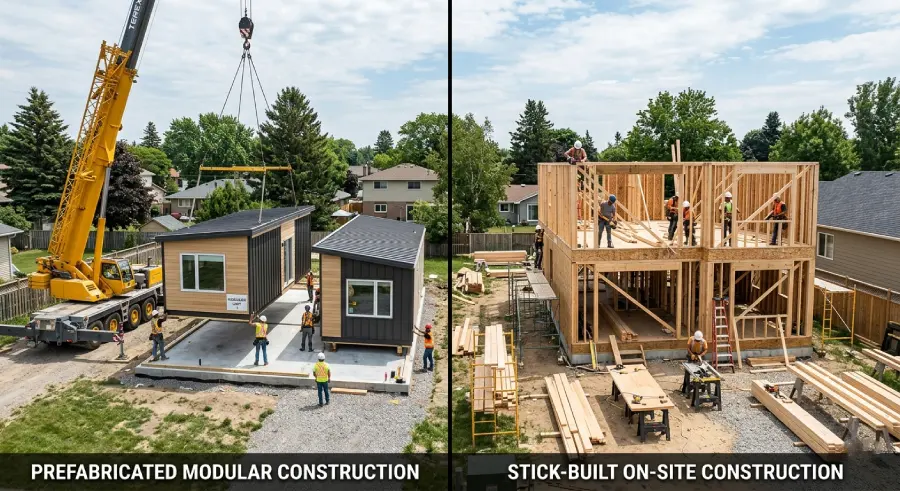
Before floor plans are finalized or permits are submitted, one decision shapes the entire direction of an ADU project — how the structure will actually be built. Whether you’re exploring ADU construction services or just beginning to research options, understanding the difference between prefab and stick-built construction is essential.
This early choice influences everything from timeline and cost to design flexibility and construction quality. Each method has its strengths, and selecting the right one depends on your priorities, your property, and your long-term goals.

Understanding Stick-Built Construction
Stick-built construction, also known as site-built, is the traditional approach most homeowners are familiar with. The entire structure is assembled directly on your property using raw materials.
Framing is constructed piece by piece, followed by sheathing, roofing, insulation, and interior systems. The process unfolds step by step over several weeks or months, depending on project size and complexity.
This method has long been the standard in the Pacific Northwest, and most contractors are highly experienced with it. That familiarity brings advantages in craftsmanship and adaptability, but it also means the project is exposed to real-world conditions.
Weather delays, scheduling gaps between trades, and on-site adjustments are all part of the process. While experienced teams manage these challenges effectively, they still introduce variability into the timeline.
What Prefabricated Construction Involves
Prefab construction shifts much of the building process away from the job site and into a controlled factory environment. Depending on the system, this can range from panelized walls to fully modular units.
Panelized systems involve pre-built wall and roof sections that are assembled on-site. Modular construction goes further, delivering large sections — sometimes entire rooms — that are already framed, insulated, and partially finished.
The biggest advantage of prefab is predictability. Because components are built indoors, the process is not affected by weather or site conditions. This allows for tighter schedules and more consistent production.
However, prefab systems operate within defined design limits. Customization is possible, but it often increases cost and extends lead times.
Comparing the Two Methods: What Matters Most
Choosing between prefab and stick-built construction involves weighing several key factors. Each method performs differently depending on project conditions and priorities.
Key Differences at a Glance
| Factor | Stick-Built Construction | Prefabricated Construction |
| Timeline | Flexible but can be affected by weather and delays | Faster overall, with predictable factory schedules |
| Cost Stability | Can vary due to site conditions and coordination | More predictable upfront pricing |
| Design Flexibility | Highly customizable for unique layouts | Limited by factory design parameters |
| Quality Control | Depends on contractor and supervision | Consistent due to controlled environment |
| Site Impact | Longer on-site construction period | Shorter installation time on-site |
This comparison highlights that neither method is universally better — each has advantages depending on the situation.
Timeline Considerations
Prefab construction stands out when speed is a priority. Once the foundation is prepared, installation can happen quickly, sometimes within days. However, this doesn’t eliminate the need for planning. Foundation work, utility connections, and delivery logistics must all be carefully coordinated.
Stick-built construction typically takes longer because work happens sequentially on-site. In Seattle, where skilled trades are often in high demand, scheduling gaps can extend timelines even when everything is running smoothly.
Cost Factors and Budget Control
Cost is often one of the most important considerations, but it’s also one of the most misunderstood.
Prefab projects tend to have higher upfront costs for manufacturing, but they benefit from greater price stability. Because much of the work happens in a controlled environment, there are fewer unexpected expenses during construction.
Stick-built projects may appear more affordable initially, but final costs can vary depending on site conditions, material changes, and coordination between trades. Unexpected discoveries during excavation or framing can increase the budget.
Design Flexibility and Customization
When it comes to design freedom, stick-built construction offers clear advantages. Building on-site allows for customization based on the property’s layout, setbacks, and architectural style.
Prefab works best when the design fits within standard configurations. While customization is possible, it often comes with additional costs and longer production times.
For properties with unique constraints or homeowners seeking a highly personalized design, stick-built construction is usually the better fit.
Quality and Consistency
Prefab construction benefits from controlled manufacturing conditions. Components are built with precision, and processes are repeated consistently, reducing the likelihood of errors.
Stick-built quality depends more on the skill of the construction team and the level of supervision. A well-managed project can achieve excellent results, but the variability between projects is generally higher than with prefab.
How to Decide Which Method Works for You
There is no universal answer when choosing between prefab and stick-built construction. The best option depends on your specific priorities and project conditions.
Consider the following:
- If speed and predictability are most important, prefab may be the better choice
- If customization and flexibility matter more, stick-built is often the right approach
- If your site has unique challenges, on-site construction may provide better solutions
Understanding these factors early helps avoid costly changes later in the process.
Why Early Decisions Matter
The construction method you choose affects every stage of your project. From design and permitting to budgeting and scheduling, this decision sets the framework for everything that follows.
Making this choice early allows for better planning and ensures that all aspects of the project align with your goals. As emphasized in the original material, the method itself is less important than how well it fits the specific needs of your project.
Final Thoughts
Prefab and stick-built construction are not competing solutions — they are different approaches suited to different situations. The right choice depends on how well the method aligns with your property, timeline, and expectations.
For homeowners exploring new construction services , the key is to evaluate both options carefully and work with professionals who can guide the decision based on real project conditions. Closer to the final stages of planning, partnering with a reliable Home remodeling company ensures that whichever method you choose is executed with precision, proper coordination, and long-term performance in mind.


Comments are closed.