
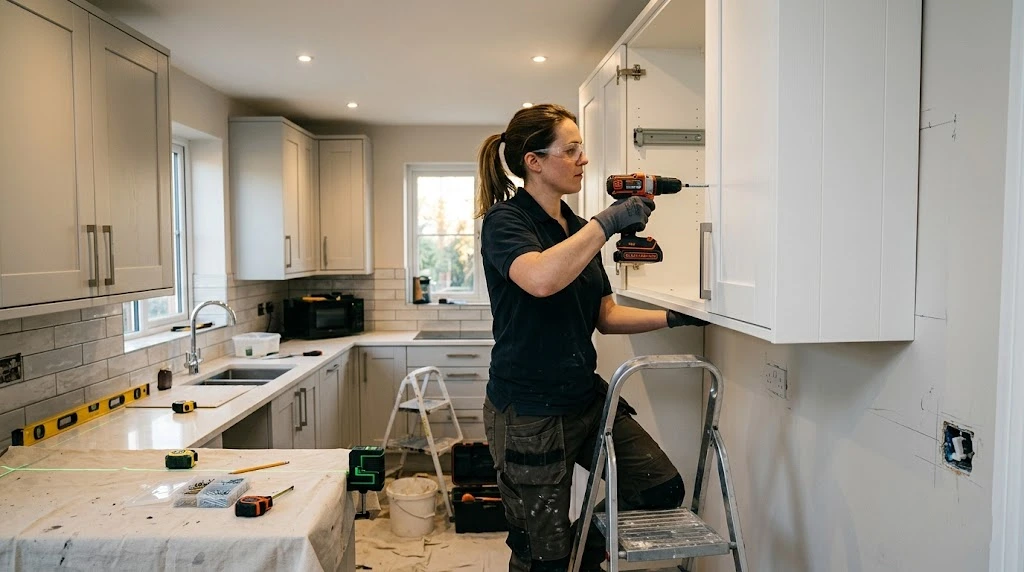
To hang wall cabinets, mark a level line 54 inches from the floor, attach a temporary ledger board to the studs, pre-drill pilot holes, lift the cabinet onto the ledger, and secure it into the studs with 3-inch screws. Always check for level before fully tightening.
How Do You Hang Wall Cabinets
Hanging wall cabinets feels like a big job — until you break it down. With the right tools, a clear plan, and a little patience, you can do this yourself and end up with cabinets that look like a pro put them up. The secret is not rushing. Every step builds on the one before it, and the prep work you do upfront saves you a lot of headache later.
This guide walks you through the whole process from planning to the final screw. Whether you’re putting cabinets in a kitchen, bathroom, or garage, the approach stays the same.
What Tools Do You Need Before You Start?

Getting your tools together before you touch the wall makes everything go smoother. You’ll need a stud finder, tape measure, pencil, power drill, drill bits, a long level (4-foot is ideal), wood screws that are at least 2.5 to 3 inches long, shims, and a ledger board — which is just a straight piece of 1×4 pine. A laser level is a bonus if you have one, but a standard bubble level works fine. You’ll also want safety glasses for drilling.
Remove the cabinet doors before the install. It cuts the weight down and makes the cabinet easier to handle when you’re lifting it into place. A lighter cabinet is a safer cabinet, and you’ll thank yourself once you’re holding it against the wall.
How Do You Find the Right Height for Wall Cabinets?

The standard height for the bottom of wall cabinets is 54 inches from the floor. This gives you enough clearance above a standard countertop, which sits at about 36 inches, leaving an 18-inch gap between the counter and the cabinet. That gap is your workspace — room for appliances, a cutting board, or just breathing room while you cook.
That said, the 54-inch rule is a starting point, not a law. The height can vary based on your own height and personal preference. If everyone in your home is taller than average, raising the cabinets by a few inches makes sense. If you have kids who need to reach shelves, going lower helps. Measure twice, mark once, and make sure the line is perfectly level before you commit to anything.
How Do You Locate and Mark Wall Studs?
This step is where a lot of DIYers run into trouble. Use a reliable stud finder and mark stud locations with a pencil. Anchor to studs whenever possible — secure every cabinet, especially upper ones, into at least one and ideally two wall studs.
Studs are typically spaced 16 inches apart in most American homes. Once you find the first one, measure out from it in both directions to locate the rest. Mark each stud clearly on the wall with a vertical pencil line so you can see it when the cabinet goes up.
Fixing directly to drywall won’t hold much weight. Cabinets attached only to drywall are likely to pull away, leaving you with cracked walls or fallen cabinets. The studs are what hold everything together. Don’t skip this step or guess.
What Is a Ledger Board and Why Do You Need One?
A ledger board is a straight piece of wood you temporarily screw to the wall along your height line. It acts as a shelf that holds the cabinet in place while you drill the screws in — so you’re not trying to hold a heavy cabinet with one hand and operate a drill with the other.
Ledger boards act as a continuous support rail screwed securely into wall studs, providing a solid foundation for cabinets to rest upon. They also offer additional safety during installation, preventing cabinets from tilting or slipping before being permanently secured.
A 1×4 pine board works well. Secure the ledger board along and below the line that marks the bottom of your wall cabinets. Drive a 2.5-inch screw into every other stud to secure it to the wall. Make sure it’s level before you lock it in — this board sets the tone for every cabinet you hang. If the ledger is off, the cabinets will be off too.
How Do You Drill and Prep the Cabinet for Hanging?
Before you lift the cabinet anywhere near the wall, do some prep work on the cabinet itself. Transfer stud locations from the wall to the inside of each cabinet before you lift it into place, then drill clearance holes for the mounting screws. Clearance holes — the same diameter as the screw — ensure that the cabinet will be drawn tight to the wall by the head of the screw.
Drill the holes in the upper and lower hanging rails of the cabinets — the two horizontal pieces of lumber along the top and bottom of the back of the cabinet. These are the strongest points in the cabinet. Screwing through them into the studs gives you a connection that will hold for years.
How Do You Actually Hang the Cabinet on the Wall?
Now comes the moment everyone’s been waiting for. Lift the cabinet and set it onto the ledger board. Have a helper with you if at all possible. Working alone increases the risk of injury or misalignment. A second set of hands makes the process safer and faster.
Set the first wall cabinet on the ledger strip and a quarter-inch away from its reference line on the wall. Secure the top and bottom of the cabinet to the wall with 3-inch-long #10 cabinet screws. Snug up the screws as you go, but don’t tighten them completely. You want to leave a little room to make small adjustments before everything is locked in permanently. Check for level as you go — top to bottom and side to side.
If you’re hanging more than one cabinet, attach as many cabinets together as you can safely lift and install on the ledger board — usually just two. Use clamps to fix the stiles together and check for plumb, making sure the fronts of the cabinets are flush. Getting the faces lined up before the screws go in makes the whole run look clean and professional.
How Do You Handle Uneven Walls?
Walls are almost never perfectly flat or plumb. This is just reality in most homes, and it’s nothing to panic about. If the wall against which the cabinet end butts is out of plumb, you need to shim both base and wall cabinets as you install them to make them plumb. Cabinets that butt an out-of-plumb wall will leave a tapered gap you will need to address.
Shims are thin wedges — usually wood or plastic — that you slide behind or under the cabinet to push it out to plumb. Tap them in gently with a hammer. Check your level after each adjustment. Once the cabinet is plumb and level, you can tighten the screws fully and snap off any shim material that sticks out past the cabinet edge.
Common issues during installation include uneven walls, off-center studs, and alignment problems. Proper planning, measurement, and the use of adjustable hardware can prevent most of these challenges and ensure a professional finish.
How Do You Finish the Installation Correctly?
Once all your cabinets are hung and level, go back and fully tighten every screw. You’ll go back later for a final tightening of all the screws after cabinets are aligned with each other, joined together with screws, and plumbed. This two-step approach — snug first, then tight — gives you the chance to make corrections before everything is permanent.
Remove the ledger board from the wall after all the cabinets are secure. Fill the screw holes it leaves with a little spackle and touch up the paint. Rehang the cabinet doors, adjust the hinges so they sit evenly, and add your hardware. Once all cabinets are installed, apply caulk along seams and edges to seal gaps and ensure a polished look.
Step back and take a good look at the whole run. Check that the doors swing open and close cleanly, that the cabinet faces are flush with each other, and that nothing sags or tilts. If everything looks right and feels solid, you’re done.
What Are the Biggest Mistakes to Avoid?
The single most common mistake is skipping the leveling steps. Even the most beautiful cabinets will look wrong if they aren’t level. A slightly crooked cabinet run can create uneven gaps, cause doors to swing open on their own, or make countertop installation more difficult. Spend the extra ten minutes checking your work at each stage — it’s worth it every time.
Another big one is using screws that are too short. A 1.5-inch screw into a stud might feel tight at first, but it won’t hold the long-term weight of dishes, pots, and food. Use cabinet-specific or heavy-duty wood screws at least 2.5 to 3 inches long to ensure deep penetration into the stud.
Finally, don’t skip the ledger board because you think you can manage without it. It’s a temporary tool, but it makes a permanent difference in how straight and safe your install turns out to be. A few extra minutes setting it up correctly will save you from a frustrating redo.
Hanging wall cabinets is a project you can take on yourself. Measure carefully, anchor into the studs, use the ledger board, and check your level at every step. Do that, and you’ll end up with cabinets that are solid, straight, and built to last.


Comments are closed.