
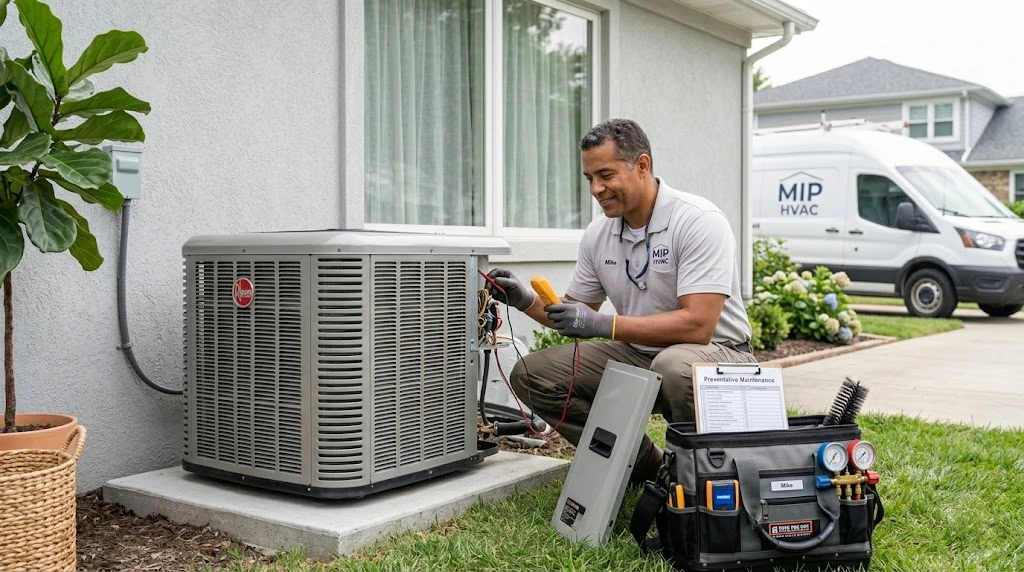
A preventative HVAC maintenance plan is a service agreement between you and an HVAC company. A technician visits your home once or twice a year to inspect, clean, and tune your system. It catches small issues early, saves money on energy bills, and extends your equipment’s lifespan.
Your heating and cooling system works hard every single day. In summer, it’s fighting 95-degree heat. In winter, it’s battling freezing temperatures to keep your family warm. But most homeowners never think about their HVAC system until something goes wrong — and by then, the repair bill can be brutal.
That’s exactly where a preventative HVAC maintenance plan comes in. It’s a simple, affordable way to stay ahead of problems before they turn into expensive emergencies. And once you understand what these plans actually cover, it’s hard to argue against having one.
What Is a Preventative HVAC Maintenance Plan?

A preventative HVAC maintenance plan is a service agreement you sign with a local HVAC company. In exchange for a set fee, the company provides routine maintenance and other benefits to ensure your system runs at peak performance and lasts as long as possible. Think of it like a subscription for your home’s comfort system.
Every time you go to the dentist for a cleaning or get an oil change on your car, you’re performing preventative maintenance. Your HVAC system needs the same kind of regular care. The difference is that your HVAC system costs thousands of dollars — so the stakes are a lot higher when you skip it.
Most plans are structured around one or two scheduled visits per year. The most common setup includes a tune-up before the heating season and another before the cooling season. This timing makes sense because you want your furnace checked before winter hits and your air conditioner inspected before summer arrives.
What Does a Maintenance Plan Actually Include?
This is the question most homeowners ask first — and the honest answer is that it depends on the company and the plan tier you choose. That said, most plans share a core set of services.
A professional HVAC service contract will include items that should only be performed by a certified HVAC technician, such as inspecting refrigerant levels, checking electrical components, and cleaning the internal parts of the system. These aren’t things the average homeowner can safely do on their own.
During a typical visit, a technician will check and clean the evaporator and condenser coils, test the thermostat calibration, inspect electrical connections, lubricate moving parts, check refrigerant levels, flush the condensate drain line, and inspect the heat exchanger for cracks. Each of those tasks sounds small on its own, but skipping even one of them can lead to a serious problem down the road.
Many companies offer three or four tiers of service agreements, with more perks available as you move up the payment tiers. A basic plan might cover one annual visit and a filter change. A higher-tier plan might include two visits per year, priority scheduling, and a percentage off any repair work.
How Much Do These Plans Cost?
Pricing varies based on where you live, the size of your system, and the company you choose. Most homeowners pay somewhere between $150 and $500 per year for a standard plan. That works out to $12 to $40 per month — less than most streaming subscriptions.
Factors that influence the price include whether both heating and cooling tune-ups are included, the availability of priority service, and extended coverage that may include additional components like thermostats and ductwork. If you have a larger home with multiple units, expect to pay more.
Here’s a useful way to think about the cost. A standard HVAC repair call — just the service fee alone — typically runs $75 to $150 before any parts or labor. A maintenance plan often costs about the same as two or three of those calls. If the plan helps you avoid even one major repair each year, it more than pays for itself.
The Real Benefits of Staying on a Plan
The most obvious benefit is catching problems early. A technician who visits your home twice a year will notice a worn capacitor, a dirty coil, or a small refrigerant leak long before those issues cause your system to shut down on the hottest day of August.
According to Energy Star, a program run by the U.S. Environmental Protection Agency, regular HVAC maintenance can lower your energy bills by up to 30% and extend the life of your system. That’s a significant number, especially if you’re in a climate that demands heavy heating or cooling use.
Dirty coils or refrigerant leaks can negatively affect efficiency and performance. Scheduling regular maintenance to spot these issues and fix them will keep your system running longer. A system that works harder than it needs to also wears out faster — which means you’re replacing it years sooner than you should have to.
Another major benefit is priority service. If you live in a place with an extreme climate, going without heat or air conditioning is dangerous. An HVAC maintenance plan with a priority clause can be worth its weight in gold, especially for households with young children, elderly family members, or people with health conditions. When your AC dies in July, being at the front of the line matters.
Many HVAC companies offer maintenance plan members 24-hour service to promptly repair or replace their systems, and service agreements typically waive overtime charges for service required outside of regular business hours. That peace of mind alone is worth a lot to most families.
Safety Is a Bigger Reason Than Most People Realize
Most people think about maintenance plans in terms of money and comfort. But safety is actually one of the most important reasons to stay current on HVAC maintenance — and it’s the one that gets talked about the least.
Your furnace produces carbon monoxide as a byproduct of burning fossil fuel. A cracked heat exchanger — something a technician can spot during a routine visit — can allow that carbon monoxide to seep into your living space. Carbon monoxide has no smell and no color. You won’t know it’s there until it’s already a medical emergency.
Carbon monoxide leaks, system failures, and fire hazards are more likely to occur when heating and cooling systems aren’t properly maintained. A maintenance plan isn’t just an investment in your system — it’s an investment in your family’s safety.
What to Look for When Choosing a Plan
Not all plans are created equal, so it pays to ask the right questions before you sign anything. Start by asking exactly what’s included in each visit. Ask whether the plan covers both heating and cooling seasons. Ask about the discount percentage on repairs if something does break.
It’s crucial to thoroughly review all available plans and prices before making a decision, ensuring that you don’t feel rushed into making a choice. A good HVAC company will take the time to walk you through your options clearly.
Also check whether the plan is transferable. Some HVAC companies allow you to transfer your existing maintenance agreement to a different HVAC system if you purchase a new home, maintaining coverage. If you’re planning to sell your house in the next few years, a transferable plan can actually be a selling point.
One last thing to check — make sure the plan doesn’t overlap with any existing manufacturer warranty you have on a newer system. Be sure to check the details of the maintenance plan offering, as well as any existing HVAC warranty or home warranty you may have, before buying. You don’t want to pay twice for the same coverage.
When Is the Best Time to Sign Up?
The best time to sign up for a maintenance plan is right now — before something breaks. Most homeowners wait until they have an HVAC problem to call a company, and by then they’re paying emergency rates and dealing with the stress of a system that’s already failed.
Just waiting until you have outwardly noticeable issues will cost you more in emergency repair services, and the downtime can disrupt your daily life significantly. Getting on a plan before the summer or winter season means your system gets a professional check when it matters most.
If you just had a new system installed, this is a perfect time to start a plan. If you just had a new system installed, the HVAC company may also offer an extended labor warranty with a service agreement — the standard labor warranty is one year, and an extended labor warranty may go up to five years.
The Bottom Line
Your HVAC system is one of the most expensive pieces of equipment in your home. A preventative maintenance plan is one of the simplest ways to protect that investment. It keeps your energy bills lower, extends the life of your equipment, puts safety checks in place, and gives you access to faster service when you need it most.
You don’t have to wait for a breakdown to take care of your system. Call a local HVAC company today, ask about their maintenance plans, and get one scheduled before the next season hits.


Comments are closed.