
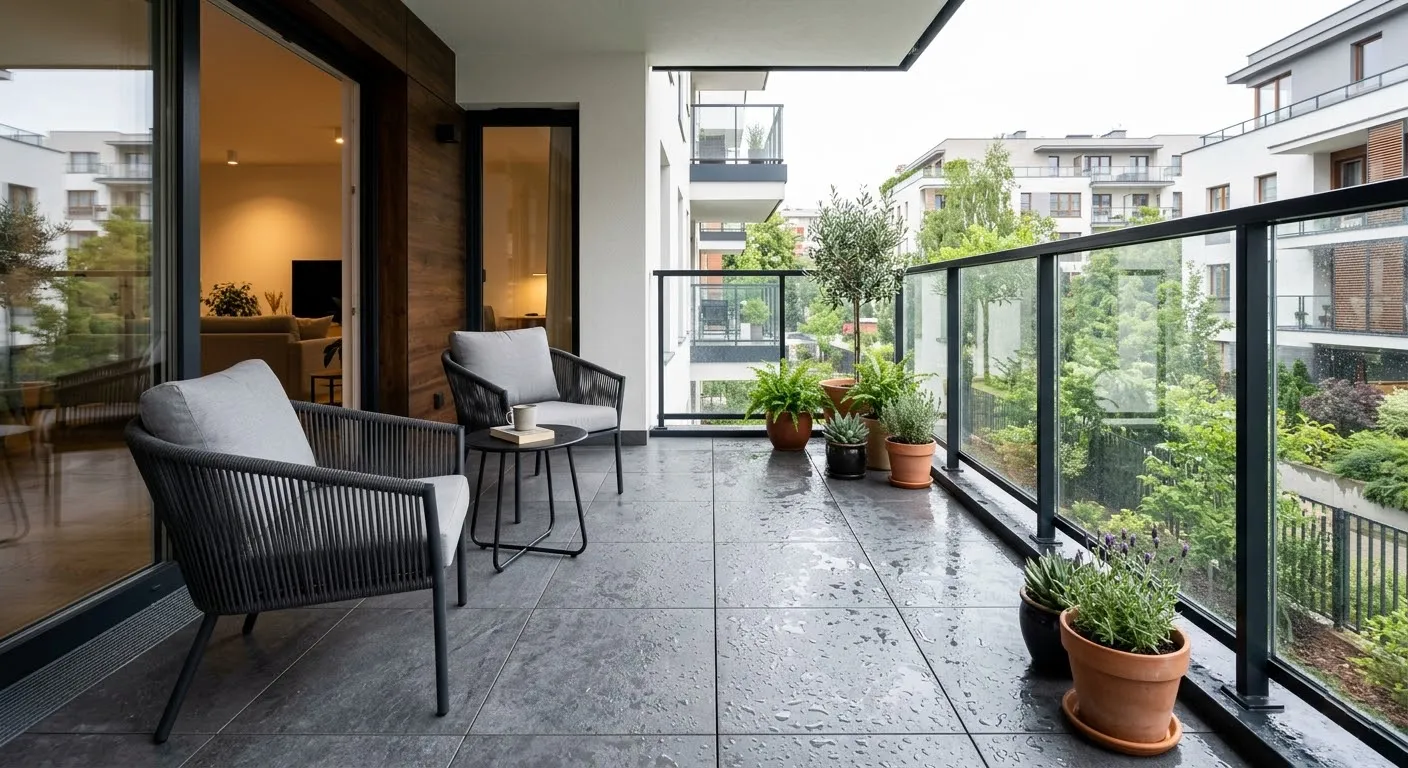
Waterproof balcony tile is outdoor flooring that combines water-resistant tile materials — like porcelain or ceramic — with a waterproofing membrane beneath the surface. Together, they stop moisture from reaching the structural base, preventing cracks, mold, and costly water damage to your balcony long-term. (48 words)
Your balcony takes a beating every single day. Rain, humidity, direct sun, and foot traffic all wear it down over time. Without the right flooring, water sneaks into the base of your balcony and starts causing damage you won’t even see until it gets expensive. That’s exactly why waterproof balcony tile has become one of the most popular choices for homeowners who want a beautiful outdoor space that actually holds up.
This guide walks you through everything — the best tile types, waterproofing methods, installation basics, and how to keep your tiles looking great for years.
Why Waterproofing Your Balcony Floor Actually Matters

A lot of people assume that tile is waterproof on its own. It’s not — at least not completely. Although tile is waterproof, it needs protection, especially when used outdoors. Water still finds its way through grout lines, small cracks, and the edges of tiles. Once it gets under the surface, it hits the substrate — and that’s where the real trouble starts.
Heavy rain may pool due to inadequate balcony waterproofing systems, potentially leaking to the lower floor and causing cracks, chips, and unsafe joints and sealants. If your balcony sits above a room, a garage, or a neighbor’s unit, a compromised floor can lead to water damage in the space below. That’s a repair bill nobody wants to deal with.
When a tiled balcony is not waterproofed, it can lead to several problems — from water damage to paint peeling off — and the fixes will get expensive. Getting waterproofing right from the start is always cheaper than fixing it later.
The Best Tile Types for a Waterproof Balcony

Not every tile works well outdoors. You need materials that can handle moisture, UV exposure, temperature swings, and steady foot traffic. Two options dominate: porcelain and ceramic.
Tiles most commonly used in outdoor installations include porcelain tile and stone because they are thicker, denser, and better suited for foot traffic, as well as prevent water absorption.
Porcelain is the top pick for exposed balconies. According to ASTM standards, porcelain must have a water absorption rate of 0.5 percent or lower, which makes it about as close to waterproof as tile gets. Porcelain tiles are inherently waterproof due to their remarkably low water absorption rate, and they resist staining, cracking, and general wear far better than most alternatives. For elevated spaces, porcelain is widely considered the best material for balcony floor applications because it resists cracking, fading, and water damage better than most alternatives.
Ceramic is a budget-friendly option that works well in covered or sheltered balconies. Ceramic offers great design versatility and affordability, but it may require more maintenance over time if placed in open outdoor spaces. If your balcony gets a lot of direct rain, porcelain is the smarter long-term choice.
Porcelain offers dense, low-porosity surfaces that resist staining and moisture intrusion. Use outdoor-rated, non-slip tiles and a compatible exterior grout. Always check that the tile you choose has an exterior rating — not all porcelain tiles are built for outdoor conditions.
Natural stone is another option worth mentioning. It gives balconies a premium, elegant look and handles weather well. Slate or stone tiles give a natural and elegant look to your balcony. They are durable, weather-resistant, and come in various colours and textures. The trade-off is cost and installation complexity — stone typically needs professional handling.
Waterproofing Methods That Actually Work

Choosing great tiles is only half the job. The waterproofing layer underneath is what protects your balcony’s structure. There are a few solid approaches, and the right one depends on your balcony’s size, substrate, and climate.
Liquid membrane is one of the most common methods. Using a liquid membrane to waterproof balcony tiles is an effective solution. This type of membrane is easy to apply, does not have seams, and is completely waterproof. You apply it with a roller or brush, and it creates a continuous barrier with no gaps. Products like RedGard are popular choices that handle outdoor conditions well.
Sheet membranes work especially well for larger balconies. Sheet membranes provide a continuous layer that also resists punctures or tears. These pre-fabricated sheets — made from polyethylene, vinyl, EPDM, or bituminous materials — are compatible with concrete, wood, metal, and tile balcony structures. They take more effort to install but deliver strong, consistent coverage across wide surfaces.
Cementitious waterproofing is another solid choice, particularly for concrete or plywood substrates. Cementitious waterproofing methods work well with substrates made from concrete or plywood and can easily be applied to basic balcony designs. It’s cost-effective and widely used for standard balcony projects where temperature swings are moderate.
Polyurethane coatings offer flexibility and a durable finish. Polyurethane waterproofing is flexible and can fill in small cracks and imperfections. The glossy finish is durable and resistant to UV rays, providing long-lasting protection against moisture and wear. It works best as part of a larger waterproofing system rather than a standalone solution.
How to Prepare Your Balcony Before Tiling
Before any tile goes down, the surface needs to be in good shape. Skipping this step is one of the most common reasons tile installations fail.
Before choosing your balcony waterproofing solution, first check the flooring for cracks or holes. If present, remove the finished floor layer and check the substrate for damage. Make sure the balcony has a slope of at least 2 percent (1/4 inch per foot) for positive drainage. That slope is critical — without it, water pools on the surface and works its way into any gap it can find.
Before installing the tile, a waterproofing and crack isolation membrane should be employed to reduce transmission of cracks through the surface, minimize water getting into the substrate, and decrease efflorescence. This step keeps small structural movements from cracking your tile down the road.
The substrate also needs to be clean, dry, and flat. Any moisture trapped underneath the waterproofing layer before it cures can create blisters and compromise the entire system. Give the surface time to dry out fully before you start.
Grout and Adhesive: Small Choices with Big Impact
The tiles you pick matter. So do the products you use to hold them in place. Selecting the best grout for outdoor tile is just as important. Epoxy or urethane-based grout resists stains, fading, and water infiltration — ideal for rainy seasons.
Standard interior grout breaks down outdoors. It absorbs moisture, cracks under temperature changes, and lets water seep straight through. Epoxy grout costs a bit more, but it holds up year after year without needing constant resealing.
For adhesive, porcelain tile’s low porosity means you will need to use a thinset adhesive with a higher latex count. This type of adhesive can be more expensive compared to thinsets suitable for ceramic tile. Using the wrong adhesive is a shortcut that leads to tiles popping loose, especially in climates that experience hot summers and cold winters.
How Long Will Waterproof Balcony Tiles Last?
Done right, a tiled balcony with proper waterproofing is a long-term investment. Expect 15–25 years from ceramic or porcelain tile with membranes, and 20–40 or more years for high-quality composites or natural stone with appropriate waterproofing.
Longevity also depends on climate. In climates with freezing temperatures, ensure the system accommodates freeze-thaw cycles and uses frost-resistant ceramic or porcelain tiles or engineered composites. Porcelain rated for freeze-thaw conditions handles cold winters without cracking, while standard tiles may chip and break after a few seasons of frost.
Keeping Your Waterproof Balcony Tiles in Good Shape
Maintenance is straightforward once your tiles are down. Regular sweeping or vacuuming to remove dirt, plus mopping with a mild cleaner, keeps tiles looking fresh. Grout lines may need periodic sealing, especially in wet areas.
Avoid harsh chemicals and abrasive scrubbers. They dull the tile surface over time and break down grout faster than normal wear. A mild detergent mixed with warm water handles almost every cleaning job a balcony tile floor will throw at you.
Check the grout and sealant condition once a year. Porcelain tiles need occasional regrouting and sealant checks. Catching a small crack in the grout early stops water from finding its way underneath and saves you from a much bigger repair.
Is Waterproof Balcony Tile Worth It?
Absolutely. The combination of the right tile — porcelain for most outdoor spaces — paired with a solid waterproofing membrane underneath gives you a balcony that looks great and stays structurally sound for decades. You protect the space from moisture damage, you reduce ongoing maintenance costs, and you add real value to your home.
Take the time to prepare the surface properly, use quality materials throughout, and don’t cut corners on the waterproofing layer beneath the tile. That layer is invisible once the job is done, but it does all the heavy work of keeping your balcony dry, safe, and solid year after year.


Comments are closed.