
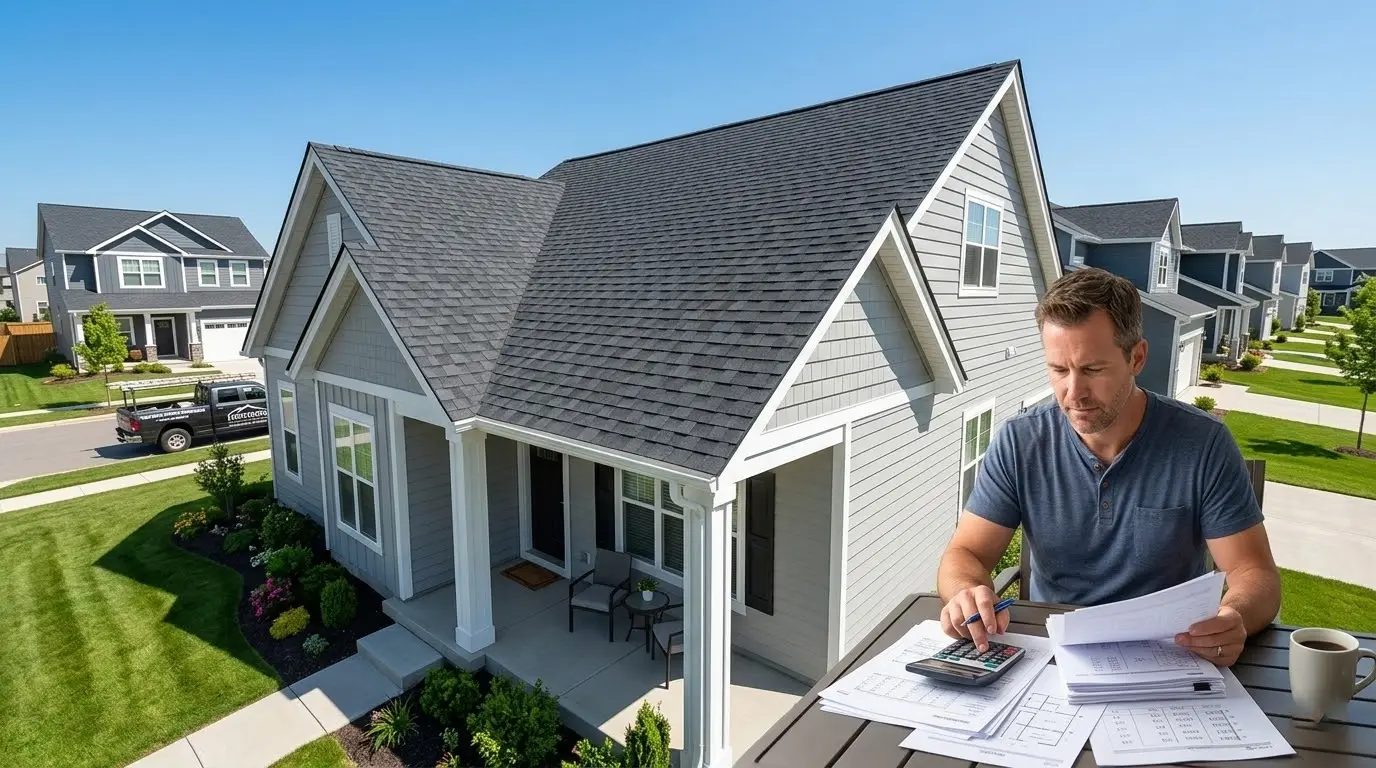
Roofing financing options include personal loans, home equity loans, HELOCs, contractor financing, credit cards, and government-backed FHA Title I loans. Each option varies by interest rate, approval speed, and credit requirements — helping homeowners replace or repair their roof without paying the full cost upfront.
A damaged roof is never convenient — and the bill that comes with fixing it rarely is either. The average cost of a roof replacement sits around $9,500, and it can climb past $45,000 when premium materials are involved. That kind of expense catches most homeowners off guard, especially when a storm or sudden leak forces the issue.
The good news is you don’t have to come up with that money all at once. Roofing financing options give you a way to protect your home now and spread the cost over time. Whether you have strong credit, some home equity, or you’re starting with very little of either, there’s likely a path forward for you.
This guide walks you through each financing option — what it is, how it works, and who it makes the most sense for — so you can pick the right one with confidence.

Why Roofing Financing Makes Sense
Waiting on a roof repair to save up the full amount often costs more in the long run. Water gets in through small cracks, insulation gets ruined, ceilings start to stain, and what started as a $3,000 patch job can turn into a $15,000 structural repair. Financing lets you act fast and stop the damage before it spreads.
There’s also the matter of home value. A damaged or aging roof lowers what your home is worth on the market. Fixing it — especially with quality materials — adds real value back. Financing gives you the chance to choose better materials that last longer and protect your investment further into the future.
Think of it this way: a $15,000 roof replacement paid over time at around $250 per month is far more manageable than a lump-sum payment most families don’t have sitting in a savings account.
Personal Loans: Fast and Flexible

Personal loans are one of the most popular ways to finance a roof replacement. You apply, get approved, and receive a lump sum — sometimes within one to two business days. The process is straightforward and doesn’t require you to put up your home as collateral, which is a major benefit if you’d rather keep that security in place.
Interest rates on personal loans vary based on your credit score. If your score is strong — generally above 700 — you can qualify for rates that make this option very competitive. Borrowers with lower scores will pay more in interest, so it’s worth comparing offers from several banks and credit unions before committing.
Personal loans work particularly well for mid-size roofing projects in the $5,000 to $15,000 range. They’re also a solid option when you need the money quickly and don’t have time for a lengthy appraisal process.
Home Equity Loans: Lower Rates, Longer Terms
If you’ve built up equity in your home, a home equity loan lets you borrow against that value at a lower interest rate than most other options. You receive a fixed lump sum and repay it in predictable monthly payments over five to thirty years, depending on the lender.
Because your home secures the loan, lenders take on less risk — and they pass those savings on to you through better rates. That’s why this option tends to be one of the most cost-effective choices for larger roofing projects. The trade-off is that approval takes longer. Most lenders require an appraisal, and the full process can take several weeks from application to funding.
This option works best when you’re planning ahead rather than dealing with an emergency, and when the roof project is large enough that the lower interest rate makes a meaningful difference over time.
HELOCs: Flexible Access to Funds
A Home Equity Line of Credit — or HELOC — works differently from a home equity loan. Instead of receiving a lump sum, you get access to a revolving credit line you can draw from as needed. You only pay interest on what you actually use, which can save money if your roofing project comes in phases or under budget.
HELOCs typically allow you to borrow up to 80% to 90% of your home’s value, minus what you still owe on your mortgage. The draw period is usually ten years, followed by a twenty-year repayment period. Variable interest rates are common, which means your monthly payment can shift over time.
This option suits homeowners who want flexibility and might use the credit line for other home improvement projects down the road. Just keep in mind that your home is on the line if you fall behind on payments, so careful budgeting matters here.
Contractor Financing: The Most Direct Route
Many roofing companies offer their own financing, either in-house or through a third-party lender they partner with. You apply directly through the contractor, often during the estimate process, and approval can happen within hours. Some companies advertise 0% interest for the first six months, which is a strong deal if you can pay off the balance within that window.
The application process tends to be simpler than going through a bank, and some contractors work with customers who have less-than-perfect credit. This makes contractor financing one of the most accessible options for homeowners who’ve been turned down elsewhere.
The main downside is limited choice. You’re working with whichever lender the contractor has partnered with, so you can’t shop around for better terms the same way you can with personal loans. Read the fine print closely — especially what happens after any promotional interest-free period ends.
Credit Cards: Best for Small Repairs Only
Credit cards can work for smaller roofing repairs, but they’re generally not a great fit for full replacements. Average credit card APRs recently hit 24.35%, according to LendingTree data, which makes them one of the most expensive ways to borrow money for a large project.
Where credit cards shine is when you have a card with a 0% introductory APR and a repair estimate that you’re confident you can pay off before the promotional period ends. Some cards also offer cashback or rewards that add a bit of value. Outside of those specific scenarios, the interest charges will likely outweigh any convenience.
Also be aware that some contractors charge a transaction fee of 1.5% to 3.5% for credit card payments. On a $20,000 roof, a 3% fee adds $600 to your total cost before interest is even factored in.
FHA Title I Loans: A Government-Backed Option
The Federal Housing Administration backs Title I loans specifically for home improvement projects, including roof repairs and replacements. These loans are available to homeowners who don’t have substantial equity built up — which makes them a useful option for newer homeowners or those who’ve recently refinanced.
Loans up to $7,500 are typically unsecured, meaning no collateral is required. Loans above that threshold must be secured by a mortgage or deed of trust. Interest rates are fixed, and the qualification requirements are generally more flexible than conventional loans because of the government backing.
If your credit score isn’t strong enough for a personal loan or home equity product, an FHA Title I loan is worth researching. Check with approved FHA lenders or your local HUD office to understand current terms and requirements in your area.
Government Grants and Assistance Programs
Depending on where you live and your household income, you may qualify for grant programs or local government assistance to cover part of your roofing costs. These programs are especially common for energy-efficient upgrades and repairs that affect health or safety.
Program availability and timing varies widely by state and county. Some programs open only during specific application windows and close once funding runs out. It takes some research to track these down, but the payoff can be significant — some programs offer thousands of dollars in assistance with no repayment required.
Start by checking with your local housing authority, county government website, or HUD’s website. If you’re replacing a roof with solar shingles or energy-efficient materials, federal tax credits may also apply, which can reduce your overall out-of-pocket cost.
How to Choose the Right Roofing Financing Option
The best choice depends on four main factors: how urgent the repair is, how much equity you have in your home, the strength of your credit score, and the total cost of the project. Emergency repairs favor personal loans or contractor financing because of their speed. Large, planned replacements may justify the slower process of a home equity loan for the lower rate.
Before you apply for anything, get quotes from at least two or three roofing contractors. Knowing the actual project cost gives you a clearer picture of how much you need and which loan amounts are realistic. Then check your credit score so you know what rates to expect.
Compare total cost of the loan — not just the monthly payment. A lower monthly payment on a longer loan often means you pay significantly more overall. Run the numbers, read the terms, and choose the option that fits both your monthly budget and your long-term financial picture.
A new roof is one of the most important repairs a homeowner can make. The right financing option makes it possible to protect your home without draining your savings or waiting until a small problem becomes a much bigger one. Take your time, compare your options, and move forward with a plan that actually fits your life.


Comments are closed.