
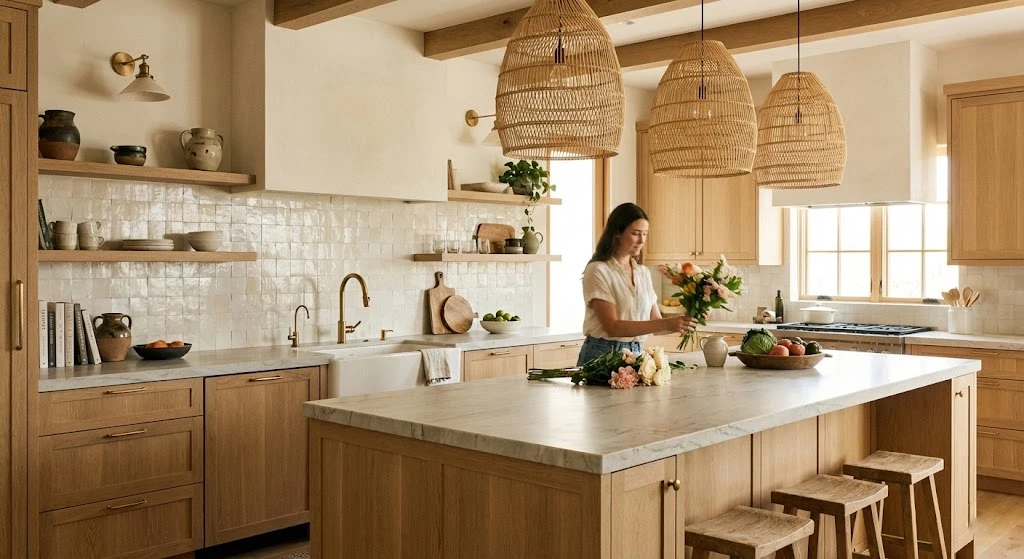
Texture makes your kitchen feel layered, warm, and alive. You can add it through a textured backsplash, natural wood cabinets, stone countertops, woven textiles, or mixed lighting fixtures. Even small changes — like distressed cabinet finishes or zellige tiles — give your kitchen depth and personality without a full renovation.
How to Add Texture to Your Kitchen
Walk into most kitchens and you’ll notice the same thing: flat cabinets, smooth countertops, plain walls. Everything is clean and functional, but something feels off. The space looks finished, yet somehow flat. That’s a texture problem.
Texture is what makes a room feel real. It gives your eyes something to land on, makes surfaces feel intentional, and turns a generic kitchen into a space that actually has character. The good news? You don’t need a full remodel to get there. A few smart changes across different surfaces can completely shift how your kitchen looks and feels.
Why Texture Matters More Than You Think
Most people focus on color and layout when they redesign a kitchen. Texture usually gets skipped. But it’s one of the biggest reasons an expensive renovation can still feel sterile or cold.
There are two types of texture at play in any room. Visual texture refers to patterns and finishes you can see but can’t necessarily feel — like a tile pattern or a wood grain print. Tactile texture is what you can actually touch, like rough stone, ridged cabinet doors, or a woven rug underfoot. Your kitchen needs both working together to feel balanced.
When you mix smooth countertops with rough brick, or glossy tiles with matte cabinet fronts, those contrasts create visual interest. Glossy tile backsplashes balance matte cabinet fronts, and polished counters offset textured floors — these pairings create interest through opposition rather than repetition. That’s the principle behind good texture layering.
Start With the Backsplash

The backsplash is the most direct place to introduce texture in a kitchen, and for good reason. It sits at eye level, covers a large visible surface, and doesn’t carry the same structural weight as countertops or flooring. This makes it the easiest place to take a design risk.
Subway tiles are a classic starting point. They’re clean and simple, but the grout lines between them add just enough dimension to break up a flat wall. If you want more visual impact, try a herringbone or soldier-stacked layout. A subway tile backsplash broken up by a herringbone pattern above the range creates texture and visual interest without going overboard.
For something bolder, zellige tiles are worth considering. Each piece shows slight variations in size, shape, and color, and the glazed surfaces ripple and pool unevenly, creating depth that machine-made tiles can’t replicate. The imperfections are the point. You get a one-of-a-kind backsplash that looks handmade because it is.
Metal backsplashes are another strong option. Brass or copper adds glamour, and stainless steel works well as a complement to modern design — marks and nicks that appear over time only add more character. If you love the idea of natural material that gets better with age, metal is hard to beat.
Bring Texture Into Your Cabinets
Cabinets take up more visual space than almost anything else in your kitchen. If they’re flat and featureless, the whole room feels that way. Fortunately, you have several ways to change that without replacing every door.
Distressed and glazed finishes are two of the most popular options. Anytime you add a distressed or glazed finish to cabinets, you gain instant textural appeal — the varying colors and heavy brush strokes can yield almost a faux-wood appearance, and even a very gentle glaze adds dimension and helps cabinet details rise up from their one-dimensional faces.
Fluted cabinet doors are having a major moment in kitchen design right now. The vertical ridges add a tactile quality that flat slab doors simply don’t have. They work in traditional spaces for a vintage feel, and in contemporary kitchens they add warmth without looking dated.
Natural wood grain is another reliable move. Wood grain adds earthiness and natural beauty, making the room feel more organic. Plain sawn oak, in particular, has a strong grain pattern that reads as texture all on its own. If you pair it with smoother surfaces elsewhere — like a quartz countertop or simple painted uppers — the contrast does most of the work for you.
Use Countertops as a Texture Layer
People usually pick countertops based on color and durability. Texture tends to be an afterthought. But the surface you touch every single day has a huge impact on how the kitchen feels.
Granite and marble are naturally varied. The veining, the movement, the subtle roughness of a honed finish — all of it adds visual depth that polished, uniform surfaces can’t offer. A honed countertop looks matte and soft. It feels different under your hand than a polished one, and that difference translates into a warmer, more grounded look overall.
Butcher block adds warmth to any kitchen design and is the most affordable option for bringing a natural, tactile surface to your countertops. It’s practical for prep areas, and the wood grain gives the kitchen a lived-in quality that stone surfaces sometimes lack.
If your kitchen island has a raised bar or eating area, consider using a different countertop material there than you use on the perimeter. Using contrasting countertops creates food prep and dining zones and adds texture through the contrast of different materials. Even something as simple as wood stools around a stone island creates that push and pull between textures.
Work Texture Into Your Walls
Beyond the backsplash, your walls offer more texture opportunity than most people use. A feature wall — one that stands out from the rest — is an effective way to add depth without making the whole room feel heavy.
Exposed brick is one of the most popular choices. Exposed brick, wood panels, textured wallpaper, or bright colors all make a statement as a feature wall, and using local materials like reclaimed barn wood or locally sourced stone can make your kitchen design a one-of-a-kind tactile experience. One well-placed brick wall behind an open shelf creates a backdrop that makes everything around it look intentional.
Textured wallpaper is a lower-commitment route that still delivers real visual impact. Modern options include grasscloth, linen-look papers, and geometric raised patterns that cast small shadows as the light shifts through the day. Keep it to one wall. That’s enough to make the room feel layered without overwhelming the space.
Three-dimensional tiles are another option for walls beyond the backsplash. Raised geometric patterns — hexagons, waves, and angular designs — create actual depth on your wall rather than just visual interest, and they cast real shadows that shift with changing light. A small section behind a coffee station or open shelving unit goes a long way.
Add Texture Through Flooring
Floors are the largest surface in any room, yet they’re often chosen for practicality alone. That’s a missed opportunity.
Natural stone floor tiles bring immediate texture. Slate, travertine, and limestone all have surface variation that ceramic tiles can’t fully replicate. They feel grounded and real underfoot. If you want a softer look, wood floors add warmth and grain that plays off harder kitchen surfaces beautifully.
For kitchens with all-smooth finishes up top, a textured tile floor creates the contrast the room needs. Even smaller mosaic tiles on the floor add visual complexity through their grout lines and varied surface area. The more surfaces you think about, the more cohesive the final result feels.
Layer In Soft Textiles
Not every texture in your kitchen needs to be hard. Soft textiles — rugs, runners, dish towels, seat cushions — do real work when it comes to making the space feel comfortable and finished.
Woven textiles such as jute rugs or textured table linens soften hard surfaces and add warmth and a sense of coziness, making the kitchen feel inviting. A jute runner in front of the sink or a woven basket on a counter shelf costs almost nothing and immediately changes the feel of the space.
Pendant lights with textured shades — rattan, woven rope, hammered metal — are another easy addition. They bring texture to the ceiling zone of your kitchen, which is often completely ignored. Layered lighting fixtures that mix glass, metal, and wood allow for dynamic shadow play that highlights and enriches the overall aesthetic.
Balance Is the Goal
More texture isn’t always better. The goal is contrast and breathing room. If every surface competes for attention, the room feels chaotic instead of layered.
Give your eyes places to rest — plain painted walls between textured cabinets and counters create visual breathing room. Think of texture like seasoning. You want enough to make the dish interesting, not so much that you can’t taste anything else.
Start with one or two surfaces — a backsplash and a floor, or cabinets and a feature wall — and see how they interact before adding more. Bring home samples and live with them for a few days. Watch how they look in morning light versus evening light. The right combination will feel right across all conditions, not just in a showroom.
Your kitchen doesn’t need to be a design masterpiece. It just needs to feel like yours. Texture is how you get there.


Comments are closed.