
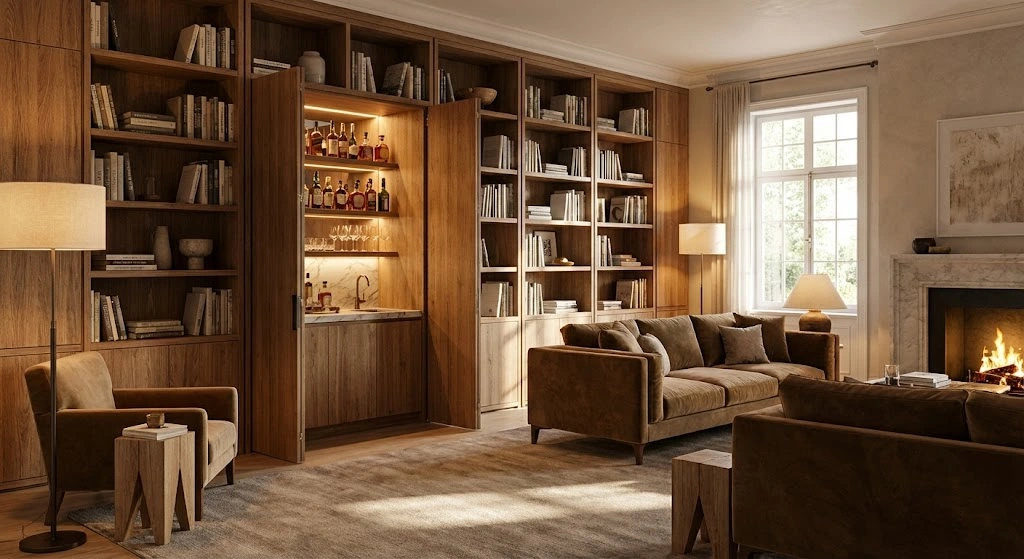
A hidden door bookshelf is one of the most exciting upgrades you can add to your home. It looks like a normal bookshelf, but it secretly opens into another room. Some people use it for a home office, a mini bar, a storage room, or just for fun.
The good news? You don’t need to be a master carpenter to install one. With proper planning, the right tools, and a prefabricated kit, many homeowners can install a hidden door bookshelf themselves.
In this guide, you’ll learn how to install a hidden door bookshelf step by step, written in simple English that’s easy to understand.
What Is a Hidden Door Bookshelf?
A hidden door bookshelf is a bookshelf that also works as a door. When closed, it blends into the wall and looks like regular shelving. When opened, it reveals a hidden space behind it.

Why Homeowners Love Hidden Door Bookshelves
- They save space
- They look stylish and unique
- They add privacy
- They create a “wow” factor in any room
Some people install them for practical reasons, while others just love the mystery and design.
Types of Hidden Door Bookshelves

Before starting, it’s important to understand your options.
1. Prefabricated Hidden Door Kits (Best for DIY)
These kits come with:
- Prebuilt bookshelf
- Door frame
- Hinges or pivot system
- Installation instructions
✅ Best choice for beginners
2. Custom-Built Hidden Doors
- Made by carpenters
- Fully customized size and design
❌ Expensive and time-consuming
3. Pivot vs Sliding Hidden Doors
- Pivot doors: Swing open like a door (most common)
- Sliding doors: Slide sideways on a track (modern look)
For most homes, pivot-style prefabricated kits are the easiest and safest option.
Planning Before Installation
Good planning makes the installation easier and safer.
Choosing the Right Location
Pick a wall that:
- Has enough space for the bookshelf
- Does not block walking paths
- Can support the weight of the unit
- Is not full of plumbing or electrical lines
⚠️ Important:
If you’re cutting a new opening, always check if the wall is load-bearing. A structural engineer or contractor can confirm this.
Tools and Materials You’ll Need
Tools
- Tape measure
- Pencil
- Long level
- Drill / driver
- Impact driver
- Hammer
- Chisel
- Oscillating tool
- Framing square
- Circular saw
- Finish nailer
- HEPA shop vacuum
- Non-contact electrical tester
Materials
- Hidden door bookshelf kit
- 2×4 lumber
- Long wood screws (#10, 3-inch)
- Drywall screws
- Wood shims
- Wood glue
- Finish nails (15-gauge)
- Door threshold
- Oscillating blades (wood & drywall)
Do You Need to Frame a Door Opening?
If your wall already has a door opening, you can skip this section.
If not, framing is required — and this is the most serious part of the project.
⚠️ If the wall is load-bearing, hire a professional.
Step-by-Step: How to Frame a Door Opening
Step 1: Prepare the Wall
- Turn off electricity in the area
- Use a tester to check live wires
- Remove switches or outlets in the opening area
Step 2: Mark the Rough Opening
- Measure your door size
- Add:
- +2 inches to width
- +2–2.5 inches to height
- Mark the outline using a level
Step 3: Cut the Drywall
- Use an oscillating tool
- Cut slowly and vacuum dust
- Remove drywall to expose studs
Step 4: Build the Frame
You’ll install:
- King studs (full-height studs)
- Jack studs (support the header)
- Header (supports weight above)
Secure everything tightly and make sure it’s level and square.
Installing the Hidden Door Bookshelf Kit
Step 1: Assemble the Door
Follow the manufacturer’s instructions carefully. Some kits require:
- Door + frame assembled together
- Others install frame first
For heavy doors, assembling everything first is usually easier.
Step 2: Install the Frame
- Place the frame in the opening
- Use shims on all sides
- Make sure it’s:
- Level
- Plumb
- Square
Secure the frame but don’t over-tighten screws.
Step 3: Install the Door
- Lift the bookshelf door into place
- Attach to hinges or pivot system
- Open and close slowly to test movement
Step 4: Finish the Trim
- Cut off extra shims
- Install case molding
- Fill nail holes
- Sand and paint
Now your hidden door should look clean and seamless.
Choosing Books and Decorations
Because this is a working door, weight matters.
Best Tips:
- Distribute weight evenly
- Avoid heavy objects on one side
- Skip fragile décor
- Test items before final placement
- Use museum putty to keep items in place
Some kits also allow:
- Hidden locks
- Magnetic latches
- Secret “book pull” openers
How to Keep Your Hidden Door Working Smoothly
Maintenance Tips
- Do not overload shelves
- Tighten screws every few months
- Keep hinges clean
- Lubricate pivot points
- Watch for sagging
Proper care can make your hidden door last for years.
Safety Considerations
Hidden doors are fun, but safety comes first.
Building Code Awareness
- Do not block emergency exits
- Follow local door width rules
- Make sure fire safety is not affected
Child Safety
If you have kids:
- Install childproof locks
- Avoid heavy objects
- Teach children safe use
- Never allow kids to play behind the door unsupervised
Pros and Cons of Hidden Door Bookshelves
Pros
- Saves space
- Looks stylish
- Adds privacy
- Increases home value
Cons
- Installation takes time
- Heavy weight if overloaded
- Framing may require professionals
Frequently Asked Questions (FAQs)
Is a hidden door bookshelf expensive?
Prefab kits usually cost $1,000–$4,000, depending on size and quality.
Can I install it myself?
Yes, if the wall is not load-bearing and you follow instructions carefully.
How much weight can it hold?
Most kits support normal books and décor, but always check the manufacturer’s limits.
Do hidden doors squeak?
Not if installed correctly and maintained regularly.
Can I add a lock?
Yes, many kits support hidden locks and magnetic latches.
Final Thoughts
A hidden door bookshelf is more than just a door — it’s a statement piece. With careful planning, proper tools, and patience, you can create a secret space that looks amazing and works smoothly.
If you’re confident with DIY projects, a prefabricated kit makes installation much easier. But if framing or structural work feels risky, hiring a professional is always the safer choice.
Done right, a hidden door bookshelf adds beauty, mystery, and value to your home.


Comments are closed.