
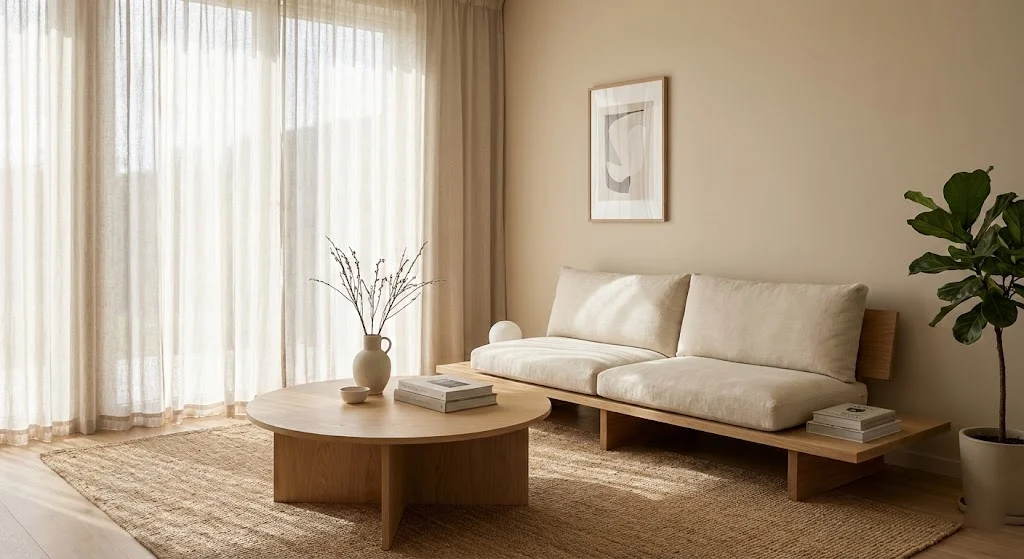
Japanese Interior Design: Japandi is a design style that blends Japanese minimalism with Scandinavian warmth. A Japandi living room uses natural materials, neutral earth tones, low-profile furniture, and clean lines to create a calm, functional space that feels both beautiful and genuinely livable.
There’s something about walking into a Japandi living room that slows your breathing down. The space isn’t empty — it’s intentional. Every piece of furniture earns its spot. Every color feels like it belongs. Nothing shouts at you for attention. And somehow, the whole room feels like a deep exhale.
If you’ve been searching for a design style that gives you both peace and warmth — without making your home look like a cold museum — Japandi might be exactly what you’re looking for. It’s one of the most talked-about interior design styles right now, and for good reason. It works.
What Is Japandi Interior Design?

Japandi is a blend of two design philosophies: Japanese minimalism and Scandinavian style. The word itself comes from combining “Japan” and “Scandi.” On the surface, those two cultures seem worlds apart. But dig a little deeper and you’ll find they share a lot of the same values.
Japanese design is rooted in the concept of wabi-sabi — the idea that there’s beauty in imperfection, simplicity, and things that age naturally. A hand-thrown ceramic bowl with an uneven edge. A wooden table with visible grain. Raw materials left to tell their own story.
Scandinavian design, on the other hand, grew out of necessity. Cold climates and limited resources pushed Nordic designers to create things that were both beautiful and incredibly practical. The result? Clean lines, warm textures, functional furniture, and a love for natural light.
When these two philosophies meet, you get Japandi — a space that’s calm without being cold, minimal without feeling bare, and stylish without trying too hard.
The Core Philosophy Behind a Japandi Living Room
The most important thing to understand about Japandi is that it’s not just an aesthetic. It’s a way of thinking about your space.
Every item in a Japandi living room should earn its place. That means you ask yourself a simple question before putting anything in the room: does this serve a purpose, and does it bring me genuine calm? If the answer is no, it doesn’t belong there. This isn’t about stripping your home down to nothing. It’s about choosing well.
The Japanese concept of “ma” plays a big role here. Ma refers to negative space — the deliberate use of emptiness to let other elements breathe. In a Japandi living room, the space between your sofa and your coffee table matters just as much as the furniture itself. An empty wall isn’t a mistake. It’s a choice that lets everything else in the room stand out.
The Japandi Color Palette for Your Living Room
Color is where a lot of people get tripped up. Japandi isn’t just beige — though beige can absolutely be part of it. The palette is built on warm, earthy neutrals that feel grounded rather than sterile.
Think oatmeal, mushroom, ash grey, sand brown, off-white, and stone. These serve as your foundation. From there, you layer in deeper accent tones to keep things alive — muted olive green, charcoal, deep terracotta, or a soft warm brown. The goal is a room that feels like it belongs to nature without looking like a cabin in the woods.
Avoid anything bright, stark white, or overly cool-toned. A Japandi living room should feel warm, even on a grey day. When you’re choosing paint, lean toward whites with yellow undertones rather than blue ones. For accent colors, go muted and natural — never neon, never corporate.
Natural Materials: The Heart of Japandi Design
If color sets the mood, materials set the soul of a Japandi living room. Natural materials are non-negotiable here. They bring warmth, texture, and a quiet authenticity that no synthetic surface can replicate.
Wood is your best friend. Oak, walnut, bamboo, pine, and maple all work beautifully. The key is layering — you don’t want everything to be the same tone. A medium walnut coffee table beside a pale oak side table and a darker bookshelf creates harmony without uniformity. Avoid lacquered or overly polished finishes. The goal is honest wood, not showroom wood.
Beyond wood, look for stone, linen, cotton, wool, rattan, and ceramic. A linen sofa. A jute rug. Handcrafted ceramic vases. A woven basket used for throw storage. These textures give your eyes somewhere interesting to rest and make the room feel warm rather than flat. Raw ceramics, especially those that look hand-shaped, embody wabi-sabi perfectly — they’re beautiful precisely because they’re not perfect.
Japandi Living Room Furniture: Low, Simple, and Purposeful
Furniture selection makes or breaks a Japandi living room. The rules are straightforward: keep it low, keep it simple, and make sure every piece pulls its weight.
Low-profile furniture is a Japanese design signature. A sofa that sits close to the ground creates a sense of groundedness and calm. Low coffee tables, floor cushions, and platform-style seating all reinforce this feeling. When you sit closer to the floor, the room feels more open and the ceiling feels higher — even when it isn’t.
Clean lines matter. Avoid fussy details, ornate legs, or overly decorative upholstery. You want pieces that look like they were made with care and restraint. That said, Scandinavian influence brings in some softness — gentle curves on armchairs, slightly rounded edges on tables, or a sofa with a low curved back instead of a boxy silhouette.
Multi-functional furniture fits perfectly in a Japandi space. A storage ottoman does double duty. A low bench at the end of a sofa adds seating and holds blankets. Built-in storage keeps visual clutter at bay. When your furniture solves problems quietly, the room stays calm.
Lighting in a Japandi Living Room
Lighting can carry a Japandi living room or completely undo it. The goal is warmth and softness — never harsh overhead fluorescents.
Start with natural light. Keep window treatments minimal. Sheer linen curtains that let sunlight filter through are ideal. They soften the light without blocking it, and they connect the interior to the outside world — a key principle in both Japanese and Scandinavian design.
For artificial lighting, layer it. Use a mix of ambient light (overhead), task light (reading lamps), and accent light (small table lamps or candles). Rice paper pendant lights and woven rattan shades are common Japandi choices — they diffuse light softly and add organic texture at the same time. Warm bulb temperatures around 2700K–3000K keep everything looking cozy rather than clinical.
Candles deserve a mention too. The Scandinavian concept of hygge — finding comfort in small, cozy pleasures — loves candlelight. A few well-placed candles on a coffee table or shelf add warmth without overwhelming the space.
Bringing Nature Indoors
A Japandi living room always has a connection to the natural world. This doesn’t mean filling every corner with plants — it means being intentional about how nature shows up in your space.
A single bonsai tree on a low shelf. A sculptural branch in a tall ceramic vase. A small olive tree in a terracotta pot near a window. These choices are deliberate and spare. They bring life into the room without creating chaos.
Incorporate nature through materials as well — a live-edge wooden shelf, stone coasters, a jute rug with visible texture. When you combine these elements thoughtfully, the room starts to feel like an extension of the outdoors rather than a sealed-off interior.
Ikebana — the Japanese art of flower arranging — is worth exploring here. It uses negative space as part of the arrangement. A few stems placed with intention look far more striking than a big, bushy bouquet. Less really is more.
Decluttering: The Non-Negotiable Step
You can buy the most beautiful Japandi furniture in the world and still not get the look right if your space is cluttered. Decluttering isn’t a style choice in Japandi — it’s the foundation everything else sits on.
Go through your living room and remove anything that doesn’t serve a clear purpose or bring you genuine calm. That collection of random decorative items on the shelf? Edit it down to three pieces, max. The stack of magazines on the floor? Find them a home or let them go. Each surface should have breathing room.
Storage should be hidden where possible. Use closed cabinets, baskets with lids, and furniture with built-in storage. When your mess has a home, your living room stays serene without much effort.
Small Decor Details That Complete the Look
Once the big elements are in place, small decor choices bring the room together. This is where wabi-sabi really shines.
Choose handmade ceramics over factory-perfect pieces. Display a few items of real meaning — a travel find, a family heirloom, a small sculpture you actually love. Add texture through cushion covers in linen or bouclé. Layer a wool throw over the back of your sofa. Place a single piece of abstract wall art with organic shapes and muted tones.
Keep artwork minimal. One or two carefully chosen pieces beat a gallery wall in a Japandi space. Framing matters too — simple black, natural wood, or thin metal frames keep things clean.
Why Japandi Works So Well Right Now
Japandi isn’t just popular because it looks good in photos — though it does photograph beautifully. It resonates because it offers something people genuinely need: a home that slows them down.
We spend a lot of time in environments that demand attention. Screens, noise, constant input. A Japandi living room is designed to do the opposite. It gives your eyes and mind somewhere quiet to land. The warm materials, the soft lighting, the breathing space — all of it adds up to a room that actually helps you rest.
You don’t need to gut your home to get there. Start with what you have. Declutter one surface. Swap out a synthetic throw for a linen one. Add a piece of natural wood. Each small step moves you closer to a space that feels calm, intentional, and genuinely yours.


Comments are closed.