
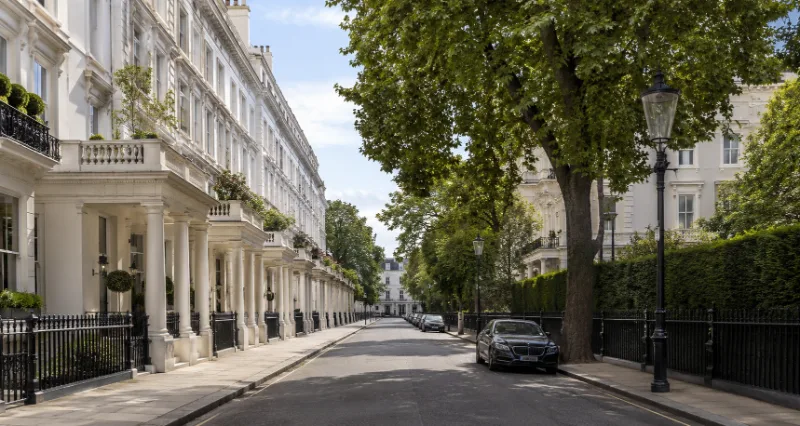
From April 2028, owning a home worth £2 million or more in England will come with a new annual bill on top of council tax: the High Value Council Tax Surcharge, quickly nicknamed the “mansion tax”. It was announced at the Autumn Budget in November 2025, the consultation on how it will work closed in July 2026, and the final design is expected to be confirmed around this month’s Budget.
Here is exactly who pays it, how much it costs, when your home’s fate gets decided — and why the valuation being taken in 2026 matters more than anything that happens in 2028.
What Is the High Value Council Tax Surcharge?
The surcharge is a new yearly charge on the owners of residential property in England worth £2 million or more. It sits on top of ordinary council tax, which you keep paying as now — but unlike council tax, the money goes to the Treasury, not your local council. Social housing is out of scope, and fewer than 1% of homes in England are expected to be caught.
The charge the government uses to justify it is fairness: the average Band D council tax bill in England is £2,280 a year — only £250 less than a £10 million home in Mayfair currently pays under Westminster’s Band H charge. The surcharge is designed to close that kind of gap.
How Much Is It? The Four Bands
| Property value | Annual surcharge |
| £2 million – £2.5 million | £2,500 |
| £2.5 million – £3.5 million | £3,500 |
| £3.5 million – £5 million | £5,000 |
| £5 million or more | £7,500 |
These are flat charges, not percentages — a home worth £2.5 million pays £1,000 a year more than one worth £2.49 million, which is why the band edges matter so much. From 2029-30 the charges are due to rise each year in line with CPI inflation.
The Office for Budget Responsibility estimates around 165,000 homes will be in scope in the first year, raising about £400 million in 2028-29 and £435 million by 2030-31. Roughly 71,000 of those homes sit in the lowest band; about 15,000 will pay the top £7,500. Most affected homes are in London and the South East.

The 2026 Valuation Decides Everything
Whether you pay — and which band you fall into — is set by your home’s value in 2026. The Valuation Office Agency is carrying out a targeted valuation of high-value homes, using a snapshot date of 1 April 2026. Revaluations will then happen every five years.
That has two consequences worth understanding now. First, homes currently hovering just below £2 million are the ones with most at stake in how the VOA assesses them. Second, expect disputes: the OBR itself assumes around one in five affected owners will appeal their valuation, and that roughly 40% of those appeals could succeed because the bands are so narrow.
Who Pays — Including Landlords
Liability falls on the property’s owner, not the person living there. For most people that changes nothing — you own your home, you pay. But for rented homes it matters a great deal: if you let out a property worth £2 million or more, the surcharge is your bill, not your tenant’s, on top of the council tax arrangements you already have. Owners of high-value London lets should factor it into their yields now, not in 2028.
What Is Still To Be Confirmed
The government’s consultation on the details ran from May to 14 July 2026, and its response is still awaited. Open questions include the exact reliefs and exemptions, how appeals will work, and whether there will be a deferral scheme for owners who cannot pay immediately — the OBR’s costings assume one will exist, which would let asset-rich, cash-poor owners roll the charge up until they sell. The Budget on 28 October is the obvious moment for the final design to land.
One thing that appears settled: the threshold. Reports this month suggested extending the charge down to £1.5 million homes had been considered and rejected — lowering it would have more than doubled the number of homes caught, from about 127,000 to 243,000 on some estimates. The starting line stays at £2 million.

What About Scotland and Wales?
The surcharge is England-only. Scotland and Wales run their own council tax and property tax systems, and neither has announced an equivalent charge. (If you are buying across the border, the taxes differ in other ways too — our UK Home Buyer Toolkit includes a Scotland & Wales stamp duty calculator covering Land Transaction Tax and Land and Buildings Transaction Tax.)
Frequently Asked Questions
When does the mansion tax start?
April 2028. It applies to homes in England valued at £2 million or more in 2026, and is charged every year on top of council tax.
How much will I pay?
Between £2,500 and £7,500 a year depending on your home’s band: £2,500 for £2–2.5 million, £3,500 for £2.5–3.5 million, £5,000 for £3.5–5 million and £7,500 above £5 million.
My home is worth just under £2 million. Am I safe?
For now — but it is the official 2026 valuation that counts, not an estate agent’s estimate. If the VOA values your home at £2 million or more, you are in scope, though you will be able to appeal. Valuations are refreshed every five years.
Does my tenant pay it if I rent the property out?
No. The surcharge is charged to the owner. If you are a landlord with a property worth £2 million or more, it is your cost.
Can the charge be deferred?
Possibly. A deferral scheme — letting owners who cannot pay immediately roll the charge up, most likely until the property is sold — was part of the consultation and is assumed in the OBR’s costings, but the final rules have not yet been confirmed.
Sources: GOV.UK, “High Value Council Tax Surcharge” guidance; Office for Budget Responsibility estimates (via The Times); HomeOwners Alliance mansion tax guide; City AM reporting on the £1.5 million threshold, October 2026.

Comments are closed.