
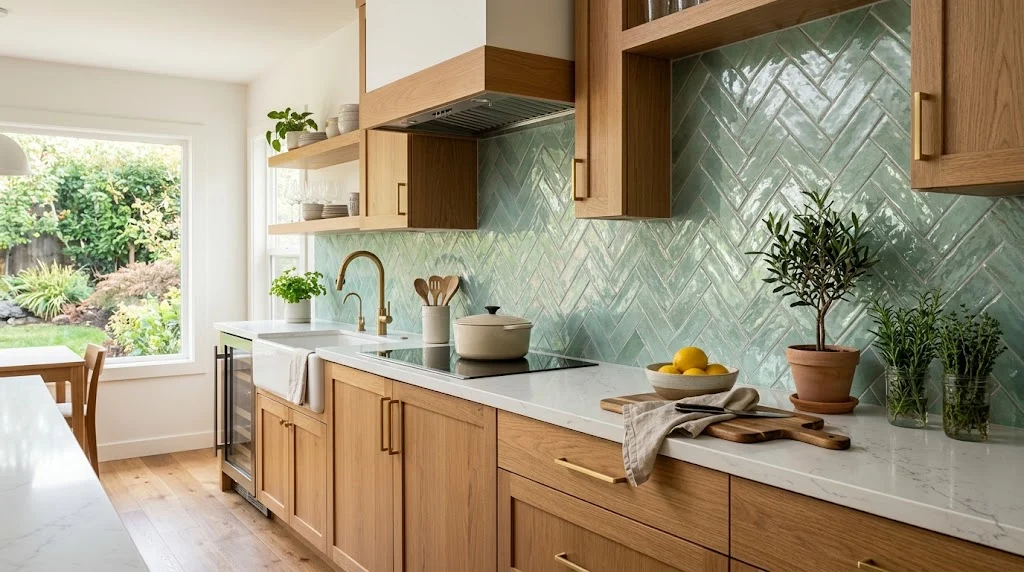
Glass tiles are thin, non-porous tiles made from molten or recycled glass. They resist water, stains, and mold, and they reflect light to brighten a room. Homeowners use them mostly on backsplashes, shower walls, and pools. They cost more than ceramic and need careful installation with white thinset and unsanded grout.
What Are Glass Tiles?
Glass tiles are wall and floor coverings made from glass instead of clay. Manufacturers melt the glass, shape it, and cut or cast it into small squares, long rectangles, or sheets of tiny mosaic pieces. Some companies use recycled bottles and windows as their raw material. The finished tile has a smooth, shiny surface that reflects light and shows color with real depth.

Because glass is see-through, color often sits on the back of the tile or runs through the whole piece. That is why a glass wall seems to glow when sunlight or a lamp hits it. Most people first meet glass tile as a kitchen backsplash. You will also find it in showers, fireplace surrounds, spa walls, and swimming pools.
Glass is non-porous, which means water cannot soak into it. That trait makes glass resistant to water and mold, and it explains most of the benefits you will read about below.
A Quick Look at Glass Tile History
People have set small pieces of glass into walls for thousands of years. Roman and Byzantine artists built glass mosaics in churches, palaces, and bathhouses, and some of that work still shines today. Those early artists chose glass for the same reason you might: it catches light and holds color.
For a long time, glass tile stayed rare and expensive. In recent decades, better manufacturing brought prices down and widened the choices. Now you can buy glass tile in nearly every color, size, and finish, and you can find it at big home stores as easily as at design showrooms.
Types of Glass Tiles You Can Buy

Mosaic sheets are the most common type. The small pieces, often one inch square, come stuck to a mesh backing in sheets about a foot wide. The mesh keeps the spacing even, so installation moves faster. You cut through the mesh on the back with a utility knife to fit the sheet to your wall.
Subway tiles are long rectangles, often three by six inches. They give you a clean, simple look and work well in a backsplash or shower. You can lay them straight, stacked, or in a herringbone pattern. Larger glass tiles, such as twelve by twenty-four inches, mean fewer grout lines. They also weigh more and take more skill to set flat.
Recycled glass tiles use reclaimed glass and appeal to shoppers who want a greener option. They tend to be thicker and often have a speckled or slightly cloudy look. Handmade or cast glass tiles have uneven surfaces, small bubbles, and rich color. Each piece varies a little, and the price is usually higher.
Finish matters as much as shape. Glossy tiles give you the most sparkle. Frosted tiles have a soft, matte look and hide fingerprints and water spots better. Iridescent and metallic finishes shift color as you move around the room. Glossy finishes may need more frequent wiping to stay smudge-free.
Why People Love Glass Tiles
Light is the top reason people pick glass. The smooth surface bounces light around the room. A glass backsplash reflects light and can make a space feel larger. In a dim bathroom or a small galley kitchen, that effect is easy to see.
Water resistance comes next. Glass suits showers and tub surrounds because it stays unharmed by constant moisture. It also does not stain easily, which helps in kitchens where sauce splatters and grease are daily events. Cleaning takes a soft cloth and a mild cleaner.
Color is another strength. Glass tile comes in more shades than most other materials, from soft whites and sea greens to deep blues and bold reds. It generally holds its color well over time, even in bright rooms. You can also mix glass with stone, wood, or metal for contrast. A few glass accent pieces set into a plain wall can change the whole feel of a space.
Recycled options keep used glass out of landfills, which matters to many buyers.
The Downsides to Know Before You Buy
Glass tile costs more than most options, and we will cover numbers in a moment. Installation is also harder than it is for ceramic. Because glass is see-through, the thinset behind it has to be smooth and even, or every ridge will show. Cutting takes care too. A wet saw with a diamond blade made for glass tile is recommended.
Glass can crack under a hard hit or if it sits on an uneven surface. When installed correctly, it is quite durable, but a dropped cast-iron pan can still chip a tile. Repairs are possible. You tape off the damaged pieces, remove them, and set new ones, which is why you should keep a spare box of matching tile.
Glass can also be slippery when wet, so choose a slip-resistant tile for shower floors. Glossy finishes show fingerprints and water spots. Grout color shows through translucent tile and changes how the color looks, so plan for it before you buy.
Best Places to Use Glass Tile
Backsplashes are the easiest place to start. Backsplashes generally have fewer installation requirements than showers. The wall stays dry most of the time, the area is small, and mistakes cost less. A typical kitchen backsplash covers about 30 square feet.
Showers are popular too, but they demand more planning. Shower stalls require a waterproofing membrane, and you must choose a mortar that works with it. Many homeowners hire a pro for this job. Glass also looks striking on a shower ceiling or inside a wall niche, where a small amount makes a big visual change.
Other good spots include fireplace surrounds, bathroom vanity walls, and accent stripes in a plain tile wall. Glass mosaics are common in swimming pools and hot tubs, though pool projects call for products rated for underwater use. Floors are less common. Glass floor tile exists, but most homeowners keep glass on walls because floors need extra grip and strength.
How Much Do Glass Tiles Cost?
Glass tile prices vary a lot, and online sources disagree, so treat every number here as a ballpark. One 2026 guide puts glass tile material at $7 to $30 per square foot, with labor at $8 to $20 because the tile is fragile. Another estimates the total installed cost at $12 to $40 per square foot, with an average of $22.
Compare that with other choices. Ceramic tile runs about $1 to $5 per square foot for the material, and porcelain runs $3 to $10. Glass usually costs several times as much.
Here is what that means for a real project. A 30-square-foot backsplash at $12 per square foot costs $360. At the $22 average, it costs $660, and at $40, it costs $1,200. Setting materials add a little more. A 10-pound bag of unsanded grout runs $18 to $35, and a 10-pound pack of glass tile mortar costs about $25.
You can lower the bill in a few ways. Use glass as an accent band and fill the rest of the wall with ceramic. Pick a simple mosaic sheet over a handmade tile. Do a small backsplash yourself, and hire a pro for showers.
How to Install Glass Tile
Good results start with the wall. It must be flat, clean, and free of dust or residue. You can set glass tile on painted drywall, since the mortar can penetrate the paint. On unpainted drywall, use a drywall primer and allow 48 hours of cure time. Plan your layout on the countertop first, and mark where outlets and switches will interrupt the pattern.
The adhesive matters more than most people expect. Installers use white thinset for glass so the background does not change the tile’s color. Gray mortar can show through and dull the look. Polymer-modified glass tile mortar is highly recommended for showers. Spread it with a small notched trowel, because a deep notch can push mortar up into the grout joints.
Set the bottom row first so it supports the rows above. Press each sheet in gently, and keep joints even with spacers between one-sixteenth and one-eighth of an inch. Use a utility knife to cut the mesh on sheets and a wet saw for cuts through tiles. Let the mortar cure as the label directs before you grout.
Then comes grout. Choose unsanded grout. Some glass tiles can be scratched by sanded grout, and unsanded grout also flows easily into narrow joints. It is sticky enough to stay in place on vertical walls. Spread it with a rubber float, wipe with a damp sponge, and use as little water as you can. Too much water in mixing or washing is the top problem people run into.
In a shower, leave clean, open joints at inside corners and where the wall meets the floor or ceiling. Fill those joints with 100 percent silicone sealant rated for glass tile instead of grout, because these spots move slightly. Once the grout cures, seal it. The glass itself does not need sealing, but the grout lines do.
Choosing the Right Grout Color
Grout color changes how glass tile looks, so test before you commit. Bright white is the most popular choice and boosts light reflection. Light pewter gives soft contrast and hides small stains better than white. Sterling silver adds a faint shimmer.
Epoxy grout is the most reliable option when performance and longevity matter most. It costs more, cures faster, and works best in a pro’s hands. Hold a grout sample next to your tile in the room’s real light. Colors look different under showroom lamps than they do on your wall.
Cleaning and Care
Glass tile is one of the easiest surfaces to keep clean. A non-abrasive cloth and a mild cleaner are enough. Skip scouring powders and rough pads, which can scratch. In the shower, run a squeegee over the wall after use to cut down on water spots. In the kitchen, wipe splatters the same day so grease does not build up on the grout.
Grout needs more attention than the glass. Reseal it as the manufacturer suggests, since sealed grout repels moisture and dirt. Watch for cracks in the silicone at corners, and replace it when it splits. Keep a few spare mosaic sheets from your original order so any repair matches.
Tips for Choosing Glass Tile
Order samples first. Tape them to your wall and look at them in morning light, afternoon light, and lamplight. Glass changes a lot between those settings. Ask the seller whether the tile is rated for wet areas, floors, or pools, since not every glass tile suits every job.
Buy extra. Ten to fifteen percent more than your measured area covers cuts, mistakes, and future repairs. If you order in more than one batch, check that the lot numbers match, because color can shift slightly between batches. Finally, ask any installer you hire whether they have set glass before. Experience shows in the finished lines.
Is Glass Tile Right for Your Home?
Glass tile fits homeowners who want bright, colorful walls that clean up easily. It suits backsplashes best, and it works well in showers when you plan the waterproofing and joints. It costs more than ceramic and asks for more care during installation, so budget for both. If you start small, with a backsplash or an accent strip, you can see how you like it before you take on a larger project.
Start with samples, set a realistic budget, and choose your thinset and grout before you buy tile. Those three steps prevent most of the problems people run into.
Comments are closed.