
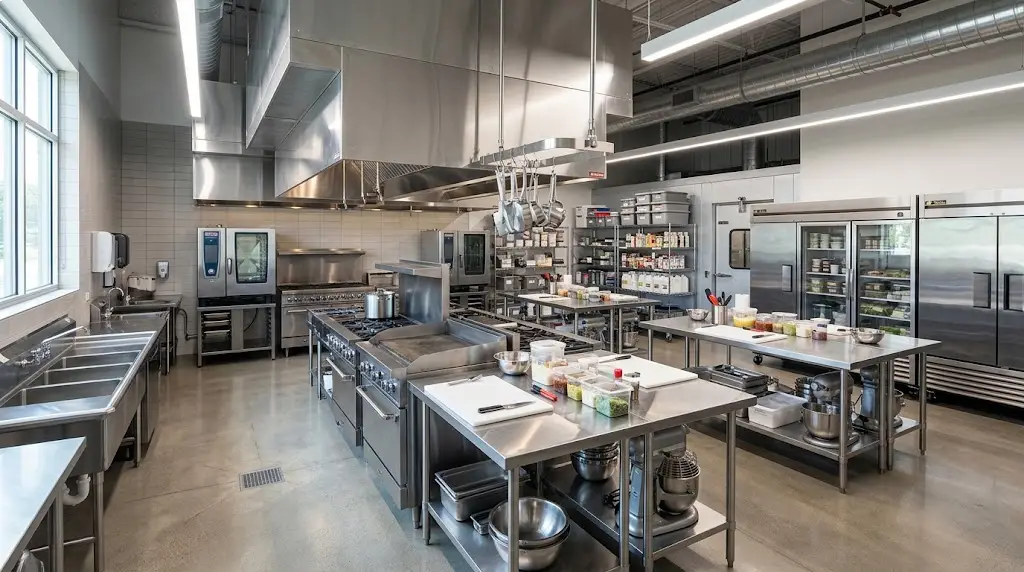
A commissary kitchen is a licensed, commercial-grade kitchen that food trucks, caterers, bakers, and ghost kitchens rent to prepare, cook, and store food. It meets health department standards and often includes shared equipment, storage, and parking, so business owners can operate legally without building their own kitchen from scratch.
What Is a Commissary Kitchen?
A commissary kitchen is a licensed commercial kitchen that food businesses can rent instead of build. Think of it as a professional cooking space set up to meet health codes, with the equipment and storage that a food business actually needs. You pay to use the space by the hour, by the month, or through a membership plan.
The word “commissary” comes from an old term for a store that holds supplies and equipment. A commissary kitchen keeps that same idea. It’s a place where food business owners store ingredients, cook their products, and package meals before sending them out to customers.
Most commissary kitchens sit in industrial areas or on the edges of a city. Since customers never walk through the door, the location doesn’t need to be convenient for foot traffic. This also keeps rent lower, which helps keep rental rates affordable for the businesses using the space.
How a Commissary Kitchen Works
A commissary kitchen works a lot like a gym membership. You sign up, pick a plan that fits your schedule, and book time slots to use the kitchen. Some kitchens let you reserve hours online, while others run on a first-come, first-served basis during open hours.
Once you’re inside, you get access to commercial stoves, ovens, prep tables, and sinks. Many locations also offer refrigerated storage, dry storage, and freezer space so you can buy ingredients in bulk and keep them fresh between visits. Food truck operators often get parking too, since some cities require trucks to park overnight at an approved facility.
Because several businesses share the same space, you’ll usually need to clean up after each session and follow a set schedule. The kitchen operator handles the maintenance, repairs, and health inspections, so you don’t have to worry about running the building yourself.
Who Uses a Commissary Kitchen
Food trucks are some of the most common commissary kitchen renters. Many cities actually require food trucks to prep and store food at a licensed facility instead of a home kitchen, so a commissary becomes a legal requirement rather than just a nice option.
Caterers rent commissary space too, especially when they need a bigger kitchen for large events. Bakers, meal prep companies, and beverage brands use these kitchens to produce their products at a scale a home kitchen can’t handle. Ghost kitchens and virtual restaurants, which cook only for delivery apps and never serve customers in person, also rely heavily on commissary space since they don’t need a dining room at all.
Even small restaurant owners sometimes rent extra commissary hours when their own kitchen gets too busy to keep up with catering orders or new menu items.
Commissary Kitchen vs Commercial Kitchen
People often use these two terms as if they mean the same thing, but there’s a real difference. A commercial kitchen is any kitchen built to meet health department standards for professional food production. Every commissary kitchen is a commercial kitchen, but not every commercial kitchen is a commissary.
A commercial kitchen might belong to one restaurant and serve only that business. A commissary kitchen is a specific type of commercial kitchen designed for shared use, where multiple food businesses rent time in the same licensed facility. The equipment looks similar in both, with things like fire suppression systems, three-compartment sinks, grease traps, and food-safe surfaces, but the shared setup is what sets a commissary apart.
So if someone asks whether they need a commercial kitchen or a commissary kitchen, the real question is whether they want to share the space with other businesses or have it all to themselves.
Types of Commissary Kitchens
Shared commissary kitchens are the most common and the most affordable option. Several food businesses split the cost of rent, utilities, and equipment, which keeps monthly fees lower for everyone involved. You book your time slot, use the space, and clear out for the next renter.
Private commissary kitchens cost more, but you get the whole space to yourself. This works well for a growing ghost kitchen brand or a food truck company running several vehicles that all need a central home base.
Some food businesses skip the traditional commissary altogether and rent a restaurant’s kitchen during its off hours instead. This gives full access to a working kitchen without paying commissary prices, though it usually doesn’t come with truck parking or storage.
Non-traditional kitchens also exist in places you might not expect. Churches, schools, social clubs, and retirement communities sometimes have commercial-grade kitchens sitting empty for parts of the day, and they rent that space out to bring in extra income.
What Equipment You’ll Find
Commissary kitchens are built around the tools that food businesses actually need every day. Stoves, ovens, and prep tables cover the basic cooking and prep work, while three-compartment sinks and handwashing stations keep everything up to health code.
Storage matters just as much as cooking space. Dry storage rooms, walk-in coolers, and freezers let renters buy ingredients in bulk instead of running to the store every day. Grease trap systems and proper waste disposal areas handle the mess that comes with commercial cooking, and loading access makes it easier to bring in supplies and take out finished products.
Food truck commissaries often add a few extras on top of the basics. Overnight parking, water and waste hookups, and sometimes even on-site truck maintenance make life easier for mobile vendors who need more than just a kitchen.
How Much It Costs to Rent One
Renting a commissary kitchen by the hour usually runs between fifteen and forty dollars, depending on the city and the amenities included. Bigger cities with higher real estate costs tend to sit at the higher end of that range, while smaller towns often come in cheaper.
Monthly plans work out to a better deal for most business owners. Average monthly rates land somewhere between two hundred fifty and one thousand dollars, though cities like New York or Los Angeles can push that closer to twelve hundred a month. Many kitchens also offer membership plans that bundle a set number of hours into one flat monthly fee, which helps if your schedule stays fairly predictable.
Renters should also budget for extra costs beyond the base rental fee. Storage space, cleaning services, and equipment rental can each add another twenty to two hundred dollars depending on the facility. Most kitchens also require a security deposit somewhere between two hundred fifty and one thousand dollars, which gets refunded later as long as nothing gets damaged.
How to Choose the Right Commissary Kitchen
Storage space matters more than most new renters expect. Shared kitchens split refrigerated and dry storage among every tenant, so ask exactly how much space you’ll actually get before signing anything.
Parking counts too, especially for food truck operators. Some cities legally require overnight parking at an approved facility, so check whether the kitchen offers covered or open parking and how secure that lot really is.
Location plays a bigger role than people assume as well. A cheaper kitchen thirty minutes outside the city might cost you more in gas and time than a slightly pricier one closer to your delivery zone. Talking to current renters about cleanliness, equipment reliability, and how the management handles problems can tell you more than any brochure will.
Legal Requirements and Health Inspections
Health departments treat commissary kitchens the same way they treat any commercial kitchen. Inspectors check the space regularly to confirm it meets sanitation rules, storage standards, and safe food handling practices. Because the commissary operator handles these inspections, renters get the benefit of a compliant kitchen without managing the paperwork themselves.
Many cities require food trucks and mobile vendors to list an approved commissary as their official base of operations before they can even get a permit. Skipping this step can mean fines or losing the ability to operate legally, so checking local health department rules before picking a kitchen saves a lot of trouble later.
Benefits of Using a Commissary Kitchen
Building your own commercial kitchen costs a huge amount of money and takes months to set up properly. A commissary kitchen skips all of that. You get access to professional equipment, storage, and a licensed space the same week you sign up, instead of waiting on permits, contractors, and construction.
Shared costs make the whole setup more affordable too. Splitting rent, utilities, and equipment maintenance across several businesses keeps monthly bills far lower than running a kitchen alone. And since the commissary handles repairs and upkeep, renters spend their time and energy on cooking and growing their business instead of fixing a broken oven.
For new food entrepreneurs, this combination of low upfront cost and full legal compliance makes a commissary kitchen one of the easiest ways to get a food business off the ground and keep it running the right way.

Comments are closed.