
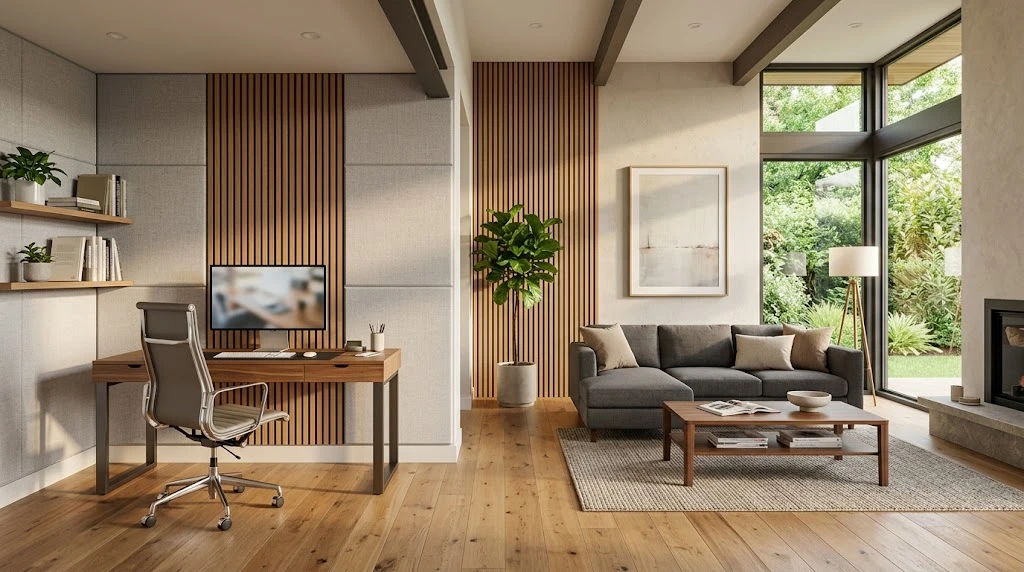
Acoustic panels are sound-absorbing boards mounted on walls or ceilings to cut down echo and reverberation. They’re made from materials like foam, fiberglass, or mineral wool, which trap sound waves and turn them into small amounts of heat. This makes rooms sound clearer, calmer, and easier to hear in.
Have you ever walked into a room and felt like every word bounced off the walls? Maybe it was a home office, a restaurant, or even your own living room. That echo you’re hearing isn’t your imagination. It’s sound waves crashing into hard surfaces and reflecting back at you again and again.
Acoustic panels fix that problem. They’re one of the simplest ways to make a noisy, echo-filled space feel calm and comfortable. In this guide, we’ll walk through what these panels are, how they work, the different types you can buy, and where to put them for the best results.
What Are Acoustic Panels?

Acoustic panels are specially made boards designed to absorb sound instead of letting it bounce around a room. You’ll find them in recording studios, offices, restaurants, home theaters, and even bedrooms. Anywhere sound needs to be controlled, these panels can help.
Most people picture the foam squares seen in old movies about music studios. But today’s acoustic panels come in far more styles. Some look like wood slats. Others resemble fabric-covered art pieces you’d hang on a gallery wall. The core job stays the same no matter the look: soak up sound energy before it can reflect and cause echo.
The idea isn’t new either. Recording studios started using early versions of these panels in the early 1900s to sharpen sound quality. Since then, the technology has spread into homes, schools, and offices everywhere.
How Do Acoustic Panels Actually Work?

Sound moves through the air as waves. When those waves hit a hard surface like drywall, glass, or tile, most of that energy bounces straight back into the room. That bouncing is what causes echo and makes rooms sound harsh or noisy.
Acoustic panels change that outcome. Inside each panel sits a porous material such as foam, fiberglass, or mineral wool. When sound waves enter this material, they get pulled into tiny air pockets and gaps. Friction inside those gaps converts the sound energy into a small amount of heat instead of sending it back out.
The result is a room where conversations sound clearer and background noise fades into the background. This matters most in rooms with a lot of hard, flat surfaces. Homes with plasterboard walls, laminate floors, and large windows reflect a huge share of sound energy, often more than 70 percent. That’s why so many modern homes and offices sound louder than they should, even when nothing unusual is happening.
Panel performance gets measured using something called the Noise Reduction Coefficient, or NRC. This number ranges from 0 to 1. A panel rated at 0.80 absorbs 80 percent of the sound that hits it and reflects the rest. Higher NRC ratings mean better sound absorption, which is worth checking before you buy.
Main Types of Acoustic Panels
Not every acoustic panel works the same way, and picking the right type depends on your space and your goals.
Fabric-wrapped panels use a core of fiberglass or mineral wool covered in breathable fabric. These deliver the strongest overall sound absorption, often reaching NRC ratings between 0.85 and 1.00. They work well in offices, studios, and living rooms where both looks and performance matter.
Foam panels are the classic choice most people picture first. They’re light, affordable, and simple to install, which makes them popular for home studios and podcast rooms. Their performance usually sits lower than fabric-wrapped panels, with NRC ratings between 0.25 and 0.65, and they tend to work best on higher-pitched sounds.
Perforated wood panels bring a more polished, upscale look to a room. Small holes or grooves in the wood let sound pass through to an absorbing material hidden behind it. These suit offices, restaurants, and living spaces where design matters as much as function.
Slat panels use vertical wood strips backed by an absorbing layer. They give a room a warm, natural feel while still cutting down on reflected sound. Many designers now choose these for feature walls in homes and offices.
3D acoustic panels use a textured, sculpted surface to both absorb and scatter sound waves. These work well when a room needs a decorative touch along with better acoustics.
Where Should You Place Acoustic Panels?
Buying the right panels only solves half the problem. Where you place them changes how well they perform, sometimes by a wide margin.
Start by thinking about reflection points, which are the spots where sound waves first hit a hard surface and bounce back. In a living room or office, this usually means the walls directly across from speakers, seating areas, or windows. In a home theater, the side walls near your front speakers matter most, since that’s where the first reflections happen.
Height matters too. Panels should sit roughly between six and twelve feet off the floor for most rooms, right around ear level for someone standing or seated. Mounting panels too high, like near the ceiling, means sound reaches them too late to make a real difference.
Spreading panels across multiple walls works better than clustering them all in one spot. A few panels spaced evenly around a room outperform the same number of panels bunched together in a corner. For general rooms, aim to cover somewhere between 25 and 35 percent of your wall surface. Studios and rooms with serious acoustic needs may require closer to 50 percent coverage.
Corners deserve special attention too. Bass frequencies tend to build up and get muddy in corners, so thicker panels or dedicated bass traps placed there can clean up low-end sound significantly. Never leave two parallel walls completely bare, either. Bare parallel surfaces create a bouncing effect called flutter echo, which shows up even in small rooms.
How to Choose the Right Acoustic Panel for Your Space
The best acoustic panel depends on what your room actually needs. Start by asking what kind of sound problem you’re solving. A home office dealing with video call echo needs different treatment than a garage band practice space trying to keep noise from spreading through the house.
Check the NRC rating before buying anything. A higher number means stronger sound absorption, but don’t stop there. Look at how a panel performs across different frequency ranges too, especially if speech clarity matters most to you. Some panels handle high-pitched sounds well but do little for deeper, bass-heavy noise.
Thickness and density play a real role in performance as well. Thicker, denser panels tend to absorb a wider range of frequencies, which makes them a smart pick for rooms with serious noise problems. Thinner panels can still help but usually work best in smaller spaces or rooms with milder echo issues.
Don’t forget about fire safety, especially in commercial buildings. Many public spaces require panels to meet specific fire ratings, so check local building codes before ordering panels for an office or restaurant.
Finally, think about how the panels will look once installed. You’ll be staring at these things every day, so pick a style, color, and shape that fits the room instead of settling for whatever looks generic.
Common Mistakes People Make With Acoustic Panels
A lot of people buy acoustic panels, hang a couple on one wall, and wonder why the room still sounds echoey. Using too few panels is one of the most common issues. Small rooms with serious echo problems often need more coverage than people expect.
Placing panels randomly instead of at actual reflection points is another frequent mistake. A panel hung purely for decoration in the wrong spot won’t do much for sound quality, even if it looks nice. Take a few minutes to think about where sound is actually bouncing before you start drilling holes.
Ignoring corners is another slip-up. Bass buildup in corners causes a rumbling, boomy sound that regular wall panels won’t fix on their own. Adding a bass trap or a thicker panel in these spots makes a noticeable difference.
Some people also assume acoustic panels will block outside noise from entering a room, like traffic or a noisy neighbor. That’s not what these panels are built for. Acoustic panels absorb sound already inside a room; blocking outside noise requires different soundproofing methods, such as heavier walls, sealed gaps, or specialized insulation.
Bringing It All Together
Acoustic panels offer a straightforward way to fix a noisy, echoey room without a full renovation. Whether you’re setting up a home studio, calming down an open-plan office, or just trying to make your living room feel less harsh, the right panels in the right spots make a real difference.
Start by figuring out where sound is bouncing the most in your space. Pick panels with an NRC rating that matches your needs, and don’t be afraid to mix styles if it helps the room look better while still doing its job. A little planning goes a long way toward a room that sounds as good as it looks.
Ready to quiet down your space? Pick a few reflection points in your room today and try adding your first set of acoustic panels this week.


Comments are closed.