
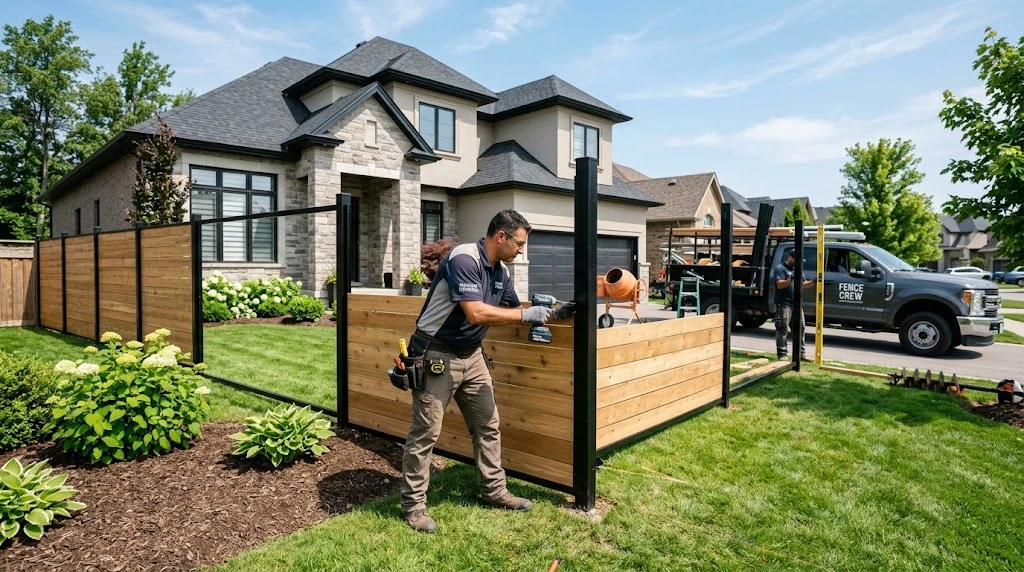
Professional fencing solutions deliver lasting performance through three main factors: high-quality materials suited to your climate, correct installation techniques like proper post depth and spacing, and ongoing maintenance support. Together, these elements protect your property, cut long-term costs, and keep your fence standing strong for decades.
Why Fence Performance Matters More Than You Think
A fence is one of those things you notice only when it stops working. Maybe a post leans after a storm. Maybe the gate starts sticking. Maybe rust spots show up two years after installation, way sooner than they should.
These problems rarely happen by accident. They usually trace back to one thing: how the fence was built in the first place. A fence that looks great on installation day but falls apart within a few seasons isn’t actually a good investment. It’s a bill you’ll pay twice.
That’s the real difference between a basic fence job and a professional fencing solution. One focuses on getting something up quickly. The other focuses on making sure it still works ten or twenty years from now. Performance isn’t just about how the fence looks the day it goes in. It’s about how well it holds up against wind, weather, ground movement, and daily use.
The Foundation: Why Materials Make or Break Longevity

Every fence starts with a material choice, and this decision affects everything that comes after it. Wood offers a warm, classic look, but it needs regular staining and sealing to fight off rot and insect damage. Skip that upkeep, and you’ll be replacing boards within a few years.
Vinyl takes a different approach. It resists rot, pests, and moisture almost entirely, which makes it a smart pick for property owners who want a clean look without constant upkeep. It won’t need painting, and it holds its color well over time.
Aluminum and steel bring serious strength to the table. Aluminum resists rust and corrosion naturally, so it holds up in humid or coastal climates without much fuss. Steel, especially when galvanized or powder-coated, offers even more durability and works well anywhere security is the top priority.
Chain link remains popular for a simple reason: it’s tough, affordable, and easy to repair if something does go wrong. It won’t win any beauty contests, but for industrial sites, storage yards, or large perimeters, it gets the job done for years without complaint.
A professional fencing company won’t just ask what you want your fence to look like. They’ll ask about your climate, your soil type, your property’s exposure to wind, and how much upkeep you’re willing to commit to. That conversation shapes a material choice built to last, not just one that looks good in a photo.
Installation Quality Is Where Performance Really Begins
Here’s something a lot of property owners don’t realize: two fences made from the exact same material can perform completely differently based on how they were installed. Materials matter, but installation is where lasting performance actually gets built.
Post depth is a big piece of this. Posts that aren’t set deep enough will shift, lean, or pull loose after a few hard freezes or a rainy season. Professional installers dig below the frost line in colder climates, which keeps the ground’s freeze-and-thaw cycle from pushing posts out of position.
Spacing matters too. Posts placed too far apart put extra strain on the panels between them, especially during high winds. Set them at the right intervals, and the whole fence line shares the load evenly instead of concentrating stress on a few weak points.
Hardware choice plays a quieter but important role. Galvanized screws, bolts, and brackets resist rust far longer than standard hardware. A fence can have perfect posts and premium panels, but if the connecting hardware corrodes early, the whole structure weakens from the inside out.
Grading and drainage also deserve attention. Water pooling around fence posts speeds up rot in wood and corrosion in metal. A professional crew accounts for your yard’s natural slope and adjusts the installation so water moves away from the fence line instead of sitting against it.
Security and Access Control Built to Last
For many property owners, especially business owners, a fence isn’t just about privacy or curb appeal. It’s a security tool. A well-built fence acts as a real deterrent, making it harder and less appealing for anyone to attempt unauthorized entry.
Height plays a role here, along with design features like anti-climb tops or reduced foot and hand holds. Commercial properties often need taller fencing than residential ones, and the specific height usually depends on local codes as well as the level of risk on-site.
Gates and access points deserve just as much attention as the fence line itself. A high-security fence with a poorly built gate is only as strong as its weakest point. Professional installers make sure gates align properly, latch securely, and can support the addition of access control systems like keypads or card readers if you need them down the road.
Reduced liability is another benefit worth mentioning. Clear boundaries and controlled access can lower the chances of accidents on your property, which can also translate into savings on insurance premiums over time. It’s not the flashiest benefit, but it adds up.
Weather Resistance and Climate-Specific Solutions
Weather is the single biggest test any fence will face over its lifetime, and different climates call for different strategies. A fence built for a dry, sunny region needs different protection than one built to survive humid summers or freezing winters.
In areas with heavy rain or humidity, materials that resist moisture absorption prevent warping and mold growth. Vinyl and properly sealed wood both perform well here, as long as drainage around the base is handled correctly during installation.
Coastal properties face a different challenge: salt air. Salt speeds up corrosion in untreated metal, so aluminum or specially coated steel becomes the smarter choice near the ocean. Standard steel without protective coating can start showing rust within a single season in these conditions.
Cold climates bring their own demands. Ground freezing and thawing puts pressure on posts, which is why frost-line-depth installation matters so much in northern regions. Materials also need to handle temperature swings without becoming brittle or cracking.
A professional fencing company factors all of this in before recommending a solution. That regional knowledge is hard to replace with a generic, one-size-fits-all approach, and it’s often the difference between a fence that lasts fifteen years and one that needs major repairs after five.
Ongoing Maintenance Keeps Performance Steady
Even the best-built fence needs some attention over time, though how much varies a lot by material. Wood needs the most consistent care, including restaining or sealing every few years to protect against weather damage. Skip this step, and you’ll see cracking, warping, and rot much sooner than expected.
Vinyl and aluminum need far less maintenance. Occasional cleaning keeps them looking sharp, and neither material requires painting or sealing. This lower-maintenance profile is a major reason both options have grown so popular for property owners who want durability without a long list of upkeep tasks.
Chain link fencing benefits from periodic checks for loose ties, damaged sections, or gate hardware that’s starting to wear. Repairs are usually quick and affordable, which is part of why this option remains a practical long-term choice for larger properties.
Many professional fencing companies offer maintenance plans or repair services after installation. This kind of ongoing support matters because small issues, caught early, rarely turn into expensive problems. A loose post or a rusting hinge is a quick fix today and a bigger job if it’s ignored for a year.
Choosing the Right Professional Partner
All of this points to one conclusion: lasting fence performance depends heavily on who you hire. A qualified fencing company brings more than installation labor. They bring an understanding of local codes, climate conditions, material behavior, and long-term maintenance needs.
Ask potential contractors about their experience with your specific property type, whether that’s residential, commercial, or agricultural. Ask how they handle post depth in your region and what hardware they use. A contractor who can answer these questions clearly, without hesitation, is usually one who takes long-term performance seriously.
Warranties are worth checking too. A company confident in their workmanship will typically back it with a product and labor warranty, giving you real protection if something goes wrong down the line.
At the end of the day, a fence is a long-term investment in your property’s security, privacy, and appearance. Choosing a professional fencing solution, built with the right materials and installed the right way, is what turns that investment into something that keeps paying off for decades instead of years.


Comments are closed.