
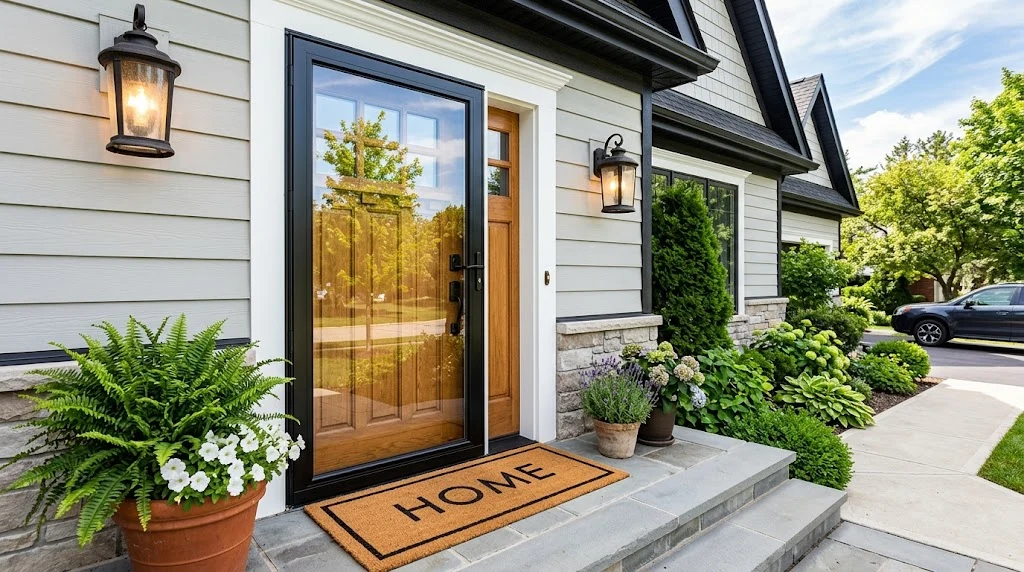
A storm door is a secondary door installed in front of your main entry door. It protects your home from harsh weather, improves insulation, and adds ventilation through screen panels. Most homeowners spend between $187 and $683 for a complete installation, including materials and labor.
Your front door takes a beating every single day — sun, rain, wind, and cold all chip away at it season after season. A storm door stands between your main door and all of that. It’s one of the smartest, most affordable upgrades you can make to protect your home and cut down on energy loss. But with so many options out there, knowing where to start feels overwhelming.
This guide walks you through everything — from the types of storm doors to how much you should expect to spend.
What Is a Storm Door and Why Do You Need One?

A storm door is an extra door installed in front of an existing exterior door. It protects the home from the elements, extends the life of the front door, and aids ventilation. The term itself was first used back in 1878.
Today’s storm doors do a lot more than block wind. In winter, a storm door lets you open the front door to allow in light — but not cold air — through the glass panel. It also provides an added layer of insulation, blocking cold drafts from entering or heated air from escaping. In warm weather, screen panels allow air to enter and circulate while keeping bugs and debris out.
If you have a wooden front door, a storm door is especially valuable. Wood is vulnerable to moisture, sun damage, and temperature swings. Adding a storm door in front of it can add years to its lifespan and save you the cost of a full door replacement down the line.
Types of Storm Doors

Not all storm doors work the same way, and the right type depends on what you actually need from yours.
Full-view storm doors have a complete glass panel that allows a full view of the outside. If desired, the glass can be replaced with a screen, though this requires storing the glass panel separately. Ventilating storm doors have two glass panels alongside one or two screen panels that can be adjusted vertically to reveal a screen section — no need to fully remove the glass. Retractable or roller screen storm doors offer a full glass panel and a hidden screen that can be pulled down. This screen operates from a tensioned roller housed at the top of the door and combines the benefits of both the full-view and ventilating styles.
High-view storm doors are worth considering if you want extra weather protection. The glass sits at the top of the door while a solid panel covers the lower section, making them tougher against hard rain and wind at ground level. They also tend to cost less than full-view models.
The right choice really comes down to how much light you want, how much privacy you need, and how important fresh airflow is to you.
Storm Door Materials: Which One Should You Choose?
Storm doors can be made from aluminum, fiberglass, or wood. Aluminum storm doors are a popular choice because they are lightweight and resistant to rust, making them a solid option for areas with high humidity or frequent rain. Fiberglass storm doors are known for their strength and ability to withstand harsh weather conditions — they don’t warp or rot, which makes them great for regions with extreme temperatures. Fiberglass doors can also mimic the look of wood, giving you a classic aesthetic without the upkeep.
Wood storm doors look beautiful, but they require more maintenance and don’t hold up as well in wet or high-wind environments. Aluminum and synthetic doors usually have a hard foam inner core that provides insulation against heat and cold. For most homeowners, aluminum is the practical starting point — it’s affordable, low-maintenance, and widely available in a range of styles and finishes.
How Much Does a Storm Door Cost?
Storm door costs vary quite a bit depending on the type, material, and whether you hire a professional.
Storm door installation costs range from about $187 to $683 per door for materials and labor, with an average of about $434. All in, you can expect to spend anywhere from around $100 for a basic DIY kit to over $1,800 for customized doors.
The labor cost to install a storm door ranges from about $250 to $450 per door. Most local contractors charge between $40 and $90 per hour.
Glass type also plays a role in the final price. Low-E glass improves energy efficiency, while tempered glass strengthens your door against high winds. These improved glass panels can add up to $80 per pane to the overall cost.
To keep costs down, stick with standard sizes. Storm doors typically come in 30, 32, 34, or 36-inch widths. Custom options will drive up the price noticeably. You can also save $50 to $100 by removing the old door yourself before the installer arrives.
Key Features to Look for Before You Buy
A storm door is only as good as its features. Here’s what actually matters when you’re comparing models.
Weatherstripping is one of the most important elements. Good weatherstripping seals the gap between the door and the frame, blocking drafts and moisture. Without it, you lose most of the energy-saving benefits.
Glass quality makes a significant difference. Low-E glass reduces heat transfer, tight seals prevent drafts, and an insulated core adds extra thermal resistance. A good storm door acts as a barrier, preventing air leaks and helping your HVAC system run more efficiently.
Security features are worth the upgrade if your front door area is exposed. Look for doors with a strong locking mechanism, like a deadbolt lock. Shatter-resistant glass is another plus — you want something that can withstand a kick or a thrown object.
Finally, look at the closer mechanism. A quality pneumatic or hydraulic closer keeps the door from slamming, which protects both the door and your frame over time.
How to Measure for a Storm Door
Getting the right fit is critical. A storm door that doesn’t fit correctly won’t seal properly, and all the insulation benefits go out the window.
Before you purchase, take complete measurements of the inside of the existing door casing and take note of whether you need a left- or right-opening door. Some doors are interchangeable, but not all. Because the storm door needs to attach to the existing door frame, make sure yours is solid, without splits or dry rot.
Measure the height and width of the door opening at three points each — top, middle, and bottom — and use the smallest measurement. This ensures the door will fit even if the frame is slightly uneven. Most manufacturers list storm doors by the rough opening size, so double-check the specs before ordering.
DIY vs. Professional Installation
If you have decent DIY skills, the right tools, and a second pair of hands, you can install a storm door yourself. Most storm doors come prehung on a frame with an installation kit that includes all the hardware. Required tools typically include a drill, Phillips head screwdriver, measuring tape, a level, an angle tool, scissors, and safety goggles.
That said, professional installation brings real advantages. Poor sealing cancels out the energy-saving benefits that make the investment worth it. Many door manufacturers also require professional installation to keep warranty coverage valid — if problems come up during the warranty period, you’ll need proof of proper installation to get repairs or replacements.
Expect to pay $300 to $600 for professional installation. Be cautious of very cheap installers, as poor workmanship can lead to costly repairs down the road. Get at least three quotes and ask about workmanship warranties before committing.
Storm Door Maintenance Tips
A storm door is built to last, but it needs a little attention to stay that way. Most storm doors carry a 10-year warranty, and regular care helps you get every bit of use out of them.
Clean the frame and glass a few times a year with mild soap and water. Avoid harsh abrasives that can scratch aluminum finishes or damage weatherstripping. Check the weatherstripping at least once a year and replace it if it looks cracked, flattened, or compressed.
Lubricate the hinges and door closer annually with a silicone-based spray. If the door starts dragging or not closing fully, the closer likely needs adjustment — most models have a simple adjustment screw that controls the closing speed and tension.
Swap glass and screen panels at the start of each season. This keeps ventilation working in summer and insulation holding up in winter. Store glass panels in a safe, dry location to prevent cracks.
Is a Storm Door Worth It?
Short answer — yes, for most homes it absolutely is. Improved insulation reduces energy costs, protection from the elements extends the life of primary entry doors, and enhanced security through multipoint locking systems adds real peace of mind. Retractable screens allow airflow while keeping pests out, and the addition can increase property value and market appeal.
If your front door faces direct sun, heavy rain, or strong seasonal winds, a storm door pays for itself faster than you’d expect. Choose the right type for your climate, pick durable materials, and get it installed properly — and you’ll have a door that works hard for your home for well over a decade.

Comments are closed.