
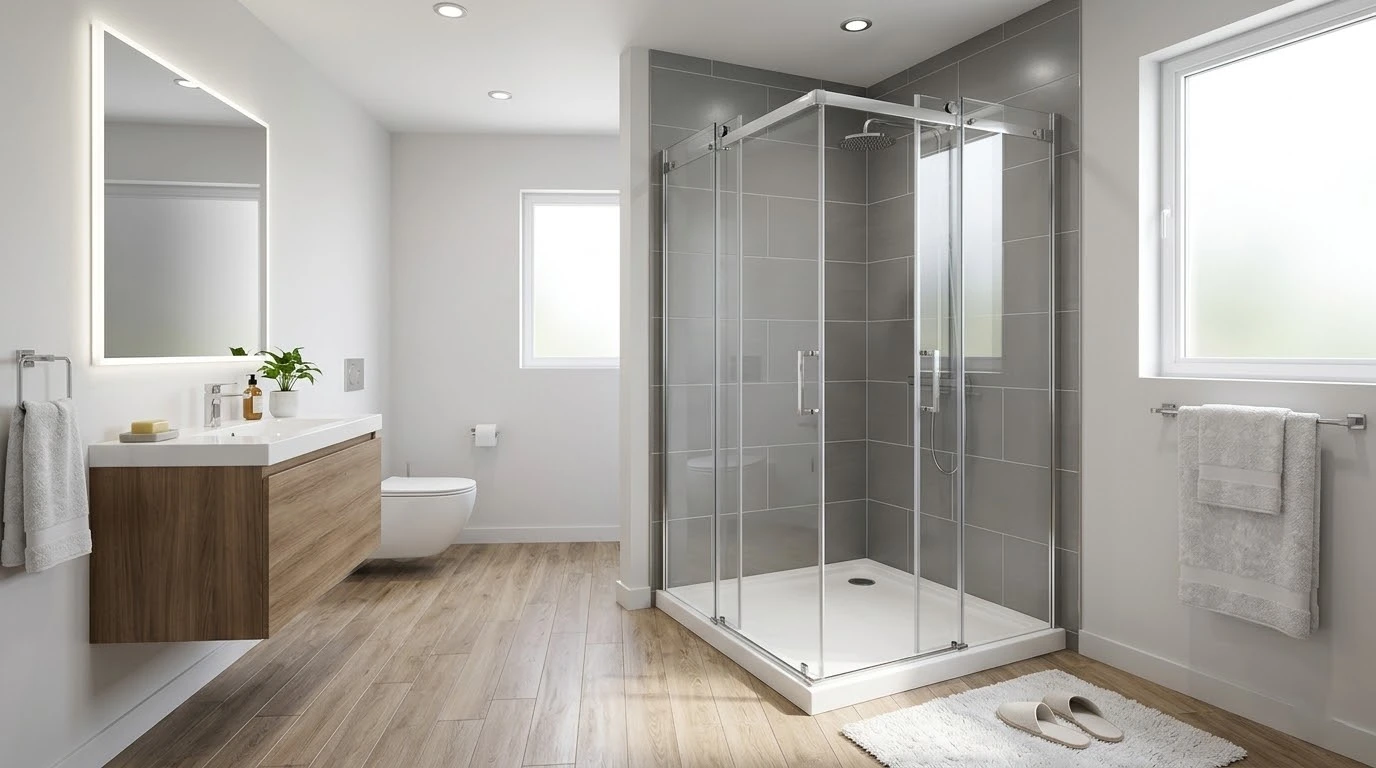
A typical corner shower measures 36 inches by 36 inches. This size fits most standard bathrooms while leaving enough room to move comfortably. Sizes can range from 32×32 inches on the compact end up to 48×48 inches or larger for a more spacious setup.
You want to add a corner shower to your bathroom, but you’re not sure how much space you actually need. Too small and every shower feels like a phone booth. Too large and you’ve eaten up half the room. Getting the size right from the start saves you time, money, and a whole lot of frustration.
The standard and most commonly installed size of a corner shower is 36 inches by 36 inches. That’s a good starting point, but there’s much more to the story. Corner showers come in several shapes and styles, and each one handles space a little differently. This guide walks you through everything you need to know — from the smallest code-legal options to comfortable larger builds — so you can make a confident decision.
What Counts as a Corner Shower?

A corner shower is exactly what it sounds like — a shower unit that sits in the corner of your bathroom, using two existing walls as part of its structure. Instead of occupying a full wall like an alcove shower, it tucks into the corner and keeps the rest of the room open.
This design works especially well in smaller bathrooms because it uses space that would otherwise sit empty. You get a fully functional shower without giving up the floor space you need for a vanity, toilet, or just room to move around. A corner shower offers an ideal solution for maximizing both space and functionality.
The Most Common Corner Shower Size

The average size for a corner shower is typically around 36 inches by 36 inches. This size is spacious enough for a comfortable shower while still fitting well in most standard bathrooms.
At 36×36, you get 9 square feet of floor space. That’s enough room to turn around, wash your hair without elbowing the wall, and feel like you’re actually showering — not just getting wet in a closet. Most people find this size perfectly comfortable for daily use.
The standard corner shower size ranges from 32 inches wide by 32 inches deep up to 48 inches wide by 48 inches deep. That wide range gives you real flexibility. Whether you’re working with a tight powder room or a generous guest bath, there’s likely a corner shower size that works for your floor plan.
What Are the Minimum Size Requirements?

Before you start shopping, you need to know what’s legally allowed. Building codes set a floor on how small a shower can be, and it’s smaller than you might expect.
A 30×30 shower meets the minimum shower size per most local building codes, but it can feel tight for daily use. It’s best suited for smaller bathrooms where space is limited and the user prefers quick showers.
A 30×30 shower gives you just 6.25 square feet. That works in a pinch — think a basement bathroom or a small guest space — but most adults will find it cramped over time. If you can manage even a few extra inches, you’ll notice the difference every single day.
If you have enough room, upgrading to at least 36×36 inches will improve comfort and shower space usability. That extra 6 inches on each side makes the interior feel noticeably more open, even though the overall footprint is still very efficient.
Corner Shower Styles and Their Typical Dimensions
Not all corner showers are the same shape. The style you choose affects how the dimensions translate to usable interior space.
Square Corner Showers
This is the classic option. Two flat glass panels meet at a 90-degree angle in the front, with the bathroom’s two corner walls forming the back. Square showers are popular because they fit neatly into a corner and work in both small and medium bathrooms. Standard shower pan sizes for square stalls often include 32×32, 34×34, 36×36, and sometimes 42×42 inches.
The interior on a square model is simple and predictable. What you see on the outside is roughly what you get inside, minus a couple of inches for wall thickness.
Neo-Angle Corner Showers

A neo-angle shower adds a small angled panel across the front corner, creating a five-sided shape. The base width of a neo-angle corner shower ranges from around 36 inches to 42 inches. The door opening width can go up to about 24 inches to 30 inches. The neo-angle corner shower dimension makes it easier to fit snugly into a limited bathroom space.
This style has a modern look and tends to feel a bit more open because the angled door panel removes that sharp 90-degree entry corner. The interior is slightly less rectangular, but most people find the usable space very similar to a standard square model.
Quarter-Circle (Quadrant) Corner Showers
Quarter-circle corner showers feature a curved design that shares similarities to a quarter-circle. They are a perfect fit for small bathrooms as the rounded circle ensures space utilization. The curved glass door creates a visually appealing look. It is a perfect option for studio or one-bedroom apartments. It also makes your space look a little bit larger while keeping the coziness intact.
These typically run in the 36-inch range from wall to wall. The curved front makes them feel less boxy than a standard square unit.

Rectangular Corner Showers
Rectangular corner showers provide a larger interior space compared to the quarter-circle and neo-angle options. The standard size of a rectangular corner shower is around 32 inches to 48 inches. These stretch longer along one wall, giving you more elbow room and the option to add a bench or a second showerhead. If you have the wall length to spare, a 36×48 or 36×60 rectangular corner shower feels generous and comfortable.
Shower Height: Don’t Forget to Look Up
Most people focus entirely on the floor dimensions and forget about height. Most standard showers are around 80 inches from floor to showerhead. That’s 6 feet 8 inches — enough headroom for most adults.
Glass enclosures often stop a few inches above that. Standard framed and frameless glass enclosures often stop a bit above the showerhead. Heights around 72 to 76 inches work well for most people and help steam escape into the room.
If you want a steam effect, you’d go higher — sometimes all the way to the ceiling — but that requires stronger ventilation to handle the extra moisture.
ADA-Compliant Corner Shower Sizes

If you’re planning for accessibility — whether for aging in place, a family member with mobility needs, or simply future-proofing your home — the ADA sets specific standards worth knowing.
Transfer showers must measure exactly 36 inches by 36 inches clear inside dimensions, measured at center points of opposing sides. A 36-inch minimum entry width on the shower face is required.
A clear floor space outside of 30 by 48 inches for approach is also required. Grab bars must be installed at 33 to 36 inches height. These requirements are designed for individuals who move from a wheelchair to a shower seat — and they also make showers safer and easier to use for just about everyone.
For roll-in wheelchair access, you’d need a larger footprint — 30×60 inches minimum — but that’s typically a walk-in configuration rather than a corner shower.
How Much Does a Corner Shower Cost to Install?
Size directly affects your budget. A larger unit means more materials, more tile, more glass, and more labor.
The average cost to install a standard size custom 36×36 corner shower is typically between $2,895 and $7,955. This includes the price of materials, including the glass shower door, wall and floor materials, and professional labor.
If you’re looking to save, corner shower kits are a smart option. Basic kits can range from $200 to $600. Mid-range kits with better materials and glass doors range from $600 to $1,500. High-end custom options from a contractor can range from $1,500 to $5,000 and above.
Going custom lets you choose your exact dimensions, materials, and features. A kit limits your sizing options but cuts the cost significantly — and for a standard 36×36 space, the results can look just as sharp.
How to Pick the Right Size for Your Bathroom
Start by measuring your bathroom floor. Map out where the toilet, vanity, and door are. Then think about how much clear floor space you want to keep in front of the shower — you want at least 24 to 30 inches of open space so the bathroom doesn’t feel cramped when you step out.
Most people are comfortable in a shower of 48 inches by 36 inches. If you can squeeze in more space than that, then the 36 by 60 inch shower option is optimal. If you are already pressed for space, a shower of 32 by 32 inches might feel a bit cramped, but will get the job done.
Think about who will use the shower daily. A taller person or someone who prefers a little more room will notice the difference between a 36×36 and a 42×42 immediately. If two people often shower back-to-back in a hurry, comfort matters more than you’d think.
Final Thoughts
The right corner shower size comes down to three things: the space you have, the way you like to shower, and your budget. For most bathrooms, a 36×36 corner shower hits that sweet spot — practical, comfortable, and easy to work into an existing layout. If you have a little more room to work with, stepping up to a 42×42 or even a 36×48 gives you noticeably more comfort without taking over the bathroom.
Measure carefully, think about long-term use, and don’t settle for a size that’s going to feel tight in six months. A corner shower is a daily-use fixture — get the size right once, and you’ll appreciate it every single morning.


Comments are closed.