
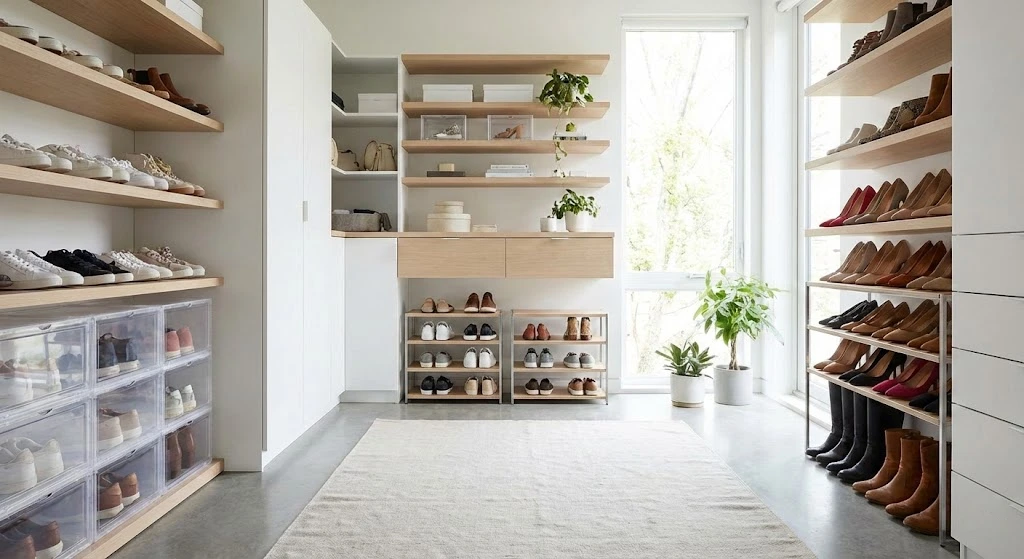
Shoe organizers for closets are storage solutions that keep footwear neat, accessible, and off the floor. Common types include over-the-door racks, hanging organizers, tiered shelves, clear shoe boxes, and built-in cubbies. The best choice depends on your closet size, shoe collection, and budget.
You wake up late, you’re rushing to get out the door, and you can’t find your left shoe. Sound familiar? If your closet floor looks like a shoe explosion, you’re not alone. Most people never think twice about where their shoes land — until the pile gets out of hand. That’s where a good shoe organizer steps in.
A shoe organizer for your closet does more than just tidy things up. It saves you time every morning, protects your shoes from scuffs and damage, and makes your whole closet feel twice as big. The good news? You don’t need a walk-in closet or a big budget to make it work. There’s a solution for every space, every style, and every shoe collection out there.
Why Your Closet Needs a Shoe Organizer

Think about how much time you spend hunting for shoes each week. Even five minutes a day adds up to over 30 hours a year. That’s real time wasted on a problem that’s easy to fix.
Beyond convenience, shoes that pile up on the floor get scuffed, bent out of shape, and worn down faster. A proper organizer keeps each pair in its own spot, which means your shoes last longer and look better. Whether you have 10 pairs or 100, giving every shoe a home changes the way your whole closet functions.
There’s also the stress factor. A cluttered closet creates a cluttered mind, even if you don’t realize it. An organized space — especially one you walk into every morning — sets a calm, focused tone for your day.
Types of Shoe Organizers For Closets
Not all shoe organizers are built the same, and the right one depends on your specific closet setup. Here’s a breakdown of the most popular options on the market right now.
Over-the-Door Shoe Organizers

Over-the-door organizers are one of the most popular choices, and it’s easy to see why. They hang on the back of any standard door using hooks or brackets, which means they take up zero floor or shelf space. Most models hold anywhere from 12 to 36 pairs of shoes in fabric or clear plastic pockets.
This style works especially well in small closets where floor space is already tight. You can grab your shoes at eye level, which makes getting dressed in the morning much faster. Clear pocket versions let you see exactly what’s inside without digging around, which is a huge plus when you’re in a hurry.
One thing to keep in mind — over-the-door organizers work best for flat shoes, sneakers, and sandals. Bulkier boots or thick-soled shoes may not fit as cleanly in the pockets.
Tiered Shoe Racks

Tiered shoe racks are the classic choice, and they’re still one of the best. These freestanding units typically hold between 12 and 40 pairs across multiple horizontal shelves. You can find them in metal, wood, or plastic, and they range from budget-friendly options around $15 to sturdier designs for $50 or more.
The big advantage of a tiered rack is flexibility. You can place it inside your closet, in your bedroom, or near your front door. Many models are also stackable or adjustable, so you can change the height between shelves to fit boots, heels, or sneakers as needed.
Metal racks tend to be the most durable and easy to clean. Wood options look great and blend well with bedroom furniture. If you’re watching your budget, a basic metal tiered rack from a store like Lowe’s or Amazon will get the job done without breaking the bank.
Clear Shoe Boxes

Clear shoe boxes have become a favorite among people who take their shoe collection seriously. Instead of stacking cardboard boxes you can’t see through, these stackable plastic containers let you spot exactly which pair you’re looking for in seconds.
Drop-front versions are especially clever — the front panel swings open so you can grab your shoes without unstacking anything above them. Some versions, like those from The Container Store, can fit men’s sizes up to 17 and even accommodate heeled shoes.
Clear boxes also protect your shoes from dust, humidity, and light, which matters if you have expensive or delicate pairs you want to keep in great condition. The downside is cost — a full set of clear boxes adds up faster than a basic rack. But if you’re storing quality footwear, the protection is worth it.
Hanging Closet Organizers

Hanging closet organizers attach directly to your closet rod, right alongside your clothes. They typically have multiple fabric shelves or compartments that drop down vertically. Some models hold up to 10 pairs in just 7 inches of rod space — which is incredibly efficient.
This type works well if you already have a crowded closet floor but still have some open space on your clothing rod. Fabric versions allow airflow, which helps prevent odors and keeps shoes fresher between wears. They’re also lightweight, inexpensive, and easy to move around.
Built-In Shoe Shelves and Cubbies

If you’re ready to invest in a more permanent solution, built-in shoe shelving is hard to beat. Custom closet systems from companies like EasyClosets or ClosetMaid let you design shelves specifically sized for your shoe collection. You can include sections with varying heights — shorter for flats, taller for boots — to make every inch count.
Shoe cubbies are a great middle-ground option. They’re individual compartments, each holding one or two pairs, arranged in a grid pattern. They work well for households with multiple people since each person can have their own section. You can buy freestanding cubby units or have them built into your closet system.
Built-in options cost more upfront, but they look polished, last for years, and add real value to your home.
How to Choose the Right Shoe Organizer For Your Closet
Before you buy anything, take a few minutes to assess your situation. Start by measuring your closet — the floor space, the height of your shelves, and the width of your door if you’re considering an over-the-door unit. Knowing your exact dimensions will save you from buying something that doesn’t fit.
Next, count your shoes and think about what types you own. If you mostly wear sneakers and flats, almost any organizer will work. If you have a lot of heels, tall boots, or large men’s sizes, you’ll need to look for organizers that specify they can handle those dimensions.
Think about your budget, too. You can put together a solid closet shoe storage system for under $30 with a basic tiered rack or an over-the-door organizer. If you want something more permanent and polished, plan to spend $100 to $300 or more for built-in shelving.
Finally, think about access. Do you want to see all your shoes at once? Go with open shelving or clear boxes. Do you want a cleaner, hidden look? A shoe cabinet with doors might be the better pick.
Tips to Keep Your Shoe Organizer Working Well
Buying an organizer is just the first step. The real trick is keeping it organized over time. Start by decluttering before you set anything up. Pull every pair of shoes out of your closet and decide what stays and what goes. Donating shoes you no longer wear makes the whole system easier to maintain.
Group your shoes in a way that makes sense for your routine. Keep the pairs you wear most often at eye level or near the front. Store seasonal shoes — think ski boots or sandals — toward the back or in under-bed organizers to free up prime space for everyday pairs.
One practical tip from professional organizers: when displaying shoes on open shelves, alternate the direction — one toe facing out, one heel facing out. It saves about 30% more space per row and still looks neat.
Finally, do a quick shoe check every season. As your collection changes, your storage setup should change with it. Swapping out one style of organizer for another as your needs shift is normal — and it keeps your closet from creeping back into chaos.
Small Closet? Here’s What Works Best
Small closets need smart solutions. The best approach is to go vertical. Over-the-door racks and hanging organizers are your best friends here because they add storage without eating up any floor space.
If you do use a freestanding rack, pick a narrow, tall model rather than a wide, short one. A rack that holds 30 pairs in a 12-inch wide footprint takes up far less room than a wider unit holding the same number. Under-bed storage is another great option for seasonal shoes or pairs you don’t reach for often.
Even a small closet can hold a surprisingly organized shoe collection with the right setup — it’s mostly about working with the vertical space you already have.
The Bottom Line
A shoe organizer for your closet is one of the simplest upgrades you can make to your daily routine. It takes the stress out of getting ready, protects your shoes, and makes your space feel cleaner and more controlled. Whether you go with a $15 over-the-door organizer or invest in a custom built-in system, any step toward better shoe storage is a step in the right direction.
Start small if you need to. Pick one type of organizer, set it up, and see how it changes your mornings. Chances are, once you experience the difference, you’ll wonder why you waited so long.


Comments are closed.