
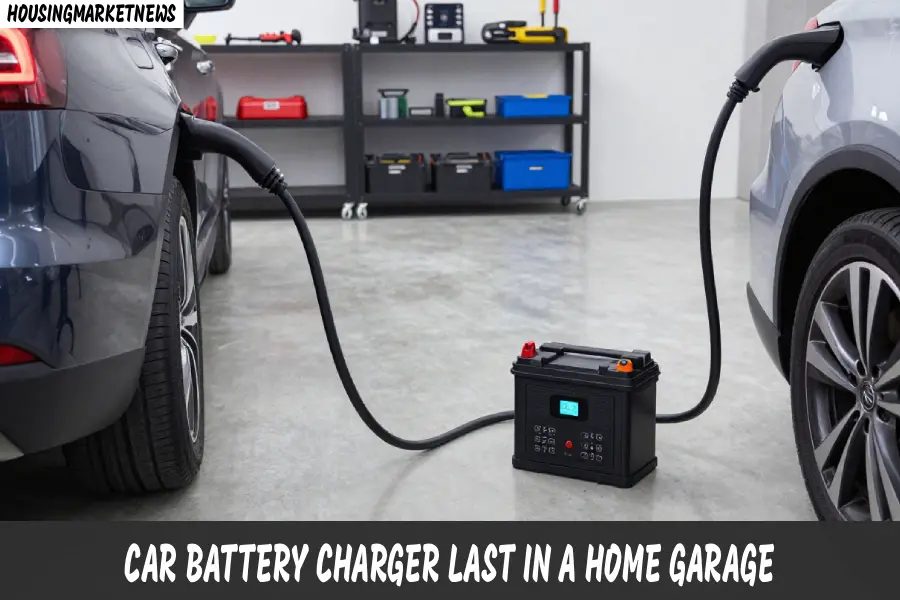
Many homeowners keep a car battery charger in the garage for emergencies, seasonal vehicles, or backup power needs. Like other home tools, its lifespan depends on how often it is used and how well it is maintained. With regular use and proper care, most chargers last between 5 and 10 years.
The exact lifespan can vary based on quality, storage, and charging habits. A durable unit stored correctly in a home garage often lasts closer to ten years. Lower-cost models exposed to heat, dust, or moisture may stop working much sooner.
What Affects the Lifespan of a Car Battery Charger at Home?
Several factors determine how long a charger performs well in a residential setting.
Charger Type and Battery Compatibility
Smart chargers usually last longer than basic manual models. They adjust current automatically and reduce internal heat, which protects circuits and wiring.
It is also important to match the charger with the correct battery type. Lead-acid, AGM, and lithium batteries require different charging patterns. Using a compatible car battery charger with accessories ensures stable performance and reduces strain on internal components. Accessories such as temperature sensors and automatic shutoff cables help maintain safe charging levels.
For homeowners looking for reliable options, a car battery charger with accessories can provide added protection and convenience for garage use.
Frequency of Use
How often the charger is used directly impacts its lifespan. Occasional use for winter storage or a drained battery puts less stress on the unit than daily charging.
Each charging session produces heat. Over time, repeated heat exposure can weaken internal parts. Chargers without an automatic shutoff may wear out faster if left connected after the battery reaches full charge.
Garage Storage Conditions
Garage conditions play a major role in durability. High temperatures during summer can damage insulation and wiring. Cold weather may lead to condensation, which can harm electronic circuits.
Store the charger in a dry and well-ventilated space. Keep it off the floor to avoid moisture. Protect it from dust buildup that can block vents and trap heat.
Build Quality and Safety Features
Construction quality makes a clear difference. Chargers with thick cables, solid clamps, and sturdy casing tend to last longer. Weak materials can crack, overheat, or fail early.
Safety features such as automatic shutoff, reverse polarity protection, and surge protection reduce electrical stress. These features help maintain consistent performance over time.
How to Extend the Life of Your Car Battery Charger
Simple habits can add years to your charger’s service life.
Check cables and clamps regularly for wear or corrosion. Clean terminals with a dry cloth to remove dirt. Avoid bending cords sharply, as this can weaken internal wiring.
Unplug the charger when not in use. If it does not have an automatic shutoff, disconnect it once the battery is fully charged. Using a surge protector can also guard against voltage spikes from your home’s electrical system.
When Should You Replace a Charger?
A charger that becomes unusually hot, charges inconsistently, or takes much longer than usual may be nearing the end of its lifespan. Visible cable damage or loose clamps are also warning signs.
Replacing an outdated unit with a newer smart charger improves safety and reliability in your home garage.
Conclusion
A car battery charger used at home typically lasts 5 to 10 years. Its durability depends on usage frequency, storage conditions, and build quality.
By storing it properly, using the correct battery match, and following safe charging practices, homeowners can expect steady performance for many years. Regular inspection and careful handling help prevent early failure and reduce replacement costs.


Comments are closed.