
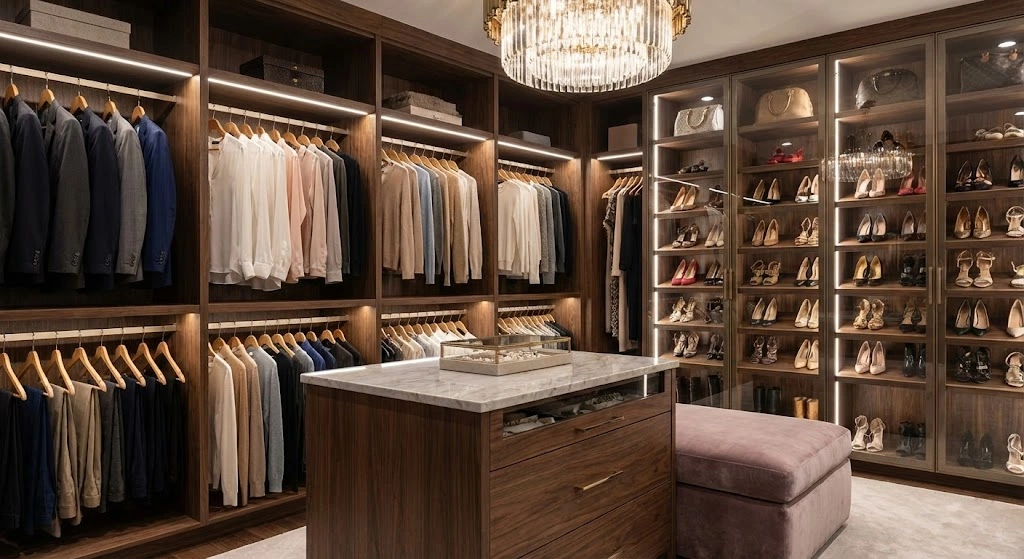
WIC stands for Walk-In Closet on house floor plans. It refers to a spacious storage area you can physically enter and move around in, designed for organizing clothes, shoes, and accessories with proper hanging space and shelving.
You’re scrolling through house listings online and keep seeing “WIC” pop up on floor plans. What does it mean? Should you care?
The answer is simple. WIC stands for walk-in closet, and yes, you should absolutely care. This three-letter abbreviation represents one of the most wanted features in modern homes, and understanding it can help you make smarter decisions whether you’re buying, selling, or just dreaming about your next renovation.
What Exactly Is a Walk-In Closet
A walk-in closet is a spacious storage area designed to be entered, offering ample room for hanging clothes, shelves, and often even a dressing area. Think of it as your own personal boutique right inside your bedroom.
Unlike regular closets where you stand outside and reach in, walk-in closets give you space to step inside and see everything at once. You can turn around, organize your outfits, and actually get dressed in there if you want to.
The difference matters more than you might think. Regular closets force you to dig through cramped spaces, squinting at clothes bunched together. Walk-in closets let you spread out, see your options clearly, and start your day without the frustration of hunting for that one shirt.

How Big Does a Walk-In Closet Need to Be
The minimum walk-in closet size is 5 x 5 feet, which gives you just enough room to turn around. That’s the absolute smallest you can go and still call it a walk-in.
For storage for one person, minimum dimensions of about 4-by-5 feet may be adequate. But here’s the catch—if you’re thinking about resale value, you need to think bigger.
For two people, you’ll usually want walk-in closet dimensions that at least match the average size of 7-by-10 feet. This gives you enough space for double-sided storage and a comfortable walkway down the middle.
Why does depth matter? If you plan to have hanging rods in your walk-in closet, plan for a 24-inch depth to accommodate the hangers. You want enough space so the edges of the clothes don’t rub against the wall as they hang. That’s not just about preventing wrinkles—it’s about making the closet actually functional for daily use.
Different Walk-In Closet Layouts That Work
Walk-in closets come in different configurations, and each one works better for certain spaces and needs.
The single-sided layout puts all your storage along one wall. Single-sided layouts are usually 4-5 feet deep and occupy about 24 inches of that depth for storage. This design works great when you don’t have much width to work with but still want more than a standard closet offers.
Parallel or double-sided layouts feature two walls with storage running parallel to each other, separated by a central walking aisle. This is probably what most people picture when they think “walk-in closet.” You walk down the middle with clothes and shelves on both sides.
L-shaped walk-in closets maximize space by utilizing two adjoining walls that meet in a corner. These work well in oddly shaped rooms where you’re trying to make the most of every square foot.
For those with serious space and a bigger budget, an island-shaped walk-in closet offers the luxury of a central island used as a bench, seat, storage fixture, dresser, or work surface. This is where walk-in closets start feeling less like storage and more like a room of their own.
Why Walk-In Closets Matter for Your Home’s Value
Here’s where things get interesting for homeowners. Walk-in closets aren’t just convenient—they’re financial assets.
A custom closet can offer a return on investment of an estimated 50 to 60%. That’s real money when you’re talking about home improvements. While it won’t match a kitchen remodel’s ROI, it costs significantly less to install.
USA Today, when referencing data from the National Association of Realtors, suggests that 60% of homebuyers will pay more for a home with a custom closet. Six out of ten buyers are willing to spend extra money just because your home has better closet organization. That’s a massive percentage in real estate terms.
According to the National Association of Home Builders, over 90% of new homes now include at least one walk-in closet. If nine out of ten new homes have this feature, your older home without one is at a serious disadvantage.
What does this mean in real dollars? Homeowners can expect to recoup around 56% of their investment, adding at least $2,000 to their property value. Some markets see even better returns depending on local demand.
What Makes Walk-In Closets So Appealing to Buyers
Real estate agents will tell you that storage ranks at the top of buyer wish lists. But walk-in closets offer something beyond just storage space.
Walk-in closets make a home feel more high-end, even if the rest of the space is modest. It’s about perceived luxury. Walking into a well-organized closet triggers the same feeling you get in upscale boutiques. That emotional response matters when buyers are deciding between similar homes.
Homes with walk-in closets in the master bedroom sell faster and for high prices than comparable homes. The keyword here is “faster.” In real estate, time on market costs money. A home that sits for months loses negotiating power.
The practical benefits stack up too. When your closet is organized and accessible, you save time every single morning. You can see what you own. You’re not wrestling with hangers or digging through piles. These daily conveniences add up to a better quality of life.
What to Put in Your Walk-In Closet
The beauty of walk-in closets is how customizable they are. You’re not stuck with whatever builder-grade wire shelving came with the house.
Start with hanging rods at two different heights. For half height, the average height is 3ft 6ins, and for full height the average height is 5ft 6ins. This lets you hang shirts and folded pants up top while dresses and coats get the full-height space below.
Shelving is your friend. Aim for 6-7 inches between shelves for women’s shoes and about 12 inches between shelves for folded garments. These measurements keep everything visible without wasting vertical space.
Drawers work great for smaller items that would get lost on shelves. Think accessories, undergarments, jewelry, and folded t-shirts. Pull-out drawers make everything easier to access than stacking things in boxes.
If you want to get dressed in your walk-in closet you’ll need a minimum space of 4 x 3ft for a small bench or seating area. Being able to sit down while putting on shoes transforms the space from storage into a genuine dressing room.
Common Mistakes People Make with Walk-In Closets
The biggest mistake? Trying to cram too much storage into too little space. Just because you have a walk-in doesn’t mean you should fill every inch with rods and shelves.
A minimum of 60 centimeters (24 inches) of clearance between two opposing shelves or rods is required to move comfortably. If you can’t turn around or move freely, you’ve defeated the entire purpose of having a walk-in.
Another problem is ignoring lighting. A closet where you can’t see your clothes properly is basically useless. You need bright, even lighting that shows true colors. Nobody wants to get to work and realize their navy pants are actually black.
Over-customization hurts resale value. Features like dedicated shoe walls or ultra-niche layouts may not appeal to the average buyer. Your collection of 200 pairs of sneakers is uniquely yours. The next owner might need that space for something completely different.
Materials matter for longevity. Solid wood is a top choice that will last a lifetime and can withstand heavy loads, although it is more expensive. Cheaper materials might save money now but need replacement sooner.
Walk-In Closets in Small Homes
You don’t need a mansion to have a walk-in closet. Even modest homes can squeeze one in with smart planning.
The absolute minimum size for a walk-in closet is 5 feet by 5 feet. That’s only 25 square feet—about the size of a small bathroom. Many homes have underutilized spaces that could work.
Even though a 4 x 4 walk-in is technically possible, it may not be the most functional for a closet that gets regular use, and it will ultimately be more of a “step-in” closet than an actual walk-in. There’s a difference between technically qualifying and actually being useful.
The key is using vertical space. Floor-to-ceiling storage multiplies your capacity without eating up more floor space. Wall-mounted systems work better than freestanding furniture in tight quarters.
Understanding WIC on Floor Plans
When you’re house hunting, seeing “WIC” on floor plans tells you several things instantly.
First, the home has dedicated storage space beyond basic closets. Second, the master bedroom likely has enough square footage to accommodate this feature without feeling cramped. Third, the builder or previous owner prioritized organization and modern amenities.
Often shorter than simple acronyms, these pithy snippets pepper “for sale” listings and advertising. Real estate has its own language, and WIC is one of the most valuable abbreviations to understand.
Some floor plans show WIC dimensions, which helps you visualize whether your current wardrobe will fit. Others just label the space. Either way, it’s worth asking for measurements during home tours.
Is a Walk-In Closet Worth the Investment
The question isn’t whether walk-in closets are nice to have. Everyone agrees they are. The real question is whether adding one makes financial sense for your situation.
According to 2025 data from HomeAdvisor, a walk-in closet installation averages $5,000 to $7,500. That’s not pocket change, but it’s far less than most major renovations.
The return on investment ranges a bit, with homeowners able to recoup at least 50% of the cost. Unlike purely cosmetic upgrades, walk-in closets add functional value that buyers recognize and appreciate.
The decision depends on your plans. If you’re selling within a year or two, adding a walk-in closet makes sense in most markets. Buyers are used to seeing TV shows with homes boasting well-curated, custom-built solutions. Your home needs to compete with those expectations.
If you’re staying long-term, the return on investment becomes about daily quality of life rather than resale dollars. Reducing morning stress and simplifying your routine has value that’s harder to measure but just as real.
The Future of Walk-In Closets
Walk-in closets have gone from luxury extras to expected features in a single generation. That trend shows no signs of reversing.
House Digest did a survey and found that walk-ins are by far the preferred type of closet, with 79% of participants selecting that over reach-in closets, armoires, Italian closets, and wardrobes. When four out of five people prefer one type of closet, builders and developers pay attention.
New construction almost universally includes walk-in closets in master bedrooms. Older homes without them face a choice—add them through renovation or accept lower market appeal.
The good news is that a quality closet system can recoup about 50-70% of its cost in resale value, though exact ROI can vary based on location and market trends. Even in softer markets, walk-in closets retain value better than many upgrades.
Your Next Steps
Now you know what WIC means in house floor plans and why it matters. Whether you’re shopping for homes, planning renovations, or just curious about real estate terminology, this knowledge helps you make informed decisions.
If you’re buying, prioritize homes with walk-in closets or space to add them. If you’re selling, consider whether adding one could justify a higher asking price and faster sale. If you’re staying put, think about whether converting existing space into a walk-in closet would improve your daily life enough to justify the investment.
Walk-in closets aren’t just about storing clothes. They’re about starting each day organized, ending it without clutter stress, and building long-term home value. That’s worth understanding, whether you’re reading floor plans today or planning your dream home for tomorrow.


Comments are closed.