
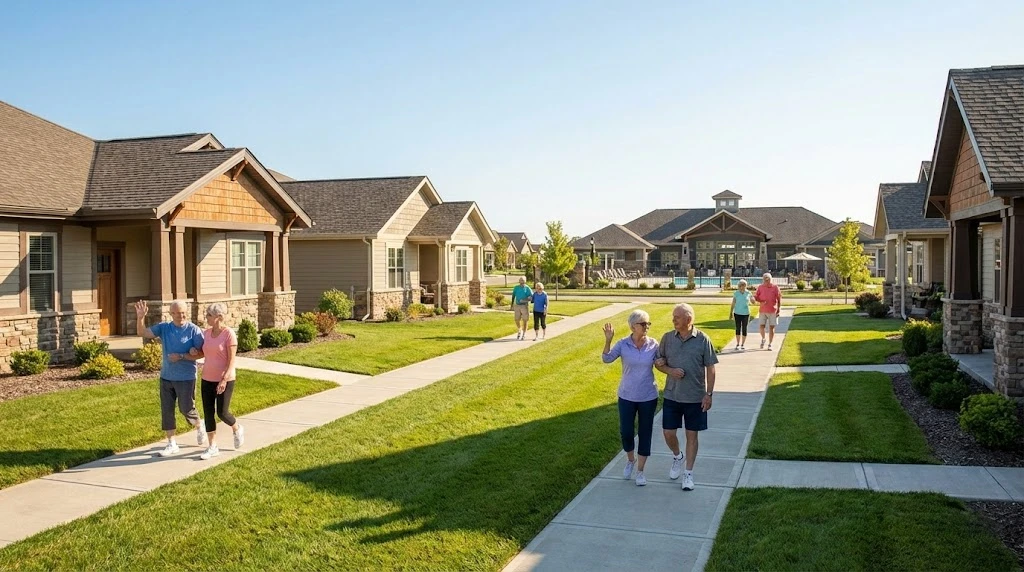
Are you thinking about moving to a 55+ community? Many people over the age of 55 are choosing this lifestyle. These neighborhoods are made for older adults who want a quieter, simpler, and more social life. But is it the right choice for you?
In this guide, we will explain everything in very simple English. You will learn the main benefits, the possible problems, and important things to think about before you decide.
Let’s get started.
What Is a 55+ Community?
A 55+ community is a neighborhood where most residents must be at least 55 years old. These communities are also called active adult communities or age-restricted communities.
They are not the same as nursing homes or assisted living centers. People who live here are usually healthy and independent. They can cook, clean, drive, and take care of themselves.
The main goal of a 55+ community is to offer:
- A quiet environment
- Low-maintenance homes
- Social activities
- Safety and comfort
- A lifestyle designed for older adults
These communities can include:
- Single-family homes
- Townhouses
- Condos
- Patio homes
Some are small and simple. Others are large and luxury-style with golf courses and clubhouses.
Who Should Consider a 55+ Community?
This lifestyle may be a good choice for:
- Retired people
- Empty nesters
- Couples whose children moved out
- Adults who want to downsize
- People who want fewer home responsibilities
- Adults who enjoy social activities
But it may not be ideal for:
- People who want children living with them full-time
- Buyers who dislike rules and restrictions
- Families planning to rent the home freely
Before buying, it is important to think about your current life and your future plans.
Pros of Living in a 55+ Community
Let’s first talk about the benefits.
1. Maintenance-Free Living
One of the biggest reasons people move to a 55+ community is low maintenance.
In many communities, the HOA (Homeowners Association) takes care of:
- Lawn mowing
- Snow removal
- Landscaping
- Exterior repairs
- Roof maintenance
This means no more weekend yard work. No more climbing ladders. No more heavy lifting.
If you want more free time to travel, relax, or enjoy hobbies, this is a big advantage.
Real-Life Example
Imagine a retired couple, John and Maria. They used to spend every Saturday cutting grass and cleaning gutters. After moving to a 55+ community, they now use that time to walk, swim, and visit friends.
Less stress. More freedom.
2. Great Amenities and Social Activities
Most 55+ communities offer better amenities than regular neighborhoods.
Common features include:
- Swimming pools
- Fitness centers
- Walking trails
- Clubhouses
- Tennis and pickleball courts
- Golf courses
- Hobby rooms
Many communities also organize:
- Yoga classes
- Book clubs
- Travel groups
- Holiday parties
- Game nights
This makes it easier to meet people your age and build friendships.
Loneliness can be a problem in older age. These communities are designed to reduce that.
3. Quiet and Peaceful Environment
Because there are no young children living there full-time, the area is usually quieter.
You won’t hear:
- Loud school buses every morning
- Kids playing loudly late at night
- Heavy traffic from school zones
This peaceful setting is one of the biggest attractions.
Of course, grandchildren can visit. But the community remains calm most of the time.
4. Homes Designed for Older Adults
Homes in 55+ communities are often built with safety in mind.
Common features include:
- Single-story layouts
- Fewer stairs
- Wider doorways
- Walk-in showers
- Grab bars
- Open floor plans
These features help residents live safely as they age.
You don’t have to remodel later. The home is already designed for comfort.
5. Strong Sense of Community
Living around people in the same life stage can feel comforting.
Your neighbors may share similar:
- Interests
- Schedules
- Experiences
- Lifestyle goals
This can make daily life more enjoyable.
Many residents say they feel more connected and supported compared to traditional neighborhoods.
6. Safety and Security
Some 55+ communities are gated. Others have security systems or patrol services.
This can provide peace of mind, especially for:
- People who live alone
- Couples who travel often
- Snowbirds who leave seasonally
Feeling safe in your home is very important.
7. Possible Lower Property Taxes (In Some Areas)
In certain locations, property taxes may be lower. This is sometimes because fewer schools are nearby, and local funding needs differ.
However, this is not true everywhere. Property taxes depend on:
- State laws
- Local government rules
- Home value
Always check tax details before buying.
Cons of Living in a 55+ Community
Now let’s look at the possible disadvantages.
1. HOA Fees Can Be Expensive
All those services and amenities come with a cost.
Monthly HOA fees can range from:
- $100 per month
- To $500 or more per month
Some luxury communities charge even higher fees.
These fees may cover:
- Maintenance
- Amenities
- Insurance
- Community events
Before buying, ask:
- What exactly does the HOA fee include?
- Can fees increase each year?
- Are there special assessments?
Hidden costs can surprise buyers.
2. Rules and Restrictions
55+ communities often have strict rules.
These may include:
- Limits on renting your home
- Restrictions on exterior paint colors
- Rules about parking
- Pet size limits
- Guest stay limits
For example, some communities only allow guests under 55 to stay for a certain number of days.
If you love full freedom, these rules may feel limiting.
3. Limited Resale Market
Because of age restrictions, your home can only be sold to eligible buyers.
This means:
- Fewer potential buyers
- Possibly slower sales
- Price limits in some markets
If you plan to sell quickly in the future, think about this carefully.
4. No Onsite Medical Care
55+ communities are not healthcare facilities.
They usually do not provide:
- Assisted living services
- Daily medical support
- Nursing care
If your health changes in the future, you may need to move again.
Before buying, think about:
- How close is the nearest hospital?
- Are there good doctors nearby?
Planning ahead is important.
5. Lifestyle May Feel Too Similar
Some people enjoy living around all age groups.
In a 55+ community, most neighbors are in the same age range.
For some buyers, this feels comfortable.
For others, it may feel limited.
If you love living near young families and children, this environment might not feel right.
Frequently Asked Questions
What Is the Difference Between a 55+ Community and a Retirement Community?
A 55+ community is for independent adults.
A retirement community (like assisted living) may provide:
- Medical care
- Daily assistance
- Meal services
In a 55+ community, you must handle:
- Interior home maintenance
- Personal care
- Daily activities
It is meant for active adults, not for people who need regular medical support.
Can Someone Under 55 Live There?
Usually, at least one household member must be 55 or older.
Some communities allow:
- A spouse under 55
- Adult children over 18
- A small percentage of younger residents
Rules vary by community.
Always read the bylaws before buying.
Can You Buy If You Are Younger Than 55?
Yes, sometimes you can buy the home. But living there may require meeting age rules.
Ownership and residency rules can be different.
Ask the HOA for full details before signing any contract.
Important Things to Think About Before Buying
Before you decide, ask yourself these questions:
- Do I want less home maintenance?
- Can I afford HOA fees long-term?
- Am I comfortable with community rules?
- Do I plan to stay for many years?
- How is my health now and in the future?
- Is the location close to family and healthcare?
Also, visit the community at different times of the day.
Talk to current residents.
Ask about:
- Fee increases
- Noise levels
- Management quality
- Upcoming repairs
Research helps you avoid regret later.
Is a 55+ Community Right for You?
There is no perfect answer for everyone.
For many adults over 55, this lifestyle offers:
- Freedom
- Safety
- Social connection
- Convenience
For others, it may feel:
- Too restrictive
- Too expensive
- Too limited
The key is planning ahead.
Think about not just today — but 5, 10, or even 15 years from now.
Will this home still work for you?
Will your needs change?
Will you be happy with the rules?
Buying a home is a big decision. Take your time.
Final Thoughts
55+ communities can be a wonderful place to live. They offer comfort, friendship, and less stress. Many residents say they feel happier and more relaxed after moving.
But like any housing choice, there are pros and cons.
The best decision is one that matches your lifestyle, budget, and future plans.
Do your research. Ask questions. Visit in person.
When you fully understand the benefits and drawbacks, you can choose with confidence.
And that’s the smartest move of all.


Comments are closed.