
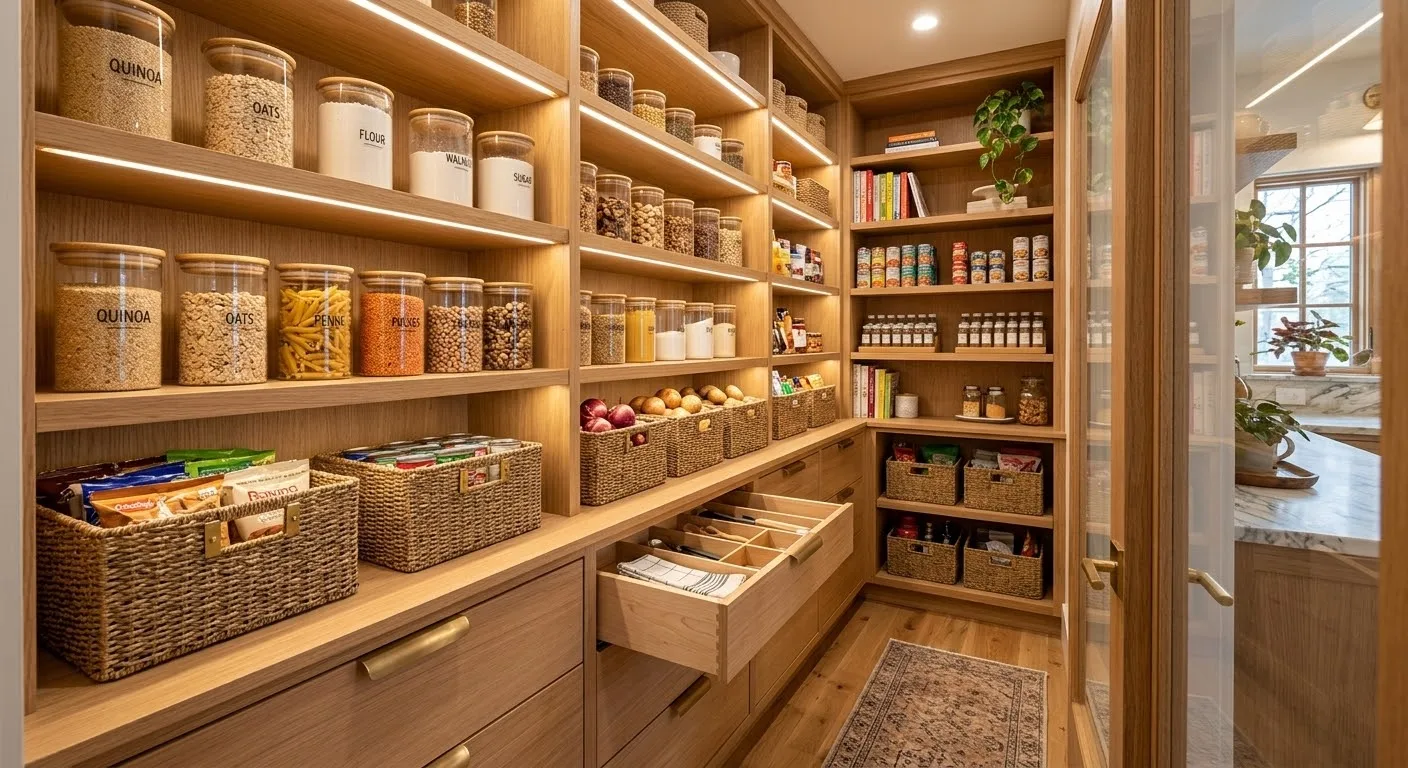
A walk-in pantry works best when you combine smart shelving layouts, matching containers, good lighting, and clear zones for different food categories. Whether you have a small closet or a full room, the right design keeps your kitchen organized, reduces food waste, and makes cooking feel easier every single day.
You open the pantry door, and a box of crackers falls on your foot. Sound familiar? A cluttered pantry is one of those daily frustrations that sneaks up on you — and before you know it, you’re buying things you already own because you couldn’t find them in the back of a shelf. A well-designed walk-in pantry fixes all of that. It gives everything a home, makes grocery runs more efficient, and honestly, makes your kitchen feel like a totally different place.
Walk-in pantries have gone from a nice-to-have feature to one of the most talked-about spaces in home design. Whether you’re starting from scratch during a renovation or reorganizing what you already have, there are smart, practical ideas that work for every space size and every budget.
Start With a Layout That Fits Your Space

Before you buy a single bin or basket, you need a plan. The layout of your walk-in pantry depends entirely on the shape and size of the room. The most common options are U-shaped and L-shaped layouts.
A U-shaped layout lines shelves along three walls, giving you maximum storage and a clear walking path through the middle. This works best when you have at least a 5×5 foot space. An L-shaped layout uses two walls and is great for smaller or awkward spaces. An L-shaped pantry maximizes corner space while keeping everything within easy reach, and this design works well in both large and small kitchens.
If you’re working with a narrow space, think single-wall shelving with deep countertop space at the end. Even a slim 4×6 foot pantry can hold a surprising amount when shelves are properly planned out. Measure your space twice before you commit to any shelving system.
Choose the Right Shelving System
Shelving is the backbone of your entire pantry. Get this right, and everything else falls into place. The debate often comes down to open shelving versus closed cabinets — and the honest answer is that a mix of both tends to work best.
Open shelves keep everyday items visible and easy to grab. Closed lower cabinets hide bulk items, cleaning supplies, or things you don’t need to see every single day. Walk-in pantries typically feature U- or L-shaped shelving and can include both lower and upper cabinets, as well as space to store smaller appliances like stand mixers, blenders, and toasters.
When it comes to shelving material, wood is a better choice than wire — it creates more level surfaces, keeps items from falling through gaps, and holds heavier items more reliably. Painted white wood shelves give a clean, bright look. Natural wood tones add warmth. Either way, wood is worth the investment over wire.
Adjustable shelves are a smart move too. Your storage needs will change over time, and being able to move a shelf up or down by a few inches saves you from buying a whole new system later.
Use Zones to Stay Organized Long-Term
One of the biggest reasons pantries fall apart after a reorganization? There was no system to begin with. Zones solve this. Instead of shoving everything wherever it fits, you assign each category of food its own section of the pantry.
Start by grouping your pantry items into categories such as dry goods, canned foods, snacks, and baking essentials. From there, assign each category a shelf or section and stick to it. Baking supplies together. Snacks in one basket. Canned goods on one shelf, all facing forward.
Place the things you use daily at eye level. Kids’ snacks should sit on a lower shelf so they can grab them without asking for help. Bulkier or rarely used items go on the top shelves or the floor. This system sounds simple, but it’s the reason a well-organized pantry stays organized for months instead of weeks.
Invest in Matching Containers and Labels
Nothing makes a pantry look pulled-together faster than matching containers. It sounds like a small detail, but the visual difference is huge. When every jar and bin matches, the space feels calm instead of chaotic — even when it’s fully stocked.
Investing in matching canisters, bins, and accessories to streamline organization and make the space beautiful is a consistent recommendation from professional designers. Decant dry goods like pasta, rice, oats, and flour into clear airtight containers. You can see exactly how much you have left, which cuts down on overbuying at the store.
Labels finish the job. You can go as simple as a label maker or as stylish as handwritten chalkboard tags. The point isn’t how they look — it’s that every container has a clear name, so anyone in the house can find what they need and put it back in the right place. This is what makes the system stick.
One practical tip: when you decant food from its original packaging, write the expiration date on a piece of tape and stick it inside the lid. You can also use a dry-erase marker directly on clear glass or plastic containers to track dates.
Make the Most of Every Inch of Space
A walk-in pantry has more usable space than most people realize. The back of the door, the corners, the floor — all of it can work harder with the right tools.
The back of your pantry door is one of the most underused spots in the kitchen. A mounted door organizer can hold spices, small condiments, foil, plastic wrap, or even a chalkboard grocery list. A door rack or even a shoe organizer mounted on the back of the door can hold spices when cabinet space is tight.
Corner shelves with a lazy Susan are one of the best solutions for deep, awkward corners. Instead of losing things in the back, everything spins forward with a quick turn. Turntables work just as well on regular shelves for oils, vinegars, and condiments.
On the floor, rolling bins or drawer units are great for storing potatoes, onions, or bulk items that don’t fit on a shelf. Deep shelves are one of the top reasons things get lost in a pantry — items get pushed to the back and forgotten, which is why narrow shelves or pull-out baskets that bring items forward make such a practical difference.
Add Lighting That Actually Works
Poor lighting is one of the most overlooked problems in pantry design. If you can’t see what’s on a shelf clearly, you’re going to miss things — and you’ll buy duplicates you don’t need.
Natural light is the best option if your pantry has a window, but most don’t. For those spaces, adding under-cabinet or motion-sensor LED lights makes a big difference — it not only improves the look but helps you actually see everything stored in the pantry.
Plug-in LED strip lights are an affordable option that you can install yourself in an afternoon. Stick them under each shelf, and suddenly every corner of the pantry is visible. If you’re doing a full renovation, recessed lighting in the ceiling is a cleaner, more permanent solution.
Consider the Style of Your Pantry, Not Just the Function
A well-organized pantry doesn’t have to be purely utilitarian. In 2025, pantry design has become a real expression of personal style. People are treating their pantries the way they treat the rest of their kitchen — with intention and personality.
Painting the back wall or cabinet interiors in a soft pastel is a trending way to add color without overwhelming a small space. A warm sage green, dusty rose, or slate blue on the back wall creates depth and makes open shelves with matching jars look intentional rather than accidental.
Hidden pantry doors that blend into cabinetry are a popular design choice — a seamless facade on the outside that opens into a fully organized storage room. If you want a clean, minimal kitchen aesthetic, a pantry door that looks like a cabinet panel keeps the room looking uncluttered.
Even small touches matter — a wood countertop inside the pantry gives you a prep surface, a small mounted chalkboard keeps your grocery list visible, and good hardware on cabinets ties the space to the rest of the kitchen’s style.
Plan Before You Shop
The most expensive mistake people make with pantry organization is buying products before they know what they need. They end up with bins that don’t fit, containers in the wrong sizes, and a pantry that looks just as cluttered as before — just with nicer stuff in it.
Measure your shelves first. Take photos of your pantry from every angle. Make a list of every category of item you want to store. Then decide what containers, baskets, or drawers you need for each zone. Measuring your shelves and photographing the space before shopping means you can check whether a container will actually fit before you buy it.
A walk-in pantry doesn’t have to cost a fortune to look and work well. Some of the most functional pantries use a mix of affordable bins from big-box retailers combined with a few quality airtight containers. What matters is that the system is consistent, everything has a place, and putting groceries away feels automatic rather than stressful.
When you get this right, you stop losing food. You stop overbying. You open the pantry door and immediately know what you have — and that small shift makes the entire kitchen run smoother every single day.

Comments are closed.