
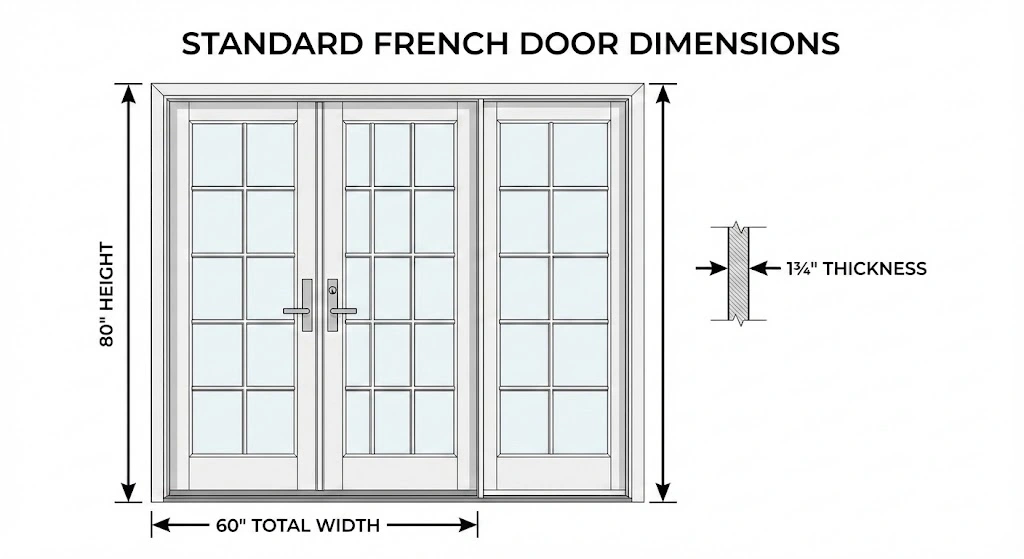
Standard French doors are 80 inches tall and come in widths of 36, 48, and 60 inches. For double doors, each panel typically measures 36 inches wide, creating a 72-inch total opening with 1¾-inch thickness.
French doors bring natural light and classic charm into your home. Whether you’re connecting your living room to a patio or adding style between rooms, understanding the right size matters. Getting the measurements wrong can lead to installation headaches and costly returns.
This guide walks you through everything you need to know about French door dimensions. You’ll learn standard sizes, how to measure your space, and what to consider before buying.
What Are the Standard French Door Dimensions?
French doors typically stand 80 inches tall, matching standard interior door heights. Common heights include 80, 84, 92½, and 96 inches for spaces with higher ceilings.
The width changes based on whether you want single or double doors. Single French doors work well for smaller spaces like closets or pantries. Double French doors create wider openings perfect for patios and main entryways.
Door thickness measures either 1¾ inches or 1 9/16 inches, which affects hardware compatibility and strength.
Single French Door Sizes

Single French doors come in widths of 18, 24, 28, 30, 32, and 36 inches. These doors fit tight spaces where you want glass panels but can’t accommodate double doors.
The 32 x 80 inch size has become popular because it meets accessibility requirements. This size provides enough clearance for wheelchairs while adding style to any room.
The most popular single door sizes are 30 x 80 and 36 x 80 inches. These dimensions work for most home offices, bedrooms, and hallways without requiring custom orders.
Double French Door Sizes
Double doors create dramatic entrances and let maximum light through. Common double door widths include 36, 48, 56, 60, 64, and 72 inches for the complete unit.
When manufacturers list double door sizes, they mean the total width when both panels are installed. A 60-inch double door has two 30-inch panels side by side.
Most double door sets range from 60 to 72 inches wide, though narrower pairs around 48 inches and wider setups pushing 96 inches exist. The 60-inch width works best for most exterior applications, giving you enough space to move furniture in and out.
Popular double door combinations include two 24-inch panels totaling 48 inches, two 30-inch panels totaling 60 inches, and two 36-inch panels totaling 72 inches.
Exterior French Door Sizes
Exterior doors should be at least 60 inches wide to provide sufficient opening for furniture and foot traffic, making 80 x 60 inches the most common exterior size.
Exterior doors face weather, so they need proper sizing for sealing and insulation. Standard exterior French doors have heights of 80 inches and widths ranging from 36 to 72 inches.
For homes with grand entrances or large patios, wider options exist. Exterior French doors measure from 5 to 8 feet wide, with massive houses accommodating doors up to 10 feet in width.
Taller ceiling heights require taller doors to maintain proper proportions. French doors measuring 96 inches or more in height suit rooms with extended ceiling heights.
Interior French Door Sizes
Standard interior French doors measure 80 inches high by 36 inches wide per door, creating an overall 72-inch opening when installed side by side.
Interior doors don’t need the same weather resistance as exterior models. This means you can choose from thinner options and smaller sizes that work in tight spaces.
Interior doors can be as narrow as 30 inches per door, though 36 inches per door is more common and practical. The extra width makes moving through the doorway easier and feels less cramped.
Think about furniture placement before choosing your interior door size. Will you need to move a king bed through the opening? Can the doors swing freely without hitting a couch or table?
Understanding Rough Opening Measurements
The rough opening isn’t the same as your door size. It’s the space cut into your wall before the door frame gets installed.
To calculate the width of a single door, add 2 inches to your measurement. For double doors, multiply the single slab width by 2, then add 2 inches. For height, add 2½ inches to your door measurement.
Here’s an example: if you want a 60 x 80 inch double French door, your rough opening should measure 62 x 82½ inches. This extra space accounts for the frame, shims, and threshold needed for proper installation.
Getting the rough opening right matters. Too small means your door won’t fit. Too large creates gaps that let air through and make installation difficult.
How to Measure for French Doors
Accurate measurements prevent costly mistakes. You’ll need a tape measure, pen, paper, and possibly a helper for hard-to-reach spots.
Start by clearing the area around your doorway. Remove furniture and decorations that might block your access to the frame.
Measure width across the top, middle, and bottom of the door opening, then use the smallest measurement. Openings aren’t always perfectly square, especially in older homes. Using the smallest width ensures your door will fit.
For height, measure from the floor to the top of the frame on the left and right sides, then use the largest measurement. This approach accounts for uneven floors or settling that happens over time.
Don’t forget depth. Walls are generally 4 to 6 inches deep, but confirm this measurement. Thicker walls need deeper frames to accommodate the full wall depth.
Write everything down. A simple sketch showing where you took each measurement helps you remember the details when ordering.
Factors That Affect Size Selection
Room size plays a big role in door selection. Larger rooms handle bigger doors without feeling cramped. Smaller rooms need smaller doors to maintain proper proportions.
Traffic flow matters too. Doors should open in a direction that doesn’t block walkways or create bottlenecks when people move through your home.
Larger doors let in more natural light, while smaller doors provide more privacy. Think about how each room gets used and what balance works best.
Door swing requires planning. Double doors need more clearance than single doors. Map out the swing area before buying to make sure furniture placement won’t interfere with opening and closing.
Floor condition affects installation. Uneven floors can cause doors to drag or create gaps at the bottom. Measure from multiple floor points to catch any irregularities.
Wall space includes more than just the door opening. Frame, trim, and handles add 1 to 2 inches on each side. Factor this into your measurements to avoid surprises.
Standard vs Custom French Doors
Standard sizes cost less and arrive faster than custom options. Most home improvement stores stock common sizes, making replacement simple if damage occurs.
Standard sizes fit most openings without extensive customization, though custom sizes offer flexibility for unique spaces.
When should you consider custom? Older homes often have non-standard openings. Historic properties built before modern standards might need custom doors to match original dimensions.
Unique architectural features also call for custom work. Arched doorways, unusually tall ceilings, or extra-wide openings may require doors built to specification.
Budget affects this decision too. Custom doors cost significantly more than standard sizes. Installation also takes longer since doors need to be manufactured to your specifications.
Door Thickness and What It Means
The most common French door thickness is 1¾ inches, with 2¼ inches providing extra strength for exterior applications.
Thickness impacts several factors. Thicker doors offer better insulation, which matters for exterior applications. They also provide more stability and resist warping better than thinner options.
Hardware compatibility depends on thickness. Door thickness dictates what hinges and locks can be installed. Make sure your chosen hardware matches your door thickness before buying.
Thicker doors generally last longer and feel more solid when opening and closing. They absorb sound better too, which helps with privacy between rooms.
Materials and Their Impact on Size
French doors come in wood, aluminum, steel, fiberglass, and composite materials. Each material affects weight, durability, and available sizes.
Wood doors are available in thicknesses of 1¾ or 2¼ inches and offer classic appearance with customization options. Wood expands and contracts with humidity, so proper sealing matters for exterior applications.
Aluminum doors are lightweight and weather-resistant. Aluminum typically measures around 1¾ inches thick and works well in modern designs.
Fiberglass provides strength without weight. These doors resist weathering and don’t require as much maintenance as wood options.
Steel offers maximum security and durability for exterior applications. Steel doors handle harsh weather conditions and provide excellent insulation when properly installed.
Common Mistakes to Avoid
Measuring the old door instead of the opening leads to incorrect sizing. Always measure the actual opening in the wall, not the door you’re replacing.
Assuming standard sizes in older homes causes problems because pre-1950s homes often feature non-standard openings. That 36-inch opening might actually measure 35 or 37 inches.
Ignoring furniture placement creates daily frustration. Beautiful doors lose appeal if they swing into your couch or block access to other rooms.
Forgetting about swing clearance means doors that can’t open fully. Make sure nothing blocks the path when doors swing through their full range of motion.
Not accounting for trim and hardware leaves you short on wall space. The door itself plus frame, trim, and handles need more space than just the door slab dimensions.
Final Thoughts on Choosing Your French Door Size
French doors add value and beauty to any home. Getting the size right makes installation smooth and ensures your doors function properly for years.
Start with accurate measurements. Take your time and double-check every number. Consider how you use each space and what size creates the best flow.
Standard sizes work for most situations and save money. Custom sizes solve problems when standard options won’t fit, but come with higher costs and longer wait times.
Think about materials, thickness, and hardware before making your final choice. These factors affect appearance, durability, and how well your doors perform their job.
When in doubt, consult a professional. A door installer can verify measurements and catch potential problems before you order. This small investment prevents expensive mistakes and ensures perfect results.


Comments are closed.