
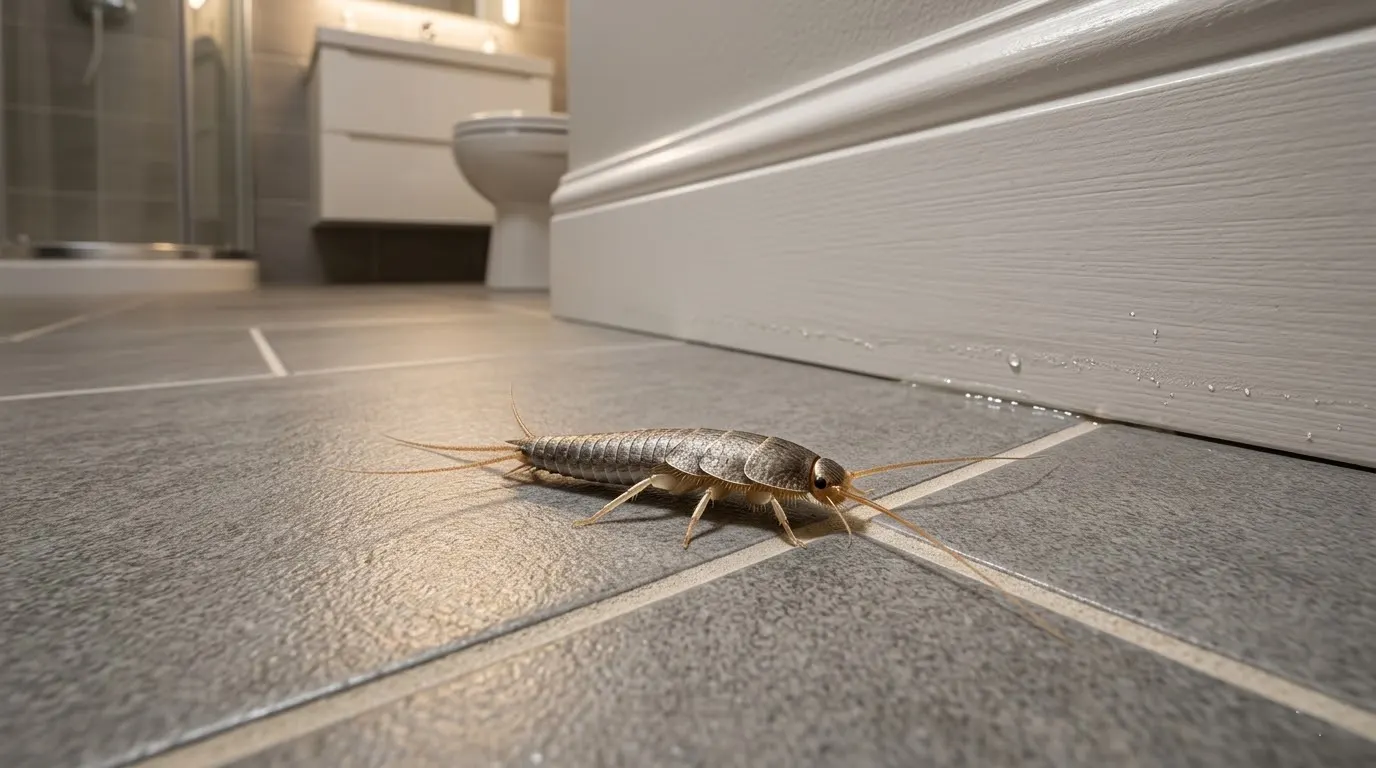
Discovering a silverfish in house can be alarming. These teardrop-shaped, wingless insects are nocturnal pests that thrive in dark, humid environments. Recognizing the signs of an infestation early—such as yellow stains, shed skin, or small holes in wallpaper and fabric—is crucial for effective control. This guide explains how to identify, prevent, and permanently remove silverfish from your property using both natural remedies and professional strategies.
Few things are as unsettling as turning on a bathroom light in the middle of the night only to see a flash of metallic, fish-like movement scurrying across the floor. If this sounds familiar, you are likely dealing with a silverfish in house. Despite their alien appearance, silverfish are one of the most common household pests in the world. They are resilient, nocturnal, and unfortunately, once they find a suitable environment, they can multiply quickly.
The primary danger of a silverfish infestation isn’t a threat to human health—they do not bite or transmit diseases—but rather the significant damage they cause to property. These pests are voracious feeders of starchy materials and cellulose. Finding a silverfish in house is a clear indicator that there are moisture issues or entry points that need to be addressed. In this comprehensive guide, we will explore the biology of these pests, the reasons they invade homes, the signs of an infestation, and the most effective strategies to eradicate them for good.
What Are Silverfish and Why Are They in Your Home?

To effectively combat a pest, one must first understand its biology. Silverfish (scientifically known as Lepisma saccharina) are primitive, wingless insects named for their silvery, metallic sheen and fish-like movements. They have a distinct carrot-shaped body that tapers from head to tail, covered in fine scales. Typically measuring between ½ and ¾ of an inch in length, they have two long antennae on their head and three bristle-like appendages at their rear.
The presence of a silverfish in house is almost always tied to specific environmental conditions. These insects are ancient creatures that require high humidity to survive. They thrive in environments with moisture levels between 75% and 90%. If your home has areas of high humidity, condensation, or standing water, you are essentially sending out a welcome invitation.
Common Attraction Factors
- Moisture: Leaky pipes, poor ventilation in bathrooms, and damp basements are primary draws.
- Food Sources: Silverfish feed on polysaccharides. This includes sugars, starches, and cellulose. They love book bindings, wallpaper paste, carpet fibers, coffee, and even dead skin cells.
- Darkness: They are negatively phototactic, meaning they actively avoid light. They seek out dark, undisturbed areas like closets, attics, and crawl spaces.
The Damage Caused by Silverfish Infestations
While a single silverfish in house might seem harmless, an established population can cause significant structural and personal property damage. Because they are nocturnal and fast-moving, their presence often goes unnoticed until the damage is done.
Silverfish are chewing insects. They do not simply nibble; they graze across surfaces, leaving behind irregular holes, notches, and surface etchings. You may notice:
- Damage to Literature: Yellow stains, chewed edges, and holes in books, newspapers, and important documents.
- Fabric and Clothing: Silk, cotton, linen, and synthetic fibers blended with starches are susceptible to holes.
- Wallpaper and Paint: They scrape the paste from behind wallpaper, causing it to peel. They may also eat through drywall paper.
- Pantry Goods: They can contaminate dried pasta, oats, and sugar containers.
Furthermore, silverfish leave behind evidence of their presence. You might find small, black peppercorn-like feces, yellowish molted skins (as they shed throughout their lives), and fine scales scattered in infested areas. Spotting this evidence is often easier than spotting the actual insect.
How to Identify a Silverfish Infestation
Because silverfish are experts at hiding, confirming an infestation requires a bit of detective work. If you suspect a silverfish in house, you should conduct a thorough inspection during the night, as this is when they are most active. Alternatively, using sticky traps placed along baseboards can help capture them for identification.
Key Signs of Infestation
- Visual Sighting: Seeing one silverfish usually indicates there are dozens more hiding. They are solitary but reproduce rapidly.
- Feces: Look for tiny, spherical pellets that resemble ground pepper in drawers, closets, or behind furniture.
- Molts: Finding shed, empty exoskeletons is a definitive sign of breeding and growth.
- Staining: Yellowish stains on fabric, paper, or linens indicate feeding activity.
The Life Cycle: Why Infestations Persist
Understanding the life cycle of a silverfish in house explains why they are so difficult to eradicate once established. Unlike many insects, silverfish undergo ametabolous metamorphosis—meaning they do not go through a larval stage. Young silverfish (nymphs) look exactly like miniature adults.
Females can lay eggs continuously, often depositing them in small cracks and crevices. These eggs are tiny, white, and oval-shaped, making them nearly impossible to spot without magnification. Depending on the temperature and humidity, eggs can hatch in a few weeks or up to two months.
The most frustrating aspect for homeowners is the longevity of silverfish. They can live for two to eight years. Furthermore, they can survive for weeks without food, making starvation a non-viable control method. If you have a silverfish in house, you are dealing with a pest that is built to endure.
Effective Strategies to Eliminate Silverfish
Getting rid of a silverfish in house requires a multi-pronged approach. You cannot simply spray a surface insecticide and expect the problem to go away. You must reduce the habitat, eliminate food sources, and use targeted treatments.
Step 1: Reduce Humidity (Environmental Control)
This is the most critical step. Silverfish cannot survive in dry environments.
- Use Dehumidifiers: Place dehumidifiers in basements, crawl spaces, and bathrooms to keep humidity below 60%.
- Fix Leaks: Repair any dripping faucets, leaky pipes, or water damage.
- Ventilation: Ensure bathrooms and kitchens have working exhaust fans that vent to the outside. Leave closet doors open occasionally to promote air circulation.
Step 2: Declutter and Remove Food Sources
- Storage: Store books, important documents, and clothing in airtight plastic containers rather than cardboard boxes (which silverfish can eat).
- Vacuuming: Vacuum regularly, especially along baseboards, behind appliances, and in closets. This removes eggs, shed skins, and food particles like hair and dust.
- Pantry Management: Store dry goods (flour, cereal, pasta) in sealed glass or metal containers.
Step 3: Natural and Chemical Treatments
- Diatomaceous Earth (DE): This fine powder is non-toxic to humans and pets but deadly to insects. Apply food-grade DE in thin layers along baseboards, behind toilets, and in the backs of cabinets. It works by absorbing the waxy outer layer of the silverfish, causing them to dehydrate.
- Sticky Traps: Place glue traps in dark corners. While they won’t eliminate a large colony, they are excellent for monitoring the population and identifying hot spots.
- Boric Acid: This is a classic remedy for a silverfish in house. Lightly dust boric acid in cracks, crevices, and behind appliances. Use caution if you have pets or small children, as it is toxic if ingested in large quantities.
- Insecticides: For severe infestations, pyrethroid-based sprays (like cyfluthrin or bifenthrin) can be applied to cracks and crevices. However, these should be used as a spot treatment, not a broadcast spray, to avoid unnecessary chemical exposure.
How to Prevent Silverfish from Returning
Eradication is only half the battle. To ensure you never find a silverfish in house again, you must seal your home against future invasions.
Seal Entry Points: Silverfish are flat and can squeeze through tiny gaps. Use caulk to seal cracks in the foundation, around windows, and where utility pipes enter the home. Exterior Maintenance: Keep mulch, leaves, and firewood away from the foundation of the house. These materials retain moisture and serve as outdoor habitats for silverfish. Regular Inspections: Continue to use dehumidifiers and maintain low humidity levels. Regularly check attics and basements for signs of moisture or pest activity.
Natural Predators and Integrated Pest Management
If you are looking for a long-term, eco-friendly solution to managing a silverfish in house, consider leveraging natural predators or Integrated Pest Management (IPM) strategies. IPM focuses on long-term prevention through a combination of biological, cultural, and mechanical techniques rather than relying solely on chemical pesticides.
In some cases, introducing natural predators can help. House centipedes, for instance, are voracious hunters of silverfish. While many homeowners are squeamish about centipedes, having one or two in your basement can serve as a natural form of pest control.
Additionally, certain essential oils act as repellents. Silverfish are repelled by the scent of cedar, citrus, and lavender. Using cedar blocks in closets or placing cotton balls soaked in lavender oil in drawers can help deter them from nesting in your valuables.
Frequently Asked Questions
Are silverfish dangerous to humans?
No, silverfish are not dangerous to humans. They do not bite, sting, or transmit diseases. However, they are a nuisance and can cause significant allergic reactions in some sensitive individuals due to the dust from their shed scales. The primary concern with a silverfish in house is the destruction of property, such as books, clothing, and wallpaper.
Does seeing one silverfish mean I have an infestation?
While seeing a single silverfish in house does not automatically confirm a massive infestation, it is a strong warning sign. Silverfish are solitary but prolific breeders. If conditions are favorable for one, they are likely favorable for many. It is advisable to investigate the area where it was found for moisture issues and set up traps to gauge the population size.
How long does it take to get rid of silverfish?
Eliminating silverfish typically takes between two to four weeks. This is because you must break their life cycle. While adult silverfish may be killed quickly with desiccants like diatomaceous earth, their eggs are highly resistant and may take weeks to hatch. Consistent treatment and moisture control are required until no new nymphs appear.
Do silverfish come out of drains?
It is a common myth that silverfish climb up through drains. While they are attracted to moisture and may be found near sinks, they generally cannot survive submerged in water for long periods. They usually enter homes through cracks in the foundation, walls, or through gaps around doors and windows, seeking the humidity near sinks and tubs.
What is the best killer for silverfish?
The best approach is a combination of methods rather than a single killer. For immediate results, sticky traps help capture active silverfish. For long-term control, food-grade diatomaceous earth or boric acid applied to cracks and crevices is highly effective. However, without addressing the underlying humidity issue, no chemical killer will provide a permanent solution for a silverfish in house.
Can silverfish climb walls?
Yes, silverfish are excellent climbers. Their bodies are designed to traverse smooth surfaces, and they can easily scale walls, bathtubs, and sinks. This ability allows them to move from floor to floor within a home, making vertical infestations common in apartment buildings or multi-story houses.
Conclusion
Discovering a silverfish in house can be an unsettling experience, but it is a manageable problem. These ancient pests are drawn to the very conditions that many homes provide—darkness, moisture, and starchy food sources. By shifting your focus from simply killing the visible insects to altering the environment they thrive in, you can achieve lasting control.
The key to success lies in consistency. You must reduce humidity levels, eliminate clutter that serves as harborage, and seal entry points to prevent new invaders. Whether you opt for natural remedies like diatomaceous earth and cedar oil or require chemical interventions for severe infestations, the principle remains the same: a dry, clean, and sealed home is your best defense.
If you take proactive steps today to manage moisture and sanitation, you will ensure that the next time you walk into your bathroom at night, the only thing reflecting in the light is the tile, not a silverfish in house.

Comments are closed.