
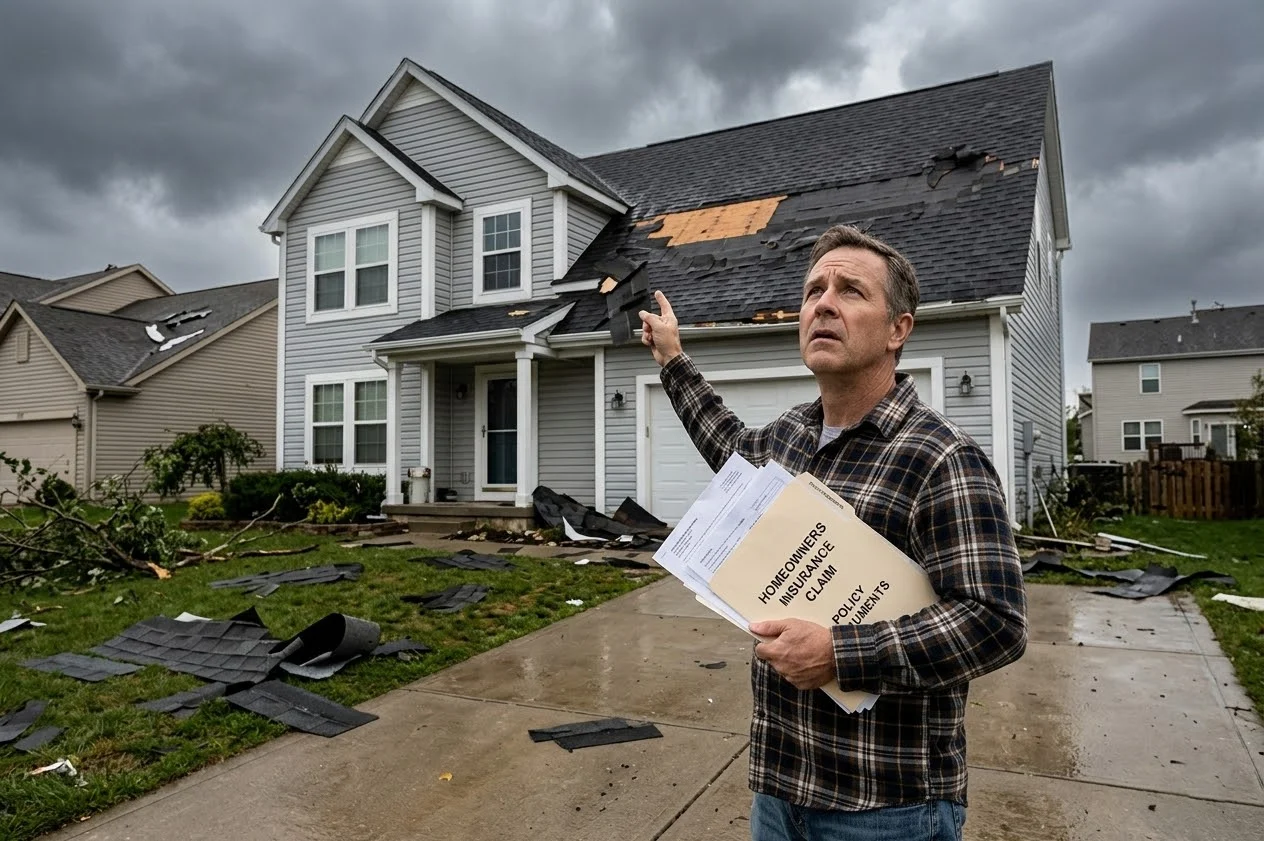
Roof insurance claim services help homeowners document storm damage, file claims correctly, and negotiate fair settlements with insurance companies. A professional roofer acts as your advocate through the entire process — from the initial inspection to the final payout — so you don’t leave money on the table.
A storm rolls through overnight. By morning, your gutters are clogged with shingle granules, your attic smells like wet wood, and your ceiling has a water stain the size of a dinner plate. You know something is wrong, but the thought of dealing with your insurance company makes the situation feel twice as heavy.
That’s exactly where roof insurance claim services come in. These services guide you through one of the most confusing processes a homeowner can face. When done right, they protect your home and your wallet. When done wrong, you could end up paying thousands out of pocket for damage your policy was supposed to cover.
This guide breaks down how these services work, what to expect at every step, and how to make sure you get the full settlement you’re owed.
What Are Roof Insurance Claim Services?

Roof insurance claim services cover the full range of support that helps homeowners file, manage, and resolve insurance claims after roof damage. This can include professional roof inspections, damage documentation, adjuster meetings, estimate preparation, and claim negotiations.
Some roofing companies offer these services as part of their overall storm restoration package. Others specialize in claims advocacy alone. Either way, the goal is the same — make sure your insurance company pays a fair amount based on what the damage actually costs to fix.
A roof insurance claim is a formal request submitted to your homeowner’s insurance provider to cover damages related to your roof. Claims can result from sudden events like storms, hail, fire, or falling debris. The challenge is that most homeowners don’t file these claims often enough to know the process well. That’s why having a professional in your corner makes such a significant difference.
What Does Homeowners Insurance Actually Cover?

Before you file anything, you need to understand what your policy will and won’t cover. Homeowners insurance is designed to protect you from sudden and accidental damage, not gradual wear and tear. When it comes to your roof, this usually means coverage for events like wind, hail, fire, lightning strikes, or a tree limb crashing down during a storm.
The key word there is “sudden.” If your shingles have been curling for years or a small leak slowly spread through your attic, your insurer is unlikely to pay for that. Age-related deterioration and neglect fall outside standard coverage. Damage from neglect like moss growth or ignored leaks will not be covered. Flood damage requires separate flood insurance, and earthquake damage needs its own policy in most areas.
That said, if a hailstorm causes widespread damage in a single night, you have a strong case. The cleaner and more sudden the cause, the stronger your claim.
Understanding Your Policy: ACV vs. RCV
One of the biggest factors in how much money you receive from a claim comes down to your policy type. Replacement Cost Value (RCV) is the preferred coverage. It pays to repair your roof at today’s prices, without deducting for depreciation. You typically receive an initial check for the depreciated value first, and the rest is paid after repairs are complete. Actual Cash Value (ACV) pays only the depreciated value of your roof.
Here’s a simple example: your roof is 15 years old and costs $12,000 to replace. With ACV coverage, your insurer might subtract years of depreciation and send you a check for $6,000. With RCV coverage, you’d eventually receive the full $12,000, minus your deductible.
With the average roof replacement costing between $7,000 and $15,000, a mismanaged claim can cost you thousands. Knowing your policy type before you file is one of the smartest moves you can make.
The First Steps After Storm Damage
Speed matters once you discover roof damage. Call your insurer within 24 to 48 hours of discovering damage. They will assign a claim number and explain next steps. Ask about your deductible, coverage limits, and the adjuster’s visit timeline.
Before that call, though, document everything you can safely see. Take photos from multiple angles — from the ground, from windows, and from any safe vantage point. Capture close-ups of missing or cracked shingles, dented gutters, and any interior water stains. These images become the foundation of your entire claim.
If your roof is actively leaking, your policy requires you to mitigate further damage. This means making reasonable temporary repairs, like placing a tarp over a hole or covering a broken skylight. Keep all receipts for materials, as these are typically reimbursable under your claim. Do not perform permanent repairs until your claim is approved.
Why You Need a Professional Roofing Contractor Early
Many homeowners make the mistake of waiting for the insurance adjuster before calling a roofer. Getting a professional inspection first is one of the most important things you can do.
A trusted contractor can provide a repair estimate and identify hidden damage that you’d never spot from the ground. Experienced roofers know what documentation insurance companies want and how to present damage in a way that supports your claim — not undermines it.
Your contractor also serves as your advocate during the adjuster’s visit. It’s also smart to have your roofing contractor present during this visit. They can point out damage an adjuster might overlook and speak the same technical language, helping ensure your claim is valued reasonably.
This matters more than most homeowners realize. An adjuster works for the insurance company. A skilled roofing contractor works for you.
What Happens During the Insurance Adjuster’s Inspection?
Once your claim is filed, your insurance company sends out an adjuster. Their job is to confirm what you’ve reported and decide how much the company should cover. This inspection is a critical moment in the claims process.
The adjuster will walk your roof, take their own photos, and create an estimate. That estimate determines how much the insurer is willing to pay. The problem? Adjusters handle dozens of claims at a time, especially after a major storm. They can miss damage or undervalue certain repair costs.
During the insurance adjuster inspection, you should be on-site to answer any questions and provide additional insight into your findings. This meeting is your chance to advocate for your customer and explain your assessment. If you have a roofer present, they can directly challenge any items that seem undervalued or overlooked.
Don’t treat the adjuster’s first number as final. The first insurance estimate is a starting point, not the final word.
Supplements: Getting What Was Missed
Even after an adjuster visits, homeowners often find that certain costs weren’t included in the initial estimate. This is where supplementing the claim becomes important.
A supplement is a request for additional funds to cover legitimate costs that were initially overlooked. Supplements often cover specialized flashing, proper ventilation, or disposal costs. If your roof was built under older codes, repairs must meet current standards. Your policy should cover these upgrades, but they must be documented and requested.
A good roofing contractor prepares and submits these supplements with detailed justification. This isn’t about inflating costs — it’s about making sure the full scope of the work is accounted for. Many homeowners who skip this step end up paying out of pocket for code-compliant upgrades that their policy was designed to cover.
Common Reasons Claims Get Denied
Not every roof insurance claim gets approved. Knowing the common denial reasons helps you avoid them.
Normal wear and tear from age never qualifies for coverage. Damage from neglect like moss growth or ignored leaks will not be covered. If you can’t connect your damage to a specific covered event — like a storm with a documented date — your insurer has grounds to deny the claim.
Filing too late is another major pitfall. Insurance companies often have strict deadlines, sometimes as short as 12 months from the date of the storm damage. Filing too late could mean losing your coverage altogether.
Regular inspections and proper maintenance records go a long way toward keeping claims open and valid. If you can show your roof was in good condition before the storm, it’s much harder for an insurer to argue the damage was pre-existing.
How to Choose the Right Roof Insurance Claim Service
Not all roofing companies offer the same level of claims support. Start by focusing on local, licensed contractors. Local companies are easier to verify, more accountable if issues arise, and less likely to disappear after the job is done. Confirm that the contractor has specific experience handling insurance claims.
Ask how many insurance jobs they complete each year. Ask whether they attend adjuster meetings. A company that does this regularly will know exactly what adjusters look for and how to make sure nothing gets missed.
One major red flag to watch for: never sign paperwork before your claim is approved. Some contractors push early contracts to lock in your business, but doing so can create problems if your claim is denied or requires adjustment. Any company that offers to waive or cover your deductible is committing insurance fraud and could leave you liable.
Protect yourself by working only with transparent, experienced professionals who have your interests at heart.
What a Smooth Claim Process Actually Looks Like
When everything comes together — good documentation, an experienced contractor, a thorough adjuster meeting, and proper supplements — the process is far less painful than most homeowners expect.
You report the damage quickly. Your contractor inspects before the adjuster arrives. You attend the adjuster visit together. Your contractor submits a complete estimate with no gaps. Any missed items get supplemented. You receive a fair settlement and your roof gets repaired to current code standards.
That’s the process working as it should. The homeowners who struggle are usually the ones who go it alone, accept the first number they’re given, and don’t realize until later that they left thousands of dollars unclaimed.
Roof insurance claim services exist to close that gap — and when you use them well, they pay for themselves many times over.


Comments are closed.