
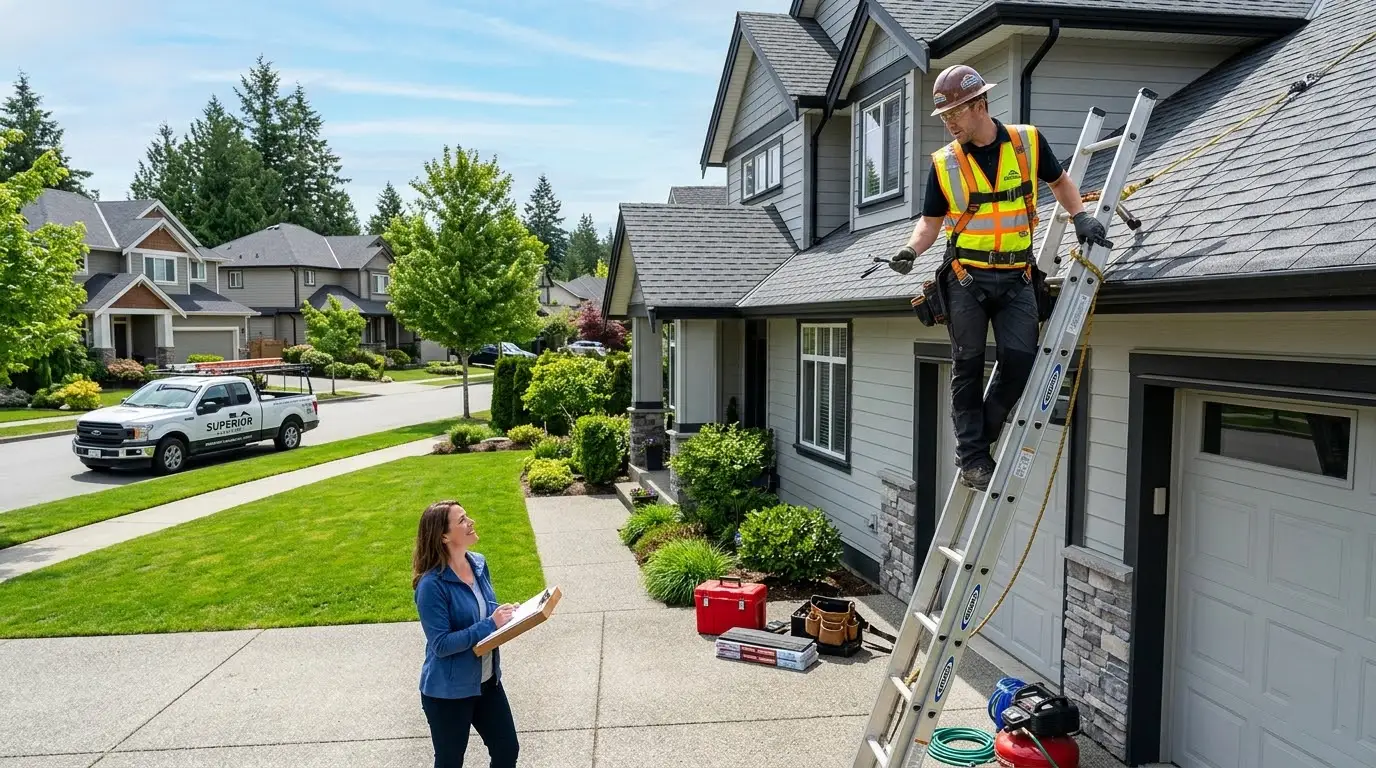
Before hiring a roofing contractor, ask about their license, insurance, experience, warranty coverage, and payment terms. A qualified contractor will answer every question clearly and provide everything in writing. These questions protect your home, your budget, and your relationship with the person doing the work.
Your roof is one of the most expensive parts of your home to repair or replace. A bad hire can cost you thousands of dollars more than you planned — and leave your home exposed to water damage, mold, and structural problems. That’s why knowing exactly what to ask a roofing contractor before you sign anything makes all the difference.
Most homeowners make their decision based on price alone. That’s a mistake. The lowest quote doesn’t always mean the best deal. The right contractor brings proper credentials, clear communication, and solid warranty coverage. Here’s everything you need to ask before you hand anyone a check.
Are You Licensed and Insured?

This is the first question you should ask — no exceptions. Licensing requirements vary by state, city, and county, so ask for specifics, including the name of the license holder, and then verify that information with your local licensing offices to make sure the license is current and free of violations.
A business license and a roofing contractor license are two very different things. A business license is for tax purposes and identifies the company — it does not mean the person has passed a test or has the qualifications to work as a roofer. Always ask for the roofing license specifically.
On top of licensing, insurance is non-negotiable. Roofing contractors should carry workers’ compensation and liability insurance. Workers’ compensation covers the homeowner in the event of a contractor injury, and liability insurance protects you from damage caused during the repair or replacement. If a worker gets hurt on your property and the contractor has no workers’ comp, you could end up responsible for the medical bills.
How Long Have You Been in Business?
Experience matters more in roofing than in most trades. The average roofing company only lasts four years, in part because newer companies don’t have a good plan for getting through the slow season. You want someone with a proven track record in your area — not a company that showed up last spring and might be gone by next fall.
A contractor with years of hands-on work has handled complicated jobs, unexpected structural problems, and difficult weather conditions. They know what questions to ask about your specific roof, and they won’t be caught off guard when something unusual comes up mid-project. Ask how long the company has been operating under its current name and ownership. Some companies rebrand after complaints pile up, so this question matters.
Can You Provide References from Local Jobs?
Any reputable contractor should be able to hand you a short list of local homeowners who are willing to talk about their experience. References from local customers who can share their opinions with you should be a priority when you’re deciding who to hire. A quick phone call or visit to a completed job tells you a lot about how the crew works and what the finished product looks like.
If a contractor hesitates or gives vague answers when you ask for references, treat that as a red flag. Confident, experienced contractors welcome the question. They know their work holds up, and they’re proud to show it. You can also check reviews on Google and the Better Business Bureau to get a wider picture of how they treat their customers.
Will You Use Subcontractors?
This question trips up a lot of homeowners. You think you’re hiring one company, but a different crew shows up on the day of the job. Some roofing companies outsource parts of the job to subcontractors, so make sure those subcontractors have insurance and the proper licenses to complete the work.
Ask for this information in writing before work begins. You should get lien waivers to protect yourself if your contractor doesn’t pay the subcontractors — because if they don’t, those unpaid workers could put a lien on your property. That’s a legal headache you don’t want anywhere near your home.
What Does Your Warranty Cover?
A roofing warranty has two separate parts, and most homeowners don’t realize that until it’s too late. The manufacturer covers the materials, and the roofer covers the workmanship — these are two separate warranties, so ask the contractor for the coverage and length of each one.
For a shingle roof, expect a manufacturer’s warranty of at least 25 years. Metal and tile warranties can last even longer. The contractor should also provide a workmanship guarantee — one to three years is typical for this type of coverage.
Ask whether the warranty transfers to the next owner if you sell your home. A roof that’s under warranty can make your home more attractive to potential buyers, and many companies offer a one-time transfer. It’s a small detail that can add real value when it comes time to sell.
Will You Pull the Necessary Permits?
A lot of homeowners skip this question entirely. Don’t. Roofing work in most areas requires a building permit, and if your contractor skips that step, you could face fines, failed home inspections, or problems with your insurance later on.
A surety bond protects you if a roofer fails to pull a permit before they begin work, fails to pay their workers, or fails to complete the job as promised. Ask directly whether the contractor will pull the permit themselves and include that cost in the estimate. If they suggest skipping it to save time or money, walk away.
What’s Included in the Written Estimate?
A verbal quote means nothing. Everything needs to be in writing before a single nail goes into your roof. Ask the contractor to break down the estimate into labor costs, material costs, debris removal, and any potential additional charges. A detailed written estimate minimizes the possibility of unforeseen expenses later on.
Ask what roofing products and brands they plan to use. Quality materials from well-known manufacturers last longer and come with stronger warranties. If a contractor is vague about the specific products, that’s a sign they may be cutting corners on material quality to keep their quote low.
How Will You Protect My Property?
Roofing work creates vibrations, debris, and noise. A good contractor has a clear plan to protect your landscaping, gutters, driveway, and the interior of your home. Tarps can prevent old roofing material from landing in pools or flowerbeds, and an onsite dumpster helps keep the yard clear of debris — but ask where they plan to park it, since dumpsters can crack driveways.
Roofing vibrations can loosen items inside your home, so you may want to remove fragile artwork or photos from walls and shelves until the project is done. A contractor who thinks ahead about property protection is a contractor who takes their work seriously.
What Are Your Payment Terms?
How a contractor handles payment tells you a lot about how they run their business. You should never pay for the entire roof in advance. On most standard jobs, the contractor won’t expect a deposit and will ask for full payment upon completion. A different schedule may apply to very large or complex projects.
Be cautious with any contractor who demands a large upfront payment before work begins. That’s a common warning sign of a scam, especially after storms when fly-by-night companies flood an area offering quick fixes. Ask about financing options if you need them, and make sure the payment schedule is written clearly in the contract.
What Is Your Timeline for Completion?
Before work starts, you deserve a clear answer on when it will begin and when it will finish. Most roofing companies can replace an average roof in a single day, while a larger home may take two to three days. A complicated roof or premium materials could take longer.
Ask who your main point of contact will be during the project and how they prefer to communicate. If you’re having trouble communicating with a contractor before the project starts, it’s unlikely to improve after you sign the contract. Good communication isn’t a bonus — it’s a baseline requirement for any job you trust someone with.
The Bottom Line
Hiring a roofing contractor doesn’t have to feel overwhelming. You’re not being difficult by asking these questions — you’re being a smart homeowner. A contractor who gets annoyed by your questions, refuses to put things in writing, or can’t provide proof of licensing and insurance is a contractor you don’t want on your roof.
Take your time, compare at least two or three estimates, and trust your instincts when something feels off. The right contractor will welcome every question you throw at them, because they know their work stands up to scrutiny.


Comments are closed.