
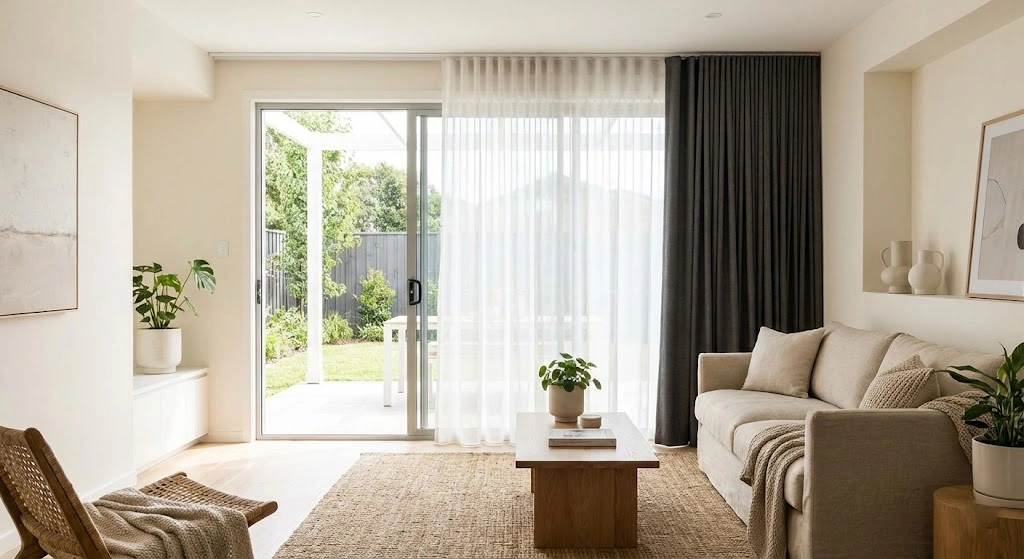
Patio doors bring in natural light and open up your living space, but they also create challenges. You get heat buildup in summer, glare on your TV screen, and zero privacy when the sun goes down. I’ve seen homeowners struggle with oversized glass panels that feel impossible to dress properly.
The right patio door curtains solve these problems while adding style to your room. You need something that works with the door’s width, controls light effectively, and doesn’t look like an afterthought. This guide walks you through real options that work in different homes.
Patio Door Curtains and Why They Matter

Patio door curtains aren’t just decorative. They’re functional pieces that affect how you use your space every day. When you have large glass doors, you’re dealing with heat transfer, privacy concerns, and light management all at once.
Privacy becomes obvious the moment your neighbors can see straight into your living room. During the day, sheer curtains filter light without blocking your view completely. At night, you need something heavier to create a barrier. I’ve noticed that homes with street-facing patio doors benefit most from layered setups.
Light control matters for comfort and energy costs. Direct sunlight heats up a room quickly, especially in south or west-facing spaces. Heavy curtains reduce that heat gain by blocking UV rays before they reach your furniture. According to the U.S. Department of Energy, window treatments can reduce heat gain by up to 77% when properly installed. That’s a noticeable difference on your cooling bills.
Visual balance is another reason people add curtains to patio doors. A large glass surface can make a room feel cold or incomplete. Curtains soften that hard edge and tie the door into your overall design. You’re essentially framing the view instead of leaving it bare.
Popular Patio Door Curtain Styles
Different patio door setups require different curtain styles. Here’s what works in real homes:
Sliding Panel Curtains

These panels move on a track system, similar to how your patio door slides. You get clean lines and easy access to the door. The panels stack neatly to one side when open, which works well in modern or minimalist spaces. I’ve seen these used in offices and contemporary homes where function matters more than fabric folds.
Grommet Top Curtains
Grommet curtains slide easily on a rod and create even, tailored pleats. They’re one of the most common styles because they’re simple to install and look clean. The grommets (metal rings at the top) make opening and closing smooth, which you’ll appreciate if you use your patio door daily. They work in casual and formal rooms depending on the fabric you choose.
Sheer Patio Door Curtains
Sheers filter light without blocking it completely. You maintain your outdoor view while reducing glare and adding a layer of daytime privacy. People often pair sheers with heavier curtains for a layered look that adjusts throughout the day. Sheers alone work best in private yards or upper-level spaces where neighbors aren’t an issue.
Thermal and Blackout Curtains
Thermal curtains have insulating layers that block heat in summer and cold drafts in winter. Blackout curtains go further by eliminating nearly all light. Both styles help with energy efficiency and noise reduction. If your patio door faces a busy street or you work night shifts, blackout curtains make a real difference in sleep quality.
Tie-Up and Layered Looks
Tie-up curtains roll or fold upward and secure with ties or tabs. They’re more decorative than functional, suited for doors you don’t open frequently. Layered looks combine two curtain types on separate rods—usually a sheer panel behind a heavier curtain. This gives you flexibility to adjust privacy and light without swapping out the entire setup.
Best Fabrics for Patio Door Curtains
Fabric choice affects durability, light control, and maintenance. Here’s what each type offers:
| Fabric Type | Light Control | Durability | Best For |
|---|---|---|---|
| Linen | Moderate | High (wrinkles easily) | Natural, relaxed spaces |
| Polyester | Varies by weave | Very high | High-traffic areas, easy care |
| Cotton blends | Moderate | Moderate | Classic rooms, layering |
| Sheer voile | Low (filters only) | Moderate | Daytime privacy, light filtering |
| Thermal/blackout | High to total | High | Energy saving, bedrooms |
Linen breathes well and has a natural texture that softens over time. It wrinkles, which some people love for the casual look and others find frustrating. Linen works in coastal or farmhouse-style homes where perfection isn’t the goal.
Polyester resists fading, holds its shape, and cleans easily. You’ll find it in most ready-made curtains because it’s affordable and low-maintenance. Modern polyester doesn’t look cheap like it did years ago—manufacturers now produce versions that mimic linen and silk.
Cotton blends offer a middle ground between natural feel and practical care. They’re softer than pure polyester but more forgiving than pure cotton. You get decent wrinkle resistance and a range of colors that hold up to sunlight.
Sheer voile is lightweight and translucent. It diffuses harsh light and gives you privacy from a distance during the day. It doesn’t block views, which makes it ideal for homes with nice outdoor scenery.
Thermal and blackout fabrics include multiple layers or special coatings. They’re thicker and heavier, which means you need sturdy curtain rods. These fabrics genuinely reduce your heating and cooling costs if your patio door is a major source of heat loss or gain.
Choosing the Right Length and Width
Getting the measurements right makes the difference between curtains that look intentional and ones that look like a mistake.
Floor-Length vs Puddle Style
Floor-length curtains should hover about half an inch above the floor or just touch it. This length looks clean and modern. Puddle-style curtains pool on the floor by 2 to 6 inches, creating a more formal or romantic look. Puddle curtains collect dust and can trip you if you walk on them, so they work better in low-traffic areas.
I personally prefer floor-length in homes with kids or pets. You avoid constant washing and tangling.
Extra-Wide Panels for Full Coverage
Patio doors are wider than standard windows. You need curtains that cover the entire width when closed and stack neatly when open. Measure the width of your door and multiply by 1.5 to 2 times for proper fullness. A 6-foot-wide door needs curtain panels totaling 9 to 12 feet in width when closed.
Skimping on width leaves gaps and makes the curtains look stretched. Generous fabric creates the folds and depth that make curtains look high-quality.
Proper Curtain Rod Placement
Mount the rod 4 to 6 inches above the door frame and extend it 6 to 12 inches on each side. This makes the door appear taller and allows curtains to clear the glass when open. Low or narrow rods make the whole setup look cramped and block light even when curtains are pulled back.
Use a level when installing. Uneven rods are immediately noticeable with long curtains.
Patio Door Curtains for Light Control and Privacy
Light and privacy needs change throughout the day. Your curtain setup should adapt without constant adjustments.
Sheer vs Blackout Options
Sheers work during daylight hours. They reduce glare on screens and prevent your furniture from fading in direct sun. You keep your view and avoid the cave-like feeling of heavy curtains. At night, sheers offer minimal privacy. Anyone outside can see in when your lights are on.
Blackout curtains eliminate this problem. They block 99% of light and give you total privacy. The tradeoff is losing your view and natural light when they’re closed. Most people don’t want to live behind blackout curtains all day, which is why layering makes sense.
Day and Night Curtain Layering
Install two rods or use a double rod bracket. Put sheers on the rod closest to the glass and heavier curtains on the outer rod. During the day, close the sheers and pull back the heavy curtains. At night, close both layers. You get flexibility without swapping out curtains seasonally.
This setup works especially well in living rooms and dining areas where you want natural light during meals but privacy after dark.
Solutions for Street-Facing Patio Doors
If your patio door faces a sidewalk or neighbor’s window, privacy is a constant concern. Top-down bottom-up shades combined with curtains give you control over which part of the glass is covered. You can lower the top portion for light while keeping the bottom covered for privacy.
Alternatively, use semi-sheer curtains that blur the view in both directions. People outside see shapes and movement but not details. You maintain some privacy without living in the dark.
Color and Pattern Ideas for Patio Door Curtains
Color affects how large or bright your room feels. Patterns add personality but can overwhelm if not chosen carefully.
Neutral Tones for Small Spaces
White, cream, beige, and soft gray make rooms feel larger and brighter. Light-colored curtains reflect sunlight instead of absorbing it, which keeps the space cooler. Neutrals also blend with changing decor, so you don’t need new curtains when you repaint or buy new furniture.
I’ve noticed that off-white works better than pure white in most homes. Pure white can look sterile, while off-white adds warmth.
Bold Colors for Contrast
Navy, charcoal, forest green, or burgundy create drama and anchor a room. Dark curtains work in large spaces with plenty of natural light. They frame the view and make the glass door a focal point. Just be aware that dark fabrics absorb heat, which can make the room warmer in summer.
Bold colors also hide stains and dust better than light fabrics, which is practical if you have kids or pets.
Patterns That Suit Modern and Classic Homes
Geometric patterns fit modern and contemporary spaces. Stripes make ceilings appear higher or rooms wider depending on direction. Vertical stripes draw the eye up, horizontal stripes widen the space.
Floral or damask patterns suit traditional and classic homes. Keep the scale in mind—large patterns work in big rooms, small patterns in compact spaces. A busy pattern can make a small room feel chaotic, while a subtle pattern adds interest without competition.
Easy Care and Maintenance Tips
Patio door curtains collect dust and absorb odors from cooking and pets. Regular care keeps them looking fresh.
Washing and Drying Advice
Check the care label before washing. Most polyester and cotton blend curtains are machine washable on a gentle cycle with cold water. Remove them from the washer immediately to prevent wrinkles and hang them to dry. High heat in a dryer can shrink fabric or damage coatings on thermal curtains.
Linen curtains often require dry cleaning or hand washing. I wash linen curtains in cold water and hang them slightly damp. They smooth out as they dry and develop that relaxed, lived-in texture.
Fade Resistance
Direct sunlight fades fabric over time. UV-resistant fabrics hold color longer, but nothing is truly fadeproof. Rotate curtains if you have extras, or close them during peak sunlight hours. If your patio door gets intense afternoon sun, consider thermal curtains with a reflective backing that bounces UV rays before they reach the decorative fabric.
Keeping Curtains Smooth and Dust-Free
Vacuum curtains monthly using the upholstery attachment on your vacuum cleaner. Start at the top and work down to avoid pulling fabric off the rod. This removes dust before it settles into the weave.
Steam wrinkled curtains while they’re hanging. A handheld steamer works faster than ironing and doesn’t require taking the curtains down. Hold the steamer a few inches from the fabric and move it in downward strokes.
Conclusion
The right patio door curtains improve comfort, reduce energy costs, and complete your room’s design. You need to balance light control, privacy, and style based on how you actually use the space. Measure carefully, choose fabrics that match your lifestyle, and don’t be afraid to layer for flexibility. Whether you prefer the clean lines of sliding panels or the soft drape of grommet curtains, the goal is the same—make your patio door work better for your daily life. Start with your biggest concern, whether that’s heat, privacy, or appearance, and build from there. You’ll notice the difference immediately.


Comments are closed.