
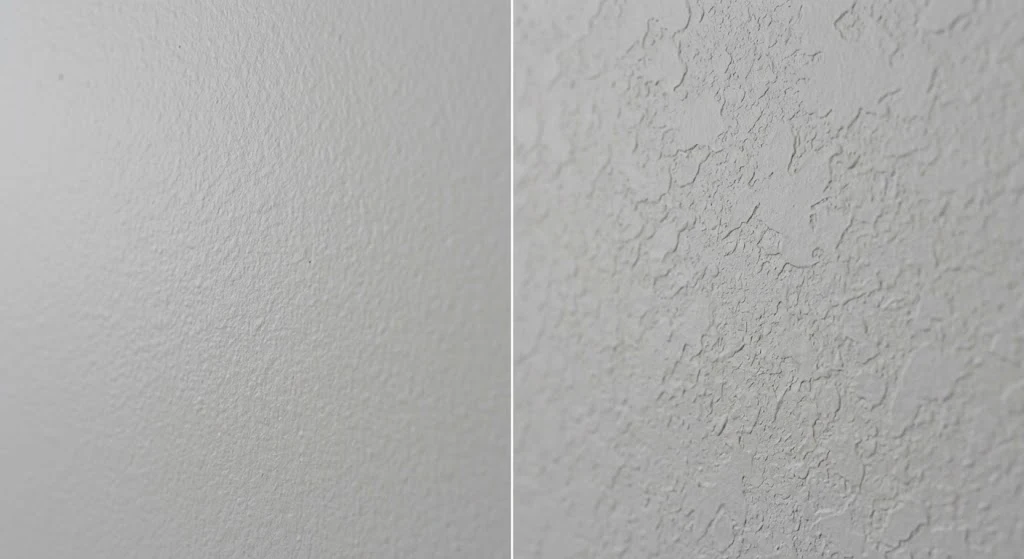
Orange peel texture has small, uniform bumps sprayed onto drywall and left to dry. Knockdown texture starts the same way but gets partially flattened with a knife, creating a mottled, stucco-like look. Orange peel costs less and repairs easier. Knockdown hides bigger flaws and adds more visual depth.
You walk into a freshly finished room and something feels off. The walls look too flat, too plain. That’s usually the moment people start thinking about texture—and the two names that come up almost every time are orange peel and knockdown.
Both are popular drywall finishes across North America. By 2015, the two textures combined accounted for 65% of all drywall finishing revenue in the region. So you’re not alone in considering them. But they look different, cost different amounts, and work better in different spaces. Knowing what sets them apart will save you time, money, and a future headache when it’s time to patch a hole.
Let’s break it all down clearly.
What Is Orange Peel Texture?
Orange peel texture does exactly what its name suggests—it mimics the dimpled skin of an orange. The finish has small, rounded bumps spread evenly across the wall. Up close it looks textured. From across the room it reads as smooth.

The application process is straightforward. A contractor sprays thinned drywall joint compound onto the wall using a hopper gun or texture sprayer, then walks away and lets it dry. No extra steps, no flattening. The compound dries right where it lands, creating that consistent bumpy pattern.
You’ll find orange peel in apartments, condos, new construction homes, and modern spaces where people want a clean, uniform finish. It doesn’t demand attention. It just quietly covers the wall and lets the furniture and decor take center stage.
What Is Knockdown Texture?
Knockdown texture starts the same way as orange peel—with sprayed drywall mud. But here’s where the process splits. After the compound sits for a few minutes and firms up slightly, a contractor drags a wide drywall knife across the peaks, flattening them. That “knocking down” step creates irregular, flattened splatters with smooth patches and soft edges in between.
The result looks like a weathered stucco wall or something you’d see in a Mediterranean-style home. It’s more dimensional, more expressive, and definitely more dramatic than orange peel. The surface feels uneven under your hand but looks intentional and textured in a way that reads as high-end when done well.
Knockdown became widely popular in the United States during the 1990s, partly because it gave builders a fast way to finish walls while adding real visual character. It’s still a go-to finish for rustic, traditional, and Mediterranean-inspired interiors.
How Do They Look in Real Life?
This is where most people make their decision—or should. Appearance matters more than any technical spec when you have to live with the walls every day.
Orange peel is subtle. It adds dimension without drawing the eye. If you love clean, modern aesthetics—think Scandinavian design, minimalist rooms, or contemporary open-plan spaces—orange peel fits without disrupting the vibe. The texture is consistent, which makes painted walls feel polished and intentional.
Knockdown has more visual weight. The irregular pattern creates shadows and highlights that shift depending on the light. In a room with warm lighting, knockdown walls can feel cozy and lived-in. In harsh direct light, every bump and valley shows up in sharp relief, which is something to keep in mind if you have large windows or strong overhead lighting.
If your home leans toward rustic, farmhouse, or Mediterranean style, knockdown is the natural fit. If your home is modern or transitional, orange peel works better.
Cost: What Should You Budget?
Neither texture will break the bank, but there is a clear price difference.
Orange peel texture typically runs between $1.25 and $1.95 per square foot for professional installation. Knockdown costs slightly more, often creeping above $2 per square foot. The reason is simple—knockdown requires an extra step. The contractor has to spray the mud, wait for it to partially set, then come back and flatten it with a knife. That timing-sensitive extra labor adds up.
For a 500-square-foot room, that price gap could mean $200–$400 more for knockdown. For a whole house, the difference becomes significant. If budget is a constraint, orange peel gives you a quality textured finish at a lower overall cost.
Material costs are similar for both. The real variable is labor, and knockdown consistently takes longer to apply correctly.
Application: Can You DIY Either One?
Orange peel is the more forgiving of the two for a first-time DIYer. You fill a hopper gun with thinned joint compound, spray it onto the wall, and let it dry. The main skill is maintaining consistent spray pressure and distance so the bumps stay uniform. It takes practice, but it’s not technically demanding.
Knockdown is trickier. The timing between the spray step and the flattening step is critical. Wait too long and the mud dries before you can knock it down. Go in too early and the knife drags the wet mud around instead of flattening the peaks cleanly. That window—usually somewhere between two and five minutes depending on humidity and temperature—is narrow. First-timers often struggle to read when the compound is ready.
If you want to DIY either texture, orange peel is the better starting point. Knockdown genuinely benefits from professional application, especially if you want a consistent, even result across large wall areas.
Which One Hides Imperfections Better?
Both textures are designed to hide drywall flaws—that’s a big part of why they exist. But they don’t perform equally.
Knockdown hides more. Its irregular pattern of peaks, valleys, and flat patches creates enough visual noise that even larger dents, seams, or uneven tape joints disappear into the surface. The thicker, more varied application simply covers more ground.
Orange peel handles minor flaws well—small nail holes, hairline cracks, and shallow dents. But larger imperfections may still show through, especially under raking light that hits the wall at a sharp angle. If your walls have serious surface issues, knockdown gives you a stronger safety net.
That said, neither texture is a replacement for proper surface preparation. Filling large holes and sanding down raised tape before texturing always produces better results, regardless of which finish you choose.
Repairs: Which Is Easier to Fix Later?
Here’s where orange peel wins clearly and it matters more than people realize.
When you need to patch an orange peel wall—maybe you put a doorknob through it, or you moved a TV mount—you can spray over the repaired area and feather the edges. The uniform, consistent pattern blends well. A careful patch job often becomes nearly invisible after paint.
Knockdown patches are harder to hide. Because the pattern is intentionally irregular, matching the exact size, shape, and direction of the surrounding texture is genuinely difficult. Even experienced contractors sometimes struggle to make a knockdown patch disappear completely. You may end up with a visible area that reads as slightly different if you look at the right angle.
If you have kids, pets, or a generally active household where wall damage is a real possibility, orange peel’s easier repairability is a meaningful practical advantage.
Maintenance and Cleaning
Both textures handle everyday wear reasonably well. They resist scuffs better than flat-painted smooth walls, and neither shows fingerprints as dramatically.
Cleaning is where knockdown requires a bit more attention. Its deeper grooves and valleys collect dust and occasionally trap dirt. Regular wiping is straightforward—a damp cloth does the job—but you’ll likely wipe knockdown walls more often than orange peel ones. In rooms with heavy traffic, cooking residue, or kids, that extra maintenance can add up over time.
Orange peel’s smaller, shallower bumps are easier to wipe clean. The surface doesn’t trap as much debris. For kitchens, bathrooms, mudrooms, and hallways, orange peel typically holds up better in day-to-day use.
Which Texture Is Better for Ceilings?
Both textures work on ceilings, and both are common choices when replacing popcorn ceilings. Knockdown ceilings have a softer, more elegant look than orange peel and tend to age better visually. Many contractors actually prefer knockdown for ceilings because the flattened pattern creates less dramatic shadows under overhead lighting compared to the round bumps of orange peel.
Orange peel on ceilings is completely acceptable and still looks clean and modern. It’s also faster and cheaper to apply, which matters when you’re covering large ceiling areas in an entire home.
Resale Value: Does It Matter?
Neither texture will hurt your home’s resale value. Both are widely accepted and recognized as standard finishes in modern homes. Buyers in newer-build markets tend to expect orange peel. Buyers looking at rustic or traditional homes often find knockdown more appealing.
If you’re preparing a home for sale, repainting and refreshing either texture matters far more than which texture you have. A clean, well-maintained knockdown wall beats a scuffed and worn orange peel wall every time.
So Which One Should You Choose?
The honest answer is that neither texture is objectively better. The right choice depends on your home, your lifestyle, and what you actually like looking at every day.
Choose orange peel if you want a clean, modern finish that’s easier to repair, faster to apply, and slightly cheaper. It works well in rentals, contemporary homes, high-traffic rooms, and any space where ease of maintenance matters.
Choose knockdown if you want more visual depth and character, if your home has a rustic or Mediterranean aesthetic, or if your walls have significant surface flaws you want to cover. Be prepared for slightly higher installation costs and more careful future repairs.
When in doubt, get samples of both textures applied to a small test board and hold them up in your actual space under your actual lighting. What looks great in a showroom or on a screen can read completely differently on your walls at home.


Comments are closed.