
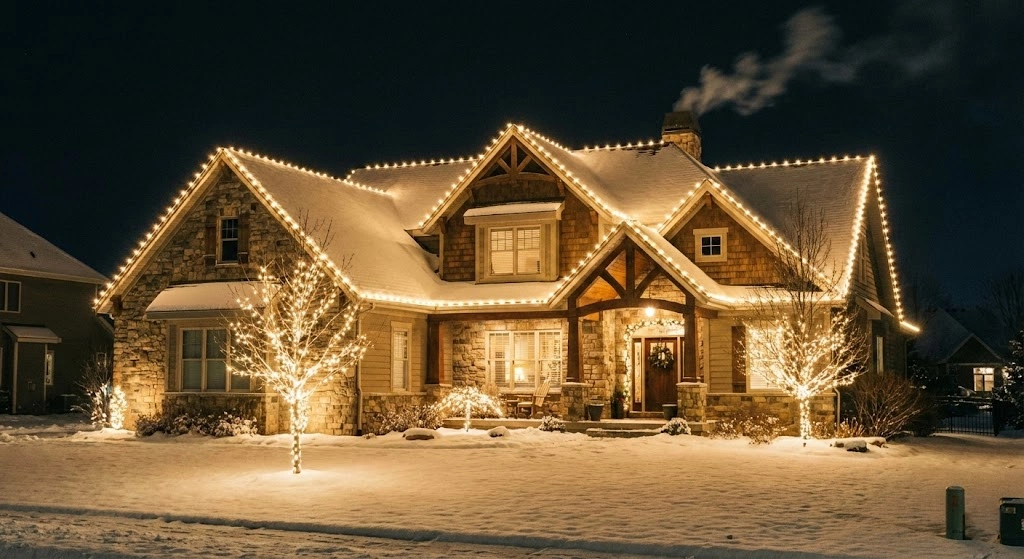
Hanging Christmas lights should be fun, not frustrating. Yet many people struggle with uneven lines, fallen lights, tangled wires, or messy spacing. Most of these problems happen because there is no clear plan or the wrong clips are used.
This complete guide will show you how to hang Christmas lights the right way, using simple steps and easy English that anyone can follow. You do not need special skills or expensive tools. With a little planning and the correct method, your home can look neat, bright, and professional.
In this article, you will learn how to plan your layout, measure correctly, choose the right lights, install them safely, and remove and store them properly after the season. This guide is written at a 7th-grade reading level and is perfect for beginners.
Why Planning Matters Before Hanging Christmas Lights

Many people rush straight to the ladder and start hanging lights. This usually leads to crooked lines, gaps, and wasted time. Planning first saves effort and gives cleaner results.
When you plan ahead, you know exactly where each light run will go. You avoid cutting strands too short and prevent tangled cords. A simple plan also makes next year’s setup much faster.
Before you install anything, decide:
- Which parts of your house you want to light
- Where the power outlet is
- What color pattern you want
A few minutes of planning can save hours of fixing mistakes later.
Tools and Materials You Will Need
Gather everything before you start. This keeps the process smooth and safe.
You will need outdoor-rated Christmas lights, extra bulbs, clips for different surfaces, extension cords or no-socket wire, plugs, a measuring tape, marker, ladder, and basic safety gear. An outdoor smart plug is optional but helpful for automatic on and off schedules.
Always use outdoor-rated lights and cords. Indoor products are not safe for outside use.
Step 1: Choose the Right Type of Christmas Lights
There are many types of Christmas lights, and each one works best in certain places.
LED filament bulbs are bright and modern. They are great for rooflines and front-facing displays. They use less energy and last longer.
Mini string lights are small and flexible. They work well on bushes, railings, and columns.
Icicle lights hang down and add texture. They look best along eaves and porch edges.
Net lights cover bushes quickly and evenly.
Rope lights create smooth lines but need strong support.
Choose one main style for your roofline to keep the look clean and balanced.
Step 2: Pick a Simple Color Pattern
Before installing, decide your color pattern. Keep it simple. A repeating pattern looks neat and planned.
For example, you can repeat red, green, blue, and white in the same order across the entire house. Do not change the order mid-way.
Planning the color sequence early prevents random-looking sections and uneven repeats.
Step 3: Measure the Roofline and Draw a Simple Map
Use a measuring tape to measure every section you want to light. This includes eaves, peaks, hips, and ridges.
Write each measurement down and draw a quick map of your house. Label each section clearly. This drawing becomes your cut list.
Always measure carefully. Good measurements reduce waste and prevent gaps.
Step 4: Cut Light Strands With Extra Length
Cut each strand to match your measurements, but always add at least one extra foot. This extra length helps with corners, peaks, and small errors.
It is better to cut long and trim later than to cut short and start over.
Lay each cut strand on the ground in the same order as your roof map.
Step 5: Dry Lay Everything on the Ground
Before climbing the ladder, place all light strands on the ground. Match them to your map.
This step helps you confirm lengths and avoid mixing pieces once you are on the roof. Keep plugs off during this step so changes are easy.
Dry laying saves time and prevents mistakes.
Step 6: Insert Bulbs in a Consistent Order
Lay bulbs out in the exact order you want before screwing them in. Use an easy counting system, such as repeating sets of five.
Make sure all bulbs face outward and sit snug in their sockets. This keeps the display bright and even.
Step 7: Use the Correct Clips for Each Surface
Clips are very important. They keep lights straight and prevent damage to your home.
Use shingle clips for roof edges, ridge clips for peaks, siding hooks for vinyl siding, and magnetic or fascia clips for smooth surfaces.
Attach one clip per socket to keep spacing perfect.
Never use nails or staples. They can damage wires and surfaces.
Step 8: Decide the Power Start and Build Jump Cords
Choose where your power outlet is located. Start your light run closest to it.
Use no-socket wire to make custom extension cords and jump cords. Jump cords help you cross blank roof sections without showing lights.
Hide these cords along trim lines or behind edges for a clean look.
Step 9: Install the Lights Safely
Start at the power source and work outward. Secure each light firmly before moving on.
Always keep three points of contact on the ladder. Do not overreach. Move the ladder when needed.
Take your time. A slow, careful install looks better and stays secure longer.
Step 10: Test the Lights Before Final Trimming
Turn the lights on before trimming any extra length. Check for dark sections or loose connections.
Fix any issues first. Once everything works, trim the extra wire for a clean finish.
Do a final test at night to see how the lights look from the street.
Special Surfaces and Tricky Areas
Windows: Use suction cups or removable adhesive clips. Clean the glass first.
Brick walls: Use brick clips or adhesive hooks on mortar lines.
Vinyl siding: Use siding hooks that slide into seams.
No gutters: Use shingle or fascia clips instead.
These methods keep your home damage-free.
Safety Tips When Hanging Christmas Lights
Always turn off power while installing. Use outdoor-rated products only. Avoid wet or windy days.
If a roof area feels unsafe, skip it or ask for help. Safety always comes first.
How to Remove and Store Christmas Lights Properly
Unplug everything first. Remove lights in reverse order, starting from the power source.
Coil each section neatly as you remove it. Label coils by location, such as front eave or peak.
Store lights in dry, sealed containers. Proper storage prevents tangles and broken bulbs.
Common Mistakes to Avoid
Do not rush the install. Do not skip measuring. Do not mix clip types. Do not staple wires.
Avoid plugging too many strands into one outlet. Use rated extension cords and follow safety limits.
Frequently Asked Questions
How long does it take to hang Christmas lights?
Most homes take two to four hours with planning.
Can I reuse lights every year?
Yes, if stored properly and tested before use.
Are LED lights better?
Yes, they use less power and last longer.
Conclusion
Hanging Christmas lights does not have to be difficult. With proper planning, correct clips, and a step-by-step approach, anyone can create a clean and beautiful display.
Follow this guide, take your time, and test before trimming. When the season ends, remove and store lights carefully to make next year even easier.
A little effort now means bright, stress-free holidays every year.

Comments are closed.