
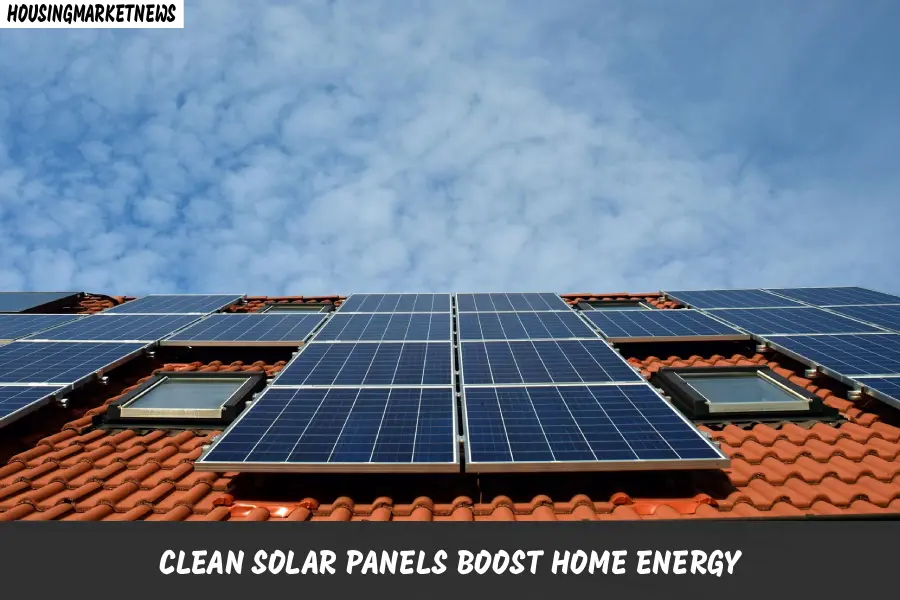
Do you want to maximise the benefits from your solar panels?
There are a few simple steps you can take as a homeowner to ensure that your solar panels are working at optimal performance all year round. And the most important one is keeping them clean.
Solar panels generate electricity by turning light from the sun into energy. Clean panels can convert sunlight into more energy which means more savings for you in the long run.
Dirty solar panels are one of the biggest losses for property owners but most are not even aware that this is the case.
This article will give you a clear idea of how clean solar panels lead to increased energy production and how regular cleaning can maximise your savings.
In this article, we’ll cover:
- Why Dirty Solar Panels Are Costing You Money
- The Real Impact of Soiling on Energy Output
- How Regular Cleaning Boosts Your Savings
- When to Clean Your Panels
Why Dirty Solar Panels Are Costing You Money
Solar panels are effective at converting sunlight into electricity. The more sunlight your panels can absorb, the more energy they will produce.
But when panels are covered in dust and dirt, this reduces the amount of sunlight they can capture. The buildup of dust, dirt, bird droppings and grime on the surface blocks sunlight from reaching the photovoltaic cells.
This ultimately reduces the amount of energy your solar panels produce. According to the National Renewable Energy Laboratory, soiling on solar panels can cause up to 7% annual energy loss in the United States. This percentage increases significantly in dusty and dirty areas.
This lost energy accumulates and costs commercial property owners and residential property owners with larger systems money. Professional solar panel cleaning in Tamworth can help commercial and residential property owners recoup that lost efficiency and preserve their investment.
The bottom line is that dirty solar panels mean you’re losing money.
The amount of money you are losing is based on every kilowatt-hour of lost production.
The Real Impact of Soiling on Energy Output
But just how much energy is lost due to dirty solar panels?
You might be surprised.
Dirty solar panels can lose anywhere between 5% to 25% of their output, depending on your location, the local weather conditions, and the types of debris that are clogging up your solar panels. In dryer, dustier regions and regions that are more affected by air pollution, you are likely to lose even more efficiency.
Solar panel cleaning services point out that the following are the biggest offenders:
- Dust and dirt – which is especially common in drier areas and near building sites.
- Bird droppings – as these are hard to wash away naturally.
- Pollen – this will build up particularly quickly over spring and summer.
- Pollution particles – these are a particular problem in more urban areas.
In fact, even a light film of grime can make a difference. Recent research found that a 5% reduction in light transmission could lead to a 10-25% reduction in energy output. That is a pretty big loss to your performance.
One more thing to point out here.
Soiling is especially bad during long dry periods, typically during the summer months. This is when solar panels should be performing at their peak levels but during those dry periods, daily soiling rates can hit 25%. Yikes.
How Regular Cleaning Boosts Your Savings
Clean solar panels have better performance and it is as simple as that. Homeowners have reported that regular cleaning of their solar panels can lead to a 10-20% increase in output. Over the lifetime of your solar system, this will lead to significant savings in your electricity bills.
Here’s an example.
A 5kW residential solar system that experiences 7% soiling loss is losing the equivalent of approximately $65 per annum in California. If you increase this to a 10kW system with a 10% loss and you’re in a dry month, that amount increases to $189.
The financial gains from ensuring your solar panels are clean aren’t just about energy production.
Extended Panel Lifespan
Dirt and debris will build up on your panels and this will increase the overall temperature of your system. Components degrade more quickly with higher temperatures. Regular solar panel cleaning will help you to maintain optimum operating conditions. It will also help to ensure a longer lifespan for the system as a whole.
Warranty Protection
Solar panel manufacturers typically recommend that you carry out regular maintenance. This is often included as part of their warranty terms. You do not want to get to the end of your warranty period only to find that you’re not covered due to lack of cleaning.
System Monitoring
Monitoring your system and its energy production should be relatively straightforward when your panels are clean. Consistent energy output will mean that you’ll be able to spot genuine problems as and when they arise. If you spot a sudden drop in output, you’ll be able to rule out dirt and dust as an issue and get to the bottom of the problem much quicker.
Easy, right?
When to Clean Your Panels
Regular cleaning is important but you do not necessarily have to be cleaning your solar panels at the same frequency as your neighbours or even the guy down the road.
The correct frequency for panel cleaning depends on a number of factors.
Environmental Conditions
Your location plays an important role. Panels that are in dusty areas, close to building sites, or in high-traffic areas are going to get dirty much more quickly. Areas that are close to the coast are going to have to deal with salt residue. Properties in rural areas are going to have to deal with pollen and agricultural dust.
An average cleaning schedule could be as follows:
- Moderate climates with regular rain – Every 6 months
- Dusty or polluted environments – Every 3-4 months
- Coastal areas – Every 4-6 months
- After storms or dust events – Clean as needed
Signs Your Panels Need Cleaning
As well as using a recommended cleaning schedule, keep an eye on your energy production data. Most modern systems are going to come with some sort of monitoring software that allows you to track how much energy is being produced. If you spot:
- A gradual decline in energy production
- Energy output lower than expected, given the weather conditions
- Visible dirt or bird droppings
Your panels are probably in need of a clean.
Rain is your ally. Rain can wash away loose dust but it is not the same as a proper clean. Rain won’t get rid of sticky substances such as bird droppings and tree sap. Mineral deposits in rainwater can also cause streaks that will reduce your efficiency over time.
DIY vs Professional Cleaning
Solar panels that are ground mounted or that are in a location that is easy to access can be a job for a homeowner using some water and a soft brush. Rooftop installations on the other hand, are probably better left to the professionals for health and safety reasons.
Professional solar panel cleaners also have access to tools and the equipment that will make the job much easier for them. It is also less likely that they will damage your solar panels. Pressure washers, abrasive materials and strong chemicals can all damage panels by scratching the surface or breaking seals.
Keep It Simple
Solar panel cleaning doesn’t need to be complicated or time-consuming. A basic maintenance schedule should be all that is needed to ensure that your system is performing at its best and that your investment in renewable energy is protected.
Quick summary:
- Dirty solar panels can lose between 5-25% of efficiency.
- Regular cleaning can boost output by 10-20%.
- You should be cleaning every 3-6 months, depending on the conditions you have around your home or property.
- Keep an eye on your energy production to spot any unexpected drops in energy.
Solar panels are designed to last 25-30 years. Regular cleaning will ensure that they continue to provide you with the maximum return on your investment over the lifetime of your system. It’s an investment that will more than pay for itself time and time again in energy savings and extending the life of your equipment.
One home improvement decision that will keep on giving.


Comments are closed.