
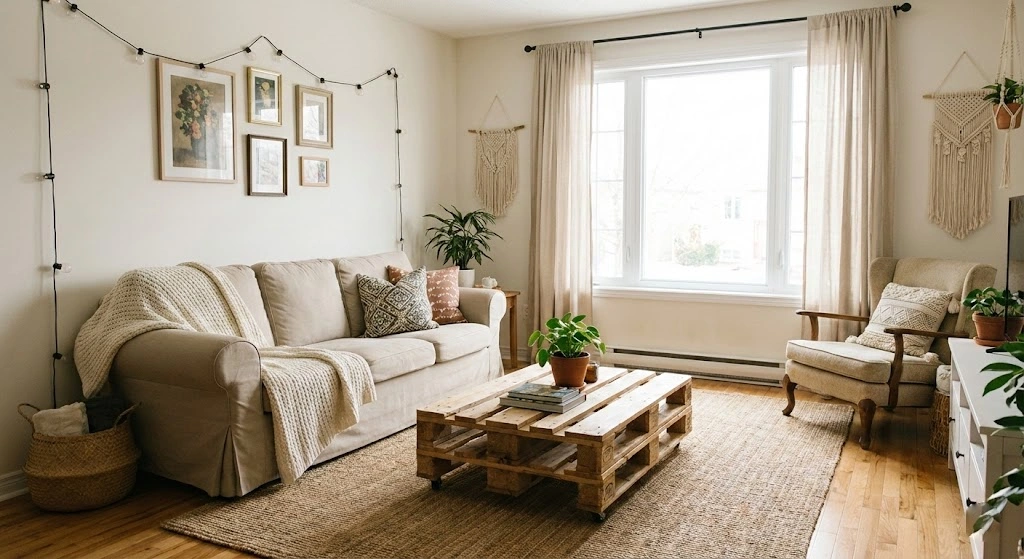
Economy home decor helps you create beautiful living spaces on a budget through thrift store finds, DIY projects, and smart shopping. You can achieve high-end looks using paint, creativity, and repurposed items without spending thousands of dollars on new furniture.
What Economy Home Decor Really Means
Economy home decor teaches people to design their living spaces economically yet retain charming, fabulous aesthetics. It’s not about making your home look cheap. It’s about making smart choices that let you express your personal style without emptying your bank account.
You don’t need designer furniture or expensive accessories to create a space you love. What you need is creativity, patience, and the willingness to see potential where others see worn-out items. A scratched dresser becomes a statement piece with fresh paint. An old brass lamp transforms into something modern with a good cleaning and new shade.
Creating a stunning and inviting home doesn’t require a bottomless bank account. The most charming spaces often come together through resourcefulness and clever thinking rather than massive spending.

Hunt for Treasures at Thrift Stores
Thrift stores, flea markets, and online marketplaces are treasure troves waiting to be discovered. These aren’t just places to find cheap stuff. They’re goldmines for unique pieces with character and history.
The secret to successful thrift shopping is patience and vision. Don’t walk in expecting to find exactly what you want immediately. Keep an open mind. That dingy wooden table might be perfect after sanding and staining. Those outdated chairs could become a matching set with coordinated paint.
You can find quality furniture for a fraction of retail prices at secondhand stores. A $10 filing cabinet can become chic office storage. A $25 table can get a complete makeover in under an hour with just painter’s tape and creativity.
Check Facebook Marketplace, Craigslist, and local estate sales regularly. The best finds go quickly, so staying connected to these sources helps you grab deals before others do.
Give Old Furniture New Life
Furniture makeovers are the backbone of economy home decor. You’d be amazed what paint and new hardware can do for tired pieces.
Start with solid wood furniture from thrift stores. These pieces were built to last and just need some attention. Sand down the surface to remove old finish. Apply a fresh coat of paint in a color that matches your style. Swap out old knobs and handles for modern hardware.
Repurposing is one of the most budget-friendly and sustainable ways to decorate. A dresser missing drawers becomes a TV console with added shelves. A vintage card catalog transforms into a stunning coffee table. Even a baby crib can be repurposed into something entirely new.
Two-tone furniture creates instant visual interest. Paint the base one color and stain the top another. Or add wallpaper to the back of a bookshelf for a high-end custom look. These simple touches make secondhand pieces look intentional and expensive.
Master DIY Projects That Impress
DIY projects put you in control of your home’s aesthetic. You choose colors, textures, and scale. This approach saves money while giving you exactly what you want.
Wall updates make huge differences without huge costs. Peel-and-stick wallpaper, slat panels, and even faux molding can create bold accent walls without the mess or cost of traditional renovations. A painted feature wall in a light color brightens dark spaces and makes them feel finished.
Create your own artwork instead of buying expensive pieces. Use canvas boards from craft stores and experiment with abstract designs. You don’t need professional skills. Just have fun with paint, stencils, or even geometric patterns. Frame family photos or printed art for a gallery wall that costs almost nothing.
Lighting can completely change a room’s ambiance. Replace outdated fixtures with budget-friendly modern options. String lights and candles establish cozy atmospheres at low prices. You can even DIY lampshades using fabric and glue.
Shop Your Own House First
One of the easiest and totally free ways to refresh your home is by simply moving things around. Before spending money, look at what you already own.
Pull a lamp from the bedroom into the living room. Swap vases between rooms. Restyle your shelves, coffee table, or mantel with pieces you already have. When items move to new spots, you notice them again. They feel fresh and interesting.
Rotate your decor seasonally. Pack away half of your currently displayed items. In six months, swap what’s out with what you stored. Seeing items after a break makes them feel new again. This gives your home a fresh vibe without spending a single dollar.
Decluttering and simplifying almost always give an instant upgrade to a space. Put away extra throw pillows, blankets, and accessories. Less clutter makes rooms look more intentional and polished.
Choose Multi-Purpose Furniture
When decorating a home on a budget, multifunctionality is your best friend. Look for pieces that serve multiple purposes. A sofa bed hosts overnight guests. A storage ottoman hides clutter while providing extra seating. A dining table doubles as a desk during the day.
Multi-purpose furniture saves money and space. You’re buying fewer items overall, and each piece works harder for you. This approach is especially smart for small apartments or homes where every square foot matters.
Consider furniture with built-in storage. Beds with drawers underneath keep bedrooms organized. Coffee tables with shelves display books and magazines. Benches with lift-up seats store shoes and accessories.
Add Personality With Small Updates
Small changes often create the biggest impact. Replace plain cabinet handles with unique ones from thrift stores or paint existing ones for a fresh look. Colorful ceramic knobs instantly upgrade kitchen drawers for under $20.
Throw pillows are easy ways to add color and texture. Mix and match colors and textures, and blend different groupings. You don’t need to buy all new pillows either. Just grab crisp new pillow covers that fit your existing inserts.
Textiles refresh spaces quickly. New towels, curtains, and rugs change the whole feel of a room. Look for these items at discount stores like HomeGoods or during clearance sales at major retailers. Neutral colors work year-round, while seasonal patterns let you switch things up affordably.
Mirrors make small spaces feel larger and reflect light to brighten rooms. You can find affordable mirrors at discount stores or thrift shops. Hang them strategically across from windows to maximize natural light.
Use Nature as Free Decor
A simple walk in the park or the woods can yield some inspiration for seasonal decorations. Vases with fresh green leaves in spring. Small flower bouquets in summer. Bowls filled with pine cones, nuts, and seed pods in fall. These natural elements add beauty without costing anything.
Branches in tall vases create dramatic statements. Potted plants bring life and color to any room. Even a collection of interesting stones or shells displayed in glass jars becomes art.
Nature provides endless free materials for wreaths, centerpieces, and arrangements. Pay attention to what’s growing and changing in your area. Bring those elements inside to connect your home with the seasons.
Paint Your Way to Transformation
Any room can receive a modern update through application of light-toned neutral paint like white, gray, and beige. Paint is the most cost-effective way to completely change a space.
A single can of paint refreshes entire rooms. Choose neutral colors as your base. These shades make spaces feel larger and brighter. They also work with any decor style you might adopt later.
Don’t limit paint to walls. Paint furniture, picture frames, plant pots, and accessories. A coat of spray paint updates brass fixtures to brushed nickel. Chalkboard paint turns cabinet doors into message centers.
Test paint colors before committing. Buy sample sizes and paint large swatches on your walls. Live with them for a few days to see how they look in different lighting. This prevents expensive mistakes.
Create Budget-Friendly Rental Updates
There are tons of rental friendly decor tips that allow you to personalize your space without losing your security deposit. Command strips and hooks hang art, mirrors, and lightweight shelving without damaging walls.
Peel-and-stick wallpaper comes in countless patterns and textures. Use it to create accent walls, line shelves, or even cover ugly countertops. It removes cleanly when you move out.
Removable backsplash tiles update kitchens temporarily. Tension rods hold curtains without drilling holes. Area rugs cover worn flooring. These solutions let renters enjoy beautiful spaces without permanent changes.
Focus on High-Impact Areas
Prioritize the areas of your home that need the most help and will get you the most bang for your buck. Start with spaces you use most often or that guests see first.
Entryways make important first impressions. A fresh coat of paint, new doormat, and organized shoe storage set the tone for your entire home. These updates cost very little but make guests feel welcome immediately.
Living rooms get the most use in many homes. Focus budget here on comfortable seating and good lighting. Everything else can be simple and minimal.
Bathrooms benefit from small upgrades. Proudly display crisp white, fluffy towels like the kind you would find in a fancy hotel or spa. This immediately makes the space feel more upscale. Add ribbon details to basic towels with a sewing machine for custom touches.
Build Collections Over Time
Buy items that you are going to use for multiple seasons. Milk glass, enamelware, and copper all have timeless neutral palettes. These items work for different holidays and seasons because you can decorate them accordingly.
Don’t feel pressured to finish decorating your home all at once. Build collections slowly. Pick up one special piece each month. This approach spreads costs over time and lets you be selective about what you bring home.
Quality matters more than quantity. One beautiful piece you love beats ten mediocre items you settled for. Wait for the right pieces even if it takes longer.
Learn From Free Resources
The internet offers endless inspiration and tutorials for economy home decor. Pinterest provides unlimited ideas for every room and style. YouTube has step-by-step videos for any DIY project you want to try.
Design blogs share real transformations with detailed instructions. Many include supply lists and cost breakdowns so you know exactly what you need.
Using vintage looking prints, they were able to make this old TV cart look like a high end furniture store piece. Decoupage is a well-kept secret of professional furniture flippers. You can increase value and visual appeal of almost any piece by working in thoughtful decoupage designs.
Join online communities focused on budget decorating. Share your projects and get feedback. Ask questions when you’re stuck. These groups offer support and encouragement as you develop your skills.
Make Your Home Look Expensive
The goal isn’t just saving money. It’s creating a space that looks and feels expensive without the expensive price tag.
Keep spaces clutter-free and clean. This alone makes homes look more polished and intentional. Organize what you display carefully rather than cramming every surface with stuff.
Pay attention to architectural details you already have. Architectural details such as crown molding, wooden beams, hardwood floors, built-in bookshelves, and mosaic-tile backsplashes are all worth focusing on. Keep them clean and make them focal points rather than competing with expensive artwork or furniture.
Coordinate colors throughout your space. Choose a color palette and stick with it. This creates flow between rooms and makes your home feel designed rather than random.
Good lighting transforms everything. Layer lighting with overhead fixtures, table lamps, and accent lights. Well-lit rooms always look better than dim ones.
Start Small and Build Confidence
Start with one project, see it through to completion, and then move on to the next. This approach keeps things manageable and ensures you stay within budget.
Begin with simple projects that build your skills. Paint a small side table before tackling a large dresser. Make one pillow cover before sewing curtains. Success with small projects gives you confidence for bigger ones.
Celebrate each completed project. Each finished piece brings you closer to the home you envision. Take before and after photos to see your progress.
Don’t let perfectionism stop you from starting. Your first attempts might not turn out exactly as planned. That’s okay. You’ll improve with practice. The beauty of economy home decor is that low-cost materials mean low-cost mistakes.
Your Home, Your Budget, Your Style
Economy home decor proves beautiful living spaces are within everyone’s reach. You don’t need unlimited funds to create a home you love. You need creativity, patience, and willingness to try new things.
Start by assessing what you have. Shop your own house before spending money elsewhere. When you do buy, choose thrift stores and secondhand markets over retail. Learn basic DIY skills that let you transform inexpensive finds into custom pieces.
Remember that decorating is a process, not a destination. Your home will continue changing as your life changes. Enjoy the journey of creating spaces that reflect who you are and how you want to live.
The most important thing is making your house feel like home. Whether you spend $50 or $5000, what matters is creating a space where you feel comfortable, happy, and yourself. Economy home decor makes that possible for everyone.

Comments are closed.