
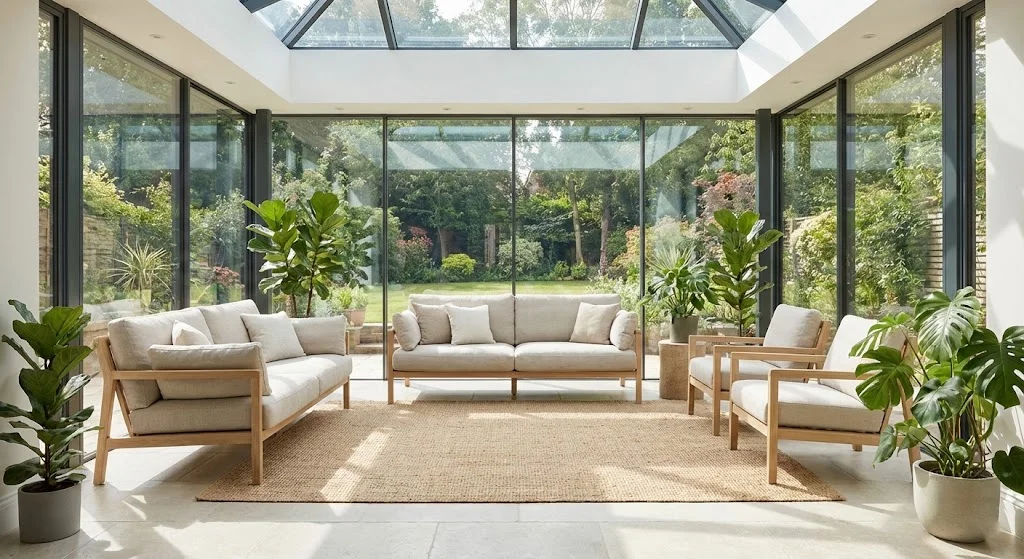
Conservatory Design Ideas: Conservatories blend indoor comfort with outdoor views through glass-walled extensions. Choose from Victorian, Edwardian, or lean-to styles. Add underfloor heating, bi-fold doors, and natural materials to create year-round living spaces for dining, working, or relaxing.
Why Conservatories Are More Popular Than Ever
Your home needs more space, but you don’t want to move. This is where conservatories come in. These glass-filled rooms create a bridge between your indoor living area and your garden. They flood your home with natural light while adding valuable square footage.

Conservatories have changed a lot since the 1980s. Back then, they were freezing in winter and sweltering in summer. Today’s designs use advanced glazing and smart heating systems. You can use these spaces all year round without discomfort.
Modern conservatories serve multiple purposes. Some people turn them into dining rooms where they can enjoy garden views during meals. Others create home offices with plenty of natural light. You might use yours as a cozy reading nook or a space for growing plants.
Choosing the Right Conservatory Style for Your Home
Your conservatory style should match your home’s character. Victorian conservatories feature curved walls and ornate details. They work beautifully with period properties. The bay front and steeply pitched roof create an elegant, classic look that adds real charm to any home.
Edwardian conservatories take a simpler approach. They have square or rectangular shapes that give you more usable floor space. The clean lines and large glass panes let in maximum light. This style fits well with modern homes and traditional properties alike.
Lean-to conservatories offer the most budget-friendly option. They feature a single sloped roof that attaches directly to your house wall. This style works especially well for bungalows or homes with limited space. The simple design doesn’t mean less beauty—lean-to conservatories create stunning, minimalist garden rooms.
Gable-front conservatories make a bold statement. The roof slopes up to meet at a triangular peak, creating dramatic height and grandeur. This style gives you a spacious, airy feel with a vaulted ceiling. If you want your conservatory to stand out as a feature of your home, the gable design delivers that wow factor.
Modern Design Trends Shaping Today’s Conservatories
Glass box extensions represent the latest trend in conservatory design. These frameless or minimal-frame structures create an almost invisible barrier between inside and outside. Large glass panels provide unobstructed garden views. The contemporary aesthetic suits modern homes perfectly.
Bi-fold and sliding doors have become essential features. They create seamless transitions between your conservatory and garden. On warm days, you can fold the doors completely open. This turns your conservatory into an outdoor entertaining space while maintaining shelter overhead.
Smart glass technology is changing how conservatories work. Electrochromic glass adjusts its tint based on sunlight exposure. This helps control temperature and glare without curtains or blinds. Self-cleaning glass uses special coatings to reduce maintenance needs. These technologies make conservatories more practical and easier to live with.
Neutral color schemes dominate current design trends. White, grey, and beige create calm, uncluttered spaces. These colors make your conservatory feel larger and brighter. They also provide a perfect backdrop for colorful furniture and plants.
Creating Comfortable Temperatures Year-Round
Temperature control separates modern conservatories from older versions. Underfloor heating has become the preferred solution for many homeowners. Electric systems heat up in 20 to 30 minutes and provide even warmth across the entire floor. They’re invisible, giving you more decorating freedom.
Underfloor heating works best with tile or stone floors. These materials conduct heat efficiently and warm up quickly. You can also use laminate or engineered wood, though carpet needs careful selection. A system with 200W/m2 output handles the higher heat loss that glass rooms experience.
Air conditioning or heat pumps provide both cooling and heating. Mini-split systems mount on walls without taking up floor space. They work well in UK climates but need backup heating on very cold days. Heat pumps are more energy-efficient than traditional heating methods.
Double or triple glazing makes a huge difference in comfort. Modern glazing technology keeps heat inside during winter and blocks excess heat in summer. Some roof glazing includes reflective or selective glass that filters out the hot components of sunlight while letting light through.
Flooring Options That Work and Look Great
Your floor choice affects both appearance and heating efficiency. Ceramic tiles and natural stone are popular choices for conservatories. They’re durable, easy to clean, and work perfectly with underfloor heating. Slip-resistant tiles designed for outdoor use can extend the look of your garden into the conservatory.
Laminate flooring provides a more affordable option. It offers the warmth of wood appearance with better durability. Modern laminates stand up to temperature changes and moisture better than solid wood. They transfer heat well if you install underfloor heating.
Matching your conservatory floor to your garden paving creates a unified look. This design trick makes both spaces appear larger. It blurs the line between inside and outside, which is exactly what conservatories should do.
Rugs add warmth and comfort without permanent commitment. Wool rugs trap heat effectively thanks to natural fibers. You can layer textured rugs over hard flooring for added insulation during colder months. This approach gives you flexibility—remove the rugs in summer when you want a cooler feel.
Decorating Your Conservatory with Style and Purpose
Think about how you’ll actually use the space before decorating. A dining conservatory needs a table sized for your family plus guests. Position it to take advantage of the best garden views. Add pendant lighting for evening meals when natural light fades.
Home office conservatories need proper storage and work surfaces. The natural light makes these spaces ideal for productivity. Just make sure you can control glare on computer screens. Adjustable blinds or curtains help manage light throughout the day.
Plants transform conservatories into lush garden rooms. Mix tropical species like banana trees or palms with easier succulents and cacti. The glass environment creates perfect growing conditions. Hanging baskets add vertical interest and make the space feel more enclosed in a good way.
Furniture should withstand temperature fluctuations. Choose pieces designed for conservatories or outdoor use. Wicker, rattan, and treated wood work well. Add washable cushions for comfort that you can easily maintain.
Bringing Everything Together
Creating a beautiful conservatory starts with understanding your needs. Do you want extra dining space? A home gym? A quiet reading retreat? Your answer shapes every design decision you make.
Consider your home’s architecture when choosing a style. Victorian details suit older properties while minimalist designs complement modern homes. The conservatory should feel like a natural extension, not an awkward addition.
Budget for proper heating and cooling systems. A conservatory that’s uncomfortable for half the year becomes wasted space. The investment in underfloor heating or a good heat pump pays off through year-round use.
Don’t forget about window treatments. Thermal curtains or blinds help manage temperature and provide privacy when needed. Blackout linings keep spaces cooler in summer and warmer in winter. They also help heating and cooling systems work more efficiently.
Making Smart Choices for Your Conservatory Project
Start by checking what planning permission you need. Most conservatories don’t require it, but rules vary based on size and location. Building regulations still apply, especially for heating and glazing standards.
Get quotes from multiple suppliers. Conservatory prices vary widely based on size, style, and materials. Don’t just pick the cheapest option—quality construction matters for long-term satisfaction. Ask to see completed projects or speak with past customers.
Think about roof options carefully. Glass roofs give maximum light but need good glazing technology. Solid roofs with skylights offer better insulation while still providing brightness. Some people mix both approaches with a partially solid roof.
Future-proof your design by including electrical outlets in useful spots. You might want to add a sound system, plug in a laptop, or run a coffee maker. Plan for these needs during construction rather than adding them later.
Creating Your Perfect Space
Your conservatory should reflect your lifestyle and taste. Some people create formal spaces with elegant furniture and sophisticated lighting. Others prefer casual family rooms with comfy seating and toy storage.
Color choices set the mood. Light neutrals keep spaces feeling open and airy. Darker colors create cozy, intimate atmospheres. You can always change paint colors and accessories as your taste changes.
Lighting makes conservatories usable after dark. Install overhead fixtures for general illumination. Add task lighting near seating areas for reading. Consider accent lights to highlight plants or architectural features.
Storage solutions keep spaces tidy. Built-in cupboards or benches with hidden storage work well. Keep garden tools, cushions, or toys tucked away when not in use. A clutter-free conservatory feels more spacious and inviting.
The Value of Professional Guidance
Work with experienced conservatory designers. They understand local building codes and can help avoid costly mistakes. Good designers balance aesthetics with practical concerns like drainage and structural support.
Don’t rush the planning stage. Take time to consider how sunlight moves through your garden throughout the day. A south-facing conservatory gets warm but provides lovely light. North-facing spaces stay cooler but might need more heating.
Visit showrooms to see different styles in person. Photos help, but standing in an actual conservatory gives you a better feel for space and light. Many companies have display conservatories you can explore.
Your conservatory represents a significant investment in your home. Done well, it adds value, creates new living space, and brings joy for years to come. Take time to make choices that truly fit your needs and your property.
Comments are closed.