
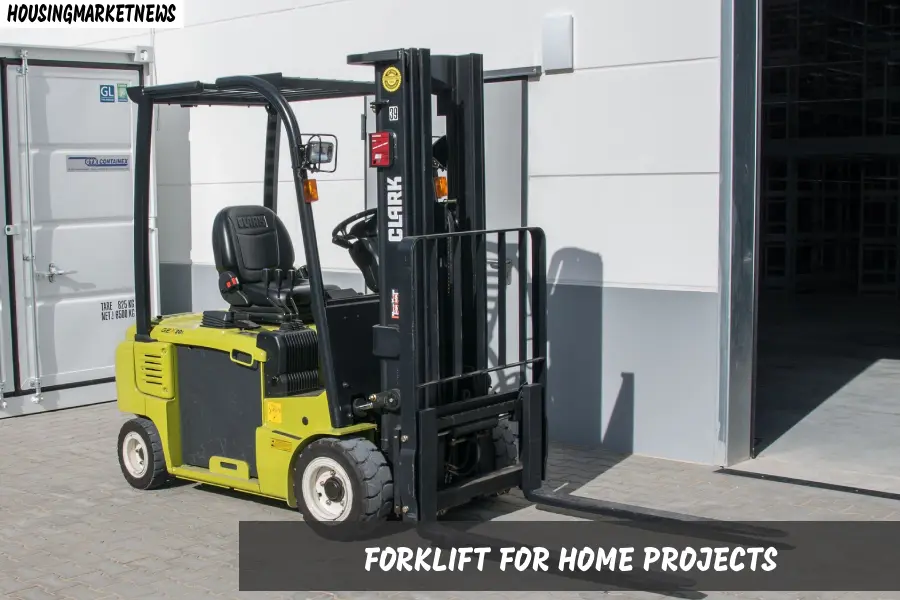
Thinking about that big home project?
A forklift is one of the best tools you can have. After all, moving heavy loads, shifting piles of rubble, and hauling construction materials by hand is tiring, back-breaking work.
Here’s the thing…
While most homeowners don’t even realise they’re an option for home projects, forklift hire can make all the difference. Choosing the right one can save you time, money, and a lot of backache.
In This Article, We’ll Cover:
- Why Forklifts Are Hiring For Home Projects
- Choosing The Right Type Of Forklift
- Key Considerations Before You Hire
- Safety Tips You Can’t Afford To Ignore
Why Homeowners Are Hiring Forklifts
Home renovation projects are only getting bigger and more ambitious. People are tackling major extensions, landscaping overhauls, and even full house renovations.
Moves those kind of volume are needed for.
We’re talking pallets of bricks, bags of cement, and other heavyweight materials and machinery.
Doing all this by hand isn’t just a bad idea. It’s asking for trouble.
Forklifts make light work of heavy lifting. Moving materials that would take hours to shift by hand can be done in minutes. And when you’re paying contractors by the hour, that’s big money.
Best of all, you don’t have to purchase a machine outright. Using short-term forklift hire services gives you access to purpose-built professional equipment at a fraction of the cost. You get a forklift for your home project, use it, and return it when you’re done.
Simple as that.
The problem is most people go straight to the first company they see and hire the first machine they get. Without checking if it’s the right forklift for the job. Talk about a recipe for wasted time and money.
Picking The Right Type Of Forklift
This is important.
Not all forklifts are the same. The type you need will vary depending on your project’s specific requirements. Hiring the wrong model can mean a machine that’s underpowered for the job, or too big and complicated.
You don’t want to be swopping out for a new machine halfway through your project do you?
The main forklift types you need to know about are:
Counterbalance Forklifts are the most common and versatile. As the name suggests, they have a weight in the rear of the machine to keep it balanced when it lifts. Suitable for loads of 1.5 tonnes up to 5 tonnes. Ideal for flat driveways and relatively level ground like a garden.
Rough Terrain Forklifts are built for uneven and soft surfaces. Got a garden that turns into a mudbath after rain? Or a gravel driveway? Rough terrain forklifts have fat tyres that can handle it. Perfect for landscaping jobs where the terrain is not smooth.
Telehandlers are a hybrid between forklift and crane. They have an extending boom that allows you to lift loads to height and reach distances a standard forklift can’t manage. Handy for roofing projects or placing materials on upper levels.
The key is getting the machine that’s the best fit for your specific situation. A counterbalance forklift will perform badly on rough surfaces. But hiring a telehandler for simple pallet moving work is overkill.
Key Considerations Before Hiring A Forklift
Before you pick up the phone to book a forklift, there are a few critical considerations to run through first. Miss one of these and your project could turn into a costly and stressful mess.
Lift Capacity should be your number one focus. Every forklift has a safe maximum weight limit. Guesswork on this and you could easily tip over the machine. Stats from the British Safety Council show about 25% of forklift-related injuries are from the vehicles tipping over. Not great odds.
Lift Height is also important. Some home projects require materials stacking or loading onto a truck. Standard forklifts lift to around 3-4 metres height. But some work will require more reach. Know your requirements before you hire.
Fuel Type will affect where you can use the forklift. Diesel and LPG models are best for outdoor use. But if noise and emissions are a concern, electric forklifts can work in enclosed areas or where you live near neighbours. Much quieter and zero emissions.
Access Width is something people often miss. Measure your gates, pathways, and any narrow access points. There’s nothing worse than a forklift arriving that can’t actually get to your project.
Ground Conditions will also affect forklift type. Solid concrete is good for any machine. But soft ground, slopes, or gravel will require a rough terrain forklift.
Safety Tips You Can’t Ignore
Safety.
Let’s have a chat about it.
Forklifts are undeniably useful but can be dangerous when misused.
Don’t believe me? Research from Arch Insurance shows forklifts are involved in 1300 serious injuries per year in the UK. That’s around five people hospitalised every day.
Don’t be one of them. Check this out:
Training Requirements are non-negotiable. Even for home projects , operating a forklift without training is asking for injury. Most hire companies offer basic instruction. Listen up.
Site Preparation can prevent accidents before they happen. Clear the area of trip hazards. Mark out pedestrian zones if others will be working near the machine. Keep the forklift’s path clear.
Load Handling basics are important. Don’t overload the machine. Keep heavy loads low to the ground when moving. Tilt the mast back for stability. It’s these simple rules that prevent most accidents.
Personal Protective Equipment includes steel-toed boots, hi-vis tabards and jackets, and a hard hat if there are overhead hazards. Safety gear is important.
Questions To Ask Your Forklift Hire Company
Before you sign on the dotted line with any forklift hire company there are some questions you must get answers to. These are:
What’s included in the daily/weekly rate? Some companies add on delivery, collection, and fuel charges. Others cover it in the hire price. Know what you’re paying for.
Do you provide operator training? Even basic instruction can help avoid costly mistakes and injuries.
What’s your policy if the machine breaks down? Will they provide a replacement quickly? Or will you be stuck mid-job?
Is insurance included? Most hire agreements stipulate you have coverage. Check what’s covered and what you must provide.
Attachments and add-ons: Fork extensions, buckets, and other attachments can make your forklift more versatile. Find out what’s available if your project requires something specific.
Wrapping Things Up
Choosing the right forklift for home projects is actually straightforward when you know what to look for.
It all comes down to:
- Choosing the forklift type that’s right for your terrain and project
- Getting the lift capacity and lift height correct
- Fuel type and access width requirements
- Taking safety seriously
Having the right machine for your project makes all the difference. Moves that would break your back become a breeze. Saves time. Protects your health. And is often a lot less expensive than you might expect.
Do the research before you hire. Measure all access points. Know your weights. And prioritise safety over speed.
Get the basics right and your home project will run like clockwork.


Comments are closed.