Author

Michelle Hayes

Browsing

Anabei sofas are modular, machine-washable couches starting at $699. They come with a steel frame, stain-resistant fabrics, and a 30-day risk-free return policy. Reviews are mixed—many buyers love the washability and design, but some report comfort issues and inconsistent customer service experiences.

You’ve seen the ads everywhere. TikTok. Instagram. Maybe a few YouTube unboxing videos. The Anabei sofa keeps popping up with that clean, minimal look and one big promise: a fully machine-washable couch at a price that won’t wreck your budget.

But is it worth it? That’s the real question.

I went through dozens of verified customer reviews from Thingtesting, BBB, Reddit, TikTok, and third-party review sites to put together the most honest picture of what you can expect from an Anabei sofa. No fluff. No sales pitch. Just real talk.

What Is the Anabei Sofa?

Anabei sofa fabric swatches in multiple colors and textures
Choose from 16 colors and 8 fabric types, all machine-washable and stain-resistant.

Anabei is a furniture brand that bills itself as the home of “the only, machine-washable sofa.” The sofa starts at $699 and is built with free shipping on every order, a modular design that lets you rearrange sections anytime, and expedited shipping options for buyers who need it fast.

The sofa’s fabric covers and the inner “Frame Duvet” are both machine washable, and all fabrics are liquid and stain-resistant to prevent messes. You wash them cold on a delicate cycle and hang dry only.

The sections are modular, meaning you can start with an L-shaped sofa and later add pieces to build a corner or U-shaped configuration. The easy-carry boxes are designed to pass through any door, so there’s no need for white glove delivery or complicated installation.

That combination of washability, modularity, and affordable pricing is the core of Anabei’s appeal. Whether it actually delivers is a different story.

Anabei Sofa Features: A Closer Look

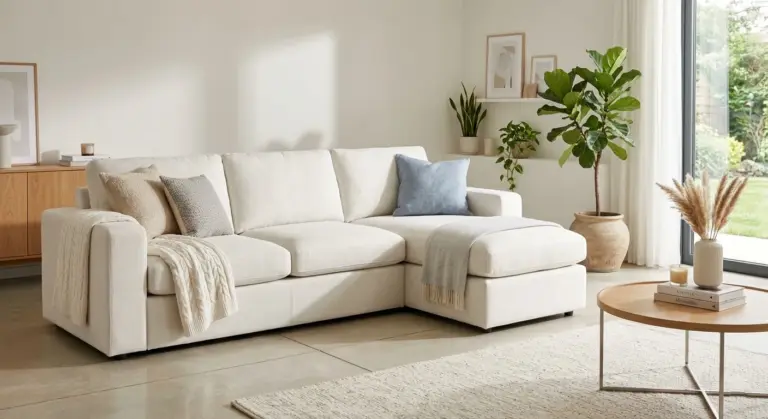
Family enjoying a clean and comfortable Anabei sofa in a bright living room.
Customers love the easy-to-clean, modular design that fits family life.

Before you read the reviews, it helps to understand what you’re actually getting for the price.

Anabei offers 16 fabric color options across 8 upholstery types. All fabrics are stain and liquid resistant, machine washable, and Oeko-Tex Certified. The brand also carries pet-friendly, snag-resistant options. Pill resistance is tested up to 100,000 rub counts, depending on the fabric.

The frame is a powder-coated steel construction with no creaking or splitting, described by the brand as indestructible. You pick from two seat insert options: a Deluxe+ Blend for a sink-in feel, or the Memorix+ Blend, which uses contoured memory foam for a balance of support and comfort.

As of 2025, warranty coverage is typically one year for manufacturing defects and three years for the structural frame. Exact pricing depends on your configuration, fabric choice, seat depth, and promotional timing.

From a sustainability angle, Anabei uses no PFCs, upcycles plastic bottles in its cushion materials, offers carbon-neutral shipments, and uses CertiPUR-US certified foam. That’s a legitimate set of credentials if eco-friendly materials matter to you.

What Customers Love About the Anabei Sofa

Let’s start with the good, because there is quite a bit of it.

The washability feature gets the most consistent praise. One buyer called the design “a plus” and said the color was beautiful, the fabric super soft, and the cushions more plush and comfortable than expected. They specifically praised being able to clean the covers.

Another owner wrote that four months in, the sofa still looked brand new after washing spilled coffee off the slipcover—removing it, tossing it in the wash, and having it come out spotless. They also noted how the modular design made rearranging easy.

Interior designers are also finding value in the product. One designer who uses sofas for home staging said she had previously used high-end brands like Maiden Home and Sixpenny but switched to Anabei because the sofa moves more easily and cleans up quickly—essential for a staging workflow.

The price-to-look ratio is another win. A two-seater starts around $639, which is significantly less than comparable styles from brands like Sixpenny or Maiden Home where similar-looking sofas can reach $9,000. For buyers who want a modern, minimal look without a massive price tag, that gap is hard to ignore.

What Customers Are Frustrated About

Here’s where it gets more complicated.

Comfort is the most polarizing issue in the Anabei sofa reviews. Multiple buyers describe it as the most uncomfortable couch they’ve ever sat on, with one comparing the sensation to laying directly on the metal bars. Another said the fabric was rough and scratchy and that their outdoor furniture was more comfortable.

One detailed review highlighted that the oat weave fabric was pilling after just eight months of minimal use, and that the cushions required constant fluffing to maintain their shape. The same reviewer called it “the most uncomfortable couch ever,” noting that their legs kept falling asleep.

It’s worth knowing that comfort on the Anabei sofa is highly dependent on which insert you choose. The brand itself acknowledged this in a response to a BBB complaint, noting that comfort is subjective and that they offer different insert types. Customers who reach out within 30 days can receive a different insert to try for free. If you’re ordering, take advantage of that window.

Assembly is another friction point. One buyer reported it took eight hours to put the sofa together, and after completion, discovered the frame bars were uncomfortable to sit or lay on without additional padding. The brand advertises assembly under 20 minutes, so experiences clearly vary.

Customer Service: A Real Concern

Beyond the sofa itself, a pattern of customer service complaints shows up across multiple platforms.

One buyer purchased in September 2025, and within two months the back pillows compressed flat and the seat cushions kept sliding forward. When they tried to get help, they could not reach the company by phone, were forced into email-only communication, and described the experience as deceptive after a promised warranty replacement was later denied.

A BBB complaint from another buyer described receiving an item marked as delivered but sent to a completely different apartment complex. Despite providing written confirmation from building management and photo proof of the mismatch, Anabei refused to take responsibility and told them to wait three business days.

In another BBB response, the company noted that it ships thousands of units per week and that negative reviews represent a small percentage of total orders, pointing out that satisfied customers generally don’t leave reviews. That’s a fair point statistically, but it doesn’t make the customer service issues less real for people caught in those situations.

Anabei Sofa Pricing: What to Expect

Anabei runs sales that bring prices to up to 60% off, with entry-level builds starting at $699. The brand frequently advertises these discount prices across its website and social media.

At least one BBB complaint accused the brand of advertising the same sale continuously across different events—Black Friday, after Christmas, and beyond—making the discount feel misleading. Whether you call that aggressive marketing or deceptive pricing is up to you, but it’s worth knowing the “sale price” may be closer to the standard price than it appears.

Pricing scales with size, fabric, depth, and configuration. Multi-seat sectionals run considerably higher than entry builds, and the exact total depends heavily on promotions at the time of purchase. Financing through Shop Pay at 0% APR is available, which helps for larger configurations.

Who Should Buy the Anabei Sofa?

The Anabei sofa works well for a specific type of buyer. If you have kids, pets, or a generally messy household, the fully washable slipcovers are a genuine selling point. The modular design is also great for renters who move often or anyone who wants flexibility in their living room layout.

The 30-day no-risk return policy—with no return shipping fees and a full refund—gives you a real trial window to decide if it’s right for your space and comfort preferences. That’s one of the more generous return policies in this price range.

Where it struggles is with buyers who prioritize firm, traditional seating support. The low-profile design means you sink into the sofa rather than sitting on it, which not everyone enjoys. If you’re used to a structured, upright couch, the Anabei may feel too soft or unstable depending on the insert you choose.

Final Verdict on Anabei Sofa Reviews

Anabei hits a real gap in the furniture market. A washable, modular sofa at an accessible price point is genuinely useful for a lot of households. The design is attractive. The fabric options are solid. And for buyers who get a good unit and don’t need customer support, the experience can be exactly what the ads promised.

But the comfort complaints are too consistent to ignore. Fabric pilling, cushion compression, and structural issues showing up within months of purchase suggest quality control is uneven. The customer service problems make those issues worse—because when something goes wrong, the experience of getting it resolved can be frustrating.

If you’re curious, the 30-day return policy is your best protection. Order it, try it in your actual space, and decide before the window closes. Just document everything if any issues come up, and handle your questions in writing.
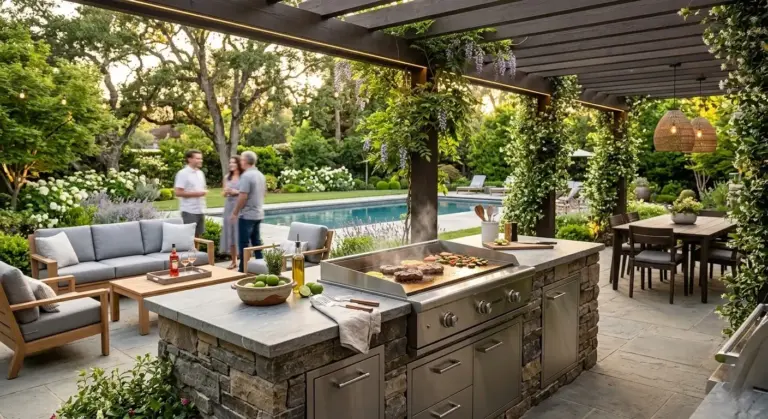
The best griddles for luxury backyards include the Twin Eagles Teppanyaki, Blaze LTE PRO 40″, Lynx Asado, and Coyote 30″ Flat Top. These built-in models use 304 stainless steel, deliver 36,000–40,000 BTUs, and are designed to last outdoors for years without rusting or fading. (48 words)

You’ve spent serious money designing the perfect backyard. The stone countertops are gorgeous. The pergola is dialed in. The outdoor kitchen island looks like it belongs in an architectural magazine. Now comes the fun part — picking a griddle that actually matches that level.

Not all griddles are created equal. A basic rolling carbon steel flat top might work fine for a camping trip, but it won’t cut it in a high-end outdoor kitchen. You need something that handles the weather, looks sharp year-round, and cooks like a dream. This guide breaks down the best options so you can make a smart decision without the guesswork.

Why Luxury Backyards Need a Different Kind of Griddle

Premium built-in stainless steel griddle in a luxury outdoor kitchen island
Luxury outdoor kitchens need griddles that can handle both daily cooking and long-term outdoor exposure.

Here’s the thing most buyers miss: the griddle you pick for a luxury outdoor kitchen has to do two jobs at once. It has to perform like a professional cooking surface. And it has to hold its appearance through rain, humidity, direct sun, and whatever else nature throws at it.

Standard griddles — even popular ones — use cold-rolled or carbon steel cooking surfaces. That material works fine when you keep it seasoned and protected. But in a permanent outdoor installation, especially in coastal or humid climates, carbon steel will rust without careful ongoing maintenance. That’s not what you want when you’ve invested tens of thousands of dollars in an outdoor kitchen.

The brands built for luxury backyards solve this differently. They use 304 stainless steel — the same grade found in commercial restaurant kitchens — for both the frame and the cooking surface. It resists corrosion, cleans up fast, and keeps looking polished through years of outdoor use. That’s the baseline you should expect at this level.

Twin Eagles 30-Inch Teppanyaki Griddle — The Top of the Line

High-end built-in stainless steel teppanyaki griddle in a luxury backyard kitchen
Twin Eagles-style griddles are built for homeowners who want top-tier performance and premium outdoor kitchen design.

If you want the best of the best, Twin Eagles is where the conversation starts. This California-made brand has built a strong reputation in the luxury outdoor kitchen space, and their 30-Inch Teppanyaki Griddle (model TETG30-C) earns every bit of the hype.

The cooking surface is a solid 5/16-inch thick stainless steel plate. That thickness matters because it holds heat evenly and gives you consistent results from edge to edge. Two independent 20,000 BTU burners give you 40,000 BTUs of total output, which is more than enough power to sear proteins, stir-fry vegetables, or run a full Sunday breakfast for a crowd. Each burner has its own thermostat control so you can run two different temperature zones at the same time.

Twin Eagles also put thought into the little things. LED heat indicator lights sit above the control knobs so you always know when the surface is ready. Electronic ignition lights it up with a single push. A stainless steel cover protects the cooking surface when the griddle isn’t in use. It’s the kind of detail work you’d expect from a brand at this price point, and Twin Eagles consistently delivers.

For homeowners who want everything in one station, Twin Eagles also offers the Dine & Breakfast Club (TEBC30-C), which pairs the teppanyaki griddle with dual side burners and built-in storage in a single elegant unit.

Blaze LTE PRO 40-Inch Built-In Griddle — Premium Performance at a Smarter Price

Built-in outdoor flat top griddle with illuminated knobs and digital temperature display
Some built-in griddles offer luxury-level features without reaching the highest price tier.

Not everyone wants to spend at the absolute top of the market, and Blaze built their reputation on exactly that gap. The Blaze LTE PRO 40-Inch Griddle sits at $3,499 and delivers a genuinely premium experience without the premium price tag of some competitors.

The cooking surface uses 304 stainless steel, same as the higher-priced competition. Two U-shaped stainless burners provide 36,000 BTUs of heat output, and the U-shape design creates large, consistent heating zones across the surface. Blaze backs this griddle with a lifetime warranty, which says something about how confident they are in the build quality.

What makes Blaze stand out at this price point is the attention to design details. The LED-lit control knobs look great at night and add a polished feel to any outdoor kitchen island. The lift-assist lid on the LTE PRO model — combined with a digital temperature screen — gives you the kind of precision control you’d normally only find at higher price points. If you’re building a luxury backyard kitchen but want to keep some budget available for other components, Blaze is the smart pick.

Lynx Asado Griddle — Restaurant-Grade Finish with Backlit Style

Luxury outdoor kitchen at dusk with built-in griddle and backlit control knobs
Backlit controls and premium finishes help luxury griddles stand out in evening outdoor entertaining spaces.

Lynx is one of the most recognized names in high-end outdoor cooking, and their Asado Griddle lives up to that reputation. The cooking surface uses a multi-layer design — aluminum sandwiched between two sheets of stainless steel. That construction distributes heat evenly and gives you excellent cooking performance across the entire surface area.

What sets the Lynx apart visually is the backlit blue illuminating control knobs. These are the same signature design details you see across the full Lynx product lineup, and they look stunning in an evening outdoor kitchen setup. The ignition system uses a hot surface design that lights the burners quickly with a simple push-and-turn motion. It’s smooth, reliable, and satisfying to use.

The Lynx Asado also includes a removable griddle surface and grease trays, which makes cleanup far easier than most competitors. A stainless steel cover comes included to protect the surface between uses. Lynx offers both built-in and freestanding cart versions, giving you flexibility depending on how your outdoor kitchen is configured.

Coyote 30-Inch Flat Top Griddle — The High-Value Contender

Luxury modular outdoor kitchen with built-in griddle grill refrigerator and storage drawers
A well-designed modular outdoor kitchen makes it easy to pair a griddle with grills, storage, and refrigeration.

Coyote Outdoor Living has built a solid following in the luxury outdoor kitchen space by offering 304 stainless steel construction and lifetime warranty coverage at a more accessible price than some of the ultra-premium brands. Their 30-Inch Flat Top Griddle is a great example of that value.

The Coyote griddle is built for permanent installation in an outdoor kitchen island. The 304 stainless steel surface resists weather and corrosion, and the overall build quality sits firmly in the premium tier. For homeowners who want the look and feel of a luxury outdoor kitchen without stretching into the Twin Eagles price range, Coyote hits the target well.

It’s also worth noting that Coyote products integrate cleanly with most modular outdoor kitchen island systems. If you’re building a full setup with a grill, side burners, refrigeration, and storage, Coyote makes it easy to mix and match components that all share the same design language.

Fire Magic Echelon Diamond E660i Gourmet Griddle — For the Serious Chef

Professional built-in gourmet griddle in a chef-style luxury outdoor kitchen
Chef-level outdoor griddles bring restaurant-style performance to a high-end backyard kitchen.

Fire Magic is an American-made brand based in California, and their Echelon Diamond E660i Gourmet Griddle takes outdoor cooking to a professional level. Built from 304 stainless steel with a black glass front panel, this griddle stands out visually and performs at a genuinely commercial standard.

Fire Magic uses hot surface ignition technology that lights up reliably without the electrode wear issues common with other ignition systems. The cooking surface reaches high temperatures fast, and the build quality is the kind that holds up through years of heavy use. A stainless steel cover protects the surface when not in use, and the overall design integrates seamlessly into a high-end outdoor kitchen island setup.

If your backyard setup is more “chef’s kitchen moved outside” than casual weekend grilling, Fire Magic gives you the tools to cook at that level every single day.

What to Look for When Choosing a Luxury Backyard Griddle

Before you make a final decision, a few things are worth checking off. First, confirm that the model you want is designed for built-in installation if you’re dropping it into an island. Freestanding models can look out of place in a built-in kitchen, and some require cutout dimensions that don’t match standard island configurations.

Second, pay attention to BTU output. Most luxury griddles fall in the 36,000 to 40,000 BTU range across two burners. That’s plenty of power for high-heat searing and large-batch cooking. Models with independent burner controls give you more flexibility for cooking different foods at the same time.

Third, think about the cooking surface material. Stainless steel is the right choice for any permanent outdoor installation. It requires far less maintenance than carbon steel, holds up better in humid and coastal environments, and keeps looking clean over time.

Finally, check the warranty. The best brands in this space — Twin Eagles, Blaze, Lynx, and Coyote — all back their products with lifetime warranties. That kind of coverage reflects both build confidence and brand stability.

Which Griddle Is Right for Your Backyard?

The Twin Eagles Teppanyaki Griddle is the top choice if you want maximum performance and are willing to invest at the premium tier. For exceptional value with genuine luxury features, the Blaze LTE PRO 40″ gives you more than its price suggests. Lynx brings signature style and smart construction to the table, while Coyote offers a compelling option for buyers who want premium quality without hitting the top of the price range.

Whatever you choose, a built-in stainless steel griddle transforms how you use your outdoor kitchen. Weekend mornings get better. Dinner parties get more impressive. And your backyard becomes the place everyone wants to be.

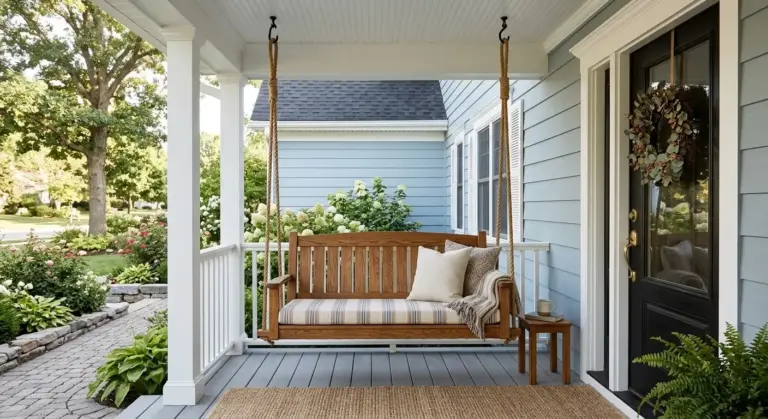
To install a porch swing, locate your ceiling joists using a stud finder, install heavy-duty eye bolts or swing hangers into the joists, attach chains or rope to both ends of the swing, and hang it 17–19 inches off the ground. Always confirm your joists can hold at least 500 pounds before starting.

There’s something about a porch swing that just makes a home feel like a home. Whether you want a quiet spot to drink coffee in the morning or somewhere to sit and watch the neighborhood wind down at night, a porch swing delivers. The good news is you don’t need a contractor to get one up. With the right tools, a free afternoon, and this guide, you can do it yourself.

What You Need Before You Start

tools and hardware needed to install a porch swing
Gather the right tools and heavy-duty hardware before you start the installation.

Getting your tools and materials together before you touch a single nail saves you a lot of frustration. You’ll need a stud finder, a power drill, a socket wrench, a tape measure, a pencil, and a ladder tall enough to reach your porch ceiling comfortably.

For hardware, pick up two heavy-duty swing hangers or eye bolts — at least ½ inch in diameter and 4 inches of threaded shank. The screw or bolt diameter needs to be at least ½ inch, and screws should have a threaded shank that’s at least 4 inches long. You’ll also need galvanized or stainless-steel chains, S-hooks or quick links, and a bag of lag screws rated for outdoor use. Galvanized or stainless steel holds up much better against moisture than standard hardware store bolts.

If you want a cleaner, more natural look, marine-grade braided nylon or polyester rope works well as an alternative to chains. Use steel chains — stainless or galvanized — or marine-grade rope to suspend the swing, and if you choose rope, check it regularly for signs of wear.

Check Your Porch Structure First

checking porch ceiling joists before installing a porch swing
Always confirm your porch ceiling joists are strong enough before hanging a swing.

This is the step most people skip, and it’s the one that matters most. Your porch must be able to support the weight of a porch swing with people in it. Only a joist can safely hold the weight of a swing with people sitting on it.

Walk out to your porch and look up at the ceiling. The joists — those horizontal framing members running across the ceiling — are what your swing will hang from. They need to be in good shape. Don’t hang a swing from a joist with rot or damage. The joists must be adequately supported at both ends for load-bearing applications, and the length of span, other loads being supported, and condition of the wood must all be taken into account.

If you’re not confident your joists are strong enough, you can reinforce them. Joists can be reinforced by “sistering” another piece of wood to the side, or by adding perpendicular wood from one joist to the next — known as “blocking” — to prevent twisting or bucking. When in doubt, have a contractor take a look before you drill anything.

Pick the Right Spot

Placement affects both comfort and safety. You want enough space around the swing so it moves freely without bumping into walls, railings, or outdoor furniture.

Allow at least a 4-foot arc for the swing’s movement, and position the swing 17 inches off the floor as a starting point. You need at least 18 inches of space behind the swing and 14 to 16 inches of side clearance on either side.

Think about sunlight too. A spot that gets morning light but stays shaded in the afternoon is ideal. If your porch gets direct afternoon sun on one side, position the swing on the cooler end. Small adjustments in placement make a big difference in how much you actually use the swing.

Find and Mark the Ceiling Joists

Locating the structural ceiling joists is the most important step. The swing must be installed into structural supports to avoid the risk of falling.

Use a stud finder and run it slowly across the ceiling. Mark each joist location with a pencil. On most front porches, joists run from the house outward toward the front edge of the porch. If the ceiling is covered with wood or beadboard, look for nail patterns where the board is fastened to the joist. Those nail lines point straight to the structure underneath.

Once you’ve found two joists that line up with where you want to hang the swing, drill a small exploratory hole at each mark to confirm you’ve hit solid wood. If you miss, fill the hole with wood putty, let it dry, and try again a couple of inches over.

Space Your Mounting Hardware Correctly

The spacing between your two mounting points matters more than most people realize. The ceiling hooks need to be 2 to 4 inches wider than the width of the swing. This helps distribute weight evenly and keeps the chains from rubbing against the sides of the swing seat as it moves.

The distance between mounting hardware should measure 4 to 6 inches wider than the swing length. This spacing ensures the swing hangs properly and allows for a comfortable arc when in use.

Mark your two final drilling spots clearly. Use a laser level or a plumb bob to make sure both marks are level with each other. If one side hangs lower than the other, your swing will tilt — which is uncomfortable and puts uneven stress on the hardware.

Drill and Install the Hardware

Pre-drill a pilot hole at each marked spot. The pilot hole should be slightly smaller than your eye bolt or lag screw so the threads grip the wood tightly. Never drill a hole the same size as your fastener — it won’t hold.

Slide a 6-inch machine-threaded eyebolt up through the porch ceiling and twist it in. Once it pops through the other side of the joist, secure it with a flat washer, lock washer, and nut. If you’re using swing hanger brackets instead, attach them with lag screws and tighten them with an impact driver until they sit flush against the ceiling — firm but not over-tightened.

Screw in the mounting hardware until it’s tight, but not too tight. Over-tightening can compromise the structural integrity of the joist.

Attach the Chains or Rope to the Swing

Most porch swings come with pre-drilled holes at the front and back of each armrest for attaching chain. Four eye bolts are attached to your swing — two mounting points on either side. Grab a chain section and thread one end through the prefabricated hole at the front of the swing’s armrest.

The classic two-point hanging setup uses one chain per side, each splitting into a front and back section that attaches to the swing. This gives the swing its gentle reclining angle. Once you have attached the longer chain, tilt the swing back about an inch and adjust the shorter chain to your comfort. That slight backward tilt makes sitting in a swing far more comfortable than a dead-level hang.

Use S-hooks or quick links to connect the chains to your ceiling hardware. After everything is connected, use your wrench to double-check that quick links are completely screwed closed, and ensure the chains are the same length on both sides.

Set the Right Height and Test It

A traditional porch swing should hang about 17 inches off the ground. This allows most guests’ feet to reach the floor. If you have tall family members, 18 to 24 inches is the standard range for hanging heights.

Once everything is connected, don’t just jump right in. Test the swing’s stability and anchoring by slowly adding weight to the frame, pushing it back and forth, and giving it a few firm tugs. If it wobbles while swinging, sits unevenly, or shifts position with added weight, recheck your work.

Start light — press down on each side with your hands, then sit on it yourself before inviting the whole family on. A few minutes of testing here can prevent a real problem later.

Keep It Safe Over Time

Installing the swing correctly is only half the job. A little regular maintenance keeps everything secure for years.

Check the hardware every few months — especially at the start of summer after a long winter. Look for rust, loosened bolts, worn rope or chain links, and any cracks forming in the ceiling around the mounting points. Make sure to periodically check your ceiling for any signs of cracking or warping. If you notice any damage, remove your swing and consult a professional contractor or structural architect.

If you used rope instead of chain, inspect it more closely. Rope stretches over time and can degrade with UV exposure and moisture. Replace it at the first sign of fraying — it’s inexpensive and takes ten minutes.

A well-installed porch swing holds up through years of use without any drama. Put in the work upfront, check it regularly, and it’ll be one of the most-used spots on your entire property. Now go hang that swing — your front porch has been waiting long enough.

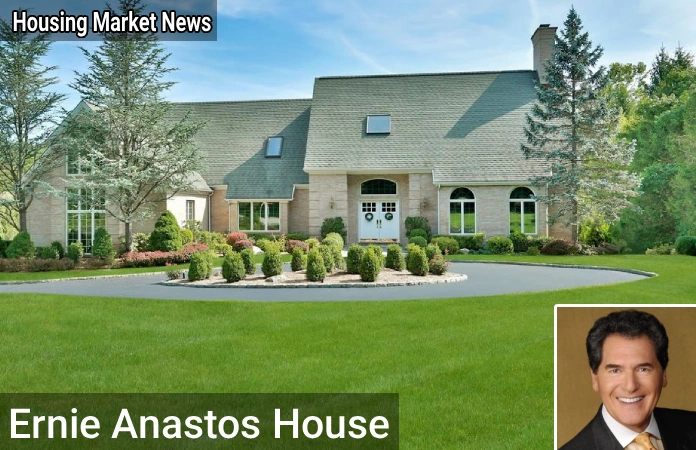
The Ernie Anastos house in Armonk, New York, stands as a quiet testament to four decades of hard work, discipline, and a life built in the spotlight of New York City’s most competitive newsrooms. Nestled on two acres of wooded Westchester County land, the 6,000-square-foot property reflects the same steady presence that made Anastos one of the most recognized faces in American local television history.

Fans of the veteran anchor have long been curious about how he lived away from the camera. The Armonk estate — purchased in 2014 for $1.98 million — gives a clear picture of a man who valued privacy, comfort, and space in equal measure. With the property now valued at an estimated $3 million, it represents both a smart real estate decision and a personal sanctuary.

Following his passing on March 11, 2026, at age 82, interest in Ernie Anastos’s life, career, and home has only grown. This article looks closely at the property he called home, the journey that brought him there, and the real estate legacy he leaves behind.

Who Is Ernie Anastos?

Ernie Anastos was an American Emmy award-winning television news anchor and talk show host. He was also a children’s author and one of the most enduring figures in New York City broadcasting. Over a career spanning more than 40 years, he anchored the evening news at four of New York’s flagship network stations — WABC (ABC 7), WCBS (CBS 2), WWOR, and WNYW (Fox 5).

He was widely recognized as the United States’ first Greek-American news anchorman. That distinction alone sets him apart in broadcast history. His sign-off phrase — “Keep fighting the good fight” — became a fixture in millions of New York homes for decades.

He was the only anchor to have led the evening news at all three of the city’s major network flagship stations over a career spanning more than 40 years. That achievement remains unmatched in New York television journalism.

Detail Information
Full Name Ernie Anastos
Date of Birth July 12, 1943
Place of Birth Nashua, New Hampshire
Nationality American
Ethnicity Greek-American
Education Northeastern University (B.A.), Harvard Business School
Profession TV News Anchor, Talk Show Host, Author
Notable Stations WABC, WCBS, WWOR, WNYW Fox 5
Awards 30+ Emmy Awards and nominations, Edward R. Murrow Award
Net Worth (at death) Estimated $8 million
Spouse Kelly Anastos (married November 10, 1968)
Children Nina and Philip
Date of Death March 11–12, 2026 (age 82)
Cause of Death Pneumonia

Where Did Ernie Anastos Live?

Anastos lived in Westchester County for more than 25 years, first in Larchmont (Rouken Glen), then Harrison (off Park Drive South), and later in Armonk. Each move reflected a man settling deeper into the suburbs north of New York City, choosing quiet residential communities over the chaos of Manhattan.

Armonk, located in the town of North Castle in Westchester County, sits roughly 35 miles from Midtown Manhattan. It’s a well-known address for professionals and media figures who want proximity to the city without living inside it. The area is surrounded by woodland, rolling hills, and some of Westchester’s most desirable residential properties.

In 2014, Anastos purchased a two-acre property in Armonk, New York for about $1.98 million. The property includes a 6,000-square-foot home, and its value has since risen to an estimated $3 million. That kind of appreciation is typical for high-quality Westchester real estate, where demand consistently outpaces supply.

Ernie Anastos House Overview

The Ernie Anastos house in Armonk sits on two wooded acres in one of Westchester County’s most sought-after residential communities. The 6,000-square-foot main structure offers generous living space arranged across multiple levels, designed for a household that values both comfort and functionality.

The listing agent noted that all of the windows look out to the woods and surrounding hills, with beautiful views out from the deck. That connection to the natural landscape is a defining feature of the property. Rather than showcasing itself against a manicured street, the home turns inward, facing acres of tree cover and open sky.

The house design balances traditional East Coast residential architecture with practical luxury. Large windows draw in natural light throughout the day, while the deck and outdoor spaces extend the living area into the surrounding grounds. For a man who spent decades under studio lighting, the calm of wooded Westchester clearly held real appeal.

Luxury Amenities of the Ernie Anastos House

The Armonk property includes a range of high-end features:

  • Full home bar
  • Home theater
  • Recreation room
  • Private gym
  • Walk-out lower level
  • Expansive deck with woodland views
  • Custom cabinetry and trim throughout
  • Generous bedroom suites
  • Multiple outdoor entertaining areas
  • Two acres of private landscaped grounds

Inside Ernie Anastos’s Home

The interior of the Ernie Anastos house reflects careful, personal customization rather than generic luxury. Anastos and his wife Kelly immediately set about customizing the property to their tastes after buying it, adding custom trim, moldings, and cabinetry. Those finishing details give the home a polished, considered feel that goes beyond standard construction.

The lower level was fully finished as a dedicated entertainment and wellness space. A full bar, recreation area, gym, and home theater occupy this floor — creating a self-contained retreat within the larger property. For a couple who entertained guests and needed a place to decompress, the layout makes practical sense.

The upper living areas maintain a warm, residential feel. Natural light moves through the space thanks to well-positioned windows that frame the surrounding woods. The overall impression is of a home that prioritizes livability over showmanship — comfortable, high-quality, and built to last.

Ernie Anastos House Then and Now

Category Then (1995 – Early 2000s) Now (2014 – Present)
Location Armonk (French Normandy-style home) Armonk (contemporary estate)
Purchase Price Not publicly disclosed $1.98 million (2014)
Estimated Value N/A ~$3 million
Size Not publicly confirmed 6,000 sq ft
Land Residential lot 2 acres
Style French Normandy Traditional East Coast
Key Features Custom finishes, woodland views Home theater, gym, full bar, deck

Personality and Design Influence

Ernie Anastos built his public reputation on discipline, consistency, and warmth. Those same qualities show up in how he approached his home. The Armonk property isn’t flashy or designed to impress from the street. It’s private, well-maintained, and built around the needs of family life — which mirrors how Anastos conducted himself on air for four decades.

For many viewers, his nightly closing message to “keep fighting the good fight” became more than a catchphrase — it became a reflection of the optimism and resilience that defined his long career in television news. The home carries that same sense of quiet resolve. It’s a place where someone clearly invested thoughtfully, not impulsively.

His Greek-American heritage and deep roots in the New England region also likely shaped his preference for traditional architecture and natural surroundings over urban high-rises or modern minimalism. The woods, the deck, the layered interiors — all of it reflects a man who knew exactly the kind of life he wanted to build.

House Value and Property Details

The Ernie Anastos house in Armonk represents one of the more straightforward real estate investments in celebrity property history. Purchased below the $2 million mark in 2014, the property has gained roughly $1 million in value over the following decade — a solid, steady return for a Westchester County residence.

Property Snapshot:

  • Build Year: Constructed prior to 2014 purchase
  • Purchase Year: 2014
  • Purchase Price: $1.98 million
  • Estimated Current Value: ~$3 million
  • Property Size: 6,000 square feet
  • Land: 2 acres
  • Architectural Style: Traditional East Coast residential
  • Location: Armonk, North Castle, Westchester County, New York
  • Condition: Fully customized with high-end interior finishes

Real Estate Portfolio Breakdown

Ernie Anastos spent the bulk of his adult life in Westchester County, cycling through several well-regarded residential communities as his career and family needs evolved.

Larchmont, New York (Rouken Glen area) His first known Westchester residence was in Larchmont, a village on Long Island Sound known for its tight-knit community and excellent school district. Rouken Glen is a residential neighborhood within Larchmont that attracts professionals commuting to New York City. No public sale price is on record for this property.

Harrison, New York (off Park Drive South) His second Westchester home was in Harrison, another affluent suburb in the county. Park Drive South sits in a quiet, leafy section of Harrison near the town’s residential core. This location offered similar proximity to the city and the same community-focused lifestyle as Larchmont.

Armonk, New York — First Property (1995) Anastos and his wife Kelly bought a French Normandy-style house new in 1995 in Armonk, which they later listed for $1.975 million. The couple customized that home extensively over the years before eventually moving on.

Armonk, New York — Current Estate (2014) The final and most recent property in Anastos’s real estate portfolio is the 2-acre, 6,000-square-foot Armonk estate purchased in 2014. This is the home he lived in until his passing in March 2026. Located in the North Castle area of Westchester County, the property sits within easy reach of major highways, top schools, and the cultural resources of the greater New York metropolitan area.

Conclusion

The Ernie Anastos house in Armonk, New York, tells the story of a man who approached life the same way he approached his career — with care, consistency, and a deep sense of purpose. From his early years in Larchmont to his final home on two private acres in Armonk, Anastos built a real estate footprint that reflects steady, deliberate choices rather than impulsive spending.

Anastos received 30 Emmy Awards and nominations, including the Emmy Lifetime Award and Edward R. Murrow Award for excellence in writing. He leaves behind not only a remarkable broadcasting legacy but also a property that stands as a physical record of how he chose to live. For anyone curious about the private life behind the famous nightly sign-off, the Armonk estate offers a clear and honest answer.

A typical corner shower measures 36 inches by 36 inches. This size fits most standard bathrooms while leaving enough room to move comfortably. Sizes can range from 32×32 inches on the compact end up to 48×48 inches or larger for a more spacious setup.

You want to add a corner shower to your bathroom, but you’re not sure how much space you actually need. Too small and every shower feels like a phone booth. Too large and you’ve eaten up half the room. Getting the size right from the start saves you time, money, and a whole lot of frustration.

The standard and most commonly installed size of a corner shower is 36 inches by 36 inches. That’s a good starting point, but there’s much more to the story. Corner showers come in several shapes and styles, and each one handles space a little differently. This guide walks you through everything you need to know — from the smallest code-legal options to comfortable larger builds — so you can make a confident decision.

What Counts as a Corner Shower?

Illustration showing a corner shower fitting into the corner of a bathroom.
Corner showers maximize space by tucking into unused bathroom corners.

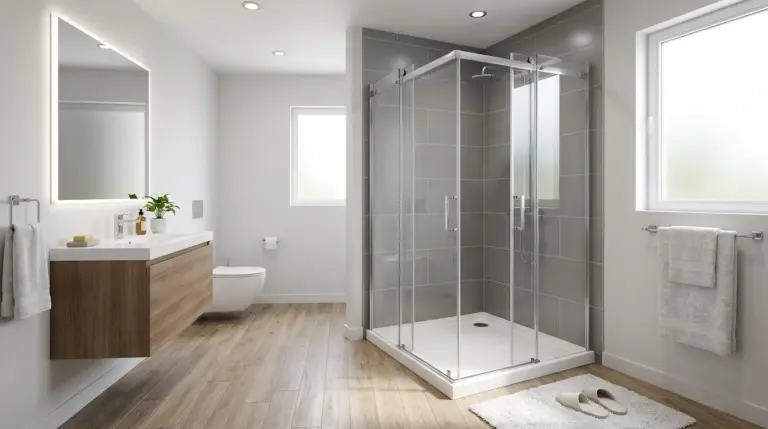
A corner shower is exactly what it sounds like — a shower unit that sits in the corner of your bathroom, using two existing walls as part of its structure. Instead of occupying a full wall like an alcove shower, it tucks into the corner and keeps the rest of the room open.

This design works especially well in smaller bathrooms because it uses space that would otherwise sit empty. You get a fully functional shower without giving up the floor space you need for a vanity, toilet, or just room to move around. A corner shower offers an ideal solution for maximizing both space and functionality.

The Most Common Corner Shower Size

Top-down diagram showing standard 36×36 inch corner shower in a bathroom layout.
Most commonly installed corner showers measure 36×36 inches, providing comfort and efficiency.

The average size for a corner shower is typically around 36 inches by 36 inches. This size is spacious enough for a comfortable shower while still fitting well in most standard bathrooms.

At 36×36, you get 9 square feet of floor space. That’s enough room to turn around, wash your hair without elbowing the wall, and feel like you’re actually showering — not just getting wet in a closet. Most people find this size perfectly comfortable for daily use.

The standard corner shower size ranges from 32 inches wide by 32 inches deep up to 48 inches wide by 48 inches deep. That wide range gives you real flexibility. Whether you’re working with a tight powder room or a generous guest bath, there’s likely a corner shower size that works for your floor plan.

What Are the Minimum Size Requirements?

Comparison of different corner shower styles with dimensions.
Corner showers come in square, neo-angle, quarter-circle, and rectangular shapes to suit various spaces.

Before you start shopping, you need to know what’s legally allowed. Building codes set a floor on how small a shower can be, and it’s smaller than you might expect.

A 30×30 shower meets the minimum shower size per most local building codes, but it can feel tight for daily use. It’s best suited for smaller bathrooms where space is limited and the user prefers quick showers.

A 30×30 shower gives you just 6.25 square feet. That works in a pinch — think a basement bathroom or a small guest space — but most adults will find it cramped over time. If you can manage even a few extra inches, you’ll notice the difference every single day.

If you have enough room, upgrading to at least 36×36 inches will improve comfort and shower space usability. That extra 6 inches on each side makes the interior feel noticeably more open, even though the overall footprint is still very efficient.

Corner Shower Styles and Their Typical Dimensions

Not all corner showers are the same shape. The style you choose affects how the dimensions translate to usable interior space.

Square Corner Showers

This is the classic option. Two flat glass panels meet at a 90-degree angle in the front, with the bathroom’s two corner walls forming the back. Square showers are popular because they fit neatly into a corner and work in both small and medium bathrooms. Standard shower pan sizes for square stalls often include 32×32, 34×34, 36×36, and sometimes 42×42 inches.

The interior on a square model is simple and predictable. What you see on the outside is roughly what you get inside, minus a couple of inches for wall thickness.

Neo-Angle Corner Showers

Neo-angle and quarter-circle corner shower interiors with angled and curved fronts.
Neo-angle and quarter-circle showers create visually open interiors while saving space.

A neo-angle shower adds a small angled panel across the front corner, creating a five-sided shape. The base width of a neo-angle corner shower ranges from around 36 inches to 42 inches. The door opening width can go up to about 24 inches to 30 inches. The neo-angle corner shower dimension makes it easier to fit snugly into a limited bathroom space.

This style has a modern look and tends to feel a bit more open because the angled door panel removes that sharp 90-degree entry corner. The interior is slightly less rectangular, but most people find the usable space very similar to a standard square model.

Quarter-Circle (Quadrant) Corner Showers

Quarter-circle corner showers feature a curved design that shares similarities to a quarter-circle. They are a perfect fit for small bathrooms as the rounded circle ensures space utilization. The curved glass door creates a visually appealing look. It is a perfect option for studio or one-bedroom apartments. It also makes your space look a little bit larger while keeping the coziness intact.

These typically run in the 36-inch range from wall to wall. The curved front makes them feel less boxy than a standard square unit.

Side view of a corner shower with standard 80-inch height.
Standard shower height is around 80 inches, providing enough headroom for most adults.

Rectangular Corner Showers

Rectangular corner showers provide a larger interior space compared to the quarter-circle and neo-angle options. The standard size of a rectangular corner shower is around 32 inches to 48 inches. These stretch longer along one wall, giving you more elbow room and the option to add a bench or a second showerhead. If you have the wall length to spare, a 36×48 or 36×60 rectangular corner shower feels generous and comfortable.

Shower Height: Don’t Forget to Look Up

Most people focus entirely on the floor dimensions and forget about height. Most standard showers are around 80 inches from floor to showerhead. That’s 6 feet 8 inches — enough headroom for most adults.

Glass enclosures often stop a few inches above that. Standard framed and frameless glass enclosures often stop a bit above the showerhead. Heights around 72 to 76 inches work well for most people and help steam escape into the room.

If you want a steam effect, you’d go higher — sometimes all the way to the ceiling — but that requires stronger ventilation to handle the extra moisture.

ADA-Compliant Corner Shower Sizes

ADA-compliant corner shower with grab bars and 36×36 inches clear interior.
ADA-compliant corner showers require 36×36 inches clear space with grab bars for accessibility.

If you’re planning for accessibility — whether for aging in place, a family member with mobility needs, or simply future-proofing your home — the ADA sets specific standards worth knowing.

Transfer showers must measure exactly 36 inches by 36 inches clear inside dimensions, measured at center points of opposing sides. A 36-inch minimum entry width on the shower face is required.

A clear floor space outside of 30 by 48 inches for approach is also required. Grab bars must be installed at 33 to 36 inches height. These requirements are designed for individuals who move from a wheelchair to a shower seat — and they also make showers safer and easier to use for just about everyone.

For roll-in wheelchair access, you’d need a larger footprint — 30×60 inches minimum — but that’s typically a walk-in configuration rather than a corner shower.

How Much Does a Corner Shower Cost to Install?

Size directly affects your budget. A larger unit means more materials, more tile, more glass, and more labor.

The average cost to install a standard size custom 36×36 corner shower is typically between $2,895 and $7,955. This includes the price of materials, including the glass shower door, wall and floor materials, and professional labor.

If you’re looking to save, corner shower kits are a smart option. Basic kits can range from $200 to $600. Mid-range kits with better materials and glass doors range from $600 to $1,500. High-end custom options from a contractor can range from $1,500 to $5,000 and above.

Going custom lets you choose your exact dimensions, materials, and features. A kit limits your sizing options but cuts the cost significantly — and for a standard 36×36 space, the results can look just as sharp.

How to Pick the Right Size for Your Bathroom

Start by measuring your bathroom floor. Map out where the toilet, vanity, and door are. Then think about how much clear floor space you want to keep in front of the shower — you want at least 24 to 30 inches of open space so the bathroom doesn’t feel cramped when you step out.

Most people are comfortable in a shower of 48 inches by 36 inches. If you can squeeze in more space than that, then the 36 by 60 inch shower option is optimal. If you are already pressed for space, a shower of 32 by 32 inches might feel a bit cramped, but will get the job done.

Think about who will use the shower daily. A taller person or someone who prefers a little more room will notice the difference between a 36×36 and a 42×42 immediately. If two people often shower back-to-back in a hurry, comfort matters more than you’d think.

Final Thoughts

The right corner shower size comes down to three things: the space you have, the way you like to shower, and your budget. For most bathrooms, a 36×36 corner shower hits that sweet spot — practical, comfortable, and easy to work into an existing layout. If you have a little more room to work with, stepping up to a 42×42 or even a 36×48 gives you noticeably more comfort without taking over the bathroom.

Measure carefully, think about long-term use, and don’t settle for a size that’s going to feel tight in six months. A corner shower is a daily-use fixture — get the size right once, and you’ll appreciate it every single morning.

If you are thinking about buying a new home, you might be wondering whether a townhouse is the right choice for you. With real estate prices going up, single-family homes are becoming harder to afford in cities and suburbs. Townhouses are a popular alternative because they are more affordable, easier to maintain, and often come with nice community amenities.

In this article, we will explain what townhouses are, their benefits, potential drawbacks, and why they might be a perfect choice for your next home. By the end, you will have a clear idea of whether townhouse living fits your lifestyle.

What Is a Townhouse?

Diagram showing layout of a typical townhouse with shared walls.
A townhouse typically shares walls with neighbors but has its own entrance and multiple floors.

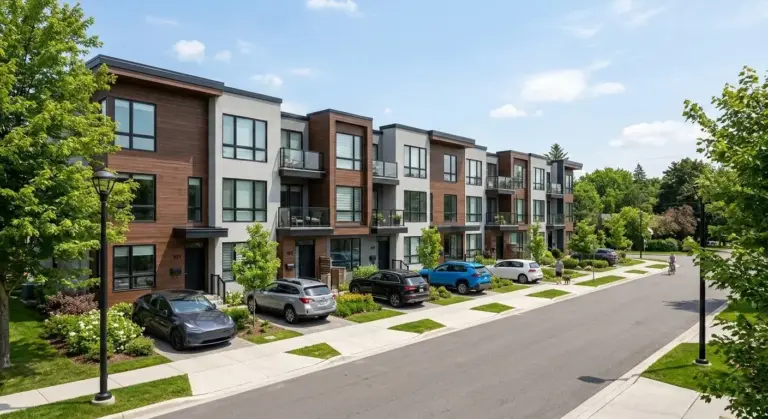
A townhouse is a type of home that shares one or more walls with neighboring houses but has its own separate entrance. Townhouses are usually multi-story buildings arranged in a row. They are often found in suburban areas, but many city neighborhoods also have townhouses.

There are two main types of townhouses:

  1. Condo-style Townhouses: You own the inside of the house, but the land is owned by a homeowners association (HOA). The HOA takes care of shared maintenance like lawns, roofs, and common areas.
  2. Fee-simple Townhouses: You own both the house and the land it sits on. You are responsible for all maintenance of your property, similar to a single-family home.

Townhouses are often seen as the middle ground between condos and single-family homes because they combine some benefits of both. They are larger than most condos but smaller and easier to maintain than detached houses.

Benefits of Buying a Townhouse

Townhouses offer many advantages for buyers, especially those looking for convenience, comfort, and affordability. Let’s look at the main benefits:

1. Affordable Option for Homeownership

One of the biggest reasons people choose townhouses is affordability. Townhouses usually cost less than single-family homes because they share walls and land with other units. This makes them more budget-friendly for first-time buyers or people looking to downsize.

Additionally, shared infrastructure like roofs, siding, or fencing can lower maintenance costs. In many cases, the HOA takes care of common areas, which saves both time and money.

Key Takeaway: Townhouses are a cost-effective choice for buyers who want the benefits of a home without the high price of a single-family house.

2. Low-Maintenance Living

Townhouse owners enjoy easier maintenance compared to detached homes. Shared walls and common areas reduce the exterior work you have to do. For condo-style townhouses, the HOA often handles lawn care, landscaping, and exterior repairs.

Even for fee-simple townhouses, having neighbors on both sides means that some costs like roof repairs or siding replacement can be shared. This makes townhouse living less stressful and more convenient.

Key Takeaway: Townhouses provide a comfortable lifestyle with less responsibility for exterior maintenance, allowing homeowners to focus on enjoying their home instead of constant repairs.

3. Community Amenities

Many townhouse communities offer shared amenities that make life more enjoyable:

  • Swimming Pools: Many townhome complexes have pools with diving boards, slides, and lounging areas.
  • Fitness Centers: These may include treadmills, free weights, yoga spaces, or even fitness classes like Zumba or Pilates.
  • Clubhouses: Community spaces for gatherings, parties, or meetings, often with games like pool, ping pong, or shuffleboard.
  • Other Services: Some communities offer onsite laundry facilities, car wash stations, or even dog parks.

These amenities make townhouses feel like a small, friendly neighborhood. They also save homeowners money because they don’t have to buy or maintain these facilities themselves.

Key Takeaway: Townhouse communities provide luxury and convenience at a lower cost than single-family homes with private amenities.

4. Convenient Location

Townhouses are often built in urban or suburban areas close to schools, shopping centers, and public transportation. This makes commuting easier and daily errands faster.

Because they take up less land than detached houses, townhouses allow developers to create homes in desirable locations where space is limited. This is great for buyers who want to live near work, schools, or city centers without paying the high price of a single-family home.

5. Ideal Size and Layout

Townhouses typically have multiple floors, which allows for separate living spaces, bedrooms, and sometimes even a small backyard. This makes them ideal for small families, couples, or single professionals who want a home with enough room but not too much space to maintain.

Some townhouses also have garages or driveways, providing extra storage and parking space.

Key Takeaway: Townhouses offer a balance between space and affordability, making them suitable for many different lifestyles.

Potential Drawbacks of Townhouse Living

While townhouses have many benefits, there are also some drawbacks that buyers should consider before making a decision.

1. Limited Privacy

Because townhouses share walls with neighbors, privacy can be limited. Noise from adjacent units may sometimes be noticeable, and outdoor spaces like patios or small yards are often close together.

If you value quiet and private outdoor space, a townhouse may feel more crowded than a detached home.

2. Homeowners Association (HOA) Fees and Rules

Many townhouses are part of a homeowners association. While the HOA can help with maintenance and amenities, it also comes with monthly fees. These fees can increase over time, adding to your living expenses.

HOAs may also have strict rules about:

  • Exterior design and color
  • Landscaping choices
  • Renovations and home modifications

These rules limit how much you can customize your property.

Key Takeaway: HOAs offer convenience but may also limit your freedom and add extra costs.

3. Smaller Outdoor Space

Townhouses usually have smaller yards than single-family homes. This can limit gardening, outdoor entertaining, or space for children and pets.

For people who enjoy large gardens or private outdoor areas, this might be a downside.

4. Shared Maintenance Can Be Complicated

Although shared maintenance lowers costs, it can sometimes cause conflicts with neighbors. For example, if roof repairs or siding replacement are needed, coordinating payments with multiple owners can be tricky.

Fee-simple townhouse owners also have more responsibility for their property, which means extra effort and expense compared to condo-style townhouses.

Townhouses vs. Condos vs. Single-Family Homes

It’s helpful to compare townhouses with other types of homes:

Feature Townhouse Condo Single-Family Home
Ownership Unit + sometimes land Unit only Home + land
Privacy Shared walls Shared walls & floors Private
Maintenance Low to medium Low High
Outdoor Space Small yard/patio Limited balcony Large yard
Cost Moderate Low to moderate High
Amenities Often included Often included Rarely included
Location City/suburbs City/suburbs City/suburbs/rural

Key Takeaway: Townhouses are a middle ground between condos and single-family homes. They provide space and some privacy at a lower cost than detached homes while offering more amenities than condos.

Who Should Consider Buying a Townhouse?

Townhouses are suitable for many types of buyers:

  • First-Time Homebuyers: Affordable and easy to maintain.
  • Small Families: Enough space for children without too much yard maintenance.
  • Downsizers: People looking to move from a large house to something manageable.
  • Busy Professionals: Low-maintenance living with amenities like pools and gyms.
  • Investors: Townhouses in good locations can be rented out easily.

Tips for Buying a Townhouse

  1. Check HOA Fees: Make sure you understand the monthly fees and what they cover.
  2. Visit the Neighborhood: Noise, traffic, and community vibe matter.
  3. Consider Floor Plans: Look for layouts that fit your lifestyle.
  4. Inspect Shared Amenities: Pools, gyms, and clubhouses should be well-maintained.
  5. Review Rules: Understand HOA rules before buying to avoid surprises.

Conclusion: Is It Worth Buying a Townhouse?

Townhouses are an excellent choice for buyers who want a balance of affordability, convenience, and comfort. They are easier to maintain than single-family homes, often come with amenities like pools and fitness centers, and are usually located in good neighborhoods.

However, townhouses also have some downsides: limited privacy, smaller outdoor spaces, and HOA rules and fees. It is important to weigh these factors against your needs and lifestyle.

Overall, if you are looking for a home that is cost-effective, low-maintenance, and offers a sense of community, a townhouse could be the perfect option for you.

Final Key Takeaway: Townhouses offer the best of both worlds between condos and single-family homes, making them a smart choice for many homebuyers.

A Non Toxic Air Fryer is one made without PFAS, PTFE (Teflon), BPA, or harmful plastic near food and heat. Safe models use stainless steel, borosilicate glass, or verified ceramic coatings. These materials do not release chemicals into your food, even at high cooking temperatures.

Air fryers took over kitchens fast. They promise crispy food with less oil, shorter cooking times, and easier cleanup. But here’s the thing — not every air fryer is as healthy as it seems. The basket your food sits in might be doing more harm than you realize. Choosing a Non Toxic Air Fryer is one of the most practical steps you can take toward cleaner cooking at home.

This guide breaks down exactly what makes an air fryer toxic, which chemicals to watch for, what safe materials look like, and which models are actually worth your money in 2025.

Why Most Air Fryers Are Not as Safe as You Think

Damaged non stick air fryer coating close-up.
Damaged non-stick coatings can release harmful particles into food.

When you buy a standard air fryer, the basket usually comes coated with a non-stick layer. That coating makes cleaning easy, and food slides right off. The problem is what that coating is made from.

Many traditional air fryers use baskets coated with PTFE, commonly known as Teflon — a material within the PFAS chemical family. These coatings can release fumes when overheated, which raises concerns especially if the coating is damaged. Air fryers regularly reach temperatures between 380°F and 450°F, which is exactly the range where these materials start to break down.

PTFE microplastics have been found in urine and semen and have been associated with reduced sperm counts. When PTFE coatings overheat, they can produce fumes that are deadly to small birds and may be harmful to humans. That last part is not an exaggeration. It has actually been used to describe the risk — like a canary in a coal mine, but in your kitchen.

The issue goes beyond just Teflon. BPA, found in some plastics, can be released from plastic components at high temperatures. Phthalates can also be found in the plastics used in some air fryer construction, and high heat can release volatile organic compounds from those plastics into the air or your food. When you are cooking every day, that kind of exposure adds up.

What PFAS Actually Are (and Why They Stay in Your Body)

PFAS forever chemicals health risk concept.
PFAS chemicals can accumulate in the body over time.

PFAS stands for per- and polyfluoroalkyl substances. You have probably heard them called “forever chemicals.” That name is not marketing. PFAS molecules have a chain of linked carbon and fluorine atoms. Because the carbon-fluorine bond is one of the strongest, these chemicals do not degrade easily in the environment.

The EPA reports that exposure to PFAS can have widespread effects on the body, including decreased fertility, developmental delays in children, and an increased risk of certain cancers, including prostate, kidney, and testicular cancer.

PFAS is known to accumulate in the environment and has been linked to human health impacts such as abnormal thyroid and hormone function, reduced immune system response, and cancer. These are not fringe concerns — they come from institutions like the National Institute of Environmental Health Sciences and the San Francisco Department of the Environment.

The regulatory landscape is changing fast. As of January 1, 2025, Minnesota became the first state to ban the sale of nonstick cookware coated with PFAS. Vermont, Connecticut, Rhode Island, and Colorado are also moving ahead with bans or restrictions on cookware containing intentionally added PFAS. California passed a bill in September 2025 to prohibit the sale and distribution of several categories of products that contain intentionally added PFAS, with the legislation applying to cookware beginning in 2030. These laws exist for a reason.

The Problem With “PFOA-Free” and “PTFE-Free” Labels

PFOA free label on kitchen appliance packaging.
PFOA-free does not always mean PFAS-free.

This is where a lot of shoppers get tripped up. You see a label that says “PFOA-free” and assume the product is clean. It is not that simple.

A manufacturer may claim that their products have none of a specific type of PFAS, but they actually contain another that may be equally hazardous. Stating what is not in the product does not clarify what actually is. There are thousands of PFAS chemicals. Removing one does not make the coating safe.

Labels like “PFOA-free” or “PTFE-free” can be misleading. A truly safe air fryer should be clearly labeled PFAS-free — not just PTFE or PFOA-free — and use glass, uncoated stainless steel, or verified ceramic non-stick.

The word “verified” matters. Some brands market ceramic coatings aggressively but cannot confirm the exact materials used. Companies who are still using nonstick coatings are not always willing to provide the exact materials used in their products. Some respond with a generic reply that the nonstick coating used is proprietary and cannot be disclosed. If a brand will not tell you what is in their coating, that is a warning sign.

What Makes an Air Fryer Truly Non-Toxic

A genuine Non Toxic Air Fryer meets three basic requirements. The cooking surface must be free from PFAS — not just one type, but the full class. No plastic should touch the food or sit in the path of hot circulating air. And the unit should remain odor-free at high cooking temperatures.

Here are the materials that actually meet those requirements:

Stainless steel is one of the most reliable options. Air fryers made from polished stainless steel do not require coatings. Stainless steel is environmentally inert and does not leach any chemicals, which is why it is safe for cooking food at high temperatures. Oven-style air fryers often use stainless steel racks and trays, which makes them a strong choice for families.

Borosilicate glass is another excellent option. It is heat-resistant, completely inert, and does not require any coating at all. Glass air fryers let you see your food as it cooks, and they carry zero chemical leaching concerns.

Verified ceramic coatings can work well when sourced from reputable brands. Ceramic-coated air fryers are PFAS-free and stable at high heat when made by reputable brands. The key word is verified. Demand documentation — not just a marketing claim on the box.

What you want to avoid: plastic anywhere near heat or food, cheap non-stick baskets that show no material disclosure, and anything labeled “PFOA-free” or “PTFE-free” without a broader PFAS-free certification.

Top Non Toxic Air Fryer Options Worth Considering in 2025

Several models stand out when material safety is your top priority.

Our Place Wonder Oven consistently tops lists from health-focused reviewers. The Wonder Oven is one of the safest air fryers on the market. This versatile appliance bakes, steams, broils, toasts, and roasts, and uses no toxic materials in its construction. It is compact, multi-functional, and uses no PFAS, no BPA, and no harmful plastic in its food-contact parts. For people who want to reduce their kitchen appliance count without compromising safety, this one is hard to beat.

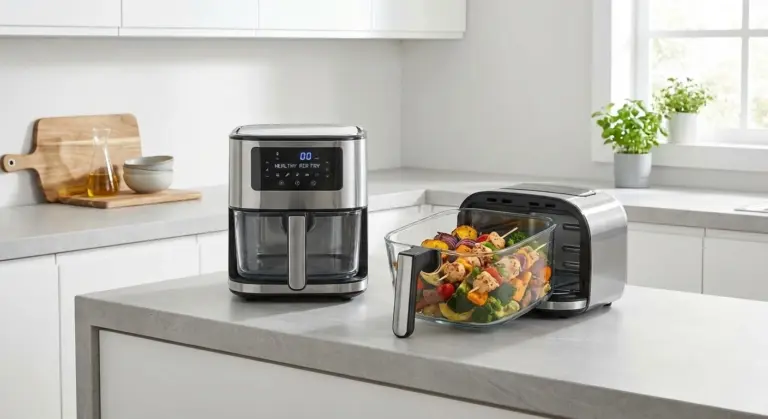
Fritaire Self-Cleaning Glass Air Fryer uses a full borosilicate glass bowl — zero coatings, complete transparency about materials. It is made with durable glass and is free from BPA, Teflon, and PFAS, so you cook with complete peace of mind knowing there are no harmful coatings or chemicals. The self-cleaning function is a nice bonus that keeps you from scrubbing glass manually.

Midea French Door Air Fryer uses stainless steel racks inside the machine. After extensive testing, the Midea model proved to be quicker, safer, and a better value for money at around $169 compared to competing models. It sits in the mid-price range and performs well for everyday cooking.

Ninja Crispi features a glass container cooking system and is clearly labeled non-toxic. It is compact, capable, and microwave and freezer safe — which adds genuine everyday value beyond just air frying.

For stainless steel oven-style units, the BLACK+DECKER line offers durable cooking surfaces without any coating concerns and at accessible price points.

How to Use Your Air Fryer Safely — Even a Non-Toxic One

Choosing a clean machine is step one. How you use it also matters.

Avoid over-browning starchy foods — darker crusts create more acrylamides, a potential carcinogen. Avoid low-smoke-point oils such as flaxseed or unrefined safflower, as they break down and form harmful compounds. Use high-smoke-point oils like avocado or refined coconut instead. Clean the basket and interior regularly to prevent burnt residue, and avoid charring meats or fish, which can produce harmful compounds.

If you still own an older air fryer with a non-stick basket, check the surface carefully before every use. If your air fryer basket is peeling, flaking, or deeply scratched, it is best to replace the basket or the entire unit rather than continue cooking on a damaged surface. A scratched coating is far more likely to shed particles into your food than an intact one.

Keep temperatures within the recipe range. Most non-toxic coatings — including ceramic — remain stable under normal cooking conditions. It is misuse, overheating, and physical damage that cause the most problems.

Is Switching to a Non Toxic Air Fryer Worth It?

The short answer is yes. The longer answer involves thinking about how often you cook, who eats that food, and how much long-term exposure matters to you.

PFAS build up in the body over time. Even low-level contamination poses serious health risks, particularly because PFAS accumulates in the body over time. You might not feel anything today. But every meal cooked in a scratched, overheated, PFAS-coated basket adds a small amount to that accumulation.

The good news is that safe options exist at every budget. A glass or stainless steel air fryer does not have to cost a fortune. Entry-level non-toxic models start at around $60–80. Premium options like the Wonder Oven or Ninja Crispi sit between $100 and $180. That is a one-time cost for a tool you use daily.

Your kitchen is where you feed your family. The equipment you cook with deserves the same attention as the ingredients you buy. A Non Toxic Air Fryer is not a luxury — it is a practical decision that pays off every single day you use it.

If you are ready to make the switch, start by looking for models that confirm full PFAS-free status in writing, use glass or stainless steel cooking surfaces, and disclose their materials openly. Those three things will take you from overwhelmed to confident in no time.

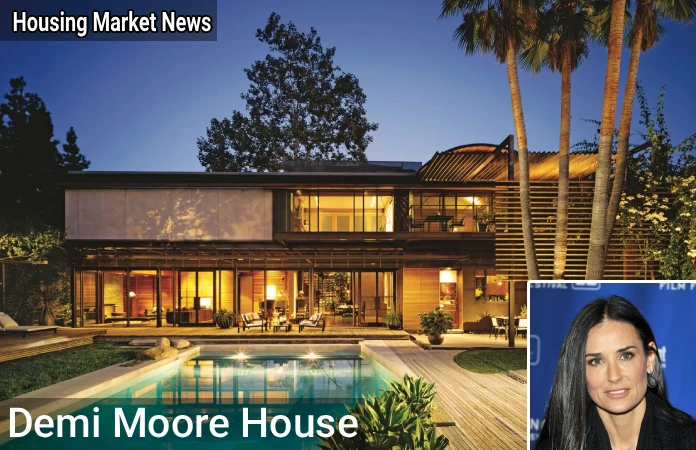
Demi Moore House has been a hot topic for celebrity real estate fans for years. Her stunning Beverly Hills estate sits behind private gates and reflects the kind of life most people only see in movies. Demi Moore is one of Hollywood’s most recognized actresses, and her home matches that status in every way. The property turns heads with its size, design, and the kind of luxury details that make it impossible to ignore. Whether you’re a fan of her films or just love celebrity homes, her Beverly Hills residence is worth every second of attention it gets.

Who is Demi Moore?

Demi Moore is an American actress, producer, and former model who rose to global fame in the late 1980s and 1990s. She starred in blockbuster films like Ghost (1990), A Few Good Men (1992), Indecent Proposal (1993), and Striptease (1996). Her career made her one of the highest-paid actresses in Hollywood during that era. She was reportedly the first actress to earn $12.5 million for a single film role.

Her net worth is currently estimated at around $200 million, built through decades of film earnings, smart real estate investments, and business ventures. She owns a notable collection of luxury vehicles, including a Range Rover, a Mercedes-Benz GLS, and a vintage Chevrolet. She doesn’t own a private yacht or private jet at this time, though she has been known to charter both for travel. As for homes, Moore owns multiple properties across the United States, including her iconic estate in Hailey, Idaho, and her Beverly Hills residence. She doesn’t own a private island, but her Idaho retreat functions as a countryside escape with significant acreage.

Detail Information
Full Name Demi Gene Guynes
Stage Name Demi Moore
Date of Birth November 11, 1962
Place of Birth Roswell, New Mexico, USA
Nationality American
Profession Actress, Producer, Former Model
Net Worth ~$200 Million
Active Years 1981–Present
Famous Films Ghost, G.I. Jane, A Few Good Men, Striptease
Ex-Spouses Freddie Moore, Emilio Estevez (engaged), Bruce Willis, Ashton Kutcher
Children Rumer Willis, Scout Willis, Tallulah Willis
Primary Residence Beverly Hills, California
Other Properties Hailey, Idaho Estate
Luxury Cars Range Rover, Mercedes-Benz GLS, Vintage Chevrolet
Private Island No
Instagram Followers 4.5+ Million

Where Does Demi Moore Live Now?

Demi Moore currently lives in her Beverly Hills, California home. She’s been based in the Los Angeles area for much of her adult life, though she splits time between Beverly Hills and her longtime Idaho estate. Beverly Hills has been her main base in recent years, particularly as her daughters are also based in Southern California. The gated property gives her the privacy she needs while keeping her close to the entertainment industry she’s been part of for over four decades.

Demi Moore House

Demi Moore’s Beverly Hills house is one of the more recognizable celebrity estates in the area. It combines classic California architecture with modern luxury touches throughout. The property gives off a relaxed yet upscale feel — the kind of home that’s clearly expensive but doesn’t try too hard to show it. It’s spacious, well-maintained, and sits on a generous lot that keeps neighbors at a comfortable distance.

1. Where Is Demi Moore’s House?

The Demi Moore House is located in Beverly Hills, California, one of the most prestigious zip codes in the United States. Beverly Hills sits within Los Angeles County and is bordered by West Hollywood to the east and Bel Air to the west. The specific neighborhood within Beverly Hills where Moore’s home sits is known for its wide, tree-lined streets and heavily gated properties. It’s a short drive from Rodeo Drive, the Sunset Strip, and the major film studios in Hollywood and Century City. The location puts her in the middle of where entertainment industry business gets done while still offering the seclusion that high-profile celebrities require.

2. Features of Demi Moore House

The Demi Moore House covers approximately 9,000 square feet of living space, spread across multiple levels on a lot that totals roughly half an acre. The architectural style leans toward California contemporary — clean lines, open floor plans, large glass windows, and plenty of natural light. The exterior features neutral tones with manicured landscaping that adds to the home’s polished look.

Inside, the house has six bedrooms and seven bathrooms. The interiors have been reported to reflect Moore’s personal taste — a blend of bohemian and modern design with warm textures, art throughout the walls, and earthy color palettes. High ceilings in the main living areas create an airy feel that opens the space up considerably. The kitchen is chef-grade with high-end appliances, custom cabinetry, and a large island that makes it practical for both everyday cooking and entertaining.

The home also includes a dedicated home office, a media room, and guest quarters that can function independently. The property’s layout is designed for both privacy and function — it works well as a family home and as a quiet retreat.

3. House Amenities

The Demi Moore House comes with a full range of luxury amenities. There’s a resort-style swimming pool surrounded by a stone deck, a spa and wellness room, a private gym, and a wine cellar. The outdoor entertaining area includes a built-in BBQ station and covered patio space. A gated motor court handles parking, and the property includes smart home technology throughout.

4. Neighborhood Area

Beverly Hills is consistently ranked among the most expensive real estate markets in the world. The neighborhood where Demi Moore’s house sits is known for its high-end properties, well-maintained streets, and extremely low crime rates. The area is walkable to some of Beverly Hills’ best restaurants and luxury shops, though most residents drive or use private transport. Neighbors in the surrounding blocks include other entertainment industry professionals, business executives, and longtime LA residents. The Beverly Hills Unified School District and proximity to private schools also make it attractive for families. Property values in the area rarely drop, which makes it a solid long-term investment in addition to a desirable place to live.

Market Value

Detail Information
Property Location Beverly Hills, California
Build Year c. 1990s
Purchase Year 2014
Purchase Price ~$7.2 Million
Most Recent Estimated Value ~$8.35 Million (2025)
Lot Size ~0.5 Acres
Interior Size ~9,000 Sq. Ft.
Bedrooms 6
Bathrooms 7
Property Type Single-Family Residential
Style California Contemporary

Demi Moore Real Estate Portfolio

Demi Moore has owned and sold several notable properties over the years, building a real estate portfolio that reflects her financial success and taste for distinctive homes.

Hailey, Idaho Estate — Moore’s most famous property is her sprawling compound in Hailey, Idaho, near the Sun Valley resort area. She purchased this property in the early 1990s and has held onto it for decades. The estate sits on a large parcel of land and includes a main house along with guest structures. It’s been her go-to retreat from Hollywood for over 30 years. The home features rustic Idaho architecture with modern interiors and scenic mountain views. Its estimated value today sits around $5 million to $7 million, depending on current market conditions in the area.

San Remo Penthouse, New York City — Moore previously owned a legendary penthouse apartment at the San Remo building on Central Park West in Manhattan. She purchased it in the 1990s for approximately $6 million and listed it for sale years later at a price point that reflected the dramatic rise in NYC real estate. The San Remo is one of Manhattan’s most iconic pre-war co-op buildings, and her unit featured sweeping Central Park views and generous square footage. She eventually sold it, parting with a piece of New York real estate history.

Ghost Ranch, New Mexico — Moore has also been connected to property in New Mexico, close to her roots. The area holds personal meaning for her, and she’s reportedly used it as a private retreat. The specifics of this property have remained largely out of public records, but it fits the pattern of her preference for large, private, nature-adjacent properties.

Former Marital Home, Los Angeles — During her marriage to Ashton Kutcher, Moore shared a home in the Beverly Hills area. After their divorce was finalized in 2013, the couple separated their real estate holdings. That property later sold and moved through the market independently.

Conclusion

The Demi Moore House in Beverly Hills stands as a clear reflection of what four decades in Hollywood can build. With an estimated value of $8.35 million, it sits comfortably among the top-tier residential properties in one of America’s most competitive real estate markets. From the California contemporary architecture to the resort-style amenities and prime location, every aspect of the home reflects careful decisions made by someone who understands both comfort and long-term value. Add in her Idaho estate and past New York holdings, and it’s clear that Moore’s real estate portfolio is as impressive as her film career.

Chris Bosh House on North Bay Road in Miami Beach is one of the most talked-about celebrity properties in all of South Florida. Built in 2009 and purchased by the two-time NBA champion for $12.3 million in 2010, this waterfront estate stood as the most expensive home owned by any active NBA player at the time. It sits on a 100-foot oceanfront lot, covers nearly 12,400 square feet, and blends modern architecture with resort-style living. From its heated infinity pool to its private boat dock, every inch of this property screams elite. After years of trying to sell, Bosh finally let it go in January 2021 — and what happened next shocked the real estate world.

Who Is Chris Bosh?

Christopher Wesson Bosh, better known as Chris Bosh, is a retired NBA power forward and two-time NBA champion born on March 24, 1984, in Dallas, Texas. He spent 13 years in the league, first with the Toronto Raptors (2003–2010) and then with the Miami Heat (2010–2016), where he formed the famed “Big Three” alongside LeBron James and Dwyane Wade. The team won back-to-back titles in 2012 and 2013. Bosh earned 11 All-Star selections during his career and was inducted into the Naismith Memorial Basketball Hall of Fame in 2021.

His total NBA salary across his career surpassed $240 million, making him one of the highest-paid players of his generation. As of 2025, his estimated net worth sits at around $110 million. He’s earned additional income through endorsement deals with brands like Nike and Foot Locker. Bosh is married to Adrienne Williams Bosh, and together they have five children: Trinity, Jackson, Dylan, Phoenix, and Lennox.

When it comes to luxury assets, Bosh has lived large. He’s owned multiple high-value real estate properties across Florida, California, and Texas, including his famous $12.3 million Miami Beach estate, a $9.4 million Pacific Palisades mansion in Los Angeles, and a massive 20,000-square-foot estate under construction in Celina, Texas. Though no confirmed private jet or yacht ownership has been publicly reported, his real estate portfolio alone put him at the top of NBA wealth rankings throughout his playing career. In 2014, Bleacher Report named him the owner of two of the three most expensive homes in the entire league.

Detail Info
Full Name Christopher Wesson Bosh
Date of Birth March 24, 1984
Birthplace Dallas, Texas, USA
Nationality American
Height 6 ft 11 in (2.11 m)
Weight 235 lbs (106.6 kg)
Profession Retired NBA Player, Entrepreneur
Teams Toronto Raptors (2003–2010), Miami Heat (2010–2016)
NBA Championships 2012, 2013 (Miami Heat)
All-Star Selections 11 (2006–2016)
Hall of Fame Induction 2021
Spouse Adrienne Williams Bosh (married 2011)
Children 5 (Trinity, Jackson, Dylan, Phoenix, Lennox)
Total NBA Salary Earned $240+ million
Estimated Net Worth (2025) ~$110 million
Known Properties Miami Beach mansion, Pacific Palisades mansion, Celina Texas estate
Primary Endorsements Nike, Foot Locker, ESPN
Retirement Year 2019 (jersey retirement, officially)
Hall of Fame (Year) 2021

Where Does Chris Bosh Live Now?

After selling his iconic Miami Beach waterfront mansion in January 2021, Chris Bosh shifted his focus back to his roots in Texas. He’s been tied to a massive estate in Celina, Texas — a fast-growing suburb north of Dallas — where a 20,000-square-foot custom home was reportedly under construction on approximately 43 acres of land along County Road 84 in the Prosper area. The project faced a brief legal dispute and a zoning complication involving a planned road, but reports confirmed the family’s strong ties to the Dallas-Fort Worth area. Bosh has openly talked about being a full-time dad since retiring, and Texas makes sense as a quieter, family-focused base.

So while his Miami Beach era is now behind him, Bosh hasn’t disappeared from the luxury property scene. He’s traded oceanfront glamour for sprawling Texas acreage — which tells you a lot about where his priorities are today.

Chris Bosh House

The Chris Bosh House at 6396 North Bay Road in Miami Beach, Florida, is one of the most recognized NBA celebrity homes in the country. Bosh bought it in 2010 for approximately $12.3 million, and it quickly became a symbol of his success — not just on the court, but in life. At the time, no active NBA player owned a more expensive home. The property sat on a 100-foot waterfront lot in one of Miami Beach’s most exclusive residential corridors, and it offered a lifestyle most people can only dream of.

Bosh held onto this home through much of his playing career, reportedly even proposing to his future wife, Adrienne, there. He first tried to sell it for $18 million back in 2013, later dropped the price to $15 million, and then finally let it go in January 2021 for $14.43 million to AquaBlue Group, a Miami Beach-based building design company. The new owners gutted and renovated the interior, relisting it just nine months later for a jaw-dropping $42 million — nearly triple what they paid.

1. Where Is Chris Bosh’s House?

The Chris Bosh House is located at 6396 North Bay Road in Miami Beach, Florida — a prestigious waterfront street on the western shore of Miami Beach facing Biscayne Bay. North Bay Road is widely regarded as one of the most coveted addresses in all of South Florida. The street has attracted dozens of celebrities over the years, including Matt Damon, members of the Bee Gees, Cindy Crawford, Rande Gerber, Karlie Kloss, and Joshua Kushner.

Dwyane Wade, Bosh’s teammate on the Miami Heat, also owned a home nearby on the same road. The address places residents close to Miami Beach’s restaurants, entertainment, and nightlife while still sitting in a private, upscale, tree-lined neighborhood. Its waterfront position on a 24,000-square-foot lot means direct bay access — a huge advantage for boating and outdoor living.

2. Features of Chris Bosh House

The Chris Bosh House was designed by Touzet Studio, a Miami-based architecture firm known for its sleek, modern residential work. The home covers approximately 11,709 to 12,400 square feet of interior space across multiple levels, all wrapped in a clean, all-white exterior that gives it a fresh, contemporary feel. The design is best described as modern glass-and-stone construction with a box-shaped structure, and the building heavily features floor-to-ceiling glass walls that open the interior to sweeping views of the bay and garden outside. Inside, the double-height great room is the centerpiece — its glass walls frame the outdoor waterfront scene like a painting.

The interior uses a combination of wood and stone elements to balance warmth with modern minimalism. Custom marble slabs and high-end Italian-style millwork accent the living spaces. The home spreads across seven bedrooms and eight bathrooms, with an open floor plan designed to feel expansive. A commercial-grade elevator, private balconies, and custom closets in the primary suite round out its more distinct architectural details.

4. House Amenities

The Chris Bosh House is packed with resort-grade amenities that go well beyond a typical luxury home. It features a heated infinity-edge pool, a private boat dock with direct bay access, a fully equipped outdoor kitchen, a covered summer kitchen and BBQ area, a gym, a guesthouse, an elevator, and beautifully landscaped courtyard gardens with a living green wall. Inside, the primary suite includes custom closets and a private balcony overlooking the palm-studded backyard, pool, spa, and cabana.

5. Neighborhood Area

North Bay Road in Miami Beach is the kind of street where every home has a story. The neighborhood sits on a narrow barrier island between the Atlantic Ocean and Biscayne Bay, giving it a distinctly coastal feel. It’s tree-lined, quiet, and notably private for a neighborhood so close to one of the most energetic cities in the country. Property values on North Bay Road have surged in recent years.

Luxury sales in this specific corridor hit record highs through 2020 and 2021, with multiple properties trading above $20 million. The area attracted a wave of ultra-high-net-worth buyers from New York and Latin America during the post-pandemic real estate boom. It’s a neighborhood where privacy, waterfront access, and proximity to South Beach culture all come together. Residents get the best of both worlds — a tranquil home environment with world-class dining, arts, and entertainment just minutes away.

Market Value

Detail Info
Property Address 6396 North Bay Road, Miami Beach, FL
Build / Development Year 2009
Year Bosh Purchased 2010
Purchase Price (Bosh) $12.3 million
Original Listing Price (Bosh) $18 million
Sale Price (Bosh Sold) $14.43 million (January 2021)
Post-Sale Listing Price $42 million (October 2021, by AquaBlue Group)
Price Per Square Foot (2021 listing) ~$3,500
Interior Size ~11,709–12,400 sq ft
Lot Size 24,000 sq ft (100-ft waterfront)
Bedrooms / Bathrooms 7 BR / 8 BA
Architect Touzet Studio
Most Recent Estimated Value $42 million+ (based on 2021 relisting)

Chris Bosh Real Estate Portfolio

Chris Bosh built one of the most impressive real estate portfolios in NBA history. At his peak, he owned two of the three most expensive homes in the entire league.

Miami Beach Mansion – 6396 North Bay Road (Sold) This is his most famous property. Bosh purchased it in 2010 for $12.3 million, a year after it was developed. The waterfront estate spans roughly 12,400 square feet on a 24,000-square-foot lot with 100 feet of bay frontage. He tried to sell it at various price points over nearly a decade before finally closing at $14.43 million in January 2021. Located on one of Miami Beach’s most prestigious streets, it earned him the title of the NBA’s most expensive homeowner in 2014.

Pacific Palisades Mansion – Los Angeles, California (Sold/Listed) Bosh purchased this 10,755-square-foot hilltop estate in late 2012 for approximately $9.4 million. The home sits on roughly 1.45 acres in Palisades Highlands and delivers unobstructed views of both Topanga Canyon and the Pacific Ocean. It features six bedrooms, eight bathrooms, a resort-style infinity pool with a swim-up bar, a tiki hut, an outdoor pizza oven, a home theater, a billiards hall, staff quarters, and a massive master suite with dual bathrooms and an ocean-view balcony.

Bosh listed it for $14.5 million around 2014 and later reduced the price to $11 million, though no confirmed public sale record has been reported. During his ownership, he rented it out for $45,000 per month — Donald Glover (Childish Gambino) famously leased it in 2013 to record his album Because the Internet.

Celina/Prosper Estate – North of Dallas, Texas (Current) After retiring, Bosh returned to his Texas roots. He purchased land along County Road 84 in the Prosper/Celina area north of Dallas and began constructing a custom 20,000-square-foot estate on approximately 43 acres. Valued at around $5 million at the time of early reports, this sprawling property represents his shift from waterfront Miami luxury to wide-open Texas ranch-style living.

It’s close to his hometown of Dallas and built to accommodate his large family. Celina is one of the fastest-growing suburban communities in Texas, popular with athletes and high-net-worth professionals who want privacy without sacrificing access to Dallas’s urban core.

Martin Short House has long been a topic of curiosity for fans and real estate watchers alike. The comedian and actor has called Los Angeles home for decades, and his Pacific Palisades estate reflects the quiet elegance of a man who’s spent over 50 years in show business. Did you know that homes in Pacific Palisades average well over $3 million? That makes Martin Short’s neighborhood one of the most desirable zip codes in all of Southern California.

His house sits in a tree-lined enclave known for privacy, old-money charm, and stunning canyon views. It’s not flashy for the sake of flash — it feels lived-in and personal. For someone who’s made millions laugh on stage and screen, his home tells a quieter, warmer story. So what exactly does Martin Short’s house look like, and what’s it worth today?

Who Is Martin Short?

Martin Short is a Canadian-American comedian, actor, writer, and producer who became a household name after joining Saturday Night Live in 1984. He was born on December 26, 1950, in Hamilton, Ontario, Canada, and showed a natural talent for performance from a very young age. After studying social work at McMaster University, he quickly shifted his focus to entertainment — and the rest is history.

He built his career through stage, television, and film. His characters, like Ed Grimley and Franck Eggelhoffer from Father of the Bride, became iconic. He’s appeared in dozens of films and TV shows, and more recently, he co-stars in the hit Hulu mystery series Only Murders in the Building alongside Steve Martin and Selena Gomez. The show has introduced him to a whole new generation of fans.

Martin Short married actress and singer Nancy Dolman in 1980. They had three children together — Katherine, Oliver, and Henry. Nancy passed away in August 2010 after a battle with ovarian cancer. Short has spoken openly about the grief and how deeply her loss affected him and his family. He continues to honor her memory through his work and personal life.

Detail Info
Full Name Martin Hayter Short
Date of Birth December 26, 1950
Birthplace Hamilton, Ontario, Canada
Nationality Canadian-American
Profession Comedian, Actor, Writer, Producer
Education McMaster University (Social Work)
Spouse Nancy Dolman (1980–2010, her death)
Children Katherine Short, Oliver Short, Henry Short
Known For SNL, Three Amigos, Father of the Bride, Only Murders in the Building
Awards Tony Award, Emmy Award, Screen Actors Guild Award
Net Worth (2025) Approx. $40 million
Current Residence Pacific Palisades, Los Angeles, California
Real Estate Holdings Pacific Palisades estate (primary residence)
Annual Income (Est.) $5–7 million
Social Media Presence Active on Instagram and public platforms

Where Does Martin Short Live Now?

Martin Short currently lives in Pacific Palisades, a wealthy residential neighborhood in Los Angeles, California. The area is known for its leafy streets, proximity to the ocean, and a certain understated elegance that sets it apart from flashier LA neighborhoods like Beverly Hills or Bel Air. It’s a popular choice for longtime Hollywood figures who value privacy over spectacle.

Short has been rooted in this part of LA for a long time. Pacific Palisades offers easy access to Santa Monica, Malibu, and the Westside — making it ideal for someone with a busy entertainment career. The neighborhood itself has a small-town feel despite being part of one of the world’s biggest cities. That combination of calm and convenience suits Short’s lifestyle well.

After the passing of his wife Nancy in 2010, Short stayed in Los Angeles and continued raising his three children. He’s spoken in interviews about how important it was to maintain stability and routine for his family during that period. His home in Pacific Palisades has been central to that sense of stability.

Martin Short House

The Martin Short House is a traditional-style estate located in the Pacific Palisades neighborhood of Los Angeles. It sits on a generous lot with mature trees and carefully maintained landscaping that gives it both privacy and curb appeal. The property carries that classic California-meets-East-Coast architectural vibe — warm, welcoming, and built to last.

The home reflects Short’s personality without being over the top. There’s no attempt to impress with excess square footage or over-designed interiors. Instead, the house feels personal. Family photos, art, and memorabilia give it character. Those who’ve visited have noted it feels more like a family home than a celebrity showcase — which, in many ways, it is.

Short has raised all three of his children here, and the house has clearly been adapted for family life over the years. It includes comfortable common areas, a backyard well-suited for gatherings, and enough space for a large family without crossing into mansion territory. By Pacific Palisades standards, it’s impressive — but it’s the warmth of the space that stands out most.

1. Luxury Amenities of Martin Short House

  • Spacious open-plan living and dining areas
  • Fully updated gourmet kitchen
  • Multiple en-suite bedrooms
  • Private home office and study
  • Outdoor patio and entertainment terrace
  • Lush, landscaped backyard with privacy hedging
  • Detached garage with capacity for multiple vehicles
  • Home theater or media room
  • Pool area suitable for year-round California use
  • High-end security system
  • Central air and heating throughout
  • Walkable distance to Pacific Palisades Village

2. Inside Martin Short’s Home

Step inside and the first thing you notice is how light the space is. Large windows throughout pull in the natural California sunlight, and the interiors lean toward warm neutrals — cream walls, wood tones, and comfortable fabrics. It’s the kind of house that looks great but also feels easy to live in.

The kitchen is a standout feature. It’s been updated with modern appliances and a large island — perfect for family dinners, which Short has always treated as sacred. The living room connects naturally to the outdoor terrace, making the space feel larger than it is and ideal for the kind of low-key entertaining Short is known for among his circle of friends.

Upstairs, the bedrooms each carry their own character. The master suite is spacious but not overdone, with a private bath and views over the backyard garden. The children’s rooms, now that Katherine, Oliver, and Henry are adults, have reportedly been adapted over time into guest rooms and personal spaces. Throughout the house, there are nods to Short’s career — framed posters, awards, and personal mementos that make it feel like a real home rather than a staged property.

3. Martin Short House Then and Now

Feature Then (Early 2000s) Now (2025)
Interior Style Traditional, family-oriented Updated warm contemporary
Kitchen Standard layout Fully renovated with modern finishes
Bedrooms Family configuration Adapted for adult children and guests
Outdoor Space Functional backyard Landscaped terrace with entertainment areas
Security Standard residential Advanced, high-end security system
Estimated Value ~$3 million ~$6–8 million (current market estimates)
Overall Condition Well-maintained Extensively updated

4. How Did Martin Short Design His House to Reflect His Personality?

Martin Short isn’t the kind of celebrity who builds a monument to himself. So naturally, his house doesn’t feel like one. The design choices throughout the property are personal and considered — not performative. He’s reportedly been closely involved in the renovation decisions over the years, favoring comfort over trend-chasing.

The living spaces prioritize gathering. Wide sofas, a large dining table, and a patio made for conversation — these aren’t accidents. Short has always been known as someone who loves people around him, especially after Nancy’s passing. His home reflects that need for connection. Friends and family are clearly welcome and frequent visitors.

There’s also a notable sense of humor woven into the décor. Framed show posters, theatrical memorabilia, and small nods to his SNL years add levity without turning the place into a museum. It’s the kind of touch that says: this person takes their work seriously, but not themselves. And that’s exactly what Martin Short has always been about.

How Much Is Martin Short’s House Worth?

Martin Short’s Pacific Palisades home has appreciated significantly over the years, as the broader LA real estate market has pushed property values in premium neighborhoods higher and higher. Estimates place the current value of the property somewhere between $6 million and $8 million, though exact figures vary depending on the source and the timing of the estimate.

Pacific Palisades as a whole saw enormous price growth through the early 2020s. Median home prices in the neighborhood crossed $3.5 million, and properties in Short’s immediate area — particularly those with strong lot sizes and canyon proximity — command even more. Given the updates made to the property and its prime location, the upper end of that $6–8 million range is entirely plausible.

Property Details at a Glance:

  • Build Year: Estimated 1970s–1980s construction
  • Purchase Year: Acquired by Short in the early 1990s
  • Purchase Value: Estimated $1.5–2 million at time of purchase
  • Recent Estimated Value: $6–8 million (2025 market estimate)
  • Area: Approx. 4,500–5,500 square feet
  • House Style: Traditional California residential
  • Architectural Design: Classic American with California modern updates
  • House Condition: Excellently maintained, extensively renovated
  • Full Address: Pacific Palisades, Los Angeles, California (exact address withheld for privacy)

Breakdown of Martin Short’s Real Estate

Martin Short’s real estate history is relatively grounded compared to many celebrities of his stature. He’s never been known for buying and flipping multiple properties or building a sprawling compound. His moves have been practical and family-driven.

Primary Residence — Pacific Palisades, Los Angeles, CA Short’s main home has been his base of operations for decades. Set in Pacific Palisades, the property spans a generous lot in one of LA’s most sought-after neighborhoods. The area borders Santa Monica Canyon and sits close to the coast. It’s a neighborhood dominated by large, older homes on sizable lots — exactly the kind of setting Short has always preferred.

Previous Residence — Malibu Area, CA Earlier in his career, Short reportedly kept a residence closer to Malibu’s beachfront communities. Like many working entertainment professionals, he eventually consolidated into one primary LA home — particularly after starting a family. The Malibu property was sold and Short doubled down on Pacific Palisades as his permanent base.

Childhood Home — Hamilton, Ontario, Canada Short grew up in Hamilton, a mid-sized industrial city in Ontario. His childhood home was a modest middle-class property in the suburbs of Hamilton — a far cry from Pacific Palisades. Short has spoken warmly about his upbringing and the community where he developed his love of performance. The Hamilton property holds sentimental significance even if it’s long since left his ownership.

Holiday and Secondary Properties Short has been linked over the years to secondary vacation-type properties, though nothing confirmed or currently active in public records. Given his career schedule — including Broadway runs and the ongoing success of Only Murders in the Building — it’s likely he maintains some form of New York presence as well, whether through a long-term rental or a smaller owned unit. But Pacific Palisades remains the anchor.

Conclusion

Martin Short House is more than just a piece of real estate — it’s a reflection of who he is. It’s warm, personal, and built around people rather than status. In a neighborhood filled with impressive properties, Short’s home stands out for exactly the right reasons. It’s been a family home through both celebration and grief, and it continues to be the place he returns to between projects. With an estimated value of $6–8 million in 2025 and a location that’s only grown more desirable over time, it’s also a smart long-term investment. But knowing what we know about Martin Short, that probably isn’t the point.