
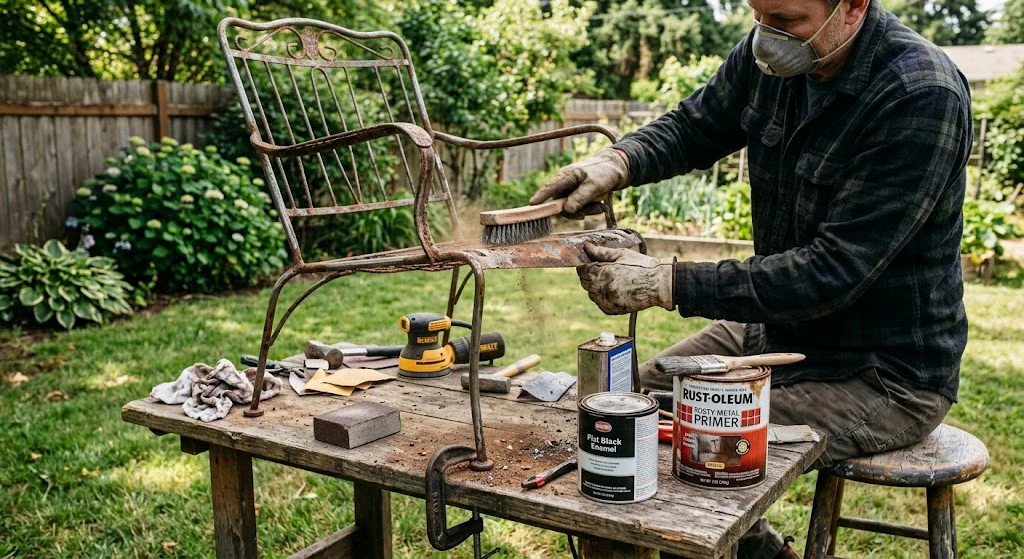
Backyard metal repairs involve fixing rust, dents, cracks, and broken welds on outdoor furniture, gates, roofs, and tools. You can handle most repairs at home using sandpaper, rust converter, epoxy putty, metal filler, or a basic MIG welder — saving hundreds of dollars compared to professional replacement costs.
Metal is everywhere in your backyard. Your patio chairs, garden gate, fire pit, metal roof trim, tool handles, and even your barbecue grill are all made from it. And sooner or later, all that metal takes a beating from rain, heat, humidity, and plain old everyday use.
The good news? You don’t have to throw any of it away. Most backyard metal repairs are things you can handle yourself on a weekend afternoon with a few basic tools and a little patience. You’ll save real money — sometimes hundreds of dollars — and you’ll walk away with a skill that’ll serve you for years.
This guide walks you through everything you need to know. We cover rust, dents, cracks, broken welds, and patching — plus when to call in a professional.
Why Metal Breaks Down in the Backyard

Before you start fixing things, it helps to know why metal fails in the first place. The most common culprit is rust. When iron or steel gets exposed to moisture and oxygen, a chemical reaction starts, and rust begins eating through the surface. It doesn’t stop on its own. Left untreated, a small rust spot turns into a deep pit, and a deep pit eventually becomes a hole.
Paint chips, scratches, and dents speed this process up dramatically. Once the protective coating is gone, moisture gets in fast. In humid climates, you can see visible rust form on bare steel within hours. That’s why early action matters so much with metal — catching the problem small makes the repair simple.
Aluminum and wrought iron behave differently. Aluminum doesn’t rust the way steel does, but it still corrodes and oxidizes, turning chalky and dull over time. Wrought iron is dense and strong but extremely prone to rust if the paint wears off.
The Tools and Supplies You Actually Need

You don’t need a fully equipped metalworking shop to handle most backyard repairs. A good starter kit of supplies will handle about 80% of the jobs you’ll ever run into at home.
A wire brush and medium-grit sandpaper (around 80 to 120 grit) are your first tools for any repair — they knock off loose rust and paint so you’re working with a clean surface. Rust-inhibiting primer and outdoor metal paint cost around $15 to $20 each and are essential for finishing any repair properly. A can of rust converter is worth having too. It chemically bonds with rust and turns it into a stable surface instead of just covering it up.
For filling small cracks, pits, and fractures, metal filler or steel epoxy putty is your best friend. These products cost under $20, mix easily, and once they cure, you can sand, drill, paint, and treat them just like real metal. For bigger structural repairs, a basic MIG welder opens up your options considerably — but we’ll get to welding in a moment.
How to Remove Rust the Right Way
Rust removal is where every metal repair starts. Skipping this step or doing it halfway is the number one reason home repairs fail. Rust left under paint or primer will keep spreading and push the fresh coat right off within a season.
Start by scrubbing away loose rust with a wire brush. Work on the flat areas first since they’re easier to reach. For stubborn spots, switch to 80-grit sandpaper and keep working until you see bright, clean metal coming through. If you’re dealing with a large rusted area, a product like Evapo-Rust works well — you apply it to the surface, let it soak for a few minutes, and then sand with 400-grit paper to reveal clean metal underneath.
Once the rust is gone, apply a rust converter to any surface that still has minor oxidation. Let it dry fully — usually 24 hours. Then prime the area with a rust-inhibiting primer before painting. Don’t skip the primer. It’s the layer that actually locks out moisture going forward.
One important rule: once you start scraping rust off a piece, don’t stop halfway. If you leave bare metal exposed without priming it, new rust can start forming within just a few hours. Plan for a full day’s work and see it through to the primer stage at minimum.
Filling Dents, Pits, and Small Cracks
Dents and surface pits are very common on older metal furniture and garden tools. The fix is simpler than most people expect. For dents in thin metal, a rubber mallet and a firm hand can push most of them back out. Work from the center of the dent outward, using gentle, controlled taps rather than one big hit.
For deeper pits or surface damage where the metal has corroded away, metal filler is the right tool. Mix it according to the package instructions and smooth it over the damaged area with a putty knife. Once it dries, sand it smooth with medium-grit sandpaper, then follow up with a fine grit to blend it into the surrounding surface. The repaired spot looks nearly invisible once primed and painted.
Steel epoxy putty works especially well for small cracks and fractures. You cut off the amount you need, knead it with your fingers until the color is uniform, and press it firmly into the crack. It bonds to iron, steel, aluminum, and most other metals. After curing overnight, it’s hard enough to drill, file, and paint — making it a solid fix for broken tool handles, cracked furniture frames, and small holes in metal containers.
Patching Holes in Sheet Metal
Larger holes in metal roofing, gutters, or sheet metal panels need a proper patch rather than just filler. This is one of those repairs that looks intimidating but is actually very manageable.
Start by cutting away the damaged section with wire snips or metal shears. Cut back to clean, solid metal — don’t try to work around the damaged area. Then cut a piece of matching sheet metal slightly larger than the hole you’ve opened up. Apply metal sealant generously along all the seams where the new patch meets the old surface. Wipe away any excess before it dries. Once the sealant has cured, drive sheet metal screws around the edges of the patch to lock it firmly in place.
Finish with primer and paint that matches the surrounding surface. Done right, a patched section holds up just as well as the original and is barely noticeable from a few feet away.
When Welding Is the Right Answer
Some repairs — broken furniture frames, cracked gate hinges, split metal rails — need more than filler or epoxy. They need a proper weld. Welding sounds intimidating, but MIG welding in particular is very beginner-friendly. It uses a wire feed electrode and is forgiving enough that most people can produce a workable weld within a few practice sessions on scrap metal.
For outdoor furniture and backyard metalwork, MIG welding handles most repairs on thicker steel frames quickly and effectively. TIG welding is better suited for intricate designs where the appearance of the weld matters, while stick welding is the most durable option for heavy-duty outdoor repairs like gates and fences. If you’re working outdoors frequently, stick welding has the advantage of not relying on shielding gas, which means wind doesn’t disrupt the process.
Always prepare your surfaces before welding. Clean metal welds better and produces a stronger bond. An angle grinder smooths out rough edges after the weld and gives your repair a cleaner finish. Safety gear is non-negotiable — a proper welding helmet, fire-resistant gloves, and protective clothing protect you from serious burns. Work in a ventilated space since welding fumes are harmful in enclosed areas.
Protecting Your Repairs So They Last
A finished repair is only as good as the protection you put over it. Metal left bare — even after a perfect repair — will rust again fast. Two coats of outdoor metal paint over a layer of rust-inhibiting primer gives you real, lasting protection.
Clean your repaired pieces regularly with mild soap and water to keep dirt and moisture from building up. Touch up any chips or scratches in the paint as soon as you notice them — those tiny exposed spots are where the next round of rust starts. Keeping a small can of matching metal paint on hand makes touch-ups a five-minute job instead of a full afternoon.
For furniture pieces in particular, storing them under a cover or moving them indoors during heavy rain seasons adds years to their life. Metal lasts a long time when you give it basic care.
When to Call a Professional
Most backyard metal repairs are genuinely DIY-friendly. But there are situations where professional help makes more sense. Structural damage to load-bearing metal — roof supports, stair railings, car frames — needs a certified welder’s eye. Similarly, if you’re not sure how deep the rust goes or whether a crack has compromised the structural integrity of a piece, a professional inspection is worth it before you attempt a fix.
For everything else — the rust on your patio set, the cracked leg on your garden bench, the small hole in your metal shed roof — you have the tools, the materials, and now the knowledge to handle it yourself. Backyard metal repair is one of those skills that pays for itself the first time you use it.


Comments are closed.