
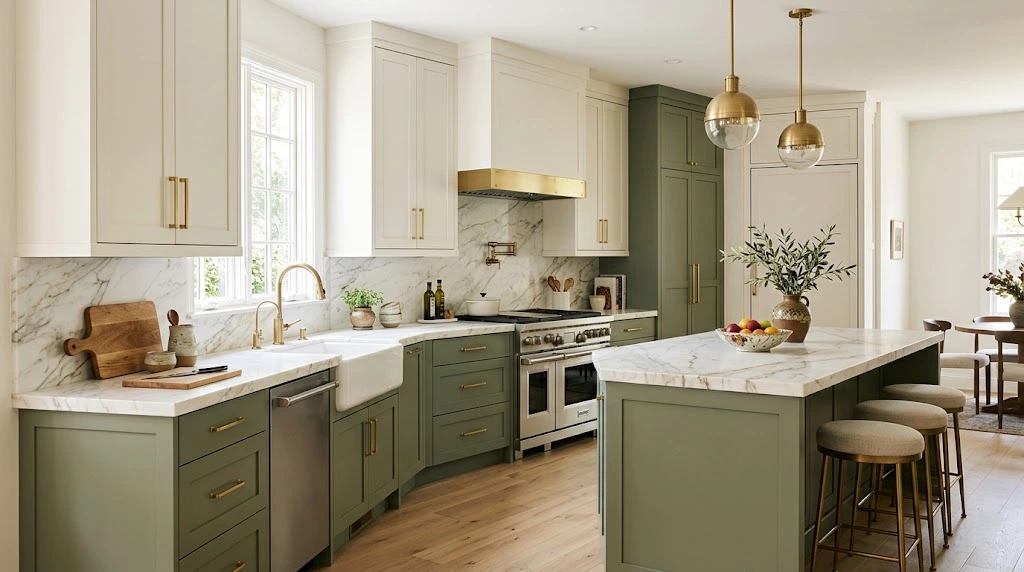
The top kitchen cabinet color trends for 2026 include warm neutrals like creamy white and greige, soft blues with gray undertones, sage and olive greens, deep navy for islands, and two-tone combinations. Designers are moving away from dark moody finishes toward softer, more livable tones that feel timeless.
Your kitchen cabinets take up more visual space than almost anything else in the room. The color you pick sets the whole mood — from warm and welcoming to sleek and bold. And right now, cabinet colors are going through a real shift.
If you’ve been thinking about a kitchen refresh, this is the perfect time to pay attention. The colors that dominated kitchens just a year or two ago are already fading out, and something fresher and warmer is taking their place. Here’s exactly what’s trending in 2026 and how you can make the right choice for your home.
Why Cabinet Colors Are Changing in 2026
The shift away from dark moody kitchens that dominated in 2024 represents more than just a seasonal preference. It reflects a deeper design philosophy: choosing colors for longevity and personal expression rather than chasing what looks good for just one season.
People want kitchens that feel real and lived-in, not like a showroom. After a stretch of darker hues, there’s a clear shift toward lighter, softer shades that reflect a more relaxed, comfortable style of living. And that shift is showing up in every cabinet color category — from the neutrals to the bolds.
This matters for you because a kitchen remodel is a big investment. Picking a color that feels fresh for only one year can be an expensive mistake. The good news is that the 2026 trends are leaning toward shades that genuinely last.
Warm Neutrals Are Taking Over from Cool Grays

Cool gray dominated kitchen design for nearly a decade. That era is ending. Cool-toned gray as the primary cabinet color now feels dated, and warmer greige tones are the acceptable neutral alternative for homeowners who want depth without going bold.
Instead of stark whites or icy grays, homeowners are choosing warm off-whites, creamy tones, and mushroom-like neutrals that still feel timeless but far less sterile. Think of shades like taupe, greige, and soft sand — colors that breathe warmth into a space without demanding attention.
Warm neutrals work with literally any countertop, backsplash, or hardware combination, which is exactly why they’re trending. They create a canvas for other design elements to shine. If you want a kitchen that still looks great in ten years, warm neutrals are your safest and smartest move.
The finish matters too. Warm neutrals pair beautifully with brushed brass or matte black hardware and work across all kitchen styles. A matte finish on the cabinet door itself also keeps the look grounded and modern without feeling trendy.
Soft Blues Are Having a Big Moment

Blue has been growing in kitchen design for a couple of years, and in 2026 it’s hitting a new peak. Interior designer Bethany Adams describes soft blues as fresh, pretty, and surprisingly sophisticated. Unlike true pastel hues, these blues carry depth and gray undertones that pair beautifully with bolder accent colors like chartreuse, burgundy, or fuchsia.
This isn’t the bright powder blue of a 1950s kitchen. Stormy blue tones, like Sherwin-Williams’ Rain Cloud and Benjamin Moore’s Stained Glass, are showing up in cabinetry as nature-inspired choices that connect the kitchen to something calming and real.
The most popular placement for blue cabinets right now is the kitchen island. Using a soft blue or deep navy on just the island keeps the look grounded and gives you all the personality of a bold color without overwhelming the whole room. Brass hardware works especially well with soft blues, adding warm contrast that keeps the palette from feeling cold.
Green Is Everywhere — and Getting Deeper

Green kitchen cabinets aren’t going anywhere. But the shades are getting more complex. Rather than bright sage or bold emerald, newer shades lean deeper and more natural — think olive, moss, dusty mint, and forest green.
Olive green is especially popular because it blends warmth and neutrality. It feels natural, pairs easily with both cool and warm materials, and adds understated depth to the kitchen. Sage remains a go-to for homeowners who want color without going overboard, particularly on islands and pantry doors where a pop of color makes sense.
Light green and sage can make smaller kitchens feel more open and inviting, and they pair well with chrome hardware, butcher block counters, and neutral tones. If you want to try green but you’re nervous about committing, painting just the lower cabinets sage while keeping the uppers a warm white is a low-risk way to test the look.
The biophilic design movement — that desire to bring the outside in — is a big reason green is holding strong. Kitchens that feel connected to nature just feel better to spend time in.
Deep Navy and Dark Blues for a Dramatic Look

If you want a kitchen that makes a statement, deep navy still delivers in 2026. Navy blue is a rich, elegant color choice that works well in modern or contemporary kitchen designs and pairs beautifully with gold hardware and white quartz countertops.
The trend is shifting toward deeper, moodier blues and charcoal blends that add drama and dimension. The key is using dark colors strategically, not wall to wall. A navy island surrounded by lighter perimeter cabinets adds depth and visual weight to the center of the room without closing things in.
Lighting is critical with dark cabinets. Weak lighting under dark cabinetry is one of the fastest ways to make a kitchen feel smaller and heavier than it actually is. Under-cabinet lighting, pendant lights over the island, and large windows all help keep a navy kitchen feeling open and intentional rather than cramped.
Two-Tone Kitchens Are Smarter Than Ever
Two-tone kitchen cabinets are becoming a go-to design move in 2026 for creating kitchens that feel layered and visually interesting. The classic formula — lighter uppers, darker lowers — is still the most popular combination, but the color pairings are getting more refined.
Popular combinations include deep greens with creamy neutrals, black islands with warm wood perimeter cabinets, and navy blended with soft greige. Designers are focusing on combinations that feel cohesive and organic rather than stark and high-contrast.
A light or off-white upper cabinet creates an open, airy feeling, especially when paired with a darker or more saturated color on the base cabinets. This combination draws the eye upward, making ceilings feel taller.
The two-tone approach also gives you a low-commitment way to try a bold color. You’re not painting every surface — just one section. If you love it, you can always do more. If you’re not sure, it stays contained and balanced.
Warm Earthy Tones Are Making a Comeback
Deep terracotta, mustard ochre, and warm clay tones are appearing in high-end kitchens and design magazines. These colors feel luxurious, artisanal, and deliberately chosen rather than trendy.
Warm browns are making a comeback in 2026. These hues create a welcoming space and pair beautifully with brushed gold and brass hardware. Sherwin-Williams’ Universal Khaki — this year’s color of the year — is a neutral brown with yellowish undertones that pairs well with warm whites and light greens.
Earthy tones work especially well in farmhouse, rustic, or Mediterranean-inspired kitchens. They soften the space and make it feel like the kind of kitchen where people actually gather and stay a while.
What Colors Are Fading Out
Knowing what to avoid is just as useful as knowing what’s trending. Espresso brown, cool gray, and stark white are fading as primary cabinet colors in 2026. Bright white can feel cold and clinical, whereas warm whites create inviting spaces that pair better with natural materials.
Glossy finishes are also losing ground to matte and satin options, which feel more textured and considered. The all-white kitchen is giving way to warmer whites and layered neutrals, with the new goal being balance and comfort rather than perfection.
How to Choose the Right Color for Your Kitchen
To choose a cabinet color with lasting appeal, prioritize warm neutrals — warm white, greige, sage green — over trendy extremes. Also consider your home’s architectural style and fixed elements like flooring, countertops, and appliance finishes.
Look at how much natural light your kitchen gets. Darker colors like navy and forest green work better in larger kitchens with good light. Smaller or darker kitchens benefit from warm whites, soft greens, and light blues that reflect light and open the space up.
Think about hardware early. The finish you choose — brushed brass, matte black, champagne gold — needs to complement the cabinet color from the start, not as an afterthought. A mismatch between the two can throw off an otherwise great palette.
Most of all, pick a color you actually love. Trends give you a useful starting point, but you’re the one who eats breakfast in that kitchen every morning. A color that’s slightly off-trend but genuinely makes you happy will always be the right choice.


Comments are closed.