
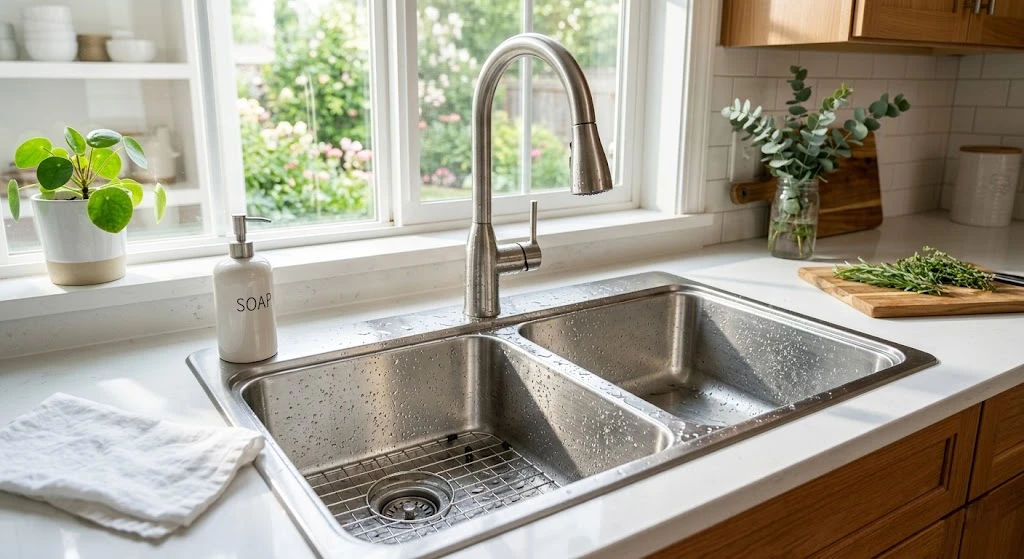
Walk into almost any kitchen in the UK or US and you’ll likely find a stainless steel sink sitting at the heart of it. They’re durable, modern-looking, and surprisingly affordable — which is exactly why they’re in so many homes. But here’s the thing: stainless steel might sound low-maintenance, but without the right cleaning routine, it can quickly go from gleaming to grimy.
Water spots, grease, soap scum, and hard water stains are the main culprits that dull your sink’s finish over time. The good news? You don’t need a cupboard full of expensive chemicals. With a few everyday household items, you can bring your sink back to life — no scratching, no harsh fumes, no stress.
This guide walks you through a complete, step-by-step stainless steel sink cleaning process that’s safe, effective, and actually works. Whether you’re dealing with stubborn stains or just want to keep things shiny on a daily basis, you’ll find everything you need right here.
What Is a Stainless Steel Sink?
Before diving into the cleaning process, it helps to understand what you’re actually working with. Stainless steel sinks are more nuanced than they look. Here’s a quick profile of the material and what makes it both brilliant and slightly demanding to maintain.
| Category | Details |
| Material | Grade 304 or 316 stainless steel (18/8 or 18/10 chromium-nickel alloy) |
| First Introduced | Early 20th century; became a kitchen standard in the 1930s–1950s |
| Common Gauge | 18–22 gauge (lower number = thicker and more durable) |
| Finish Types | Brushed (satin), mirror-polished, or textured matte |
| Lifespan | 30+ years with proper care and regular cleaning |
| Heat Resistance | Withstands up to 500°F (260°C) without damage |
| Main Cleaning Agents | Dish soap, baking soda, white vinegar, olive oil (for polish) |
| Most Common Issues | Water spots, hard water stains, scratches, soap scum, grease buildup |
| Best Cleaners to Avoid | Steel wool, chlorine bleach, abrasive scouring pads, harsh acid chemicals |
| Market Popularity | Used in over 70% of US kitchens; favored for hygiene and modern aesthetics |
Why Stainless Steel Sinks Need Special Care
Stainless steel is tough — but it’s not invincible. The material is resistant to corrosion and heat, which is great. However, it can lose its shine quickly if you’re using the wrong tools or products.
Here’s what happens over time without proper stainless steel sink care:
- Hard water deposits (calcium and limescale) create white cloudy patches
- Soap scum from dish soap and hand wash builds up around the drain
- Food residue left sitting in the basin causes discolouration
- Abrasive scrubbers and steel wool leave micro-scratches that trap more grime
- Bleach and harsh chemicals react with the metal, dulling the finish permanently
The grain of the sink — those fine directional lines in the metal — is especially important to respect. Always clean in the direction of the grain, not against it. Scrubbing across the grain is one of the fastest ways to create a scratched, dull surface.
What You Need Before You Start Cleaning
Good news: you probably have most of these supplies at home already. There’s no need for specialist stainless steel sink products for everyday cleaning (though they’re useful for deep cleans or persistent stains).
| Cleaning Supply | Purpose | Notes |
| Dish Soap | Removes grease and everyday grime | Use mild, non-abrasive formula |
| Baking Soda | Lifts stains and neutralises odours | Safe for all stainless steel finishes |
| White Vinegar | Dissolves hard water spots & mineral deposits | Don’t mix with bleach — ever |
| Microfiber Cloth | Gentle scrubbing and drying without scratches | Machine washable; reusable |
| Soft Sponge | Daily washing and light scrubbing | Avoid scratchy green side |
| Old Toothbrush | Reaches tight corners around drain and faucet | Great for crevice cleaning |
| Olive Oil / Mineral Oil | Polishes and restores shine after cleaning | Use sparingly — a few drops only |
| Soft Towel / Dry Cloth | Drying after rinse to prevent water spots | Hand-drying is better than air-drying |
A note on what NOT to use: avoid steel wool pads, abrasive scouring powders, and anything containing chlorine bleach. These can permanently damage the surface and lead to pitting or rust over time.
Step-by-Step: How to Clean Stainless Steel Sink
Step 1 — Clear the Sink Completely
Start by removing everything from the sink. That means dishes, utensils, drain stoppers, rubber mats, and sink grids. Give the basin a quick rinse with warm water to flush away loose food particles, crumbs, and debris.
This step matters more than it sounds. Any grit or crumbs left in the sink can act like sandpaper during scrubbing, causing tiny scratches on the surface. Starting clean means cleaning better.
Step 2 — Wash With Dish Soap and Warm Water
Apply a small amount of mild dish soap directly to a damp sponge or microfiber cloth. Work across the entire basin using gentle circular motions — or better yet, move in the direction of the grain if you can see it.
Don’t forget the faucet area, the edges of the basin, and around the drain. Dish soap is excellent at cutting through grease and removing everyday grime. Once you’ve scrubbed the whole sink, rinse thoroughly. No soapy film should be left behind — it’ll attract more grime if it stays.
Step 3 — Remove Stubborn Stains With Baking Soda
For anything that a simple soap wash didn’t shift, baking soda is your best friend. Sprinkle a generous layer of baking soda over the damp sink surface. It’ll stick to the wet metal and start working straight away.
Use a damp sponge or soft cloth to work the baking soda into the stained areas using light, circular motions. The fine texture of baking soda acts as a gentle abrasive that lifts stains without scratching. For tougher spots, mix baking soda with a little water to make a paste and let it sit for 5–10 minutes before wiping off.
This is the same method professional kitchen cleaners use for scratch-free sink cleaning — and it works brilliantly.
Step 4 — Tackle Hard Water Spots and Mineral Buildup
Those cloudy white patches on your sink? That’s limescale and mineral buildup from hard water. White vinegar is the go-to solution for this, and it works fast.
Pour white vinegar into a spray bottle and spritz the affected areas, or soak a paper towel in vinegar and lay it directly over the deposits. Leave it to sit for 15–30 minutes. For really stubborn hard water stains, sprinkle baking soda first, then spray vinegar over the top — you’ll get a fizzing reaction that helps lift the buildup naturally.
After soaking, scrub gently with a non-abrasive cloth in the direction of the grain, then rinse thoroughly with warm water. Important: never mix vinegar with bleach. The two chemicals react dangerously and should never be used together.
Step 5 — Clean the Faucet and Drain Area
These two spots collect the most grime and are often ignored during a regular clean. The faucet base and drain rim are tight spaces where soap scum, limescale, and food particles build up fast.
Grab an old toothbrush, dip it in a little dish soap or vinegar, and scrub around the faucet handles, base, and the drain rim. Get into those corners and crevices properly. Once done, wipe the faucet with a damp cloth and dry it thoroughly to stop water marks forming.
Step 6 — Rinse and Dry the Sink
Once all the cleaning is done, rinse the entire sink thoroughly with clean warm water. Make sure you flush away all baking soda, vinegar, or soap residue — anything left on the surface can cause streaking or dull the finish.
Then — and this is the most underrated step — dry the sink completely with a microfiber towel or soft cloth. Air-drying leaves water spots. Hand-drying is what keeps your sink looking clean between proper washes. This single habit makes an enormous difference to how your sink looks day-to-day.
Step 7 — Restore the Shine (Optional Polish)
Want that just-installed, showroom finish? Add a few drops of olive oil or a dedicated stainless steel polish to a dry cloth and buff the surface in the direction of the grain.
This removes any remaining streaks, fills in micro-scratches, and leaves a protective layer that repels water and grime. Use only a tiny amount — too much and you’ll end up with a greasy basin. A little goes a long way.
Best Cleaning Routine for Busy Homes
You don’t need to deep-clean every day. The key is building small habits that prevent heavy buildup. Here’s a simple routine that actually works:
| Frequency | Task | Time Required |
| Daily | Quick rinse, wipe down basin, dry with cloth | 2–3 minutes |
| Weekly | Full wash with dish soap + baking soda scrub | 10–15 minutes |
| Monthly | Vinegar treatment for hard water + olive oil polish | 20–25 minutes |
| As Needed | Targeted stain removal with baking soda paste | 5–10 minutes |
The daily wipe-down is the single most effective habit you can build. It takes less than three minutes and prevents 90% of the problems that lead to deep cleaning sessions.
What Not to Do — Common Mistakes to Avoid
Knowing what to avoid is just as important as knowing what to use. These are the most common mistakes that damage stainless steel sinks:
- Steel wool and rough scrubbing pads: These leave scratches that trap bacteria and dull the finish permanently.
- Chlorine bleach: Even diluted bleach can corrode stainless steel over time. Avoid it entirely.
- Scrubbing against the grain: Always go with the directional lines in the metal, never across them.
- Leaving wet sponges or rubber mats in the sink: These trap moisture and can cause discolouration and rust spots.
- Letting acidic food sit in the sink: Citrus juice, vinegar, and tomato sauce left sitting can stain or pit the surface.
- Using too much cleaner: Residue left on the surface attracts more grime. Always rinse fully after cleaning.
- Air-drying: It sounds convenient, but it’s the primary cause of water spots and mineral buildup.
Frequently Asked Questions
How often should a stainless steel sink be cleaned?
For most households, a quick daily wipe-down plus a proper weekly clean is the ideal routine. If you have hard water, a monthly vinegar treatment helps prevent limescale buildup. The more regularly you clean, the less effort each clean takes.
Can vinegar damage stainless steel?
White vinegar is safe to use on stainless steel as long as it’s rinsed off thoroughly after use. Don’t leave vinegar sitting on the surface for more than 30 minutes, and never mix it with bleach. Used correctly, it’s one of the best natural cleaners for removing hard water stains from a stainless steel sink.
What is the best way to remove scratches from a stainless steel sink?
Minor surface scratches can often be buffed out using a small amount of Bar Keepers Friend or a stainless steel scratch repair kit, applied in the direction of the grain. For deeper scratches, it’s worth consulting a professional. Regular olive oil polishing helps minimise the appearance of light scratches over time.
How do I make my stainless steel sink shine again?
Start with a full clean using baking soda and dish soap, then rinse and dry. Finish with a few drops of olive oil or stainless steel polish buffed with a soft dry cloth in the direction of the grain. The shine comes back quickly once all the soap scum and water residue is cleared away.
Is baking soda safe to use on a stainless steel sink?
Yes — baking soda is one of the safest and most effective cleaning agents for stainless steel. Its fine texture is mildly abrasive enough to lift stains without scratching the surface. It also deodorises the sink, which is a bonus if there’s any lingering smell from food or the drain.
Conclusion
Keeping a stainless steel sink looking sharp isn’t complicated — it just requires the right approach and a bit of consistency. Clear the sink, wash with dish soap, treat stains with baking soda, tackle hard water spots with vinegar, then rinse and dry. That’s really all it takes for a sparkling, well-maintained sink.
The most important takeaway? Dry your sink after every use. It sounds too simple to make a difference, but it’s the single habit that separates a sink that always looks clean from one that’s constantly covered in water marks and soap residue.
Skip the harsh chemicals, respect the grain, and give it a proper polish once a month. Your stainless steel sink can look like new for 30 years or more — and with the routine in this guide, you’re well on your way there.


Comments are closed.