
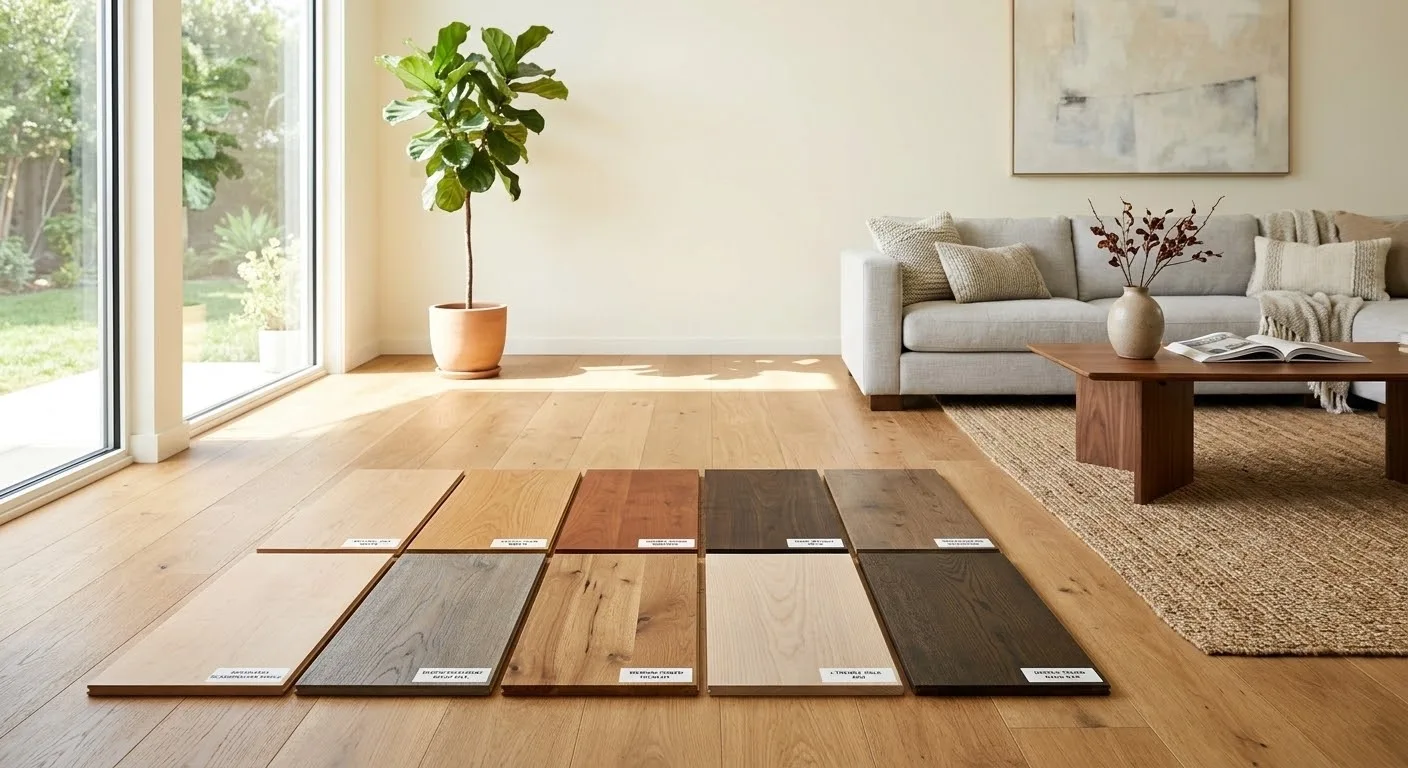
Hardwood floor colors range from light natural tones and warm browns to cool grays, greige, and deep espresso shades. The most popular choices in 2025 include light brown, natural oak, and greige. Your best pick depends on room size, natural light, and your home’s overall style.
Choosing a hardwood floor color feels simple until you’re standing in a showroom holding 30 samples, all looking slightly different under the fluorescent lights. The wrong choice can make a room feel smaller, darker, or just off. The right one ties everything together without you even noticing it’s doing the work.
This guide breaks down every major hardwood floor color, what each one does to a space, and how to pick the best fit for your home.
Why Hardwood Floor Color Matters More Than You Think

Your floor is the largest surface in any room. It takes up more visual space than your walls, your furniture, or your ceiling. That means the color you choose sets the tone for everything else.
A light floor opens a room up and makes it feel airy. A dark floor adds weight and richness. A warm tone pulls people in. A cool gray keeps things modern and clean. These aren’t just design opinions — they’re real effects that color has on how people feel inside a space.
Getting the color right early saves you from expensive refinishing jobs later. So it’s worth thinking through before you commit.
Light Brown and Natural Wood Tones

Brown has been the top color choice for hardwood flooring for over eight years running, and that trend shows no sign of stopping in 2025. Light brown and natural wood tones sit at the very top of that category.
Shades like golden oak or honey maple give a room a relaxed, inviting feel while also making it look brighter and more spacious. They work in almost any room — from a busy family living area to a calm bedroom.
One of the biggest advantages of light brown floors is their flexibility. They pair well with white walls, bold accent colors, and everything in between. Light wood floor tones showcase the natural color of the wood and contribute to a bright and open atmosphere.
If you have a smaller room or one with limited windows, light brown is one of the safest choices you can make. It reflects light rather than absorbing it, which makes the room feel bigger than it actually is.
Natural and Unfinished Wood Looks

As more homeowners lean toward sustainability and authenticity, natural, unfinished wood has emerged as a top trend. This style skips heavy stains and lets the wood speak for itself.
Natural hardwood floors provide a subtle hint of color to a home while keeping the focus on wall paint and decor. They work especially well in rooms with white walls, where the contrast creates a clean, grounded look.
White oak is one of the most popular species for this style. Its subtle grain and light coloring provide a versatile backdrop for a wide range of design styles, enhancing the natural light in a space.
This look fits modern, Scandinavian, and coastal interiors well. It feels fresh without trying too hard.
Warm Medium Browns: Walnut, Chestnut, and Rich Oak

Medium brown tones are making a strong comeback. Warm, inviting colors like walnut, chestnut, and rich oak add depth and warmth to interiors without overwhelming the space.
These shades sit in the middle of the color spectrum — not too light, not too dark. They’re the sweet spot for homeowners who want character without drama. Medium wood floors are versatile, complementing various design styles from traditional to transitional, and they offer a timeless and classic look.
Walnut, in particular, has become a go-to choice for open-plan spaces. The warm reddish-brown undertones feel grounded and natural. Pair it with leather furniture, warm metals like brass or copper, and soft textiles, and the room feels complete.
Gray Hardwood Floors

Gray has been a dominant choice in modern homes for several years, and it’s still going strong. Whether you choose a light silvery gray or a deeper charcoal, this color brings a sleek, modern feel to any space.
Gray floors work well with cool-toned interiors — think black, white, and metallic accents. They’re a natural fit for industrial-style homes, contemporary apartments, and minimalist spaces.
Cool grays and ash tones are ideal for homeowners who want a modern, sleek look. Grays can range from light, almost silver tones to darker, more charcoal shades, offering a wide range of options for different styles.
One thing to keep in mind: gray floors can feel cold in rooms with little natural light. If your space gets good sun exposure, gray can look stunning. In darker rooms, it may feel flat.
Greige: The Best of Both Worlds

Greige sits right between gray and beige, and it’s one of the fastest-growing color trends in flooring. Not quite beige, not quite gray, greige hardwood flooring is growing in popularity and is the perfect choice for neutral homes.
What makes greige so appealing is its versatility. These colors offer a neutral backdrop that complements a wide variety of design styles and color schemes. Unlike pure gray, greige has a warmth to it that keeps spaces from feeling sterile.
It pairs especially well with natural wood furniture, earthy tones, and soft greens. If you want something modern but not cold, greige is a strong candidate.
White and Whitewashed Hardwood Floors

White and whitewashed floors are bold, but they create a look that’s hard to match. Whitewashed or light blonde wood floors create a serene, spacious feel, making them especially popular in coastal or Scandinavian-inspired homes.
Whitewashed finishes are particularly effective in making small spaces feel larger and more open, while bleached finishes offer a more subtle, sophisticated look.
The tradeoff with white floors is maintenance. They show dirt, dust, and pet hair more readily than darker tones. But in a well-lit room with the right décor, the effect is worth the extra upkeep for many homeowners.
Dark Hardwood Floors: Espresso, Walnut, and Near-Black

Dark hardwood floors make a statement. Dark wood tones like mahogany or walnut create a rich and luxurious feel, adding depth and sophistication to a space.
There’s also growing interest in very dark, almost black hardwood floors, which contribute to a modern and sophisticated atmosphere. These work best in larger rooms where the darkness adds intimacy rather than making the space feel cramped.
Dark floors do show dust and scratches more easily. If you have kids, pets, or high foot traffic, you’ll want to think carefully before going very dark. A matte finish helps reduce how visible surface marks are over time.
That said, dark floors paired with light walls and bright furnishings create one of the most striking contrasts in interior design. The visual impact is immediate.
Red and Amber Tones: Bold and Timeless

Red oak and cherry wood floors bring warmth and personality to a room. Walnut and red oak hardwood floors have a reddish-brown undertone, which perfectly complements both bold and neutral wall colors.
These tones work best in traditional, farmhouse, and rustic-style interiors. They can feel dated in ultra-modern spaces, but in the right setting, they’re genuinely beautiful. Pair them with earthy wall colors — sage greens, warm whites, or deep taupes — and the result feels rich and intentional.
How to Choose the Right Hardwood Floor Color
The color of your floors should work with three main things: the amount of natural light in your room, the size of the space, and your existing décor.
Light floors brighten small rooms. Dark floors add richness to large ones. Neutral tones like greige and natural brown give you the most flexibility as your décor changes over time.
One of the easiest starting points is to match your floor color with a prominent architectural feature in your home, such as the stone on your fireplace or the color of your kitchen cabinets.
Always look at samples in your actual space before committing. Lighting in showrooms is different from the light in your home, and the same plank can look completely different depending on where you put it.
The Finish Matters as Much as the Color
Color is only half the decision. The finish you choose changes how the color reads in real life. Matte and satin finishes are leading the way, offering modern, understated appeal that minimizes reflections and allows the natural grain and texture of the wood to show through.
High-gloss finishes make colors look more intense and dramatic. Matte finishes keep things calm and natural. Oil-based finishes add warmth to any color, while water-based finishes keep tones cooler and more neutral.
Think about finish and color together, not as separate decisions.
Final Thoughts
There’s no single best hardwood floor color — only the best one for your specific home, your lifestyle, and the look you’re going for. Light browns and natural tones are the safest and most popular choice in 2025. Greige and gray are strong picks for modern spaces. Dark floors deliver a luxury feel when used in the right context.
Take your time, pull samples, look at them in different lighting, and trust what you see in your own space.

Comments are closed.